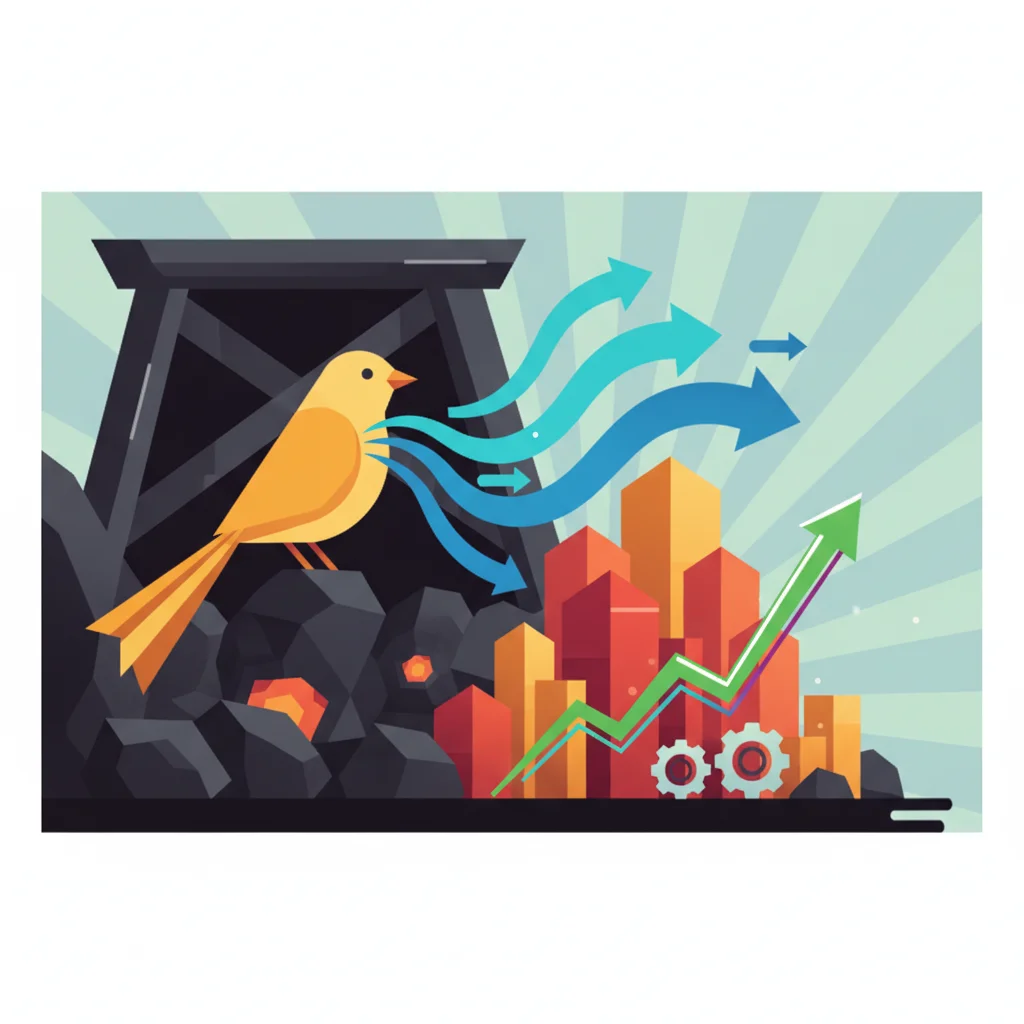
The Canary in the Coal Mine: What Surging Shelter Demand Reveals About the Real Economy
In the historic town of Northampton, a story is unfolding that should capture the attention of every investor, business leader, and financial analyst. The Northampton Hope Centre, a vital winter shelter, is witnessing its highest demand in years, with staff warning they may soon have to turn people away. While on the surface this appears to be a local social issue, it is, in fact, a powerful and visceral leading indicator of deeper fissures within the broader economy. It’s a real-time data point that financial charts and stock market tickers often fail to capture.
For those immersed in the world of finance and investing, it’s easy to become insulated by abstract metrics: GDP growth, quarterly earnings reports, and the daily fluctuations of the stock market. But the true health of an economy is ultimately measured by the well-being of its people. When a fundamental safety net like a homeless shelter is strained to its breaking point, it signals that the macroeconomic pressures we discuss in boardrooms—inflation, interest rate hikes, and wage stagnation—are no longer theoretical. They are creating tangible, human crises. This article delves into the economic undercurrents driving this surge in demand, exploring what it means for the future of our economy, the responsibility of the financial sector, and the hidden risks and opportunities for astute investors.
Decoding the Economic Headwinds: Beyond the Headlines
The situation in Northampton is not an isolated incident but a symptom of a confluence of powerful economic forces that have been building for months. The primary driver is the persistent cost-of-living crisis, a direct consequence of inflationary pressures that have outpaced wage growth for a significant portion of the population. While headline inflation may be receding from its peak, the cumulative impact on household budgets has been devastating.
Central banking institutions, in their bid to control inflation, have deployed their most potent tool: raising interest rates. This has a cascading effect throughout the economy. For homeowners, it means higher mortgage payments, eroding disposable income. For renters, landlords often pass on their own increased borrowing costs. For businesses, the cost of capital rises, potentially leading to hiring freezes or layoffs. According to the Bank of England, the Bank Rate has seen a dramatic increase from 0.1% in late 2021 to over 5% in 2023, a shock to a system accustomed to cheap money.
This creates a perfect storm where the cost of basic necessities—housing, food, and energy—escalates while the financial capacity of households diminishes. The table below illustrates the stark reality many are facing.
Comparative Analysis: UK Wage Growth vs. Cost of Essentials (Illustrative)
| Economic Indicator | Change (Approx. 2-Year Period) | Impact on Households |
|---|---|---|
| Average Private Sector Wage Growth | +10-12% | Nominal increase, but real-terms value is eroded. |
| Consumer Price Index (CPI) – Food | +25-30% | Significant reduction in purchasing power for non-discretionary spending. |
| Average Private Rent | +15-20% | Housing costs consume a larger share of income, increasing risk of arrears. |
| Benchmark Interest Rates | +500% | Drastically increases the cost of mortgages and other debt servicing. |
When these pressures converge, the first casualty is housing security. A single unexpected expense—a car repair, a medical bill—can be the tipping point that pushes a family from financial precarity into homelessness. This is the reality behind the statistics and the reason shelters like the Northampton Hope Centre are overwhelmed.
The Stability Gambit: Can the UK Steal the Investment Crown from a Volatile US?
The K-Shaped Divergence: A Tale of Two Economies
The post-pandemic economic landscape has been widely described as a “K-shaped recovery.” This phenomenon sees different segments of the economy and society recovering at starkly different rates. On the upward-sloping arm of the ‘K’, we find asset owners, knowledge workers, and those invested in the stock market. Buoyed by fiscal stimulus and asset price inflation, their wealth has often grown. On the downward-sloping arm are low-wage workers, those in the gig economy, and individuals whose incomes are not indexed to inflation. They have borne the brunt of the cost-of-living crisis.
This divergence is a critical concept in modern economics. It explains how major stock indices can reach near all-time highs while food bank usage and shelter demand simultaneously skyrocket. The financial markets are reflecting the health of large corporations and the prospects of the upward-sloping arm of the ‘K’, but they are largely blind to the distress in the other half of the economy. This disconnect is not just a social issue; it’s a source of systemic risk. An economy where a large portion of the population cannot afford basic goods is an economy with a shrinking consumer base and a fragile foundation.
Financial Technology: A Double-Edged Sword
The rise of fintech and financial technology has been a defining feature of the last decade. It has promised to democratize finance, offering everything from commission-free trading to instant loans. In many ways, it has succeeded, bringing more people into the formal financial system. However, in the context of the K-shaped recovery, some of these innovations have become instruments of risk for the financially vulnerable.
Buy-Now-Pay-Later (BNPL) services, for example, can be a useful budgeting tool but can also mask underlying financial distress and lead to spiraling debt. High-interest, short-term digital loans can trap individuals in cycles of repayment they cannot escape. While technology has made investing more accessible, it has also amplified the risks for those without a financial cushion, who may be lured into speculative assets in a desperate search for returns.
Yet, the potential for technology to be part of the solution is immense. Imagine a blockchain-based system for charitable giving, providing donors with complete transparency on how their funds are used to support a homeless individual. Consider AI-driven fintech platforms that offer truly personalized financial planning and debt counseling to low-income users at scale. The same innovative spirit that powers high-frequency trading could be redirected to build more resilient and inclusive financial systems. According to a report by McKinsey & Company, the fintech sector is at a pivotal moment, with the potential to pivot from pure growth to creating sustainable, inclusive value.
The 4% Domino: Why a Shift in Japan's Bond Market Could Shake the Global Economy
The Investor’s Lens: From Social Risk to ESG Opportunity
For the savvy investor or business leader, the news from Northampton should be processed not with pity, but with a strategic mindset. Rising social instability is a material risk to long-term business success. It can lead to:
- Reduced Consumer Demand: A population struggling with basics has no discretionary income.
- Workforce Instability: Employees facing housing insecurity are less productive and have higher turnover rates.
- Reputational Risk: Companies seen as profiting from or being indifferent to community hardship face backlash.
- Political & Regulatory Risk: Widespread social distress often leads to populist policies, higher taxes, and stricter regulations.
This is where the principles of Environmental, Social, and Governance (ESG) investing move from a “nice-to-have” to a strategic imperative. The ‘S’ in ESG is precisely about managing a company’s relationship with its employees, suppliers, customers, and the communities where it operates. A company that pays a living wage, provides stable employment, and invests in local community initiatives is not just being charitable; it is mitigating social risk and building a more resilient business model.
Research from institutions like Morgan Stanley has increasingly shown that companies with strong ESG performance can exhibit greater financial resilience, particularly during economic downturns. They build brand loyalty, attract and retain top talent, and are often better managed.
ESG ‘Social’ Score and Corporate Resilience (Conceptual Framework)
| Company Profile | Key ‘Social’ Actions | Potential Long-Term Business Outcome |
|---|---|---|
| High ‘S’ Score Company | Pays living wage, offers robust benefits, invests in community housing projects, ethical supply chain. | Higher employee retention, stronger brand loyalty, reduced regulatory risk, stable long-term growth. |
| Low ‘S’ Score Company | Relies on minimum wage/gig work, limited benefits, history of layoffs, disengaged from community. | High employee turnover, vulnerable to consumer boycotts, increased risk of labor disputes, volatile performance. |
The Trump Economy 2.0: Decoding Voter Anxiety and Market Signals
Conclusion: The Bottom Line Is Human
The overflowing shelter in Northampton is more than a headline; it’s a vital piece of economic data. It represents the point where abstract policies on finance and economics collide with human reality. For too long, the worlds of high finance and social welfare have been viewed as separate domains. This is a flawed and outdated perspective.
The health of our communities is inextricably linked to the health of our economy. A system that generates record corporate profits but cannot prevent its citizens from needing emergency shelter is fundamentally unbalanced and, ultimately, unstable. For investors, business leaders, and financial professionals, the call to action is clear. We must expand our definition of risk and opportunity. We must look beyond the ticker tape to the real-world consequences of our economic models. By investing in social resilience, promoting inclusive financial technology, and championing corporate responsibility, we are not just engaging in philanthropy; we are making the most critical long-term investment in a stable and prosperous economy for all.