Braverman’s Gambit: What a Tory Defection to Reform Means for the UK Economy and Your Investments
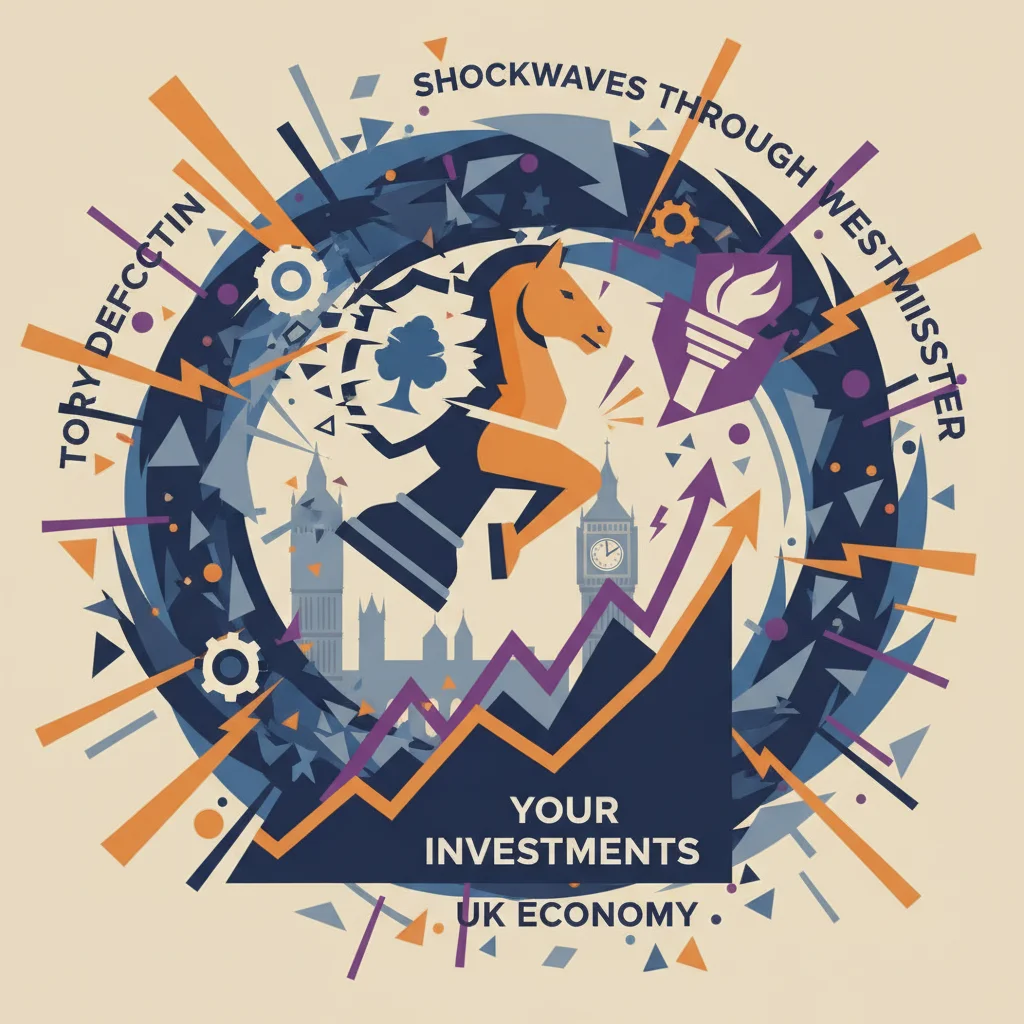
In a move sending shockwaves through Westminster, former Home Secretary Suella Braverman has defected from the Conservative Party to Reform UK, declaring, “I joined Reform to get away from Tories.” This is not merely a headline for the political pages; it’s a significant event with profound implications for the UK economy, market stability, and the strategic decisions facing investors and business leaders. While on the surface it appears to be a single politician switching allegiances, it represents a deeper ideological fracture on the right of British politics—a fracture that could reshape the country’s economic policy for years to come.
This defection acts as a bellwether for growing dissatisfaction within the traditional conservative base and signals the rising influence of Reform UK’s populist, low-tax, small-state agenda. For anyone involved in UK finance, investing, or business, understanding the potential fallout from this political realignment is no longer an academic exercise; it’s a critical component of risk management and strategic planning. We will delve into what this shift means for fiscal policy, the stock market, and key sectors like banking and fintech.
The Political Earthquake: Why This Defection Matters
Suella Braverman is not just any Member of Parliament. As a recent Home Secretary and a leading figure on the right of the Conservative party, her departure is a symbolic and strategic blow. It legitimizes Reform UK as a viable destination for disillusioned Tory voters and politicians, potentially opening the floodgates for further defections. The move comes at a time when the Conservative party is already grappling with challenging poll numbers, with some surveys showing Reform UK closing the gap or even overtaking them. According to a recent YouGov poll, the gap between the two parties has been narrowing significantly, highlighting a substantial shift in the political landscape (source).
Reform UK, led by Nigel Farage, has built its platform on a foundation of policies that diverge sharply from the current government’s trajectory. Their agenda champions drastic tax cuts, a significant reduction in the size of the state, and a hardline stance on immigration and net-zero policies. Braverman’s alignment with this platform underscores a fundamental schism in conservative thought: one side advocating for a more pragmatic, centrist approach to govern, and the other demanding a radical, free-market overhaul of the British state and its economy. This ideological battle is now set to play out not within one party, but between two competing forces on the right.
Ireland's Economic Juggernaut: Beyond the Headlines of a 12.5% Tax Rate
A Tale of Two Economic Philosophies
The core of the issue for investors and business leaders lies in the starkly different economic visions being presented. The uncertainty stemming from which vision might prevail creates volatility. A government’s approach to taxation, regulation, and public spending directly impacts everything from corporate profits to consumer confidence. Below is a simplified comparison of the stated economic stances of the mainstream Conservative party and Reform UK.
| Policy Area | Conservative Party (Current Stance) | Reform UK (Stated Aims) |
|---|---|---|
| Corporation Tax | Raised to 25% from 19%. Pledged not to raise it further. | Proposes to cut it back to 15% over time to stimulate business investing. |
| Personal Taxation | Cut National Insurance, but overall tax burden remains at a multi-decade high. | Raise the income tax threshold to £20,000, effectively removing millions from paying income tax. |
| Public Spending | Pledges to protect key services like the NHS while seeking efficiencies to control national debt. | Advocates for dramatic cuts in government waste and scrapping major projects (e.g., HS2) to fund tax cuts. |
| Regulation | Focus on “pro-growth” regulation post-Brexit, but progress has been gradual. | A “bonfire of regulations,” particularly targeting EU-derived laws and net-zero commitments. |
| Energy Policy | Committed to Net Zero by 2050, with significant investment in renewables. | Scrap Net Zero targets and prioritize fossil fuel energy for national security and lower costs. |
This table illustrates the chasm between the two parties. A shift towards Reform’s policies would represent one of the most significant liberalizations of the UK economy in a generation, but it would also introduce questions about fiscal responsibility and the funding of public services—a concern often highlighted by institutions like the Institute for Fiscal Studies (source).
The Market Reaction: Pricing in Political Risk
For those involved in the stock market and trading, political instability is a variable that must be carefully managed. The rise of a powerful political challenger to the right of the government introduces several key risks and opportunities:
- Currency Volatility: The British Pound (GBP) is often sensitive to political news. The prospect of a radical shift in fiscal policy—particularly unfunded tax cuts—could put downward pressure on sterling, reminiscent of the market reaction to the 2022 “mini-Budget.” Traders will be watching polling data with extreme focus.
- Gilt Market Jitters: UK government bonds (gilts) are sensitive to perceptions of fiscal credibility. A political platform promising huge tax cuts without fully costed spending reductions could lead to a sell-off in the gilt market, pushing borrowing costs higher for the government, businesses, and homeowners. The Bank of England’s response to such fiscal loosening would be a critical factor (source).
- Sector-Specific Impacts: A potential Reform-influenced government would create clear winners and losers. Companies in the oil and gas sector could benefit from the scrapping of green levies. Conversely, the renewable energy sector and businesses reliant on green subsidies would face a major downturn. Housebuilders might benefit from deregulation, while sectors reliant on public contracts could face cuts.
Investors must now add a new layer of political risk analysis to their UK holdings. Evaluating a company’s exposure to government policy, its reliance on specific regulations, and its resilience to macroeconomic volatility has become more important than ever.
The Trillion-Dollar Blind Spot: Why Child Safety Online is the Next Frontier for Investors
A New Dawn or a False Start for UK Banking and FinTech?
The City of London, a cornerstone of the UK economy, is watching these developments with vested interest. The future of banking, finance, and the burgeoning financial technology (fintech) sector is intrinsically linked to the regulatory environment.
A Reform-style government would likely champion aggressive deregulation of the financial sector, aiming to unshackle the City from what it views as burdensome EU-era and domestic rules. This could, in theory, boost competitiveness. However, it also carries risks. A departure from established international standards could create friction with key partners like the EU and the US, potentially jeopardizing the vital “equivalence” decisions that allow UK financial firms to operate abroad.
For the UK’s world-leading fintech sector, the implications are complex. On one hand, a radical deregulatory agenda could foster innovation, particularly in nascent fields like decentralized finance (DeFi) and blockchain applications. A government eager to slash red tape might create a highly attractive environment for startups. On the other hand, a more isolationist political stance could hamper access to global talent and create uncertainty around data-sharing agreements, which are crucial for a globally integrated financial technology industry. The delicate balance between fostering innovation and maintaining regulatory credibility would be tested like never before.
Conclusion: Navigating the New Economic Crossroads
Suella Braverman’s move to Reform UK is a potent symbol of the UK’s arrival at a political and economic crossroads. It is the most visible sign yet that the consensus that has governed the British economy for decades is fracturing. The debate is no longer about minor tweaks to tax and spend but about a fundamental reimagining of the state’s role in the economy.
For investors, finance professionals, and business leaders, the key takeaway is that the political risk premium for UK assets has risen. The future policy direction is less certain, and the range of potential economic outcomes is wider than it has been for a generation. This environment demands vigilance, robust scenario analysis, and a deep understanding of the interplay between politics and economics. Whether this defection marks the beginning of a populist revolution or simply a footnote in political history, the shockwaves it has created will be felt across the financial world for months and years to come.

Related Posts

Trade War Tremors: Why the New 25% Tariff on South Korea Shakes the Global Economy
UK’s Ground Rent Shake-Up: What the £250 Cap Means for Investors and the Economy