The Trillion-Dollar Handshake: How the EU-India Trade Deal is Reshaping the Global Economy
A New Era in Global Trade: The EU and India Forge a Landmark Alliance
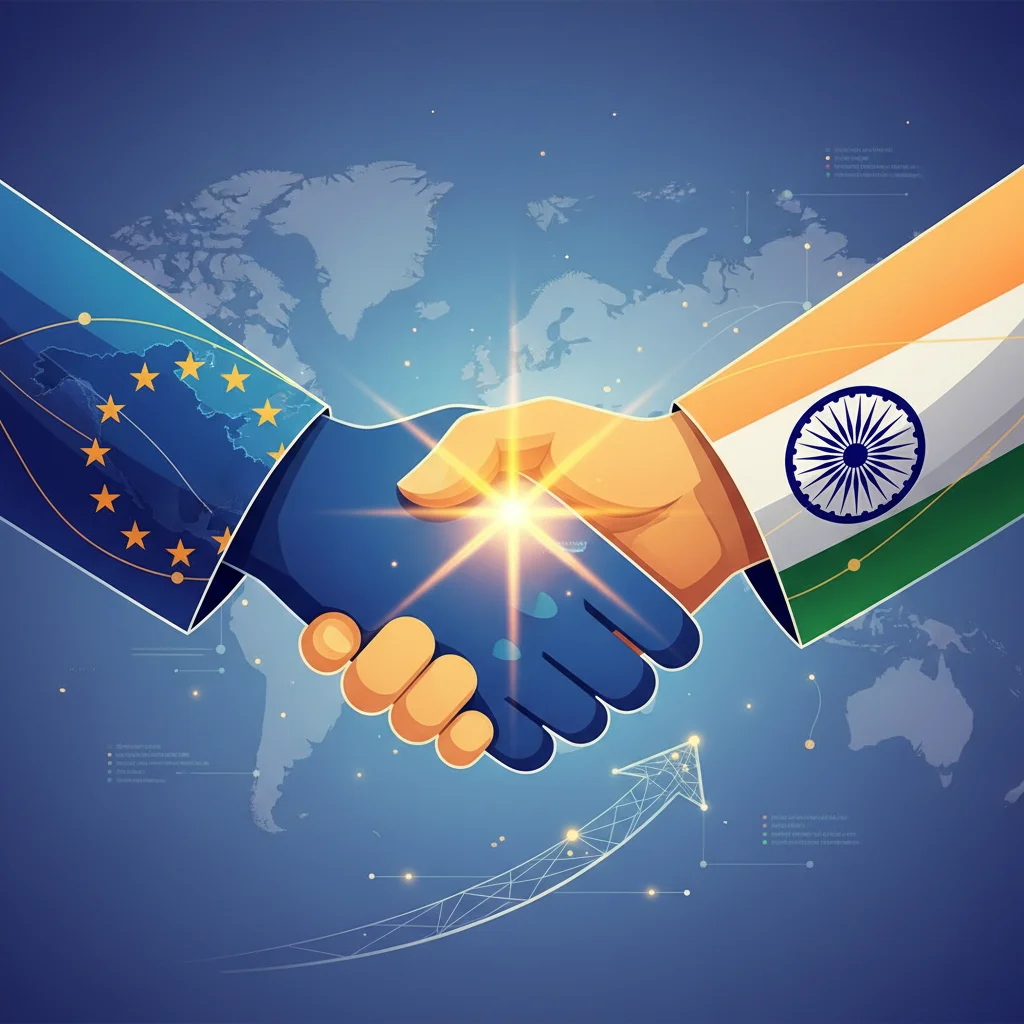
In the intricate dance of global economics, major shifts often happen not with a bang, but with the quiet signing of a pact. A monumental agreement is on the horizon between the European Union and India, a deal that officials have dubbed the “mother of all” trade deals. This long-anticipated Free Trade Agreement (FTA) is poised to do more than just lower tariffs; it signals a seismic realignment in global power dynamics, directly spurred by the trade protectionism that characterized the Trump administration and a growing global need to diversify supply chains. For investors, business leaders, and anyone with a stake in the global economy, understanding the nuances of this pact is crucial. It’s a story about geopolitics, technology, and the future of international finance.
Negotiations for an EU-India FTA have been a decade-long marathon, frequently stalled by disagreements over key sectors like automotive parts, agriculture, and intellectual property. So, what changed? The catalyst, according to reporting from the Financial Times, was the global economic instability triggered by Donald Trump’s tariff offensive. The EU, faced with new trade barriers from a traditional ally, recognized the urgent need to forge stronger alliances with other economic powerhouses. India, under Prime Minister Narendra Modi, is on a mission to attract foreign investment and boost its manufacturing sector. This confluence of interests has breathed new life into the talks, creating an opportunity to build one of the most significant trade corridors in the world.
The Sheer Scale: A Partnership of Economic Giants
To grasp the magnitude of this potential agreement, one must first appreciate the economic weight of the two parties. The European Union, as a single bloc, is one of the world’s largest economies. India, meanwhile, is the world’s fastest-growing major economy, with a burgeoning middle class and a demographic dividend that is the envy of the aging developed world. The bilateral trade in goods between the two was already valued at over €115 billion in 2021, making the EU India’s third-largest trading partner. This deal aims to supercharge that relationship.
Here’s a snapshot comparison of the two economic powerhouses:
| Metric | European Union (27) | India |
|---|---|---|
| Approx. GDP (Nominal) | ~$17 Trillion | ~$3.5 Trillion |
| Population | ~447 Million | ~1.4 Billion |
| Key Export Sectors | Machinery, Motor Vehicles, Pharmaceuticals, Chemicals | IT Services, Refined Petroleum, Pharmaceuticals, Gems & Jewelry |
| Current Bilateral Trade (Goods & Services) | Approaching €150 Billion annually | |
This FTA would go far beyond just goods. It’s expected to cover services, investment protection, and government procurement, creating a comprehensive framework for deep economic integration. For European companies, it means access to a market of 1.4 billion people. For Indian businesses, it offers a gateway to the world’s largest single market, fostering competition and innovation.
The Gen Z Investor: Misunderstood Gambler or Disciplined Strategist?
Unlocking Opportunities: Key Sectors to Watch
While the benefits will be broad-based, certain sectors are poised for explosive growth. Understanding these areas is critical for strategic investing and business planning.
1. Financial Technology (Fintech) and Banking
India’s digital payment revolution is already world-famous. The Unified Payments Interface (UPI) has transformed the country’s financial landscape. An FTA could facilitate deeper collaboration between European banking institutions and India’s vibrant fintech ecosystem. This could mean smoother cross-border payments, joint ventures in digital lending, and the adoption of advanced European financial technology platforms in India. For investors, this opens up exciting prospects in both Indian fintech startups and established European banks looking to expand their digital footprint.
2. Automotive and Green Technology
European car manufacturers, from Volkswagen to BMW, have long sought to reduce the high tariffs on cars and car parts exported to India. A favorable deal here could significantly boost their sales. Conversely, the agreement is expected to emphasize green technology and electric vehicles (EVs). This could accelerate the flow of European EV technology and investment into India, supporting the country’s ambitious climate goals and creating a massive new market for sustainable transportation.
3. Pharmaceuticals and Healthcare
India is often called the “pharmacy of the world” for its massive generic drug manufacturing capabilities. The EU is a global leader in pharmaceutical R&D. This deal could streamline regulatory approvals, protect intellectual property (a key EU demand), and foster joint research, leading to more resilient healthcare supply chains for both sides—a critical lesson learned from the recent pandemic.
The Investor’s Playbook: Navigating the New Economic Landscape
For those involved in finance and trading, this FTA is a game-changer. The immediate impact will likely be felt in the stock market, with shares of companies in the aforementioned sectors seeing increased interest. However, the long-term implications are far more profound.
- Foreign Direct Investment (FDI): The deal is expected to include robust investment protection clauses, making it safer and more attractive for European firms to invest directly in Indian manufacturing and infrastructure. According to India’s Ministry of Commerce and Industry, the EU is already one of the largest sources of FDI into India, a trend this deal would undoubtedly accelerate (source).
- Supply Chain Diversification: For decades, the global supply chain has been heavily centered on China. This deal provides a powerful incentive for European companies to adopt a “China plus one” strategy, with India becoming a primary alternative for manufacturing and services. This reduces geopolitical risk and creates a more resilient global economy.
- Capital Markets Integration: Deeper economic ties often lead to closer integration of capital markets. We could see an increase in cross-listings of companies on European and Indian stock exchanges, more India-focused ETFs and mutual funds in Europe, and greater participation of European institutional investors in the Indian stock market.
The "Dreaded European Working Group": Is EU Bureaucracy a Threat to Global Economic Stability?
Navigating the Roadblocks: It’s Not a Done Deal Yet
Despite the renewed optimism, significant hurdles remain. A deal of this magnitude is incredibly complex, and several contentious issues that derailed past negotiations must be resolved. These “sticking points” are where the real diplomatic and economic battles will be fought.
A major point of friction is agriculture. The EU’s heavily subsidized agricultural sector is a concern for India, which seeks to protect its millions of small-scale farmers. On the other hand, the EU is pushing for greater market access for its farm products, like wines and spirits. Furthermore, differing standards on data privacy and localization, intellectual property rights for pharmaceuticals, and labor and environmental standards are all complex areas that require careful negotiation. As analysts from the European Council on Foreign Relations point out, aligning the EU’s stringent regulatory framework with India’s development priorities will be a delicate balancing act.
The success of the negotiations will depend on the political will of both sides to find creative compromises. The geopolitical imperative may provide the necessary push to overcome these long-standing obstacles.
Ireland's Economic Juggernaut: Beyond the Headlines of a 12.5% Tax Rate
Conclusion: A Defining Partnership for the 21st Century
The EU-India Free Trade Agreement is far more than a simple document about tariffs and quotas. It is a strategic declaration about the future of the global order. It represents a pivot towards a multipolar world where economic partnerships are built on shared democratic values and a mutual desire for stability and growth. For the world of finance, it signals the opening of a new frontier for investing, innovation, and cross-border collaboration.
While the final text is yet to be written and tough negotiations lie ahead, the direction of travel is clear. This “mother of all” deals has the potential to unlock trillions of dollars in economic value, reshape global supply chains, and define a key alliance for the decades to come. Business leaders, investors, and policymakers would be wise to watch its development with the closest attention.