Beyond the Punchline: Why Lebanon’s War on Comedy is a Major Red Flag for Investors
The Canary in the Coal Mine: When Jokes Signal Economic Collapse
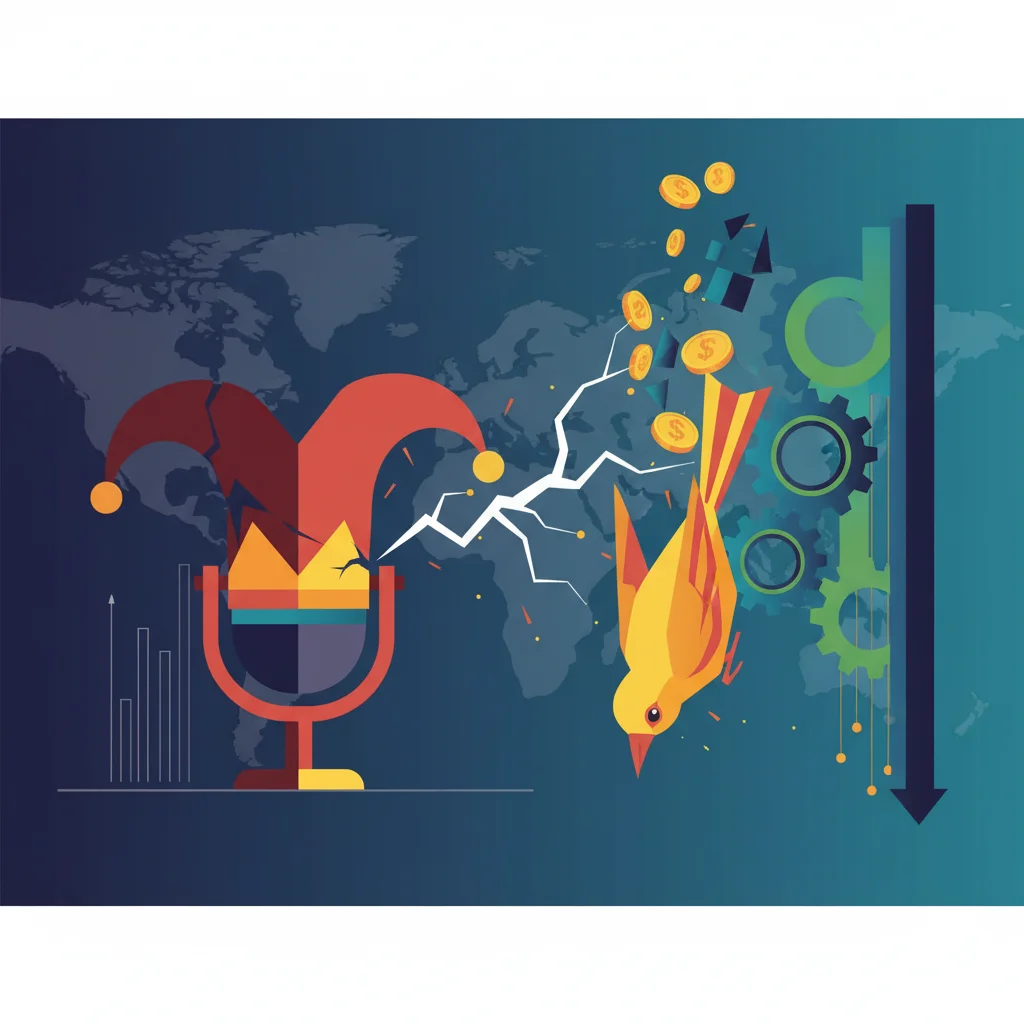
In the world of international finance and investing, analysts rely on a vast array of indicators to gauge a nation’s stability: GDP growth, inflation rates, debt-to-equity ratios, and sovereign bond yields. But what if one of the most telling metrics isn’t found on a Bloomberg terminal, but on a comedy club stage? In Lebanon, a nation mired in one of the most severe economic crises in modern history, the government’s recent crackdown on stand-up comedians offers a chilling and potent signal about its political fragility and, by extension, its dire economic future. This is no laughing matter; it’s a critical data point for anyone assessing country risk.
The story centers on performers like Nour Hajjar, a Lebanese comedian who was briefly detained for a joke he made years ago, and Shaden Fakih, who has faced legal battles for her satirical content. These incidents, detailed in a recent Financial Times report, are not isolated cultural squabbles. They are symptoms of a deeper institutional decay, where a fragile state, unable to provide basic services or a functioning economy, resorts to policing speech to maintain a semblance of control. For investors, business leaders, and financial professionals, understanding this dynamic is crucial. It reveals a breakdown in the rule of law and an environment increasingly hostile to the transparency and freedom required for any sustainable economic activity.
Anatomy of a Meltdown: The Economic Backdrop to Censorship
To understand why a joke about Jesus or military incompetence can lead to an arrest, one must first grasp the sheer scale of Lebanon’s collapse. Since 2019, the country has been in a state of freefall. The Lebanese pound has lost over 98% of its value, effectively vaporizing the savings of millions. The banking sector, once the pride of the Middle East, imploded, locking depositors out of their own accounts in a de facto default that has crippled the nation.
This financial apocalypse was not an act of God; it was the result of decades of systemic corruption, unsustainable fiscal policy, and a political system built on sectarian patronage. The very elites who oversaw this destruction remain in power, shielded by the same sectarian divisions they exploit. The 2019 mass protests, a brief moment of national unity against the ruling class, ultimately failed to dislodge them. In this context, humor is not mere entertainment; it is one of the last remaining forms of public dissent. Comedians have become the voice of a disenfranchised population, articulating the absurdity and tragedy of their daily lives. As comedian Shaden Fakih noted, “They want to silence us… because we are the only ones left with a platform to speak on, and people listen to us.” (source)
When a state can no longer deliver economic prosperity or security, it often doubles down on controlling the narrative. By targeting comedians, Lebanese authorities and their allied sectarian groups are attempting to quash a potent form of social critique that exposes their failures to a wide audience. This shift from economic mismanagement to active suppression of speech is a classic sign of a failing state solidifying its authoritarian grip.
The VAR Paradox: Why We Forgive Human Error But Despise Flawed Algorithms in Finance
Gauging the Investment Climate: A Comparative Look
For professionals in finance, translating social trends into measurable risk is paramount. The crackdown on expression is a direct assault on the foundational principles of a stable and predictable market. The following table illustrates the stark contrast between the prerequisites for a healthy investment environment and the current reality in Lebanon.
| Key Investment Climate Indicator | Hallmark of a Stable Economy | Current Reality in Lebanon |
|---|---|---|
| Rule of Law | Consistent, predictable application of laws; independent judiciary. | Arbitrary arrests based on sectarian complaints; selective prosecution. |
| Freedom of Expression | Open flow of information, critical press, and public discourse. | Censorship, legal harassment, and detention of artists and critics. |
| Political Stability | Functioning government, clear succession, and social cohesion. | Political paralysis, deep sectarian divides, and a ruling class at war with its people. |
| Economic Predictability | Stable currency, reliable banking system, and clear fiscal policy. | Hyperinflation, collapsed banking sector, and policy gridlock. |
| Innovation & Entrepreneurship | A culture that encourages new ideas, risk-taking, and creative problem-solving. | A climate of fear that stifles creativity and punishes dissent. |
The Chilling Effect on Finance, Technology, and Economic Revival
The ripple effects of this oppressive climate extend directly into the spheres of finance and technology, areas critical for any potential recovery. A nation’s economic dynamism is intrinsically linked to its social and intellectual freedom.
Deterring Investment and Capital: At its core, investing is an act of faith in the future and in the stability of the system. The arbitrary nature of the crackdown demolishes this faith. If a comedian can be arrested for a joke, what protection does a foreign or local investor have if their business activities run afoul of a powerful sectarian leader? This uncertainty paralyzes any meaningful capital flow, from venture capital to foreign direct investment. The country’s economy cannot recover without capital, and capital flees from chaos and unpredictability.
Stifling Innovation in Fintech and Beyond: Lebanon’s collapsed banking system creates a theoretical vacuum that innovative financial technology could fill. In a functional environment, one would expect a boom in fintech solutions, peer-to-peer lending, and perhaps even blockchain-based systems for transparency and remittances. However, innovation requires a culture of questioning the status quo, of challenging established norms—precisely the behavior being criminalized. A climate of fear is antithetical to the risk-taking and creative destruction that drives the tech sector. Entrepreneurs will not build the future of Lebanese finance in a place where they fear being jailed for a controversial tweet or a satirical blog post.
Paralyzing Markets: The idea of a functioning stock market or a vibrant trading environment in this context is fanciful. Markets thrive on the free flow of information, trust in institutions, and a belief in a level playing field. Censorship and political persecution are the antithesis of this. They signal that power, not performance or law, is the ultimate arbiter of success and failure. This is not a market; it is a kleptocracy, and sophisticated capital will not participate in it.
A Warning for Emerging Markets and Beyond
While Lebanon’s situation is extreme, it serves as a potent case study for investors and policymakers involved in other emerging markets. The core lesson is that social and political freedoms are not “soft” issues, separate from the “hard” data of economics. They are, in fact, foundational. A government’s treatment of its artists, journalists, and comedians is a powerful proxy for its respect for the rule of law, its tolerance for dissent, and its overall stability.
Investors increasingly use ESG (Environmental, Social, and Governance) metrics to assess risk, but the “S” is often the most difficult to quantify. The Lebanese example provides a clear, albeit grim, data point: state-sponsored suppression of free expression is a direct threat to long-term economic viability. It signals that the governing powers are brittle, insecure, and willing to sacrifice economic potential for the sake of political control.
China's "Involution" Crisis: Why Beijing Is Waging War on Price Wars
In conclusion, the plight of Lebanon’s comedians is far more than a niche story about free speech. It is a stark and unambiguous warning signal flashing red on the dashboard of country risk analysis. It tells us that the social contract has been irrevocably broken and that the institutions necessary for a market economy to function have all but evaporated. For the international financial community, the message from Beirut’s comedy stages is clear: as long as the laughter is silenced, the capital should remain silent, too.