The AI Bubble Warning: Why Google’s DeepMind Chief Says the Hype Has Gone Too Far
We’re living in the age of artificial intelligence. It feels like every week, a new AI model is released that shatters previous benchmarks, a startup announces a nine-figure funding round before it even has a product, and every company on the planet is scrambling to bake “AI” into its mission statement. The excitement is palpable, the innovation is real, and the potential is staggering. But when the hype reaches a fever pitch, it’s wise to listen to the people who are actually building the future.
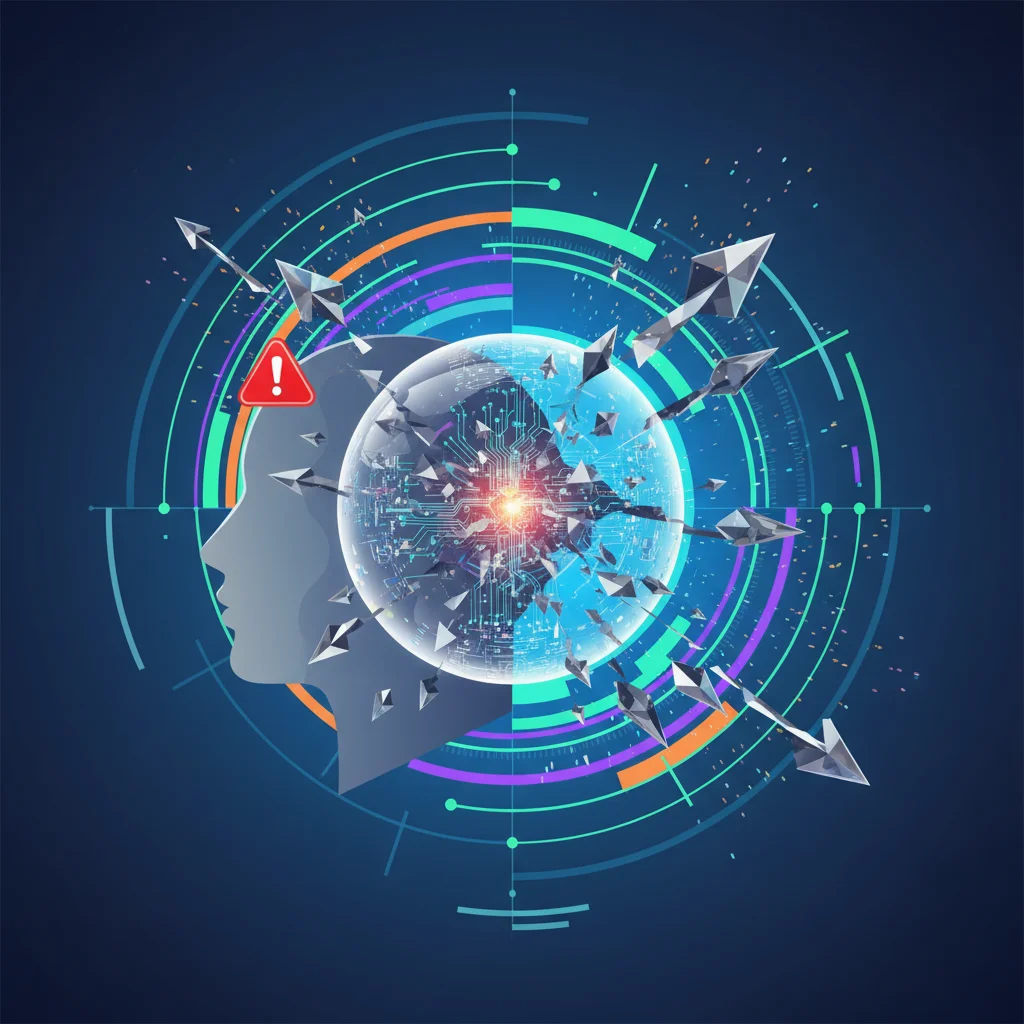
And one of the most important voices in the field just sounded a clear, cautionary note. Demis Hassabis, the co-founder of DeepMind and head of Google’s consolidated AI division, has a message for the tech world: the current investment frenzy looks “bubble-like.”
In a recent interview with the Financial Times, Hassabis pointed to the “unsustainable exuberance” and “a lot of hype” currently swirling around the AI sector (source). Coming from a pioneer who has been at the forefront of AI research for over a decade, this isn’t just another opinion—it’s a critical assessment from inside the engine room. So, what does this mean for developers, entrepreneurs, and tech professionals? Is the AI revolution a mirage, or is this just a necessary correction on the horizon? Let’s dive in.
Decoding the “Bubble-Like” Warning
To understand the weight of Hassabis’s words, we need to look back at history. Tech bubbles are not a new phenomenon. Many of us remember the dot-com bubble of the late 1990s, a period of wild speculation where companies with little more than a “.com” in their name and no clear path to profitability were awarded astronomical valuations. When that bubble burst in 2000-2001, it wiped out trillions in market value and shuttered countless startups.
The parallels to today’s AI landscape are hard to ignore:
- Massive Valuations: Startups are raising capital at valuations that are multiples of what would have been considered normal just a few years ago, often based on the perceived potential of their teams rather than on existing revenue or traction.
- FOMO-Driven Investment: Venture capitalists, afraid of missing out on the “next OpenAI,” are pouring money into the sector, sometimes leading to less rigorous due diligence. A 2023 report from Stanford’s Institute for Human-Centered AI highlighted that global private investment in AI reached a staggering $91.9 billion across thousands of deals (source).
- “AI-Washing”: Just as companies added “.com” to their names in the 90s, many are now “AI-washing” their products and services to attract investment and customers, regardless of how deep the AI integration actually is.
Hassabis isn’t suggesting that artificial intelligence itself is a fad. The underlying technology is profoundly real. The warning is about the market’s perception and valuation of that technology. The “unsustainable exuberance” he mentions is the dangerous belief that every AI startup is a guaranteed unicorn, and that a powerful foundation model is a substitute for a sound business model.
OpenAI's Big Gamble: Why Ads in ChatGPT Signal a New Era for AI
Hype vs. Reality: Separating the Signal from the Noise
The core tension in the current AI market is the gap between the incredible technological reality and the often-inflated commercial hype. It’s crucial for anyone in the tech industry to be able to distinguish between the two.
The Groundbreaking Reality
The progress in machine learning over the past few years is nothing short of revolutionary. Large Language Models (LLMs) like GPT-4, Claude 3, and Google’s own Gemini have demonstrated abilities in reasoning, creativity, and programming that were once the exclusive domain of human cognition. This has unlocked tangible value across numerous domains:
- Software Development: AI-powered coding assistants are dramatically increasing developer productivity.
- Automation: Repetitive white-collar tasks are being automated, freeing up human workers for more strategic initiatives.
- Cybersecurity: AI algorithms are becoming indispensable for detecting threats and anomalies in real-time, far faster than human analysts can.
- Scientific Discovery: DeepMind’s own AlphaFold has revolutionized biology by predicting the structure of proteins, accelerating drug discovery and our understanding of life itself. A recent study noted that AlphaFold has been accessed by over 1 million users and its predictions have been cited in thousands of scientific papers (source).
The Inflated Hype
The hype, however, often runs far ahead of this reality. It manifests as a belief that we are on the cusp of Artificial General Intelligence (AGI) and that simply having access to a powerful API is a defensible business. Many new startups are little more than thin wrappers around existing models, offering a slightly tweaked user interface but no fundamental innovation or proprietary data advantage. This is the froth of the market—the part of the bubble that is most vulnerable to a correction.
To put this in perspective, let’s compare the current AI boom to the dot-com era using a data table.
| Characteristic | Dot-Com Bubble (1995-2001) | Current AI Boom (2022-Present) |
|---|---|---|
| Core Technology | The Public Internet, Web Browsers | Generative AI, Large Language Models (LLMs) |
| Valuation Metric | “Eyeballs,” Clicks, Potential Audience | Model Performance, Parameter Count, AGI Potential |
| Key Infrastructure | ISPs, Fiber Optic Networks, Servers | Cloud Computing (AWS, GCP, Azure), GPUs (Nvidia) |
| Killer App Narrative | E-commerce, Online Portals | AI-powered SaaS, Autonomous Systems, Copilots |
| Source of “Exuberance” | Belief that the internet would change everything overnight. | Belief that AI will automate all knowledge work and solve intelligence. |
Who Survives an AI Shakeout?
If Hassabis is right and the market is due for a correction, the obvious question is: who will be left standing? His confidence in Google DeepMind’s own position provides the blueprint for resilience.
1. The Incumbents with Foundational Research
Companies like Google, Microsoft (via its partnership with OpenAI), and Anthropic are not just using AI; they are inventing it. They have decades of research, massive proprietary datasets, and the capital to fund the immense computational costs of training next-generation models. They are building the bedrock of the entire industry and will remain central to its future.
2. Startups with a Defensible Moat
For startups, the key to survival is differentiation. A thin wrapper around a public API is not a business; it’s a feature. The startups that will thrive are those that have a unique, defensible advantage. This could be:
- Proprietary Data: A unique, high-quality dataset that can be used to fine-tune models for a specific vertical (e.g., legal, medical, financial).
- Deep Domain Expertise: Building a highly specialized workflow for a niche industry that a general-purpose model can’t easily replicate. Think AI for chip design or AI for complex logistics automation.
- Algorithmic Innovation: True breakthroughs in machine learning architecture or training techniques that offer a step-change in efficiency or capability.
The EU's Digital Wall: Why Brussels Is Moving to Ban Huawei and ZTE from Critical Infrastructure
3. The Infrastructure and “Picks & Shovels” Players
Beyond the model-makers, there’s a whole ecosystem of companies providing essential tools and services. This includes GPU manufacturers like Nvidia, cloud platform providers, and companies building the MLOps (Machine Learning Operations) software needed to deploy and manage AI models in production. Their success is tied to the overall growth of AI adoption, not the fate of any single AI application.
Actionable Takeaways for the Road Ahead
Hassabis’s warning isn’t a reason to be pessimistic; it’s a call for pragmatism and focus. Here’s what it means for different players in the tech ecosystem:
For Developers and Programmers: Don’t just chase the hype. While learning the latest AI frameworks is important, focus on strengthening your core programming and software engineering fundamentals. Understand the full stack, from data pipelines to model deployment. The most valuable engineers will be those who can integrate AI into robust, scalable, and reliable products, not just those who can call an API.
For Entrepreneurs and Startups: Resist the temptation of vanity metrics and inflated valuations. Focus relentlessly on solving a real customer problem and building a sustainable business model. Ask yourself: if the AI hype died down tomorrow, would my customers still pay for my product because it delivers tangible value? Your answer to that question will determine your longevity.
For Tech Professionals and Leaders: Become a discerning consumer of AI. Cultivate a healthy skepticism and learn to differentiate between a slick demo and a production-ready solution. Champion innovation, but ground your AI strategy in clear ROI and business objectives. The goal is not to “do AI” but to use AI to build a better business.
My AI Coach Made Me Run in Circles: What a Marathon Taught Me About Trusting Algorithms
Conclusion: The End of the Beginning for AI
Demis Hassabis’s “bubble-like” assessment is not a death knell for artificial intelligence. It’s a sign of a maturing industry. The initial phase of unbridled excitement and speculation is giving way to a necessary period of sorting and rationalization. The easy money may dry up, and companies built on hype alone will falter.
But the underlying technological sea change is real and unstoppable. The companies that survive the coming shakeout will be those built on a foundation of genuine innovation, deep technical expertise, and a clear-eyed focus on creating real-world value. The end of the bubble won’t be the end of AI; it will be the end of the beginning, clearing the way for a more sustainable, impactful, and truly revolutionary era of technology.