The Trump Two-Step: Why Billionaires are Hedging Their Bets on the 2024 Election
The High-Stakes Dance Between Wall Street and Washington
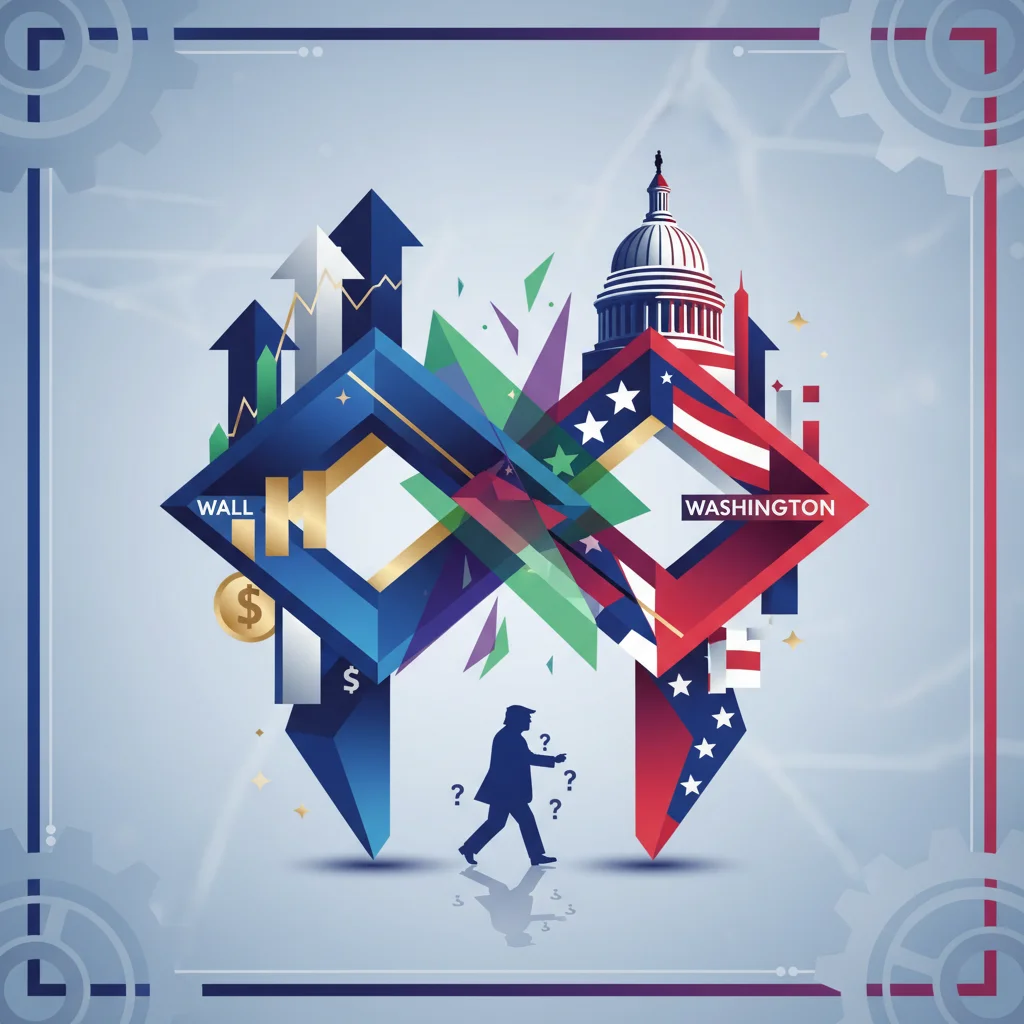
In the world of high finance and big business, certainty is the most valuable commodity. Yet, as the 2024 U.S. presidential election approaches, the political landscape is anything but certain. The potential return of Donald Trump to the White House has created a complex dilemma for the nation’s wealthiest individuals and corporate leaders. Do they publicly fight a candidate whose rhetoric and policies often challenge the established order, or do they quietly flatter and fund him to secure a seat at the table? The answer, it seems, is a masterclass in strategic ambiguity: they are doing both.
This isn’t about ideology; it’s about pragmatism. For the titans of industry, from banking to financial technology, a positive relationship with the commander-in-chief is more than a “nice-to-have”—it’s a critical component of risk management. The decisions made in the Oval Office can dramatically impact the stock market, shape the regulatory environment for banking, and alter the entire global economy. Consequently, we are witnessing a sophisticated two-step, a political dance where public criticism is paired with private access, and past grievances are set aside in favor of future influence.
From Outspoken Critics to Cautious Collaborators
The shift in tone from many financial leaders has been palpable. Consider Jamie Dimon, the influential CEO of JPMorgan Chase. Once a vocal critic, Dimon recently struck a more conciliatory note at the World Economic Forum in Davos. He acknowledged that Trump was “kind of right” about certain economic and immigration issues, a statement that signals a broader recalculation happening across the C-suite. This isn’t a full-throated endorsement but a strategic acknowledgment of policies that, from a purely business perspective, had their merits.
Why the change of heart? Many in the financial world remember the Trump administration’s pro-business policies, such as the 2017 tax cuts and a significant push for deregulation. For companies focused on the bottom line, these actions directly translated into higher profits and a booming stock market. The fear of being excluded from a second Trump administration, which could bring further deregulation or, conversely, punitive tariffs, is a powerful motivator. The primary goal is to avoid being on the outside looking in, ensuring their voices are heard on critical matters of economics and finance.
This calculated pivot is a core element of modern corporate political strategy. It reflects an understanding that in a volatile political climate, adaptability is key to survival and prosperity. For investors, this signals that corporate leaders are actively working to mitigate political risks that could impact their portfolios.
A Ticking Time Bomb: How a 15-Year-Old Boeing Flaw Shakes the Foundations of the Stock Market
Access is the Asset: The Transactional Nature of Political Support
For many billionaires, political contributions are less an expression of ideological alignment and more a strategic investment. The return on this investment isn’t just favorable policy; it’s access. The ability to get a phone call returned, to have a concern heard, or to weigh in on a key appointment can be worth billions.
We see this transactional approach playing out with some of the biggest names in finance. Stephen Schwarzman, co-founder of the private equity giant Blackstone, has become one of Trump’s most significant financial backers. This support provides him with a direct line to the center of power, allowing him to advocate for policies favorable to the investing world. Similarly, Ken Griffin of Citadel and Bill Ackman of Pershing Square, who initially supported other Republican candidates, have softened their stances, recognizing the pragmatic need to engage with the frontrunner.
Perhaps the most vivid example of this influence is the case of Jeff Yass, the billionaire founder of Susquehanna International Group. Yass, a major donor to the Club for Growth, has a significant financial stake in TikTok’s parent company, ByteDance. After Trump came out against a proposed ban on the app—a sharp reversal of his previous position—it was widely reported that his change of heart followed conversations with Yass (source). This episode perfectly illustrates how a well-placed donation can translate into direct policy influence, affecting everything from international trade to the landscape of financial technology.
Below is a snapshot of how some of these influential figures are navigating the current political climate:
| Billionaire | Primary Business | Evolving Stance on Trump | Potential Motivation |
|---|---|---|---|
| Jamie Dimon | JPMorgan Chase (Banking) | Shift from critic to acknowledging some policy successes. | Ensuring stability in the banking sector and maintaining influence on financial regulation. |
| Stephen Schwarzman | Blackstone (Private Equity) | Consistent and major financial supporter. | Shaping tax policy, particularly regarding carried interest, and deregulation. |
| Ken Griffin | Citadel (Hedge Fund) | Initially backed rivals, now signaling openness to Trump. | Hedging against market volatility and influencing economic policy. |
| Jeff Yass | Susquehanna (Trading Firm) | Major donor with direct policy influence (e.g., TikTok). | Protecting specific investments and advocating for free-market principles. |
| Elon Musk | Tesla, SpaceX, X (Tech & Fintech) | Volatile relationship; swings between criticism and engagement. | Navigating regulations for his diverse portfolio, from space exploration to social media. |
The “Trump Put”: Investing in a Pro-Market President
Underlying much of this strategic maneuvering is a belief in what some have called the “Trump Put.” In finance, a put option is a contract that gives the owner the right to sell an asset at a specified price, acting as a form of insurance against a market downturn. The “Trump Put” is the theory that the former president will do whatever it takes—including pressuring the Federal Reserve and enacting sweeping deregulation—to ensure the stock market performs well, viewing it as a public scorecard of his success. As one fund manager noted, “He will do everything in his power to make the stock market go up because that is his barometer.”
This perception creates a powerful incentive for those in the world of trading and investing to align with, or at least not openly oppose, his candidacy. The potential rewards of a president singularly focused on market performance are immense. However, this must be weighed against the significant risks. A second Trump term could also bring heightened geopolitical instability and trade wars, driven by aggressive tariffs. This duality—the promise of a pro-business domestic agenda versus the threat of global economic disruption—is precisely why the hedging strategy of simultaneous flattery and opposition has become the dominant playbook. It’s a complex arbitrage on political futures, with the global economy hanging in the balance.
The True Cost of Corporate Collapse: A Lesson in Finance, Risk, and Responsibility
The Tightrope Walk Extends to Technology
This delicate dance is not confined to Wall Street. Tech titans are also walking a similar tightrope. Elon Musk’s relationship with Trump is a prime example of this complex dynamic. As the head of companies deeply intertwined with government regulation and contracts (SpaceX, Tesla) and a key player in the digital public square (X), Musk cannot afford to be completely alienated from either side of the political spectrum. His interactions with Trump have been a mix of public spats and private meetings, reflecting the same core strategy: keep the lines of communication open, even with those you may publicly criticize.
For the burgeoning financial technology (fintech) and blockchain sectors, the stakes are equally high. A new administration could either stifle or accelerate innovation through its approach to regulation. The next president’s appointments to the SEC, Treasury, and other key financial bodies will have a profound impact on the future of digital assets, decentralized finance, and the entire architecture of modern banking. Therefore, leaders in these fields are also watching closely, engaging where possible to ensure the future of financial technology is not decided without their input.
Conclusion: A New Chapter in Corporate Political Strategy
The intricate dance between American billionaires and Donald Trump is more than just a political story; it’s a defining feature of the modern economy. It reveals a world where political engagement is treated as a sophisticated component of an investment portfolio. The strategy is clear: mitigate risk, maximize influence, and ensure that no matter who sits in the White House, your interests are protected.
This dual approach of public distance and private embrace is a rational response to an unpredictable political climate. For business leaders, it’s about safeguarding their enterprises, employees, and shareholder value. For investors and market observers, it provides a crucial lens through which to view the intersection of power, politics, and finance. As the election cycle progresses, this pragmatic, often transactional, relationship between the country’s economic elite and its political leaders will continue to shape policy, influence markets, and define the future of the American economy.

Related Posts

The Dove on the Davos Menu: Decoding Trump’s “Board of Peace” and Its Impact on Global Markets

A Decade of Doubt: Unpacking Ten Years of Negative UK Consumer Confidence