The Shadow War: How AI, Software, and a Scramble for Chinese Drones Are Redefining Modern Conflict
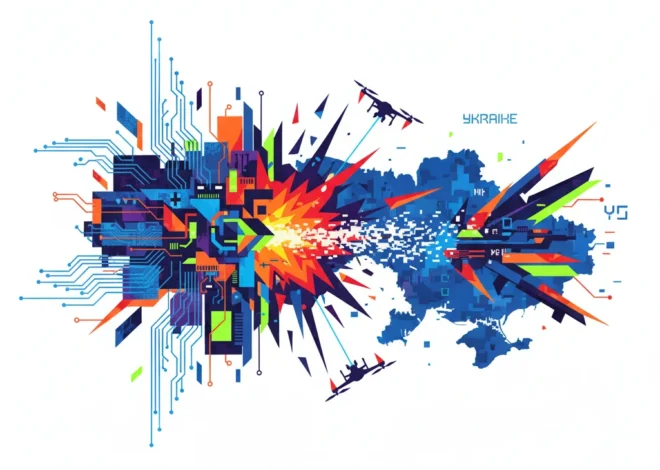
In the rolling fields and shattered cities of Ukraine, a new kind of war is being fought. It’s a conflict defined not just by artillery and armor, but by the quiet buzz of propellers and the flicker of a first-person-view screen. This is the war of the drone, a revolution in military affairs driven by consumer-grade technology, rapid innovation, and a desperate, global scramble for parts. At the heart of this scramble lies a single, dominant supplier: China. And as both Russia and Ukraine race to build and deploy thousands of drones, a critical imbalance is emerging, one that has profound implications for the future of warfare, global tech supply chains, and the role of software on the modern battlefield.
The conflict has become a brutal, real-world testing ground for the power of small, agile, and intelligent unmanned aerial vehicles (UAVs). Forget the multi-million dollar Predator drones of the past; we’re talking about FPV (First-Person View) drones, often assembled from off-the-shelf hobbyist parts, that can be built for just a few hundred dollars. These nimble machines, guided by pilots wearing video goggles, have become the new precision-guided munitions of the 21st century, capable of taking out tanks, artillery, and personnel with terrifying accuracy. But to build them, you need a steady stream of components—motors, flight controllers, cameras, and video transmitters. And nearly all roads for these components lead to China.
The Great Component Scramble: A Tale of Two Supply Chains
A recent investigation has shed light on the stark reality of this technological dependency. While Ukraine has masterfully leveraged a decentralized network of volunteers, crowdfunding, and nimble startups to build its drone arsenal, it faces significant hurdles in acquiring parts. Ukrainian operators often rely on individual volunteers or small-scale smugglers to carry components across the border, navigating a complex web of intermediaries to get what they need.
Russia, on the other hand, appears to have a much more direct and robust pipeline. According to trade data, Russian importers have received tens of thousands of key drone components directly from Chinese manufacturers. The numbers paint a stark picture: one analysis shows that Russia imported over $100 million in drones from China in the first quarter of this year alone, a figure that dwarfs Ukraine’s direct, official imports. This disparity isn’t just a logistical footnote; it’s a strategic factor that could influence the course of the war.
This data highlights the asymmetrical nature of the drone supply chain, where one side benefits from established trade relationships while the other relies on ingenuity and informal networks.
| Aspect of Drone Supply | Russia’s Approach | Ukraine’s Approach |
|---|---|---|
| Sourcing Model | Direct, large-scale imports from Chinese companies. | Indirect sourcing via intermediaries, volunteers, and crowdfunding. |
| Payment Systems | Established banking channels, often leveraging yuan-based payments. | Complex, often personal transactions that can be easily blocked. |
| Scale of Imports | Significant and growing, with direct shipments of drones and components. | Smaller, fragmented shipments that are harder to scale. |
| Key Challenge | Navigating international sanctions and export controls. | Overcoming logistical hurdles and financial blockades. |
The issue is compounded by China’s own policies. While Beijing officially claims neutrality, its actions suggest a different story. Chinese banks are reportedly clamping down on payments from Ukrainian buyers, while Russian businesses find it easier to transact. Furthermore, recent Chinese export controls on drone equipment, ostensibly designed to prevent their use in the conflict, seem to be disproportionately affecting Ukraine’s ability to source parts, as Ukrainian drone assemblers report a sharp drop in available components since the new rules were implemented.
Rosie the Robot is Almost Here: Inside the Race to Build Your Humanoid Helper
Beyond the Propellers: The Unseen War of Software and AI
While the hardware supply chain is critical, it’s a mistake to view this as a purely physical race. The real differentiator on the battlefield is increasingly becoming the software, artificial intelligence, and complex algorithms that bring these machines to life. The physical drone is merely the platform; the code is its brain and nervous system.
This is where the battle shifts from factory floors to developer desktops. Both sides are engaged in a relentless cycle of innovation, pushing the boundaries of what’s possible with drone technology:
- Autonomous Navigation: In an environment saturated with electronic warfare (EW) and GPS jamming, the ability for a drone to navigate and strike a target autonomously is a game-changer. This requires sophisticated machine learning models trained to recognize terrain and targets without human intervention.
- Cybersecurity and Counter-Measures: Drones are vulnerable. They can be hijacked, their video feeds can be intercepted, and their control signals can be jammed. This has sparked a cat-and-mouse game of cybersecurity, with engineers on both sides writing and rewriting code to create more resilient communication protocols and encrypted data links. Effective programming is the shield in this digital duel.
- AI-Powered Targeting: The next frontier is equipping drones with onboard AI that can independently identify and prioritize targets. Imagine a swarm of drones released in a general area, using machine vision to locate and engage enemy armor without a human pilot guiding each one. This level of automation would fundamentally change battlefield calculus.
- Data Processing and the Cloud: The sheer volume of video and sensor data collected by drones is immense. Processing this intelligence requires powerful backend systems, often leveraging cloud infrastructure to analyze footage, identify patterns, and provide commanders with real-time situational awareness. In some cases, this intelligence pipeline could even be structured as a SaaS (Software as a Service) platform for military units.
This has massive implications for tech professionals, entrepreneurs, and startups. It forces a hard look at supply chain resilience and the geopolitical risks baked into our hardware. Furthermore, the concept of “dual-use” technology is no longer an abstract policy debate; it’s a reality where a camera sold for a commercial drone can be used for artillery spotting the next day. This conflict is a wake-up call: the lines between civilian and military tech are irrevocably blurred, and the ethical and security challenges for the entire tech ecosystem are more profound than ever. The future may belong to those who can build secure, resilient, and politically insulated supply chains.
The Startup Spirit vs. The State Machine
One of the most fascinating aspects of this drone war is the contrast in innovation models. Ukraine’s efforts are a textbook example of agile, decentralized problem-solving, much like a thriving startup ecosystem. Dozens of small groups, funded by everything from international aid to bake sales, are constantly experimenting, iterating, and sharing designs. A new software patch to counter a Russian jamming technique can be developed, tested, and deployed to thousands of drones in a matter of days. This grassroots innovation is a powerful asymmetric advantage.
Beyond the Hype: What Will AI Actually Look Like in 2026?
Russia, with its top-down, state-controlled defense industry, has been slower to adapt, initially relying on larger, more conventional drones like the Orlan-10. However, they are learning and adapting, leveraging their state-level purchasing power to secure the components Ukraine struggles to get. The conflict is a test of two philosophies: can the distributed, agile creativity of a network of startups out-innovate the centralized, resource-rich power of a state-backed war machine?
The answer likely lies in who can most effectively integrate hardware with superior software and AI. As one Ukrainian drone operator noted, “The winner of this war will be the one with the more advanced technology.” And today, advanced technology means smarter code, more resilient networks, and more intelligent automation.
The New Space Race: How a UK Startup Beat Peter Thiel to a Slice of the Heavens
The Software-Defined Battlefield is Here
The race for Chinese drone components is more than just a logistical challenge in a regional conflict. It is a glimpse into the future of warfare—a future where conventional military might is augmented, and in some cases supplanted, by clever code, resilient networks, and secure access to a globalized tech supply chain.
For the tech world, this is a sobering moment. It underscores that the tools and platforms we build—from SaaS products and cloud computing to AI algorithms and open-source programming libraries—have implications far beyond the commercial sphere. The conflict in Ukraine is proving that the next great arms race may not be for hypersonic missiles, but for the microchips, sensors, and, most importantly, the brilliant software engineers who can turn a simple piece of hardware into a decisive strategic asset.