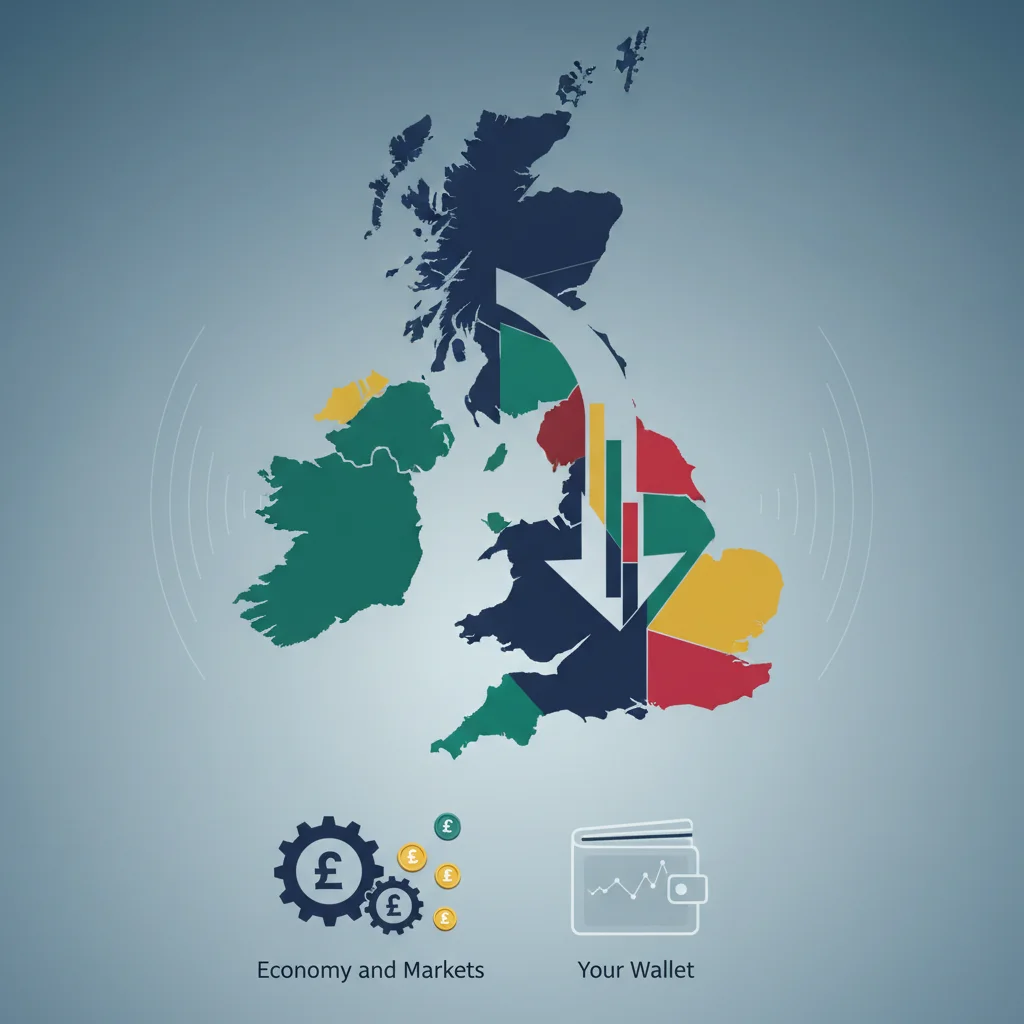
The UK’s Paycheck Puzzle: What Slowing Wage Growth Means for the Economy, Markets, and Your Wallet
A Cooling Labour Market: Unpacking the UK’s Latest Economic Signals
The latest dispatches from the UK’s economic front line have sent a clear, albeit complex, signal: the engine of wage growth is throttling down. Official figures have confirmed that the pace of private sector wage growth has decelerated to its slowest rate in five years, accompanied by a notable drop in company payrolls. On the surface, this might seem like straightforwardly negative news, painting a picture of a struggling workforce and a contracting economy. However, in the intricate world of modern economics, the reality is far more nuanced. This slowdown is a critical data point that will influence everything from the Bank of England’s next interest rate decision to corporate investment strategies and the performance of the stock market.
For investors, finance professionals, and business leaders, these figures are not just headlines; they are crucial indicators of the economic climate. They represent a potential turning point in the UK’s long and arduous battle against inflation, a battle that has defined monetary policy for the past two years. But is this slowdown a sign of a successful “soft landing,” or is it a precursor to a more challenging economic downturn? In this deep dive, we will dissect the numbers, explore the broader context, analyze the ripple effects across the financial landscape, and provide actionable insights for navigating the path ahead.
Decoding the Data: A Closer Look at the Numbers
To fully grasp the implications, we must first understand the data itself. The Office for National Statistics (ONS) provides a comprehensive snapshot of the UK labour market, and the latest release contains several key metrics that warrant close attention. The headline figure—the slowdown in wage growth—is the most significant signal for economists watching for signs of cooling inflation.
Here’s a breakdown of the key indicators from recent reports:
| Economic Indicator | Recent Trend | Implication |
|---|---|---|
| Private Sector Wage Growth | Slowed to the lowest rate in five years | Reduced inflationary pressure, but less purchasing power for consumers. |
| Company Payrolls | Experienced a drop, indicating a softening in hiring. | Suggests businesses are becoming more cautious about expansion and costs. |
| Unemployment Rate | Remains relatively low but is ticking upwards. | A loosening labour market gives the Bank of England more room to maneuver. |
| Economic Inactivity | Shows a slight decrease, a positive sign of more people re-entering the workforce. | Could help alleviate labour shortages but also adds complexity to the overall picture. |
The slowdown in wage growth is particularly crucial. For months, the Bank of England has been concerned about a potential “wage-price spiral”—a cycle where rising wages force companies to raise prices, which in turn leads workers to demand higher wages. This data suggests that this spiral may be breaking, a development the Bank has been actively trying to engineer through its series of interest rate hikes. As one analyst noted, this is a sign that the “labour market is now loosening” (source: ONS), which is a prerequisite for a sustainable return to the 2% inflation target.
However, the fall in payrolls adds a layer of concern. It indicates that businesses are not just moderating pay rises; they are also scaling back on hiring. This could be an early warning sign of weakening business confidence and a potential precursor to a broader economic slowdown.
The Unseen ROI: Why a Local Baby Bank is a Masterclass in Economic Resilience and Smart Investing
The Bank of England’s Dilemma: A Pivot to Rate Cuts?
All eyes now turn to Threadneedle Street. The Bank of England’s Monetary Policy Committee (MPC) has held interest rates at a 16-year high of 5.25% for some time, citing persistent inflationary pressures, particularly from the services sector and the tight labour market. This new data fundamentally alters that narrative.
With wage growth easing, one of the main pillars supporting a “higher for longer” interest rate stance is weakening. This significantly increases the probability of an interest rate cut in the coming months. The financial markets are already pricing this in, with traders adjusting their bets on the timing and magnitude of the first cut. A move to lower interest rates would have profound effects across the economy:
- Mortgages and Loans: Lower rates would bring relief to homeowners and businesses, reducing borrowing costs and potentially stimulating the housing market and corporate investment.
- Banking Sector: While lower rates can squeeze bank profit margins (Net Interest Margin), they can also reduce the risk of loan defaults and spur lending activity, creating a mixed impact on banking stocks.
- Currency: An interest rate cut, or the expectation of one, typically weakens a country’s currency. A cheaper Pound could boost exports but would also make imports more expensive, potentially adding a small amount of inflationary pressure.
The MPC’s decision is not simple. Cut too early, and they risk inflation flaring up again. Wait too long, and they risk tipping the economy into a recession. This data pushes the needle firmly towards the “cut sooner” camp, but the Bank will want to see a consistent trend before committing. As a recent Bank of England report highlighted, the committee remains data-dependent, watching for conclusive evidence that inflation is sustainably returning to its target.
The Silent War on the Dollar: Why Legal Attacks on the Fed Threaten Global Financial Stability
Impact on Investing and the Stock Market
For investors, this shift in the economic landscape requires a strategic reassessment. A slowing economy with the prospect of lower interest rates creates both challenges and opportunities in the stock market and other asset classes.
Sector-Specific Impacts:
- Consumer Discretionary: Companies selling non-essential goods and services (e.g., retail, travel, hospitality) are most vulnerable to slowing wage growth. With less disposable income, households will likely cut back on this type of spending first. Investors in this sector should be cautious.
- Defensive Sectors: Businesses in sectors like utilities, consumer staples (food, household goods), and healthcare tend to perform better in a slowing economy. Their products and services are essential, making their revenues more resilient.
- Growth and Technology Stocks: The impact here is twofold. A weaker economy can hinder growth prospects. However, the prospect of lower interest rates is generally positive for growth stocks, as it makes their future earnings more valuable in today’s terms (a concept known as discounting). Fintech and other financial technology firms might see increased demand as companies look for efficiency gains to offset margin pressures.
- Financials: As mentioned, the banking sector faces a mixed outlook. Insurance companies, however, may benefit as lower interest rates can increase the value of their fixed-income investment portfolios.
The key takeaway for those involved in trading and investing is the importance of diversification and a focus on quality. Companies with strong balance sheets, consistent cash flow, and a durable competitive advantage are best positioned to weather economic uncertainty.
The Fintech and Blockchain Angle: Innovation in a Constrained Economy
Economic shifts often act as catalysts for technological innovation, and this period is no different. The challenges posed by a slowing economy can accelerate the adoption of financial technology (fintech) and even create new use cases for technologies like blockchain.
As businesses and individuals become more cost-conscious, demand for fintech solutions that enhance efficiency and transparency naturally rises. This includes:
- Automated Financial Management: AI-powered budgeting apps and corporate expense management platforms can help users optimize their finances.
- Efficient Payment Systems: Solutions that lower transaction costs and improve cash flow management become more attractive for businesses operating on tighter margins.
- Alternative Lending and Investing: Fintech platforms can provide access to capital for small businesses that may be underserved by traditional banking, while robo-advisors offer low-cost investment management for individuals.
While blockchain’s role is more nascent, its potential for creating more transparent and efficient supply chains or reducing settlement times in financial trading could offer significant cost savings, making it an area of increasing interest during an economic downturn. The push for efficiency is a powerful driver of technological adoption, and the current climate may well be a proving ground for the next generation of fintech and blockchain applications.
Beyond the Balance Sheet: What Milan's Luxury Hotel Boom Reveals About the Global Economy
Conclusion: Navigating the UK’s Economic Crossroads
The easing of UK wage growth and the dip in payrolls are far more than just statistics; they are the clearest signs yet that the economic tectonic plates are shifting. The high-inflation, high-interest-rate environment that has dominated the post-pandemic era appears to be giving way to a new phase characterized by slower growth and the impending prospect of monetary policy easing.
This transition is fraught with risk and opportunity. For the economy, it’s a perilous journey toward a “soft landing.” For the stock market, it signals a rotation in leadership from cyclical to defensive sectors. For businesses and individuals, it demands a renewed focus on financial discipline and strategic planning. The coming months will be crucial. Watching the Bank of England’s commentary, upcoming inflation data, and corporate earnings reports will be essential for anyone looking to successfully navigate this evolving financial landscape. The UK’s paycheck puzzle is complex, but understanding its pieces is the first step toward making informed decisions in the world of finance, investing, and economics.

Related Posts
UK’s Fiscal Surprise: Decoding the December Dip in Government Borrowing and What It Means for Investors
UK’s Unexpected Fiscal Breather: Decoding the December Borrowing Drop and Its Impact on the Economy
