Vietnam at a Crossroads: Inside the High-Stakes Conclave Shaping a Global Economic Powerhouse
The Dragon Ascends: Why All Eyes Are on Vietnam’s Next Move
In the intricate world of global economics and finance, few stories are as compelling as Vietnam’s. Once a nation healing from the scars of war, it has transformed into one of the world’s fastest-growing economies, a darling of foreign investors, and a critical node in the global supply chain. But this economic juggernaut is now at a pivotal crossroads. As the world grapples with geopolitical shifts and economic uncertainty, Vietnam’s ruling Communist Party is convening for its 13th National Congress—a once-in-five-years event that will not only select its next generation of leaders but also hammer out the economic blueprint for the coming decade. For investors, business leaders, and students of international economics, the decisions made behind closed doors in Hanoi will have repercussions that ripple across the globe.
The stakes could not be higher. Vietnam has masterfully navigated the turbulent waters of the US-China trade war, positioning itself as a prime destination for companies seeking to diversify their manufacturing bases. This strategic pivot has supercharged its growth, but it has also placed it under a brighter, harsher international spotlight. Now, the nation must contend with challenges ranging from potential US tariffs to the urgent need for infrastructure upgrades and reforms to its state-owned enterprises. The leadership team that emerges from this conclave will be tasked with steering a more complex and globally integrated economy, making their selection a critical variable in the future of Asian finance and investing.
An Economic Miracle Forged in Geopolitical Fires
To understand the significance of the current moment, one must appreciate the scale of Vietnam’s recent success. For years, the country has posted impressive GDP growth figures, far outpacing regional and global averages. In a year when the global economy contracted due to the pandemic, Vietnam’s economy was a rare bright spot, expanding by an estimated 2.9% in 2020. This resilience is a testament to its successful public health response and its robust economic fundamentals.
A significant catalyst for this growth has been the influx of Foreign Direct Investment (FDI). As multinational corporations like Apple, Samsung, and Google have sought to de-risk their supply chains from over-reliance on China, Vietnam has emerged as the “China Plus One” destination of choice. Its combination of a young, dynamic workforce, competitive labor costs, and a government keen on attracting foreign capital has created a fertile ground for investment. This has had a profound impact on the local stock market, with increased foreign participation and a growing number of listings, particularly in the manufacturing and banking sectors.
However, this success is not without its perils. The very trade diversion that has benefited Vietnam has also led to a burgeoning trade surplus with the United States, which culminated in the Trump administration labeling Vietnam a “currency manipulator” in its final days. This designation, while symbolic for now, carries the threat of punitive tariffs—a risk that the new leadership must skillfully navigate. The challenge is to maintain a stable macroeconomic environment that supports both exports and domestic growth without antagonizing its largest trading partners. This delicate balancing act is central to the field of modern economics and will define Vietnam’s path forward.
The Political Chessboard: Who Will Lead Vietnam?
Unlike Western democracies, Vietnam’s leadership transitions are opaque, consensus-driven processes conducted within the highest echelons of the Communist Party. The country is governed by a collective leadership, traditionally embodied by the “four pillars”: the Party General Secretary (the most powerful position), the State President, the Prime Minister, and the National Assembly Chair.
The central drama of the 13th Congress revolves around the top job. The incumbent General Secretary, Nguyen Phu Trong, a 76-year-old conservative ideologue, has already served two terms and is past the official retirement age. Yet, there is widespread speculation that he may be granted an exemption to stay on for a third term to ensure stability and continue his signature anti-corruption campaign. This campaign, while popular with the public and seen as necessary for cleaning up the business environment, has also been a tool for consolidating political power. His continuation would signal a preference for stability and ideological discipline over generational change.
The main alternative is the current Prime Minister, Nguyen Xuan Phuc. As the architect of much of Vietnam’s recent economic success and its effective COVID-19 response, Phuc is viewed as a more pragmatic, pro-business leader. His ascension to the top post would likely be welcomed by the international investing community, signaling a continued focus on economic reform, international integration, and the modernization of Vietnam’s finance and technology sectors. The choice between these two figures—and other potential candidates—represents a fundamental debate about the country’s direction: continuity versus reform, and ideological purity versus economic pragmatism.
Forging the 2030 Vision: A $4 Trillion Ambition
Beyond the leadership race, the Congress will ratify a new socio-economic development plan for 2021-2025 and a broader strategy running to 2030, with a vision toward 2045. The ambitions are staggering: Vietnam aims to become a developing country with a modern industrial base and upper-middle-income status by 2030, and a developed, high-income country by 2045, the 100th anniversary of its founding. This “Made in Vietnam 2045” vision is predicated on moving the economy up the value chain—from assembling electronics to designing them, from producing basic goods to creating high-tech products and digital services.
To achieve this, Vietnam must tackle deep-seated structural challenges. The process of “equitisation,” or privatizing state-owned enterprises (SOEs), has been sluggish. These often inefficient giants dominate key sectors, crowding out private competition and dragging on economic performance. A renewed push for SOE reform under the new leadership would unlock significant value and could trigger a new wave of activity on the country’s stock market.
Furthermore, the very FDI that has fueled growth has also strained the country’s infrastructure. Ports, roads, and energy grids are struggling to keep pace. The new five-year plan will need to allocate massive capital for these upgrades, creating opportunities for international firms specializing in engineering and project finance. Below is a summary of the ambitious targets discussed in the lead-up to the Congress.
| Metric | Target for 2021-2025 | Vision for 2045 |
|---|---|---|
| Average Annual GDP Growth | 6.5% – 7.0% (source) | Sustained high growth |
| GDP per Capita (by 2025) | $4,700 – $5,000 | High-income status (>$12,000) |
| Digital Economy’s Share of GDP (by 2025) | ~20% | Significantly higher, integrated |
| Key Focus Areas | High-tech manufacturing, SOE reform, infrastructure | Knowledge economy, advanced tech, sustainable development |
The Price of a Typo: Why a Single Correction Matters More Than a Thousand Reports in Modern Finance
The Future of Finance: Embracing a Digital Economy
A critical component of this long-term vision is the digital transformation of the Vietnamese economy. The government is acutely aware that to avoid the “middle-income trap,” it must foster innovation. This opens up a fascinating new frontier in fintech and financial technology. With a young, tech-savvy population and high mobile phone penetration, the potential for digital payments, peer-to-peer lending, and insurtech is immense. A forward-looking government could create regulatory sandboxes to encourage innovation, potentially even exploring central bank digital currencies (CBDCs) and the applications of blockchain technology for secure trading and supply chain management.
The traditional banking sector is also at an inflection point. While it has been a key engine of growth, it requires further reform to enhance transparency and deal with non-performing loans. The new leadership’s stance on foreign ownership caps in banks will be a key indicator of its commitment to liberalization and will be closely watched by international financial institutions looking to increase their footprint in one of Asia’s most promising markets.
Solving the Financial Puzzle: A Crossword-Clue Guide to the Modern Economy
Conclusion: A Calculated Bet on a Rising Star
The 13th National Congress is far more than a domestic political event. It is a defining moment for a nation that has become indispensable to the global economy. The leaders chosen and the policies enacted will determine whether Vietnam can successfully navigate the immense pressures of its own success. They must balance relations with global superpowers, undertake difficult domestic reforms, and invest in the infrastructure and human capital needed to power the next phase of growth.
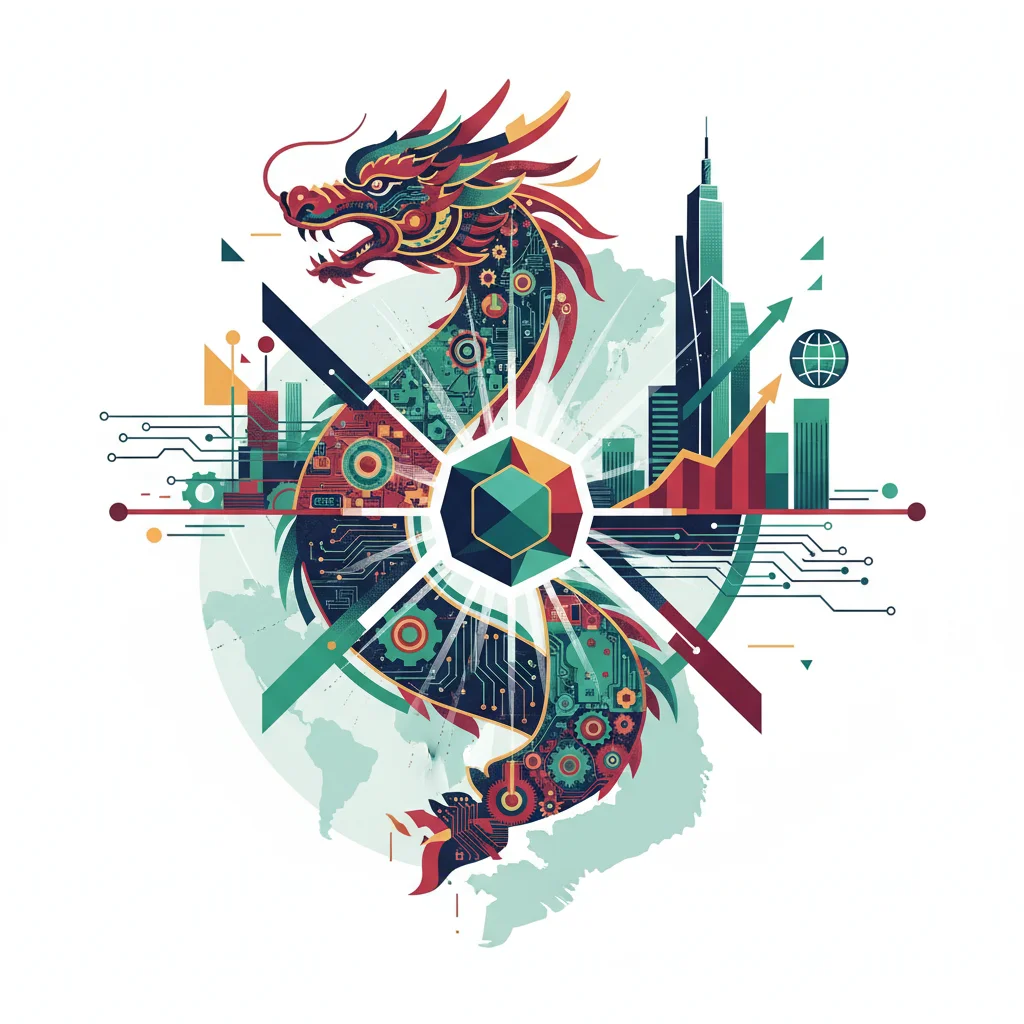
For the global investor and business leader, Vietnam remains a story of profound opportunity, but one that demands a sophisticated understanding of its unique political economy. The path forward is laden with both promise and risk. The decisions made in Hanoi will set the trajectory for the next decade, determining if this rising Asian dragon will continue its spectacular ascent or be slowed by the headwinds of global and domestic challenges. The world is watching, and waiting.