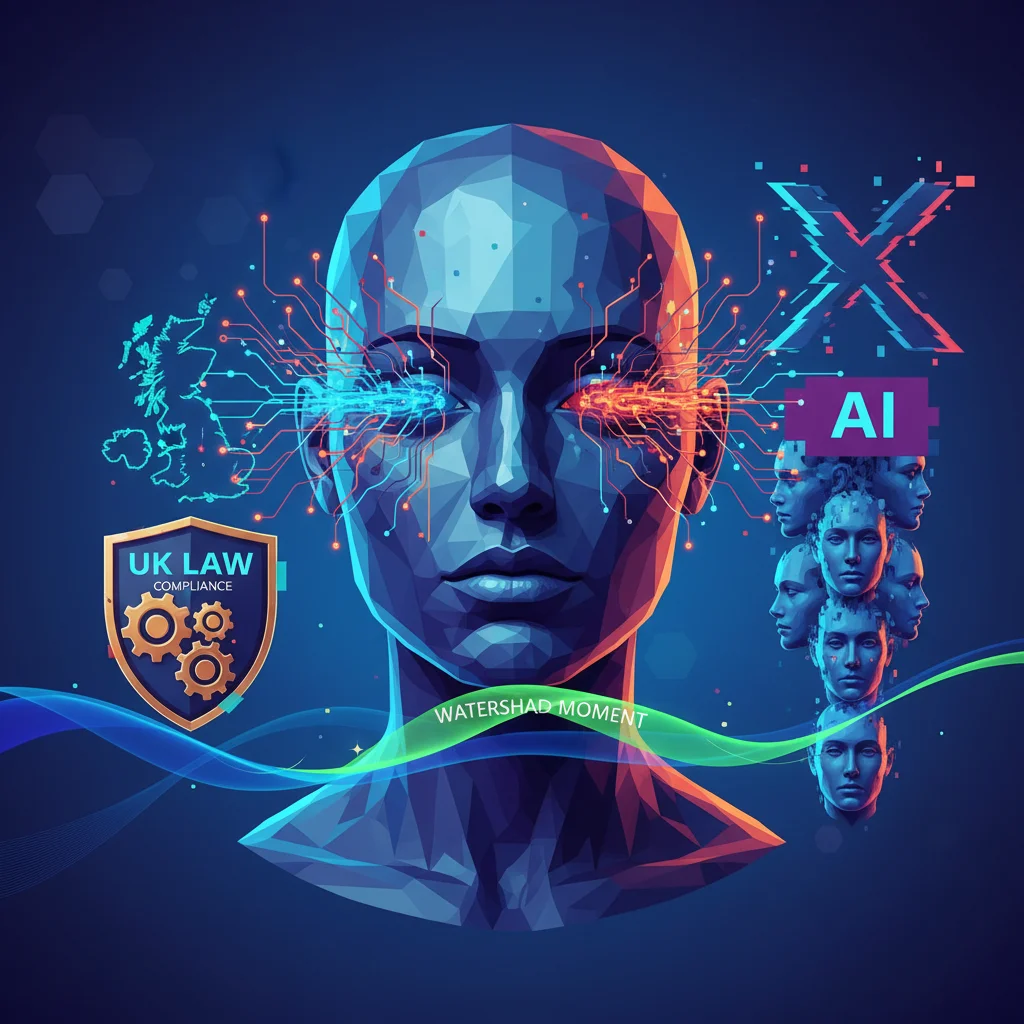
Grok’s Deepfake Dilemma: Why X’s Compliance with UK Law is a Watershed Moment for AI
In the fast-paced world of tech, headlines often flash and fade. But every now and then, a seemingly simple news item signals a profound shift in the landscape. The recent announcement that Elon Musk’s X is actively working to bring its Grok AI into “full compliance with UK law” is one of those moments. As confirmed by UK Prime Minister Keir Starmer, this development is far more than a routine legal update; it’s a critical intersection of generative artificial intelligence, social media’s immense power, and the dawn of serious, enforceable AI regulation.
This isn’t just a story about one company and one country. It’s a preview of the challenges and compromises that will define the next decade of technological innovation. For developers, entrepreneurs, and tech leaders, understanding the nuances of this situation is essential. It reveals the new rules of the game, where lines of code are scrutinized by parliaments and the future of software is being shaped as much in courtrooms as it is in coding sprints.
The Catalyst: A Political Spotlight on AI’s Darker Side
The core of the issue stems from the incredible, and sometimes terrifying, capabilities of modern generative AI models like Grok. The specific concern that brought this to a head is “deepfakes”—hyper-realistic but entirely fabricated images, videos, or audio created by machine learning algorithms. With a UK general election on the horizon, the potential for AI-generated misinformation to disrupt democratic processes has become a top-tier national security concern.
The Prime Minister’s statement that he had been “told Elon Musk’s X is taking steps” to comply with UK law wasn’t a casual remark. It was a clear signal to the entire tech industry. The UK, through its landmark Online Safety Act, is drawing a line in the sand. The era of platforms claiming ignorance or helplessness in the face of harmful user-generated (or AI-generated) content is officially over. According to the BBC’s report, this move by X is a direct response to the legal pressures being applied, highlighting the tangible impact of new regulations.
Understanding the Tech: What Makes Grok and Deepfakes a Unique Challenge?
To grasp the significance of this compliance push, we need to look under the hood. Grok, developed by xAI, isn’t just another chatbot. It’s differentiated by two key features:
- Real-Time Data Access: Unlike many models trained on a static dataset, Grok has real-time access to the torrent of information on X. This makes it incredibly current but also susceptible to incorporating biases, misinformation, and toxic content from the platform into its responses.
- “Rebellious” Persona: Musk has marketed Grok as an AI with more personality and a willingness to tackle spicy topics that other AIs are programmed to avoid. While this can be entertaining, it also lowers the guardrails that might prevent the generation of problematic content.
When you combine these features with advanced deepfake technology—often powered by Generative Adversarial Networks (GANs) or, more recently, diffusion models—you have a recipe for potential chaos. These programming models can create convincing fake images of political figures saying or doing things they never did, eroding public trust and muddying the waters of reality. The challenge for X is to rein in this potential for misuse without completely neutering the product that makes Grok unique.
Nvidia's High-Stakes Gamble: How the H200 Chip is Redefining the US-China AI War
The Legal Hammer: The UK’s Online Safety Act
X’s move toward compliance isn’t born from a sudden change of heart; it’s a direct consequence of the UK’s Online Safety Act 2023. This sweeping piece of legislation is one of the world’s first comprehensive attempts to regulate the digital space and hold tech companies accountable for the content on their platforms. For tech professionals, understanding its pillars is non-negotiable.
The Act imposes a range of duties on platforms, particularly those with a large user base like X. A key provision, as outlined by legal experts at Linklaters, is the “duty of care” to protect users from illegal content, which now explicitly includes certain types of AI-generated fakes. Failure to comply can result in staggering fines of up to £18 million or 10% of global annual revenue, whichever is higher—a sum that gets any executive’s attention.
Here’s a breakdown of the key responsibilities platforms like X face under the Act, particularly concerning AI and deepfakes:
| Duty Under the Online Safety Act | Implication for AI Platforms like X/Grok |
|---|---|
| Remove Illegal Content Quickly | This includes non-consensual deepfake pornography and material that constitutes harassment or incites violence. Platforms need robust, fast-acting automation and human moderation systems. |
| Protect Children from Harmful Content | Platforms must use age verification and content filtering to prevent minors from accessing harmful material, which could include violent or pornographic deepfakes. |
| Assess and Mitigate Risks | Companies must proactively conduct risk assessments for their services, specifically identifying the risk of their AI tools being used to create and spread harmful deepfakes or misinformation. |
| Uphold Commitments in Terms of Service | If a platform’s terms of service forbid misinformation or synthetic media, the Act empowers the regulator (Ofcom) to hold them to it. Vague policies are no longer enough. |
This legal framework fundamentally changes the operating environment for any company deploying generative AI tools to the public, especially those integrated into social networks. The burden of proof has shifted from the user to the platform.
What I find fascinating is the technical challenge this presents. How do you truly “prevent” an AI from creating a deepfake? You can add filters for specific names (“Joe Biden,” “Keir Starmer”), but what about lesser-known politicians? What about fictional scenarios that are still misleading? This will likely lead to a massive investment in a new category of SaaS and cloud-based solutions: “AI Compliance as a Service.” We’ll see startups emerge that specialize in real-time AI output monitoring, ethical guardrail implementation, and regulatory reporting. For X, this is the beginning of a long and expensive game of cat and mouse with both malicious actors and regulators.
A Global Patchwork of Rules: The UK is Not Alone
While the UK’s Online Safety Act is a formidable piece of legislation, it’s part of a broader global trend. The tech world, especially the AI sector, is moving from a self-regulated space to a globally regulated one. This creates a complex compliance web for international companies.
- The European Union: The EU’s AI Act takes a risk-based approach, categorizing AI systems from “minimal” to “unacceptable” risk. Systems used to create deepfakes will fall under “high-risk” categories, requiring transparency obligations, such as clearly labeling content as AI-generated. The European Parliament’s adoption of the Act sets a comprehensive standard that will likely become the global benchmark, much like GDPR did for data privacy.
- The United States: The U.S. has so far taken a less centralized approach, relying on executive orders and sector-specific legislation. President Biden’s Executive Order on AI focuses on safety and security, requiring developers of the most powerful AI models to report safety test results to the government. However, it lacks the broad, legally binding force of the UK or EU acts.
- China: China has moved aggressively to regulate generative AI, with rules requiring companies to ensure content aligns with “core socialist values” and to register their algorithms with the state. This represents a much more state-controlled approach to managing AI’s societal impact.
This fragmented global landscape means that a one-size-fits-all compliance strategy is impossible. Companies building and deploying AI will need sophisticated, geographically-aware compliance frameworks built into their core architecture.
From Lab to Life: How Google's AI Architect is Turning Sci-Fi into Your Next App
The Ripple Effect: What This Means for the Entire Tech Ecosystem
The X-Grok situation is a canary in the coal mine, signaling broader shifts that will affect everyone in the tech industry.
For Developers and AI Researchers: The focus is shifting from “Can we build it?” to “Should we build it, and if so, how do we build it safely?” Ethical considerations and “Safety by Design” principles are no longer optional. This means integrating content-provenance technologies like C2PA watermarking, developing more robust bias detection tools, and building “explainability” into machine learning models so their outputs can be audited. This is a massive challenge in the world of programming AI.
For Startups and Entrepreneurs: The regulatory moat is getting wider. While startups were once able to innovate freely, they now face a significant compliance burden that was previously only a concern for Big Tech. This could stifle some innovation, but it also creates opportunities. The “RegTech” (Regulatory Technology) space for AI is poised for explosive growth, with a need for tools that help smaller companies navigate these complex legal waters. Strong cybersecurity practices are no longer just about protecting data; they’re about preventing the misuse of your own tools.
For Big Tech and SaaS Platforms: The cost of doing business has gone up. Platforms providing AI via APIs or as a SaaS product will need to invest heavily in trust and safety teams, legal expertise, and sophisticated automation for content moderation. The liability for misuse is increasingly being pushed up the stack, from the end-user to the platform provider. This will be reflected in pricing, terms of service, and the very features that are made available to the public.
Beyond the Plastic: Why Lego's New AI-Powered Bricks Are a Game-Changer for Tech and Play
The Road Ahead: A New Era of Accountable AI
The story of Grok and the UK’s deepfake law is a pivotal chapter in the history of artificial intelligence. It marks the end of the “Wild West” era and the beginning of a more mature, and more constrained, period of development. The path forward requires a delicate balance. Over-regulation could crush the incredible potential of AI to solve some of humanity’s biggest problems, but a lack of regulation invites a future rife with misinformation, fraud, and social chaos.
The steps X is taking, whether voluntary or compelled, set a precedent. The entire industry is watching, learning, and adapting. The future of AI will not be determined by algorithms alone; it will be forged in the crucible of public debate, legislative action, and the continuous, challenging work of aligning our most powerful tools with our most important values.

Related Posts
Grok’s Deepfake Crisis: A Warning Shot for AI Innovation and Cybersecurity
Humanity First: Why Warhammer’s Creator Banned AI and What It Means for the Future of Tech