The New Economic Iron Curtain: Decoding Trump’s 25% Tariff Threat on Iran’s Trade Partners
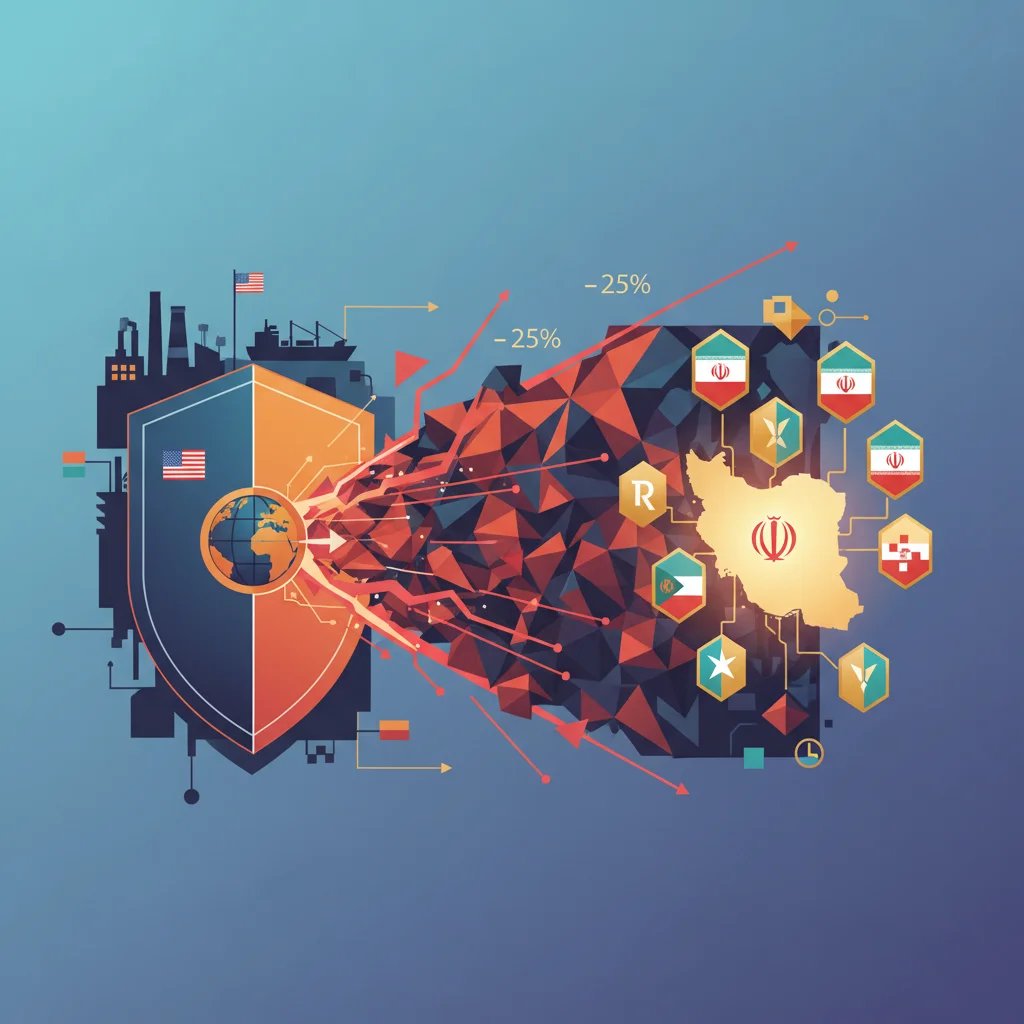
In a move that sent tremors through the global financial markets, former President Donald Trump announced a potential 25% tariff on any country engaging in trade with Iran. This declaration, coming in response to Iran’s severe crackdown on anti-government protests, represents a significant escalation of economic pressure. But this is far more than a simple trade dispute; it’s a complex maneuver with profound implications for international finance, the global economy, and investment strategies worldwide. Understanding this threat requires looking beyond the headline to unpack the mechanics of economic statecraft, identify the key players in the crosshairs, and anticipate the cascading effects on the stock market and beyond.
This proposed policy is not just a tax; it’s a strategic challenge forcing nations to make a difficult choice: continue their economic relationship with Tehran or maintain access to the far larger and more lucrative U.S. market. For investors, business leaders, and finance professionals, this development is a critical signal of rising geopolitical risk and the increasing weaponization of economic policy in international relations.
The Geopolitical Backdrop: From Sanctions to Sweeping Tariffs
The United States and Iran have a long and fraught history of economic conflict, primarily waged through a complex web of sanctions. For decades, Washington has used its dominance in the global financial system to isolate Iran, targeting its oil sector, banking system, and key officials. These measures intensified after the U.S. withdrawal from the Joint Comprehensive Plan of Action (JCPOA), or the Iran nuclear deal, in 2018.
However, this new proposal marks a tactical shift. While traditional sanctions target specific entities or sectors, a blanket 25% tariff on an entire country’s trade with Iran functions as a powerful form of secondary sanction. It doesn’t just penalize Iran; it punishes third-party nations, effectively aiming to build an economic wall around the Islamic Republic. The stated justification is Iran’s human rights record, specifically the violent suppression of recent protests, but the broader goal is to cripple Iran’s economy and curtail its influence in the Middle East. This move forces a global economic realignment, with every nation’s trade policy now under a microscope.
Beyond the Balance Sheet: Why Community 'Warm Hubs' Are the New ESG Frontier for Investors
Who’s in the Crosshairs? A Look at Iran’s Top Trading Partners
To grasp the magnitude of this threat, it’s essential to understand who actually does business with Iran. Despite years of sanctions, Iran maintains significant trade relationships with several key countries, many of whom are also major partners of the United States. A 25% tariff would place these nations in an incredibly precarious economic and diplomatic position.
Below is a table illustrating Iran’s primary trading partners, based on recent available data. The numbers highlight the significant economic stakes involved for these countries.
| Country | Approximate Annual Trade with Iran (USD) | Primary Goods Traded | Key Considerations |
|---|---|---|---|
| China | ~$15-20 Billion | Crude Oil, Petrochemicals, Plastics | Iran’s largest trade partner and a strategic rival to the U.S. Unlikely to comply fully, potentially escalating U.S.-China trade tensions. |
| United Arab Emirates (UAE) | ~$14-18 Billion | Re-exports, Consumer Goods, Machinery | A key U.S. ally but also a historic trading hub for Iran. Faces immense pressure to curtail its deep-rooted commercial ties. |
| Turkey | ~$6-10 Billion | Natural Gas, Oil, Petrochemicals | A NATO ally with a complex relationship with the U.S. and deep energy dependence on its neighbors, including Iran. |
| India | ~$2-4 Billion | Crude Oil (historically), Agricultural Goods | Has significantly reduced Iranian oil imports under U.S. pressure but maintains other trade. Faces a balancing act between the U.S. and its regional energy needs. |
| Iraq | ~$10-12 Billion | Natural Gas, Electricity, Foodstuffs | Heavily dependent on Iranian energy imports. U.S. has historically granted waivers, but this new policy could eliminate that flexibility. |
Note: Trade figures can fluctuate significantly due to sanctions, oil prices, and data reporting challenges. The figures above are estimates based on data from sources like the IMF’s Direction of Trade Statistics and other economic analyses.
The Ripple Effect: Implications for the Global Economy and Your Portfolio
The consequences of such a policy, if implemented, would reverberate across the global economy and financial markets. Investors and business leaders must be prepared for increased volatility and a new layer of risk.
1. Energy Market Volatility
Iran is a major oil producer. While its exports are already constrained by sanctions, a successful tariff regime that further chokes off its trade would remove more supply from the global market. This could lead to a spike in oil prices, fueling inflation and increasing costs for businesses and consumers worldwide. The stock market would react swiftly, with energy stocks potentially rising while sectors sensitive to fuel costs, like transportation and manufacturing, could suffer.
2. Supply Chain Disruptions
The global supply chain is an intricate network. Forcing companies and countries to abruptly sever ties with Iran can cause unforeseen disruptions. Companies sourcing raw materials or components through countries that trade with Iran (like the UAE, a major logistics hub) may face new compliance headaches and logistical nightmares. This uncertainty is a drag on economic efficiency and corporate earnings.
3. Increased Compliance Burden on Banking and Finance
For the banking sector, this represents a massive compliance challenge. Financial institutions would have to intensify their due diligence to ensure they are not, even indirectly, facilitating trade that could trigger these tariffs. This requires significant investment in financial technology (Fintech) for transaction monitoring and sanctions screening. The risk of multi-billion dollar fines for non-compliance would make many banks overly cautious, potentially freezing out legitimate business and slowing the pace of global commerce.
4. A Chilling Effect on Foreign Direct Investment (FDI)
This policy introduces a high degree of political risk into investing decisions. A company considering an investment in a country like Turkey or the UAE must now factor in the possibility of its entire U.S. business being jeopardized by that country’s relationship with Iran. This chilling effect can deter long-term capital investment, slowing economic growth in emerging markets that are caught in the geopolitical crossfire.
Navigating the Uncertainty: Strategies for the Modern Investor
In this volatile environment, a wait-and-see approach is insufficient. Proactive risk management is paramount.
- Geopolitical Risk Analysis: Now more than ever, understanding geopolitics is fundamental to sound investing. Investors must integrate analysis of international relations into their assessment of market, country, and sector risk.
- Diversification: Portfolios should be diversified not only across asset classes but also across geographies, with a careful eye on regions that are heavily exposed to these new trade pressures.
- Focus on Resilient Sectors: Businesses with domestically focused supply chains or those in sectors less sensitive to international trade and energy prices may offer a more defensive position.
- Monitor Policy Signals: The language of international diplomacy is nuanced. Investors should monitor statements from the U.S. Treasury, the State Department, and the governments of affected countries to gauge whether this policy will be implemented strictly or used as a bargaining chip.
The announcement of a 25% tariff on Iran’s trading partners is a watershed moment in modern economics. It signals a willingness to use powerful, broad-based economic tools to achieve foreign policy objectives, even at the risk of alienating allies and destabilizing the global economy. Whether it remains a threat or becomes reality, it has already introduced a new and potent variable into the complex equation of global finance and trade. For those navigating the markets, ignoring it is not an option.
The EV Price War: Why Steep Discounts Signal a Red Light for the Economy