From Scrapped Plans to Smart Capital: The New Birmingham-Manchester Rail Link and Its Investment Ripple Effect
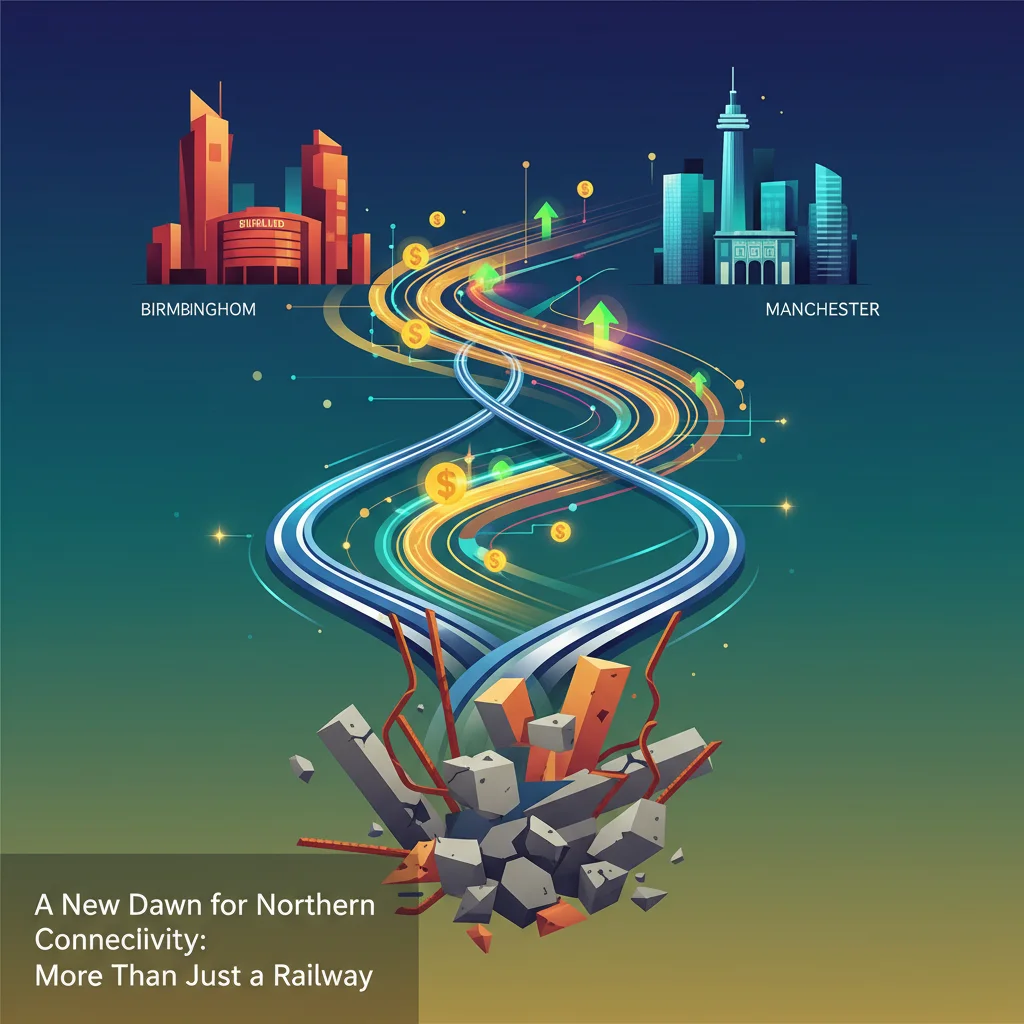
A New Dawn for Northern Connectivity: More Than Just a Railway
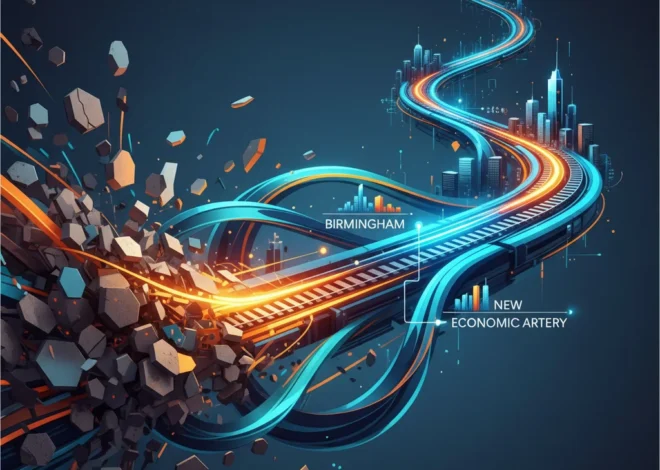
In the world of national infrastructure, few projects carry the weight of symbolism and economic expectation as a major rail line. The recent announcement of a newly planned rail link between Birmingham and Manchester is a pivotal moment for the UK. Rising from the ashes of the controversially scrapped northern leg of HS2, this new initiative represents more than just a transportation solution; it’s a powerful statement about the future of UK infrastructure, regional investment, and the national economy.
For investors, business leaders, and professionals in finance, this development is a critical signal. It demands a closer look beyond the headlines about train tracks and timetables. We must analyze it as a multi-billion-pound case study in public policy, project financing, and long-term economic strategy. This project will not only reshape the physical landscape but also create significant ripples across the stock market, influence regional property values, and present unique opportunities in sectors from construction to financial technology. In this analysis, we will delve into the context of this decision, explore its profound financial implications, and forecast the potential impact on the UK’s investment climate.
The Ghost of Ambition: Understanding the HS2 Reversal
To appreciate the significance of the new Birmingham-Manchester link, one must first understand the project it replaces. High Speed 2 (HS2) was envisioned as a landmark of 21st-century British engineering—a high-speed spine that would connect London to the major cities of the Midlands and the North, slashing journey times and supercharging economic growth.
However, the project became a victim of its own colossal ambition. The northern leg, intended to connect Birmingham with Manchester and Leeds, was officially cancelled by Rishi Sunak’s government in October 2023. The primary reasons cited were spiraling costs and chronic delays. The government argued that the original budget had become untenable and that the funds could be better utilized on a host of smaller, regional transport projects under a new plan dubbed “Network North.” In his announcement, the Prime Minister stated the government would reinvest “every single penny” of the £36 billion saved into alternative projects, a move that fundamentally reshaped the landscape of UK infrastructure investing (source).
The cancellation was met with a mixture of relief from fiscal conservatives and profound disappointment from regional leaders in the North, who saw it as a betrayal of the “Levelling Up” agenda. For the financial markets, it introduced a note of uncertainty about the UK’s ability to deliver on large-scale, long-term capital projects.
The Billion-Pound Information Gap: How Overlooked Social Benefits Impact the Broader Economy
Forging a New Path: HS2 vs. The New Link
The new proposal, while still in its early stages, represents a strategic pivot from high-speed revolution to pragmatic evolution. The focus appears to have shifted from outright speed to enhanced capacity, reliability, and cost-effectiveness. Below is a comparative analysis based on available information and expert projections.
| Feature | Original HS2 (Birmingham-Manchester) | Projected New Rail Link |
|---|---|---|
| Primary Goal | Transformative speed (up to 225 mph) and capacity increase. | Significant journey time reduction, enhanced capacity, and improved reliability on existing network frameworks. |
| Estimated Cost | Part of a £72-100bn+ overall project. The northern leg alone was estimated at £36bn+. | Expected to be substantially lower, utilizing a mix of new lines and upgraded existing infrastructure. |
| Infrastructure | Entirely new, dedicated high-speed track, tunnels, and viaducts. | A hybrid model, likely combining new track sections with major upgrades to existing lines. |
| Economic Thesis | Generate massive GVA uplift through radical connectivity, attracting global talent and investment. | Provide a strong, more immediate ROI by resolving current bottlenecks and supporting established economic hubs. |
| Political Risk | Extremely high due to cost, environmental impact, and prolonged disruption. | Lower, as the project is framed as a more fiscally responsible and deliverable alternative. |
The Investment Blueprint: Deconstructing the Financial Opportunities
A project of this scale is a powerful engine for the economy, with financial implications that extend far beyond the initial government outlay. For the astute investor and business leader, understanding these ripples is key.
Project Financing and the Role of Banking
The funding model will be a critical area to watch. While a significant portion will undoubtedly come from the public purse (reallocated from the HS2 budget), the government will likely seek private capital through Public-Private Partnerships (PPPs). This opens the door for institutional investors, pension funds, and sovereign wealth funds to participate in a long-term, stable asset class. Major banking institutions will play a crucial role in underwriting, syndicating loans, and advising on the financial structuring of these complex deals. The success of this financing will be a barometer of international investor confidence in the UK.
Stock Market and Sectoral Growth
The announcement directly impacts the valuation and outlook for several key sectors on the stock market. Investors will be closely monitoring:
- Construction & Engineering: Companies involved in rail construction, civil engineering, and materials supply are obvious beneficiaries.
- Transportation & Logistics: Improved freight and passenger capacity will benefit logistics firms and future train operating companies.
- Real Estate: Areas around the upgraded stations in both Birmingham and Manchester, as well as towns along the route, are likely to see increased property values and development interest.
- Technology & Consulting: Firms specializing in project management, digital signaling, and transport infrastructure technology will see high demand.
Careful analysis and strategic trading in these sectors could yield significant returns as the project moves from plan to reality.
The Digital Infrastructure Layer: A Fintech and Blockchain Frontier?
Modern infrastructure is as much about data as it is about steel. This project offers a unique opportunity to integrate cutting-edge financial technology. We can anticipate the use of fintech solutions for seamless, multi-modal ticketing systems, dynamic pricing models based on demand, and integrated payment platforms. Furthermore, while speculative, the underlying project management could leverage technologies like blockchain for transparent and immutable tracking of the supply chain, ensuring materials are sourced sustainably and payments to contractors are processed efficiently and securely. This convergence of physical and digital infrastructure is where true 21st-century value is created. The lessons learned in applying modern economics and technology here could set a new standard for future projects.
Beyond the Balance Sheet: Why Community 'Warm Hubs' Are the New ESG Frontier for Investors
The Broader Context: Rebuilding Confidence and Regional Powerhouses
Beyond the direct financial metrics, this rail link is a cornerstone of the UK’s regional development strategy. For decades, a key challenge in UK economics has been the productivity gap between London and other regions. A reliable, fast connection between the UK’s second and third-largest city economies is a direct intervention aimed at closing that gap. A 2013 KPMG report on the original HS2 project, while focused on a different scope, highlighted that improved connectivity could add billions in Gross Value Added (GVA) to regional economies by fostering business collaboration, expanding labor markets, and making cities more attractive hubs for investment (source). The principles remain the same for this new link.
Successfully delivering this project is also crucial for the UK’s international reputation. In a post-Brexit world, demonstrating the capacity to execute complex, long-term infrastructure plans is essential for attracting foreign direct investment. It sends a message that the UK is a stable, reliable, and forward-looking place to do business, a core tenet of the government’s National Infrastructure Strategy which emphasizes quality infrastructure as a driver of economic recovery and global competitiveness (source).
The Billion Standoff: How Two European Energy Giants are Navigating Venezuela's Debt Maze
Conclusion: The Journey Ahead
The new Birmingham to Manchester rail link is far more than a substitute for a cancelled plan. It is a pragmatic, financially-attuned response to the UK’s pressing need for enhanced connectivity and regional growth. It represents a shift in thinking—from revolutionary, high-cost transformation to evolutionary, high-value enhancement. For the financial community, it presents a rich tapestry of opportunities, from direct project investing and stock market plays to the deployment of innovative fintech solutions. The journey to its completion will be long and complex, but its potential to unlock economic value, reshape regional dynamics, and restore faith in British infrastructure makes it one of the most important economic stories to watch in the coming decade.