Fed Under Siege: Powell Faces Criminal Probe in Unprecedented Challenge to Central Bank Independence
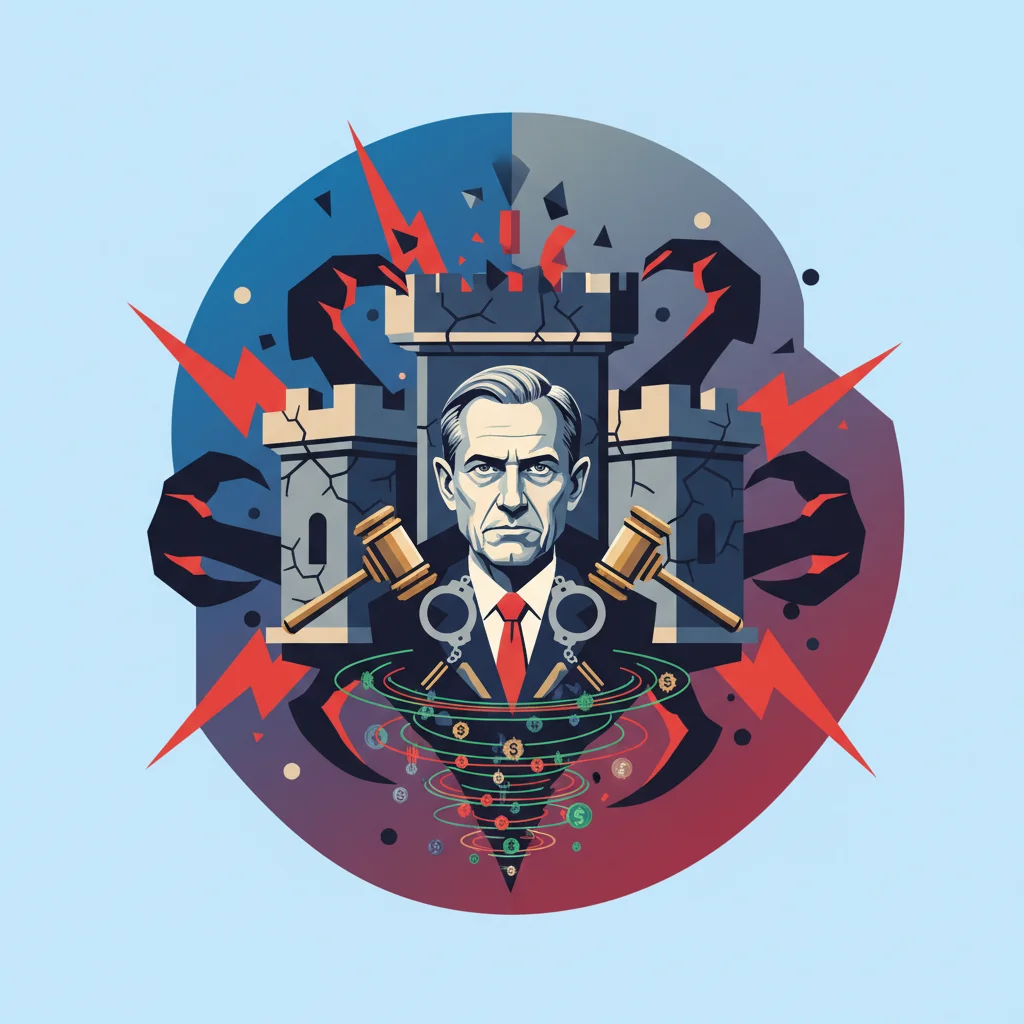
In a move that has sent shockwaves through global financial markets, the bedrock of American economic stability—the Federal Reserve—is facing an unprecedented political and legal assault. In a stunning development first reported by the Financial Times, US prosecutors have launched a criminal investigation into Federal Reserve Chair Jerome Powell. The central bank chief has been served with grand jury subpoenas, an aggressive legal step that signals a serious and deepening inquiry.
Even more startling is the context provided by Powell himself. According to the report, the Fed Chair alleges that this investigation is not rooted in legitimate legal concerns but is direct retaliation for his refusal to bow to political demands to cut interest rates. This explosive claim transforms a legal proceeding into a direct confrontation over the independence of the world’s most powerful central bank, with profound implications for the US economy, global investing, and the very fabric of our financial system.
Unpacking the Unprecedented: A Grand Jury and a Defiant Fed
To fully grasp the gravity of this situation, it’s crucial to understand what a grand jury subpoena entails. This is not a casual inquiry. A grand jury is a panel of citizens empowered by the law to conduct legal proceedings, investigate potential criminal conduct, and determine whether criminal charges should be brought. A subpoena from this body carries the full weight of the law, compelling individuals to provide testimony or evidence. For such an instrument to be aimed at a sitting Federal Reserve Chair is simply unheard of in modern history.
The core of the conflict, as framed by Powell, is a battle over monetary policy. The Federal Reserve operates under a dual mandate from Congress: to promote maximum employment and stable prices. Navigating this mandate often requires making unpopular decisions, such as raising interest rates to combat inflation, which can slow economic growth in the short term. Political actors, often focused on shorter election cycles, frequently pressure the Fed to keep rates low to stimulate the economy and boost their political fortunes.
Powell’s assertion that the investigation is “retaliation for refusal to bow to demand to cut interest rates” (source) suggests a dangerous politicization of the Justice Department, using the threat of criminal prosecution to influence monetary policy. This strikes at the heart of the principle of central banking independence, a concept established to prevent politicians from printing money to fund spending, which historically leads to hyperinflation and economic ruin.
The Tariff Trap: Why U.S. Trade Policy Is Being Undermined by a Hidden Economic Force
Historical Echoes: The Long-Fought Battle for Fed Independence
The tension between the White House and the Federal Reserve is not new, but this latest development marks a dramatic escalation. Throughout history, presidents have sought to influence the central bank’s decisions.
- The 1970s: President Richard Nixon famously pressured Fed Chair Arthur Burns to keep monetary policy loose to aid his 1972 reelection campaign, a move many economists believe contributed to the runaway inflation of that decade.
- The 2010s: President Donald Trump frequently and publicly criticized Chair Powell for raising interest rates, breaking a long-standing tradition of presidents refraining from commenting on Fed policy.
However, these past instances involved public criticism and behind-the-scenes pressure. The use of a criminal investigation as a tool of persuasion is a line that has never been crossed. This move threatens to permanently damage the credibility and perceived impartiality of the Federal Reserve, a cornerstone of US and global economic stability. If the Fed is seen as just another political entity, its ability to manage the economy effectively will be severely compromised.
Market Mayhem: Gauging the Financial Fallout
The immediate reaction from the financial markets would likely be swift and severe. Uncertainty is the enemy of stable markets, and an event of this magnitude injects a colossal dose of it. The stock market would almost certainly experience a sharp downturn as investors flee from risk.
Here’s a breakdown of the potential market reactions across different asset classes:
| Asset Class | Potential Immediate Impact | Rationale |
|---|---|---|
| Equities (Stock Market) | Strongly Negative | Massive increase in systemic risk and policy uncertainty, leading to a sell-off. The VIX (volatility index) would likely spike. |
| US Treasuries (Bonds) | Mixed to Positive (Initially) | A classic “flight to safety” could drive demand for long-term bonds, pushing prices up and yields down. However, long-term credibility damage could eventually weaken demand. |
| US Dollar (USD) | Negative | The dollar’s status as the world’s primary reserve currency is built on the stability and credibility of US institutions, chiefly the Fed. This event directly undermines that trust. |
| Gold & Commodities | Strongly Positive | As a traditional safe-haven asset and a hedge against institutional instability and potential inflation (if the Fed is forced to print money), gold would likely see a surge in demand. |
| Cryptocurrencies | Uncertain but potentially Positive | Proponents of decentralized finance would point to this as a prime example of why systems like Bitcoin, free from government control, are necessary. This could drive speculative inflows. |
The long-term damage could be even more significant. Global investors rely on the Fed’s independence when they buy US debt and hold US dollars. If that trust erodes, the US could face higher borrowing costs, and the dollar’s dominance could wane. This would be a seismic shift in the global order of finance.
Beyond the Acronym: Why 'TACO' is a Multibillion-Dollar Word in Global Finance
The Ripple Effect: From Banking and Fintech to the Global Economy
The shockwaves from this investigation extend far beyond the trading floors. The entire financial ecosystem, from traditional banking to cutting-edge financial technology, would be impacted.
For the banking sector, the uncertainty over future interest rate paths would become a nightmare. Banks make long-term decisions based on their expectations of Fed policy. If policy can be swayed by criminal threats, it becomes impossible to plan, potentially leading to a credit crunch as banks become more risk-averse. The stability of the entire banking system, which relies on a predictable regulatory and monetary environment, would be threatened.
The burgeoning fintech industry would also feel the chill. Innovation in finance thrives on stability and clear regulatory frameworks. A constitutional crisis at the heart of the financial system would scare away venture capital and make it harder for startups to raise funds and partner with established institutions. The entire forward momentum of financial technology in the US could be jeopardized.
Furthermore, this crisis of confidence could accelerate discussions around alternatives to the current system. While still a niche part of the conversation, technologies like blockchain and decentralized finance (DeFi) are built on the premise of removing central intermediaries. An event that so profoundly demonstrates the vulnerabilities of a centralized system could lend significant credibility to these emerging alternatives over the long term, fundamentally altering the landscape of economics and trading.
Framing Your Financial Future: Lessons in Strategic Investing from Architectural Design
A Dangerous Precedent for the Future
As this story unfolds, we are left with more questions than answers. Is this a legitimate investigation into actual wrongdoing, or is it, as Powell claims, a politically motivated attack? The initial report provides only the opening salvo in what is sure to be a protracted and damaging battle.
What is certain is that the mere existence of this investigation is a dangerous precedent. It threatens to shatter the decades-long consensus that monetary policy must be insulated from partisan politics. For investors, business leaders, and the general public, the implications are immense. The stability of our economy, the value of our savings, and the global standing of the United States are all on the line. The world is watching, and the path forward is fraught with peril.