Beyond Wall Street: Uncovering Alpha in the Untapped Economy of Harlem’s Art
In the world of finance and investing, the relentless pursuit of alpha—the excess return of an investment relative to the return of a benchmark index—often leads professionals down familiar paths. We analyze earnings reports, scrutinize stock market trends, and build complex models based on established economic principles. Yet, a recent letter to the Financial Times by Guy Humphrey of New York served as a poignant reminder that some of the most profound value propositions lie far from the trading floors of Wall Street, instead displayed openly on the streets of communities like Harlem.
The letter highlights “bold works of art you can only see in Harlem,” such as Faith Ringgold’s vibrant glass mosaics at the 125th Street subway station and LeRone Wilson’s evocative “Once Upon a Time” sculpture. To the casual observer, these are beautiful cultural artifacts. To the astute investor, business leader, or finance professional, they represent something more: a tangible manifestation of cultural capital, a leading indicator of economic revitalization, and a case study in an alternative asset class with profound, untapped potential.
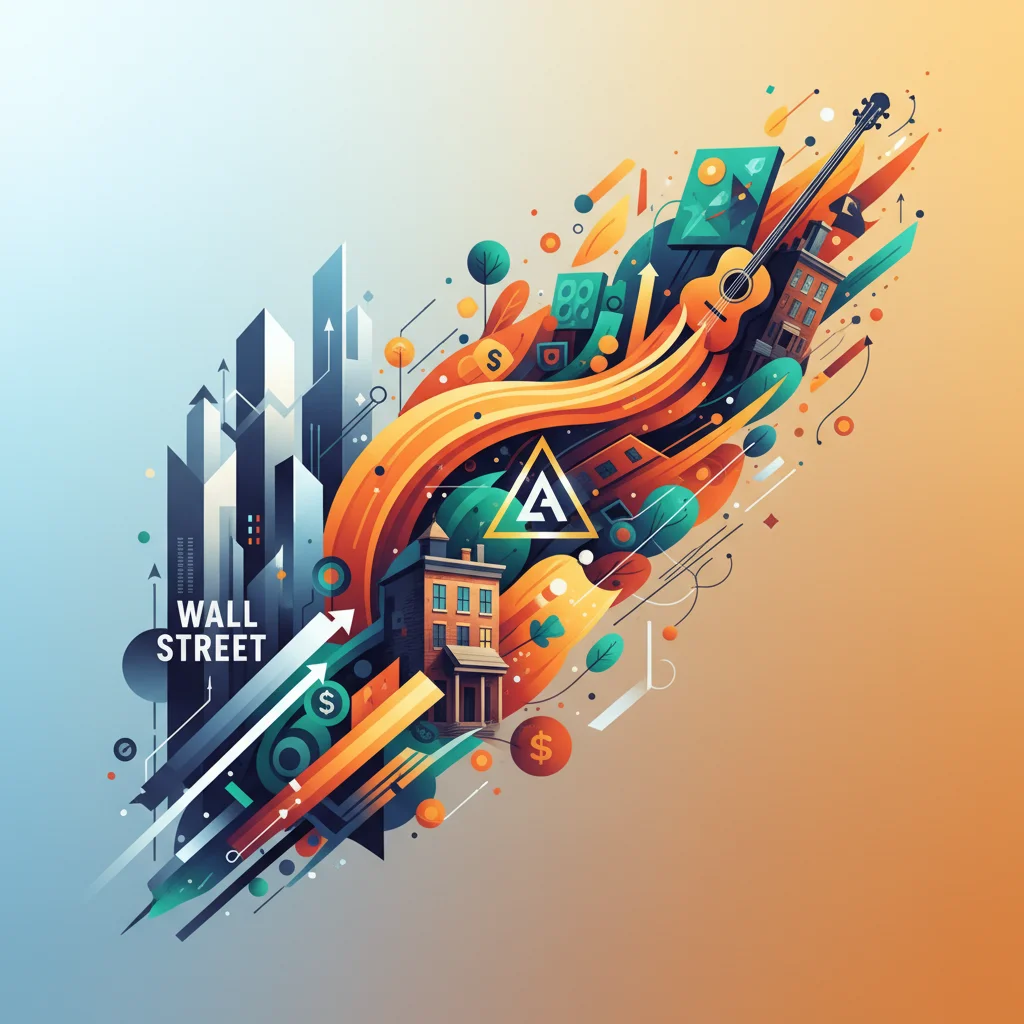
This post will explore the intersection of art, community, and economics, using Harlem’s public art scene as a lens. We will delve into how cultural assets can be viewed as a unique investment vehicle, the role financial technology is playing in democratizing this market, and why the next great investment opportunity might be found not in a prospectus, but on a neighborhood corner.
The Economics of Cultural Capital: Valuing the Invaluable
Before we can analyze the investment potential, we must first understand the economic framework. Cultural capital, a term coined by sociologist Pierre Bourdieu, refers to the social assets of a person (education, intellect, style of speech, etc.) that promote social mobility. When applied to a community like Harlem, the concept expands to include shared historical narratives, artistic traditions, and collective identity. The public art of Harlem is a powerful embodiment of this collective cultural capital.
These artworks are not just decorative; they are economic engines in disguise. They attract tourism, foster community pride, and enhance the quality of life, which in turn can lead to increased property values and new business formation. A study by Americans for the Arts revealed that the nonprofit arts and culture industry generates $151.7 billion in economic activity annually. This demonstrates a direct, measurable link between a thriving arts scene and a robust local economy.
For investors, this presents a dual opportunity:
- Direct Investment: The art market itself, which is increasingly accessible.
- Indirect Investment: Recognizing that a vibrant cultural landscape is a bullish signal for real estate, local commerce, and community-focused development projects.
Beyond the Acronym: Why 'TACO' is a Multibillion-Dollar Word in Global Finance
Art as an Alternative Asset: A Portfolio Diversifier
For decades, fine art has been the purview of the ultra-wealthy, a tangible asset class known for its potential for significant appreciation and, crucially, its low correlation to traditional financial markets. When the stock market is volatile, assets like art often hold their value or even appreciate, making them an excellent tool for portfolio diversification. According to a 2023 report by Deloitte, 85% of wealth managers surveyed stated they believe art and collectibles should be included in a wealth management offering.
While the works of Ringgold and Wilson in Harlem are public trusts, the principles of their value apply to the broader market for works by similar artists. The value is derived from the artist’s reputation, historical significance, rarity, and provenance. The art of the Harlem Renaissance, for example, has seen a dramatic increase in valuation as institutions and collectors seek to diversify their collections and acknowledge previously underrepresented artists.
To illustrate its performance, let’s compare a leading art market index to the S&P 500, a common benchmark for the U.S. stock market.
| Asset Class | 10-Year Annualized Return | Correlation to Equities | Primary Value Driver |
|---|---|---|---|
| Artprice100© Index (Fine Art) | Approx. 5-9% (Varies) | Low (approx. 0.1-0.3) | Aesthetics, Rarity, Provenance, Cultural Significance |
| S&P 500 Total Return | Approx. 12-14% (Varies) | 1.0 | Corporate Earnings, Economic Growth, Monetary Policy |
Note: Returns are illustrative and vary significantly based on the time period and specific art market segment. The key takeaway is the low correlation, not necessarily outperformance. (Source for Artprice100© concept)
The Fintech Disruption: Democratizing the Art Market
The high barrier to entry has historically kept most investors out of the fine art market. A single painting by a renowned artist can cost millions. However, the rise of fintech and blockchain technology is radically transforming the landscape of art investing, making it more accessible than ever before.
Fractional Ownership
Platforms like Masterworks and Yieldstreet now allow accredited investors to buy shares in multi-million dollar paintings, much like buying stock in a company. This “fractionalization” breaks down a high-value, illiquid asset into smaller, tradable units. This innovation in financial technology allows for portfolio diversification into art with a much lower capital outlay.
Blockchain and Provenance
One of the biggest risks in art trading is authenticity and provenance (the history of ownership). Blockchain technology offers a powerful solution. By creating an immutable, decentralized ledger, a piece of art’s entire history—from creation to every subsequent sale—can be tracked transparently. Non-Fungible Tokens (NFTs) can act as digital certificates of authenticity, permanently linking a physical artwork to a secure digital record. This reduces fraud, increases trust, and enhances the liquidity of the asset, all of which are critical factors in any mature financial market.
Beyond 2050: The Urgent Financial Case for Tackling Near-Term Climate Change
The Macro View: Harlem as a Microcosm of a New Investment Thesis
Stepping back, the story of Harlem’s art is a microcosm of a larger investment thesis relevant to business leaders and finance professionals. The thesis is this: long-term, sustainable economic growth is inextricably linked to cultural vitality and community well-being.
Investing in or alongside cultural infrastructure is not philanthropy; it’s smart capital allocation. When a neighborhood develops a strong cultural identity, as Harlem has through its art, music, and history, it creates a “moat” that is difficult to replicate. This cultural moat attracts talent, drives innovation, and builds a resilient local economy that is less susceptible to generic market fluctuations. The bold art mentioned in the original FT letter is not just a landmark; it’s a cornerstone of an economic and social ecosystem.
Forward-thinking investors and financial institutions are beginning to recognize this. We see the rise of impact investing funds, ESG (Environmental, Social, and Governance) mandates, and a greater emphasis on “place-based” investment strategies. These approaches understand that profit and purpose are not mutually exclusive. Supporting the arts ecosystem in a place like Harlem can deliver both a financial return and a social dividend.
The New Gold Rush: Why Investing in Recycled Magnets is a Geopolitical Masterstroke
Conclusion: Reading the Signs Beyond the Ticker Tape
The world of finance is built on data, but the most successful investors know how to read the qualitative signs that precede the quantitative shifts. The vibrancy on display in Harlem—from the subway mosaics to the community sculptures—is a powerful qualitative signal. It speaks to a rich history, a resilient community, and a future brimming with potential.
For the modern investor, banker, or business leader, the lesson is clear. We must expand our definition of “assets” and look for value in the cultural fabric of our communities. By leveraging new tools from fintech and applying proven principles of economic analysis, we can uncover extraordinary opportunities for growth that also enrich society. The next time you’re looking for alpha, you might just find it by looking up from the stock market ticker and taking a walk through a neighborhood like Harlem.