The Arctic Ticking Time Bomb: Why a Greenland-Denmark Rift Could Fracture the Global Economy
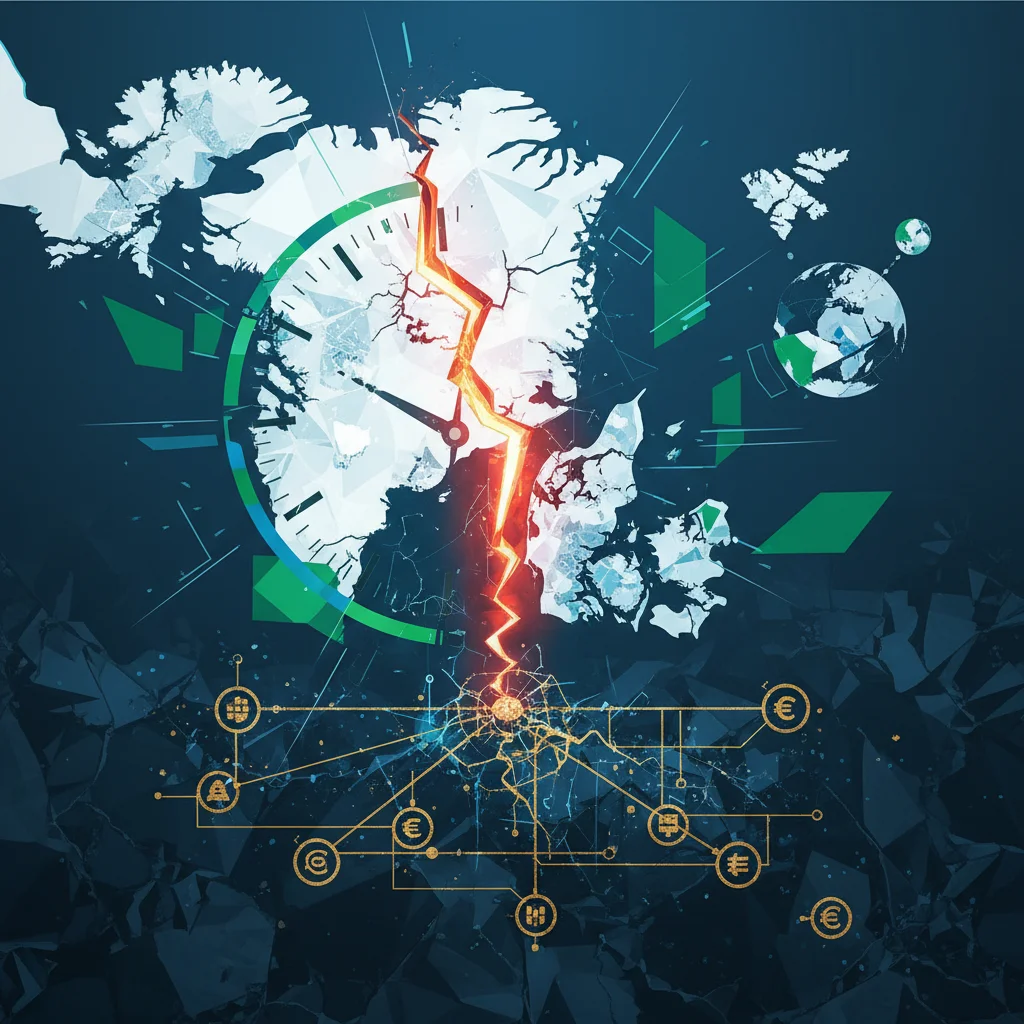
In the grand theater of global finance, our attention is often captured by the headline-grabbing drama of stock market fluctuations, central banking decisions, and fintech innovations. We meticulously track inflation data and dissect corporate earnings. Yet, some of the most profound risks to our economic stability are not found in spreadsheets or trading algorithms, but in the silent, icy landscapes of the far north. One such risk, highlighted in a prescient letter by Tim Reilly of the Scott Polar Research Institute, is the simmering tension between Greenland and Denmark—a potential fallout that could send shockwaves through the European Union and the global economy.
At first glance, it may seem like a distant, regional issue. But to dismiss it as such would be a grave miscalculation. Greenland is not just a vast expanse of ice; it is a treasure chest of the very elements that power our modern world. Its potential separation from Denmark, and by extension its drift from the Western sphere of influence, represents a systemic threat to our supply chains, our green transition, and the very hardware that underpins our digital financial infrastructure. This is a story about geology, geopolitics, and the global economy, and investors would be wise to pay close attention.
The Dragon’s Hoard: Greenland’s Unseen Strategic Value
To understand the magnitude of the risk, one must first grasp the sheer strategic importance of Greenland. While it is a self-governing territory, it remains part of the Kingdom of Denmark, relying on an annual block grant of nearly 4 billion Danish crowns (around $585 million), which accounts for about half of its public budget. This financial lifeline has long been the cornerstone of the relationship, but a powerful independence movement is gaining momentum, fueled by a desire for full sovereignty and control over the island’s immense natural resources.
And what resources they are. Beneath Greenland’s ice sheet lies one of the world’s largest untapped reserves of critical raw materials (CRMs) and rare earth elements (REEs). These are not just obscure entries on the periodic table; they are the lifeblood of the 21st-century economy. They are essential for everything from electric vehicle batteries and wind turbines to smartphones, fighter jets, and the complex servers that power global banking and fintech platforms.
The European Union is acutely aware of its vulnerability in this area. The EU’s Critical Raw Materials Act highlights a stark reality: the bloc is overwhelmingly dependent on a handful of countries, chiefly China, for its supply of these vital minerals. For instance, the EU sources 97% of its magnesium and a significant majority of its rare earths from China. Greenland offers a potential path to diversifying this supply and securing the future of European industry.
To put this in perspective, let’s examine some of the key minerals found in Greenland and their indispensable roles in our modern economy and financial systems.
| Critical Mineral / Element | Primary Use Cases in Modern Economy | Relevance to Finance & Technology |
|---|---|---|
| Neodymium (REE) | High-strength magnets for EV motors and wind turbines | Enables the green energy transition, a major sector for ESG investing |
| Dysprosium (REE) | Improves magnet durability at high temperatures | Crucial for high-performance computing and data centers that support trading and blockchain |
| Zinc & Lead | Galvanizing steel, batteries, construction | Fundamental industrial commodities that act as indicators of economic health |
| Uranium | Nuclear power generation | A key component of the global energy mix, impacting energy prices and utility stocks |
| Platinum Group Metals | Catalytic converters, electronics, hydrogen fuel cells | Essential for both traditional and emerging tech sectors, from automotive to clean energy |
This immense geological wealth transforms Greenland from a remote Arctic territory into a pivotal piece on the global chessboard. The question is no longer *if* these resources will be developed, but *by whom* and for *whose benefit*.
The Tariff Trap: Why U.S. Trade Policy Is Being Undermined by a Hidden Economic Force
A Geopolitical Blind Spot with Trillion-Dollar Consequences
The core of the risk lies in the potential for a messy divorce between Greenland and Denmark. If the independence movement culminates in a complete break, a newly sovereign Greenland, lacking the financial cushion of the Danish block grant, would be forced to seek massive foreign investment to build its economy and exploit its mineral wealth. This is where the geopolitical storm gathers.
Who has the capital, the technical expertise, and the political will to make such a colossal investment? China and Russia are the most obvious candidates. Both have been aggressively expanding their presence in the Arctic, viewing it as a new frontier for resources and strategic positioning. For China, securing a foothold in Greenland would be a monumental geopolitical victory, giving it direct access to the critical minerals it currently dominates and further tightening its grip on global supply chains. For the West, it would be a catastrophic failure.
An independent Greenland aligning with China or another rival would effectively hand over the keys to the West’s green and digital future. The ambitious climate goals of the EU would be held hostage. The cost of building out the infrastructure for the next wave of financial technology could skyrocket. This geopolitical shift would immediately translate into market volatility, impacting the entire global economy.
The New Gold Rush: Why Investing in Recycled Magnets is a Geopolitical Masterstroke
The Market Shock: Translating Arctic Ice into Financial Risk
For those in finance, investing, and business leadership, the challenge is to quantify this seemingly distant geopolitical risk and integrate it into decision-making. The potential fallout is not abstract; it has tangible consequences for the stock market, banking, and the broader economy.
- Investing & Trading: A Greenland-Denmark split would create immense volatility in the commodity markets, specifically for REEs and industrial metals. Mining stocks with Arctic exposure would see their risk profiles rewritten overnight. Investors in green technology and EV manufacturing would face the prospect of severe supply chain disruptions and input cost inflation, directly impacting stock valuations. Shrewd traders would start pricing in a “geopolitical risk premium” on a wide range of European and tech-sector equities.
- Economics & The Economy: From a macroeconomic perspective, the loss of a secure, Western-aligned source of critical minerals would be a significant inflationary shock. It would cripple Europe’s strategic autonomy, making its industrial base more fragile. This supply-side shock would ripple through the economy, potentially dampening GDP growth and complicating the monetary policy of central banks.
- Banking & Financial Risk Modeling: Financial institutions, particularly those with heavy exposure to industrial, automotive, and technology sectors, would need to update their risk models. The “Greenland scenario” moves from a tail risk to a plausible eventuality. Underwriting loans for large-scale manufacturing or energy projects would require a much deeper analysis of supply chain resilience.
- Fintech & Blockchain: The digital world is built on a physical foundation. The servers, processors, and network hardware that power everything from high-frequency trading to decentralized finance and blockchain ledgers are constructed with these very minerals. A supply crunch doesn’t just mean more expensive iPhones; it means a higher cost structure for the entire digital economy. The continued expansion of financial technology relies on the assumption of stable, accessible hardware—an assumption that a Greenland pivot would shatter.
Navigating the Ice Floes: A Call for Strategic Foresight
The situation is not yet at a crisis point, but the ice is cracking. Preventing a disastrous outcome requires proactive and sophisticated diplomacy from the West. Denmark and the EU must move beyond a simple patron-client relationship with Greenland and offer a true partnership—one that respects Greenland’s aspirations for sovereignty while providing the investment and technical support needed to develop its resources within a Western framework of transparency and environmental standards.
For investors and business leaders, the key takeaway is the urgent need to look beyond the quarterly reports. Geopolitical risk is no longer a niche concern for emerging market specialists; it is a core variable impacting the entire global stock market. Building resilient supply chains, investing in mineral recycling technologies, and diversifying geographic exposure are no longer best practices—they are essential survival strategies.
Beyond the Ticker: What John Maynard Keynes's Wine Cellar Teaches Us About Modern Investing
The quiet drama unfolding in the Arctic is a powerful reminder that our interconnected global economy is more fragile than we think. The relationship between a nation of 56,000 people and its former colonial power could very well determine the future of global supply chains, the pace of the green transition, and the balance of economic power for decades to come. As Tim Reilly’s letter warned, this is the EU’s big risk, and by extension, it is a risk for us all. Ignoring the tremors from the far north is a luxury the global financial community can no longer afford.