The Silent Shock: How Energy Poverty is Reshaping the US Economy and Your Investment Portfolio
The Silent Shock: How Energy Poverty is Reshaping the US Economy and Your Investment Portfolio
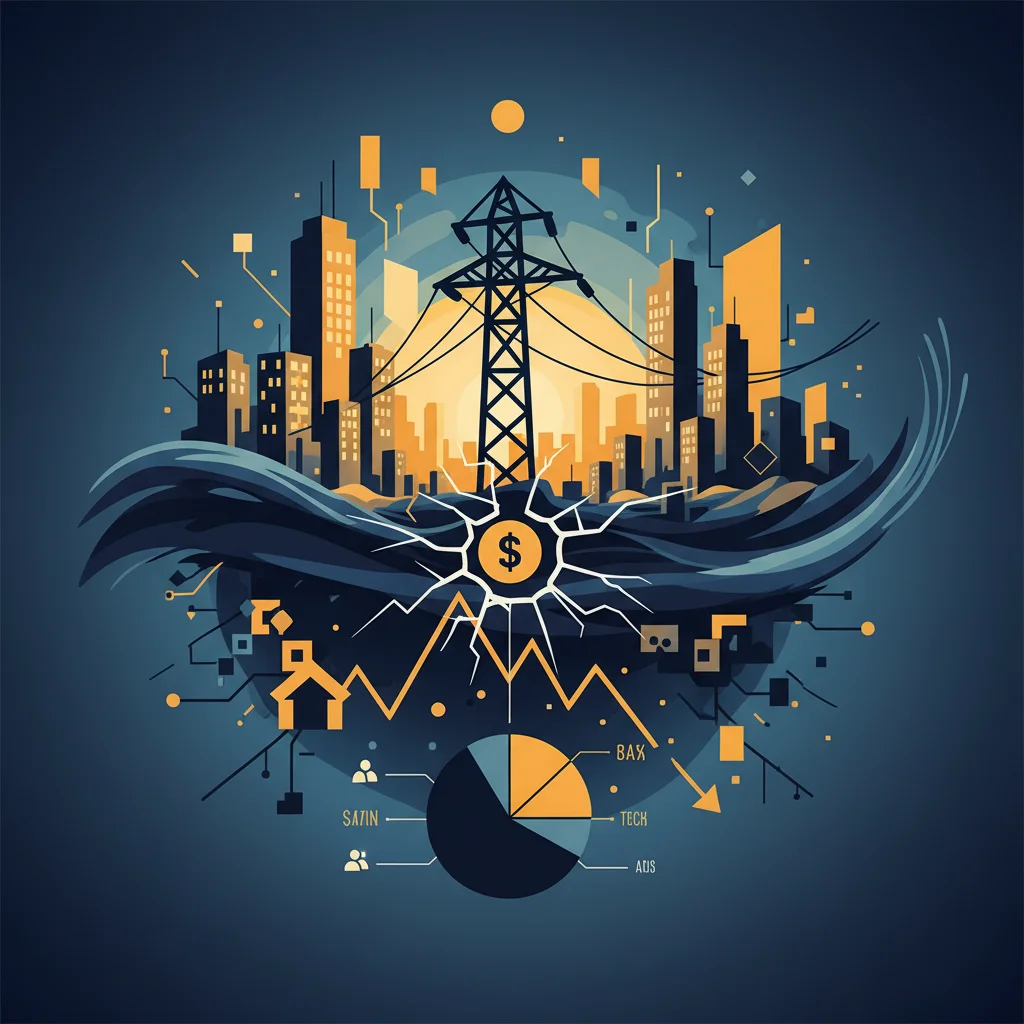
For many, the hum of a refrigerator or the flick of a light switch is an unremarkable part of daily life. But for an increasing number of Americans, that background noise has fallen silent. “I had no electricity for six months,” one person shared in a harrowing account to the BBC. This isn’t a story from a developing nation; it’s the reality unfolding in communities across the United States. Soaring energy prices are no longer just an inconvenient line item on a monthly budget; they are a powerful economic force pushing families into debt, reshaping consumer behavior, and sending complex signals through the financial markets. This is the story of energy poverty—a silent shockwave with loud implications for the economy, the banking sector, and your investment strategy.
What began as a post-pandemic economic tremor has evolved into a sustained challenge. The convergence of geopolitical instability, strained supply chains, and a complex global energy transition has created a perfect storm. The result is a cost-of-living crisis where energy is a primary driver, forcing a difficult conversation that extends from kitchen tables to corporate boardrooms and the trading floors of the stock market.
The Anatomy of a Price Surge: Deconstructing the Energy Crisis
To understand the current crisis, we must look beyond the monthly utility bill. The surge in electricity costs is a multi-faceted issue rooted in fundamental principles of economics and global finance. A primary catalyst has been the sharp increase in the price of natural gas, a key fuel for power generation in the US. This has been exacerbated by global events, including the war in Ukraine, which fundamentally re-routed global energy flows and created unprecedented volatility.
Simultaneously, the economy has been grappling with decades-high inflation. This inflationary pressure affects every component of the energy supply chain, from the cost of raw materials for infrastructure maintenance to the wages of utility workers. Furthermore, the necessary and accelerating transition to renewable energy sources, while critical for the long term, introduces short-term price volatility and requires massive capital investment in grid modernization—costs that are often passed on to consumers.
The numbers paint a stark picture of this new reality. According to the BBC report, some families have seen their electricity bills more than double in just a few years. This isn’t a marginal increase; it’s a fundamental shift in household expenditure that strains financial stability.
To put this into perspective, let’s examine the trend in average electricity prices across the United States over recent years.
| Year | Average Price (Cents per Kilowatt-hour) | Approx. Year-over-Year Change |
|---|---|---|
| 2020 | 13.15¢ | – |
| 2021 | 13.72¢ | +4.3% |
| 2022 | 15.12¢ | +10.2% |
| 2023 | 15.95¢ | +5.5% |
Note: Data is illustrative based on trends reported by the U.S. Energy Information Administration (EIA).
This steady climb, particularly the sharp jump in 2022, demonstrates how a macroeconomic phenomenon translates directly into household financial distress. It’s a classic example of how global economics directly impacts Main Street.
Beyond the Balance Sheet: What Pet Food Banks Reveal About the True Health of Our Economy
The Ripple Effect: From Household Debt to Market Volatility
The impact of high energy costs extends far beyond individual households. It creates powerful ripples that affect the entire economy, influencing everything from corporate earnings to the stability of the banking system.
1. Consumer Spending and Debt
When a non-discretionary expense like electricity skyrockets, it forces a reallocation of household income. Money that might have been spent on retail, dining, or entertainment is diverted to utility companies. This has a chilling effect on the consumer-driven economy. For those without a financial cushion, it means turning to credit cards or personal loans to cover the gap, leading to a rise in consumer debt. The National Energy Assistance Directors Association (NEADA) has highlighted that millions of American households are behind on their energy bills, representing a significant pool of potential bad debt that poses a risk to both utility companies and the wider financial system (source).
2. Corporate Earnings and the Stock Market
For investors, understanding how energy prices affect different sectors is crucial. Energy-intensive industries like manufacturing, transportation, and materials face compressed profit margins as their input costs rise. This can lead to underperformance in the stock market. Conversely, energy producers (oil, gas, and even certain utilities) may see record profits, creating a bifurcated market. Successful trading and investing in this environment require a nuanced view of which companies can pass costs on to consumers and which will be forced to absorb them.
3. The Utilities Sector: A Shifting Risk Profile
Utility stocks have long been considered a safe haven for conservative investors, prized for their stable demand and reliable dividends. However, the current environment complicates this thesis. While revenues are rising, so are the risks of customer defaults and regulatory pushback against further rate hikes. Investors in this sector must now weigh the benefits of higher energy prices against the growing credit risk on the companies’ balance sheets.
Financial Technology (Fintech) as a Potential Solution
While the macroeconomic picture is challenging, innovation within the financial technology sector offers potential pathways to mitigate the crisis. The rigid, one-size-fits-all billing model of traditional utilities is being challenged by more dynamic, user-centric solutions powered by fintech.
Modern financial technology can provide tools for both consumers and providers to better manage energy costs. This includes:
- Budgeting and Analytics: Smart-meter-integrated apps that provide real-time data on energy consumption, helping users identify savings opportunities.
- Flexible Payment Plans: Fintech platforms that enable “pay-as-you-go” models or automatically smooth out payments to avoid seasonal bill shocks.
- Micro-lending: Specialized lending platforms that can offer small, short-term loans specifically to cover utility bills at more favorable rates than predatory lenders.
Looking further ahead, emerging technologies like blockchain hold the potential to decentralize energy grids. A blockchain-based system could facilitate peer-to-peer energy trading, where a homeowner with solar panels could sell excess energy directly to their neighbor. This would create more resilient and competitive local energy markets, reducing reliance on centralized, aging infrastructure. This isn’t just a theoretical concept; it’s a frontier where financial technology and energy economics are set to converge.
Here’s a comparison of how traditional and fintech-enabled approaches to utility finance differ:
| Feature | Traditional Model | Fintech-Enabled Model |
|---|---|---|
| Billing Cycle | Fixed (Monthly, post-consumption) | Flexible (Real-time, pay-as-you-go, subscription) |
| Data Insight | Minimal (Total kWh used) | Granular (Appliance-level data, peak-hour usage) |
| Payment Assistance | Slow, bureaucratic aid programs | Instant, integrated micro-loans and payment smoothing |
| Market Structure | Centralized, monopolistic | Potential for decentralized, peer-to-peer trading (Blockchain) |
The Path Forward: A Triad of Policy, Innovation, and Strategic Investing
Navigating this complex energy landscape requires a multi-pronged approach. There is no single solution, but rather a combination of intelligent policy, technological innovation, and savvy financial strategy.
From a policy perspective, governments must balance the need for immediate relief for struggling families with the long-term imperative of investing in a modern, resilient, and cleaner energy grid. This includes streamlining the permitting process for new energy projects and providing targeted subsidies that don’t distort the broader market.
For the business and finance community, the challenge is to see this not just as a risk but as an opportunity. There is immense potential for investing in companies at the forefront of energy efficiency, grid modernization, and financial technology solutions. The transition to a new energy economy will be one of the most significant capital reallocations of our time, and those who understand the underlying dynamics will be best positioned for success.
Ultimately, the story of a family living without power is a canary in the coal mine for the broader economy. It signals deep-seated stress in the consumer base and highlights the fragility of our essential systems. Addressing it is not only a moral imperative but an economic necessity. For investors, finance professionals, and business leaders, the message is clear: the price of energy is now a critical variable in every financial model, and understanding its human and economic impact is fundamental to navigating the future.

Related Posts

The Pothole Economy: Why Cracks in the Road Signal Deeper Fissures in UK Public Finance and Investment
The Venezuelan Wildcard: How a Geopolitical Shift Could Fuel a Bonanza for Indian Oil Refiners