Nvidia’s High-Stakes Game: The Billion-Dollar Scramble for AI Dominance in Asia
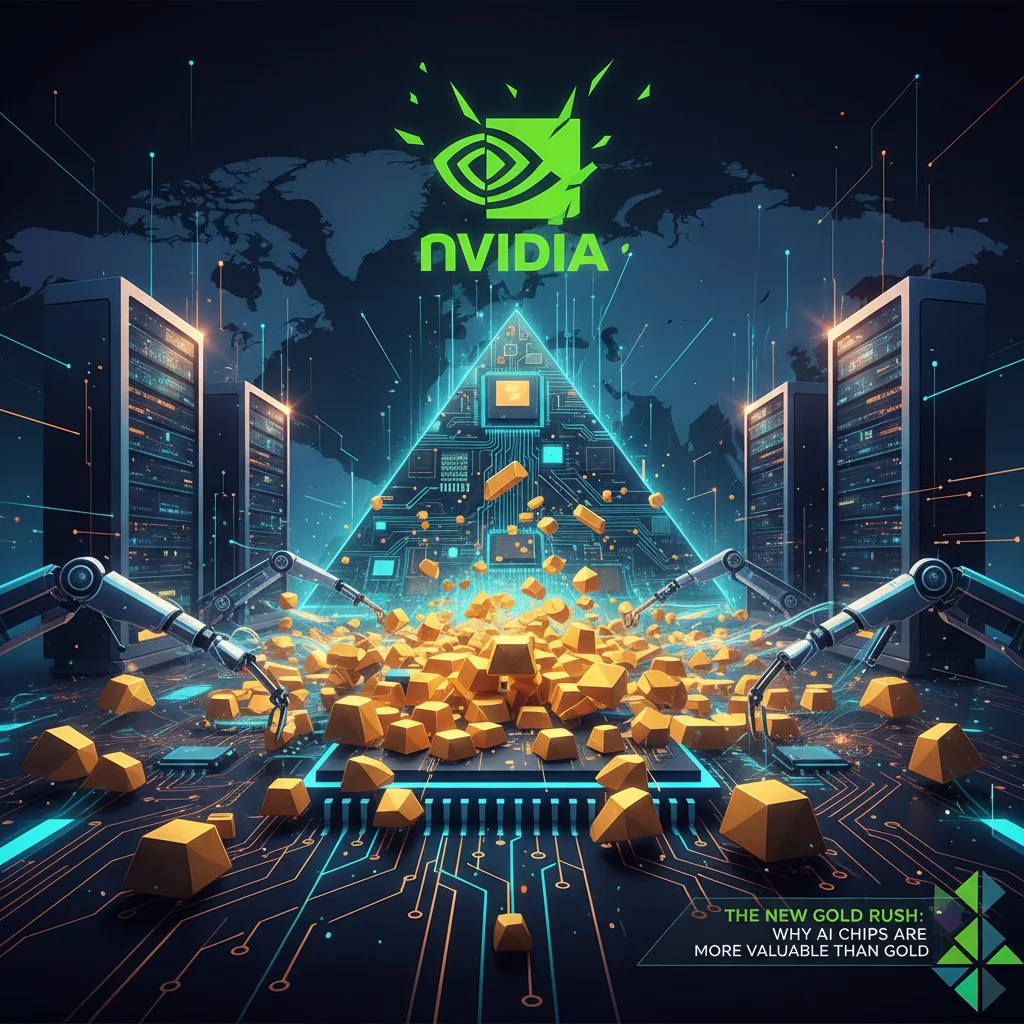
The New Gold Rush: Why AI Chips Are More Valuable Than Gold
We’re living in the middle of a technological revolution, and its name is artificial intelligence. From the large language models that power chatbots to the complex algorithms that predict market trends, AI is reshaping our world. But this revolution runs on a very specific type of fuel: powerful, specialized computer chips. And in this new gold rush, one company, Nvidia, isn’t just selling the shovels—it’s selling the entire fleet of industrial-grade mining equipment.
The heart of the AI boom beats inside massive, power-hungry buildings called data centers. These are the modern-day factories where the raw material of data is processed into the finished product of intelligence. The demand for AI-ready data centers is exploding globally, but nowhere is the race more intense, complex, and geopolitically charged than in Asia. This is a story about staggering amounts of money, technological supremacy, and a high-stakes chess match being played out between nations, with Nvidia’s silicon at the very center of the board.
At the heart of the issue is a simple equation of supply and demand. The demand for Nvidia’s high-end GPUs (Graphics Processing Units) is virtually infinite, as every major tech company and government scrambles to build its own AI capabilities. However, the supply is finite and, more importantly, heavily influenced by geopolitical forces, particularly the escalating tech rivalry between the United States and China. This post dives into the inside story of how this dynamic is reshaping Asia’s tech landscape, who’s bankrolling this multi-billion dollar infrastructure build-out, and what it means for the future of software, startups, and global innovation.
The Great Wall of Silicon: Navigating US Sanctions
For years, China was a massive market for Nvidia. However, the US government, citing national security concerns, has implemented strict export controls designed to slow China’s progress in advanced AI. These rules prevent Nvidia from selling its most powerful chips, like the much-coveted H100 and A100 GPUs, to Chinese companies. The impact was swift and significant. Nvidia’s revenue from China, which once accounted for roughly a fifth of its data center sales, plummeted to a “mid-single-digit” percentage in just a few months (source).
In response, Nvidia has been walking a tightrope. To continue serving its massive Chinese customer base without violating US law, the company has developed watered-down versions of its chips, such as the H20. But this is a risky strategy. Chinese tech giants like Tencent and Alibaba are reportedly telling their engineers to design AI models that can run on fewer high-end chips, and they are increasingly turning to domestic alternatives, most notably from Huawei. The sanctions, intended to curb China’s tech ambitions, may have inadvertently kickstarted a powerful domestic chip industry, forcing local players to innovate out of necessity.
This situation creates a fascinating dilemma. On one hand, the demand for AI processing power in China hasn’t disappeared. On the other, the best tools are now off-limits. This gap is creating a secondary market for smuggled Nvidia chips and pushing Chinese firms to invest heavily in their own hardware and software ecosystems. The long-term question is whether China can build a parallel AI stack that is “good enough” to compete on the global stage, even without access to the absolute cutting edge of Western technology.
The AI Tax: Why Your Next Gadget Could Cost 20% More
Follow the Money: The Titans Funding Asia’s AI Future
Building AI-capable data centers is an astonishingly expensive endeavor. We’re talking about billions of dollars for a single facility. So, who is writing these massive checks? The answer reveals a major shift in global capital flows, with sovereign wealth funds and private equity giants stepping in to fuel the AI arms race.
Middle Eastern sovereign wealth funds, flush with cash and a strategic mandate to diversify their economies away from oil, are becoming pivotal players. They see investing in AI infrastructure as a way to secure a stake in the future economy. For example, Abu Dhabi’s G42, an AI-focused investment firm, recently partnered with Microsoft in a $1.5 billion deal that involves building out massive data center capacity. This isn’t just a financial investment; it’s a geopolitical one, aligning the UAE with the US tech ecosystem.
Meanwhile, in Japan, a tech renaissance is underway, heavily focused on AI. SoftBank, led by Masayoshi Son, is reportedly planning to invest an additional ¥1 trillion ($6.5 billion) to bolster its AI computing infrastructure. The goal is to create a domestic AI powerhouse that can compete globally, reducing Japan’s reliance on foreign tech. This surge in investment is creating enormous opportunities for companies across the AI supply chain, from data center operators to SaaS providers developing AI-powered applications.
Here’s a simplified breakdown of the key financial players and their motivations in the Asian AI infrastructure boom:
| Investor Type | Primary Focus Area | Key Motivation | Illustrative Example |
|---|---|---|---|
| Sovereign Wealth Funds | Large-Scale Data Centers, National AI Clouds | Geopolitical Influence, Economic Diversification | Abu Dhabi’s G42 |
| Private Equity & Infrastructure Funds | Data Center Operators, Energy & Real Estate | Stable, Long-Term Returns on Core Infrastructure | KKR, Blackstone |
| Corporate Giants & Conglomerates | Domestic AI Platforms, Securing Chip Supply | National Competitiveness, Future Growth Engine | SoftBank (Japan) |
| Venture Capital | AI Startups, Niche SaaS, Automation Tools | High-Growth Potential, Disruptive Innovation | Various regional and global VCs |
This massive influx of capital is creating a ripple effect, turning countries like Japan, Singapore, and even parts of Southeast Asia into burgeoning AI hubs. They are benefiting from the capital flight and technological pivot away from China, attracting investment and talent eager to build on the next wave of computing.
The Gold Phone That Wasn't: Why Building a Smartphone is a Startup's Ultimate Boss Battle
It’s the Software, Stupid: Nvidia’s Unbeatable Moat
While the headlines often focus on the hardware—the physical GPUs—Nvidia’s true dominance lies in its software ecosystem, CUDA. CUDA (Compute Unified Device Architecture) is a parallel computing platform and programming model that allows developers to use a GPU’s massive processing power for general-purpose tasks, not just graphics. For over a decade, Nvidia has invested billions in building out CUDA, creating a vast library of tools, and nurturing a global community of developers who are trained to use it.
This creates an incredibly sticky “moat” around Nvidia’s business. Even if a competitor, like Huawei or an ambitious startup, manages to build a chip that is technically faster or more efficient, they face the monumental task of convincing millions of developers to abandon the familiar, well-supported CUDA environment and rewrite their code for a new platform. This is a challenge that goes far beyond hardware engineering; it’s about winning the hearts and minds of the people who actually build AI applications.
This software lock-in is why the battle for AI supremacy is not just about silicon. It’s about the entire stack, from the chip to the cloud services and the SaaS applications that run on top. The deep integration of CUDA into every major machine learning framework (like TensorFlow and PyTorch) makes switching away from Nvidia a costly and time-consuming proposition for any serious AI company or research institution. It’s a masterclass in building a defensible business that competitors will struggle to replicate for years to come.
The New Geopolitical Chessboard: What’s Next?
The race for AI dominance in Asia is far more than a corporate competition; it’s a defining feature of 21st-century geopolitics. The interplay between US export controls, China’s drive for self-sufficiency, and the flood of investment from sovereign wealth funds is creating a new and unpredictable landscape.
For developers, entrepreneurs, and tech professionals, this era of change presents both challenges and immense opportunities. The decentralization of AI infrastructure away from a single-country focus means new tech hubs are emerging across Asia. The demand for talent in machine learning, data science, and automation has never been higher. Startups that can build innovative solutions on top of this new infrastructure or help companies navigate the complex hardware and software ecosystem are poised for success.
The key takeaway is this: the foundation of the next digital era is being laid right now, in the form of data centers packed with AI chips. The decisions made today—by governments in Washington and Beijing, by investors in Abu Dhabi and Tokyo, and by engineers at Nvidia—will determine the trajectory of technological innovation for the next decade. The game is afoot, and the stakes couldn’t be higher.

Related Posts
Nvidia’s High-Stakes Gamble: How the H200 Chip is Redefining the US-China AI War

The Phoenix of Finland: How Nokia Rose from the Ashes to Power the AI Revolution