Venezuela’s Black Gold: A High-Stakes Gamble for US Investors and the Global Economy
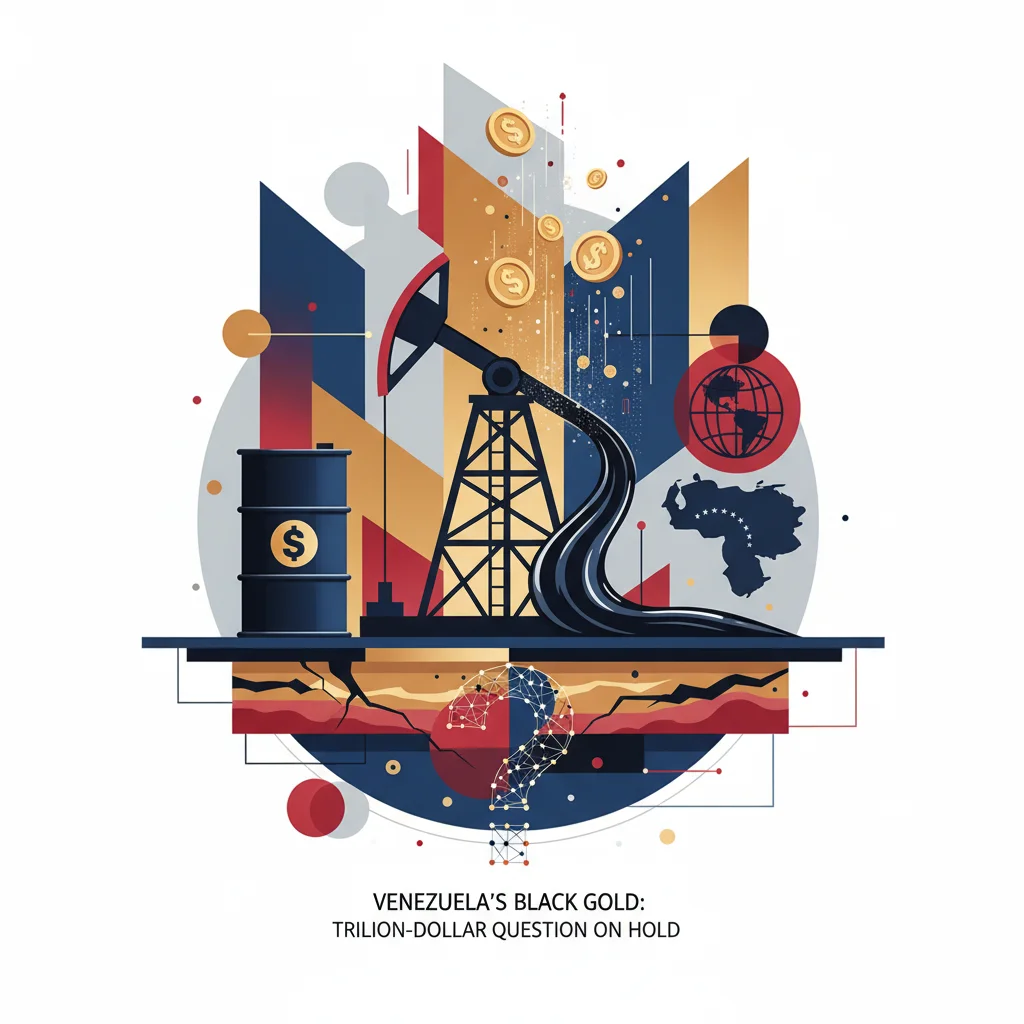
The Trillion-Dollar Question on Hold
In the world of high-stakes finance and global energy, few prizes are as tantalizing—or as treacherous—as Venezuela’s oil reserves. Sitting atop the world’s largest proven crude oil deposits, the nation represents a potential goldmine for energy companies. Yet, for years, this immense wealth has been locked away behind a wall of political instability, economic collapse, and crippling international sanctions. Recently, a slight thaw in US policy created a flicker of opportunity, but American oil giants are sending a clear message: they won’t step back into the fire without an ironclad, fireproof suit. The core of their demand is simple yet profoundly complex: guarantees. This isn’t just a business negotiation; it’s a high-stakes geopolitical chess match with the global economy hanging in the balance.
According to a recent report from the Financial Times, US oil executives are in talks with political figures, including former President Donald Trump, stressing that any significant investment to revitalize Venezuela’s decaying oil infrastructure would require robust protections against political risks. This cautious stance is born from a history of bitter experience, where billions in assets were seized without compensation. For investors, the stock market, and energy traders, the question is whether any guarantee can truly be trusted in such a volatile environment.
A Painful History: Why Caution is the Watchword
To understand the industry’s deep-seated hesitation, one must look back at the last two decades of Venezuelan history. Under the late Hugo Chávez, a wave of nationalizations swept through the country’s most profitable sectors, most notably oil. International energy giants who had invested billions to develop the nation’s heavy crude saw their assets expropriated, often with little to no recourse. Companies like ExxonMobil and ConocoPhillips spent years fighting for compensation in international arbitration courts, a stark reminder of the perils of investing in jurisdictions with weak rule of law.
The subsequent collapse of Venezuela’s state-owned oil company, PDVSA, from a global powerhouse to a shadow of its former self, further decimated the industry. Mismanagement, corruption, and a lack of investment left critical infrastructure to rust. Production plummeted from over 3 million barrels per day to a fraction of that figure, contributing to one of the worst economic crises in modern history. This history is not just a footnote; it’s a foundational text for any executive or investor considering a move back into the country.
The Glass in the Water: Why a Simple Product Recall is a Major Signal for the Modern Investor
The Delicate Dance of Sanctions and Strategy
The current situation was catalyzed by the Biden administration’s decision in late 2023 to temporarily ease some sanctions on Venezuela’s oil and gas sector. This was a strategic move, designed to encourage fairer elections and potentially increase global oil supply. It opened a narrow window for companies like Chevron, which received a special license to expand its operations, to re-engage. However, this relief was always conditional and has since been partially rolled back due to political developments in Venezuela.
This “on-again, off-again” nature of US policy is precisely what spooks long-term investors. A multi-billion-dollar project to drill new wells or refurbish a refinery takes years, if not decades, to yield a return. Committing that level of capital is impossible if the legal framework for doing business can be upended by a single election or executive order in either Washington or Caracas. As the Financial Times noted, industry bosses are now engaging with the Trump campaign, a clear sign they are planning for all political contingencies (source). They need assurances that transcend a single presidential administration.
Weighing the Risks and Rewards
The calculus for any company considering a major investment in Venezuela is a classic case of extreme risk versus monumental reward. The potential upside is enormous, but the list of potential pitfalls is equally staggering. Below is a breakdown of the key factors at play:
| Potential Rewards (The Upside) | Significant Risks (The Downside) |
|---|---|
| Vast, Untapped Reserves: Access to the world’s largest proven oil reserves, primarily heavy crude ideal for US Gulf Coast refineries. | Political Instability: An unpredictable political climate in both Venezuela and the US, creating regulatory and legal uncertainty. |
| Low Production Costs: Once infrastructure is restored, the geological cost of extracting Venezuelan oil is relatively low. | Risk of Nationalization: A history of asset seizure looms large, making investors wary of losing everything overnight. |
| Geographic Proximity: Venezuela is much closer to the US than Middle Eastern suppliers, reducing transportation costs and time. | Sanctions Whiplash: The risk that US sanctions could be re-imposed at any moment, trapping capital and halting operations. |
| Market Impact: Bringing Venezuelan supply back online could help stabilize global oil prices and increase supply diversity. | Decayed Infrastructure: Billions are needed just to repair and modernize pipelines, refineries, and ports before new production can even begin. |
| First-Mover Advantage: The companies that get in first and secure the best fields could reap enormous long-term benefits. | Legal & Contractual Voids: Lack of a reliable legal system and questions about the enforceability of contracts and arbitration awards. |
The Broader Implications for the Global Economy
This standoff is not happening in a vacuum. Its resolution—or lack thereof—will have ripple effects across the global financial and energy landscape. For the energy trading community, the potential return of millions of barrels of Venezuelan oil to the market is a major variable that could significantly impact prices. A successful, stable reintegration could act as a moderating force on oil prices, benefiting consumers and industries worldwide. Conversely, continued chaos or a failed attempt at reopening could add another layer of volatility to an already jittery market.
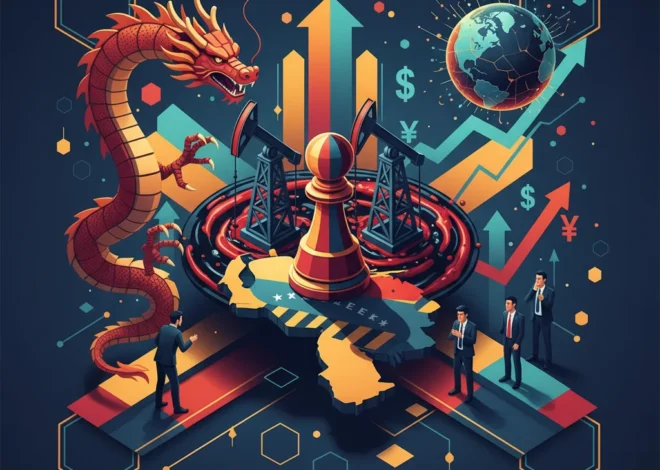
From a geopolitical perspective, the continued absence of US and Western investment creates a vacuum that rivals like China and Russia have been keen to fill, albeit with mixed success. For the US, fostering a stable, productive oil sector in its own hemisphere is a matter of energy security and regional influence. A revived Venezuelan economy, driven by responsible foreign investment, could also mitigate the regional migration crisis, a significant domestic political issue in the United States.
The financial world is watching closely. The type of guarantees required would likely involve a complex interplay of international law, bilateral investment treaties, and innovative financing structures. The banking sector would need to navigate a labyrinth of compliance and risk management to facilitate any transactions. The success or failure of this endeavor could set a precedent for how Western capital engages with other high-risk, high-reward frontier markets in the future.
The Fungal Frontier: Why Mushrooms Are the Hottest New Asset in the Circular Economy
What Guarantees Could Look Like
So, what do these “guarantees” actually entail? While specifics are negotiated behind closed doors, they generally fall into several categories:
- Legal and Contractual Stability: This means creating long-term operating licenses and production-sharing agreements that are enshrined in a way that they cannot be unilaterally altered by a future Venezuelan government.
- International Arbitration: Companies want explicit clauses that any disputes will be settled in a neutral, international court (like the ICSID), not within the Venezuelan legal system. This is a standard demand in international investing.
- US Government Backing: This is the most sensitive and crucial element. It could range from explicit political risk insurance offered by a US government agency to a clear, bipartisan policy statement ensuring that companies won’t be penalized by future sanctions for long-term investments made in good faith. According to one industry source cited by the FT, this is a non-negotiable point (source).
- Capital Repatriation Rights: Firm assurances that companies will be able to convert their local earnings into dollars and send them back to the US without punitive exchange controls or taxes.
The Path Forward: A High Wire Act
The road ahead is fraught with uncertainty. The fate of Venezuela’s oil industry is inextricably linked to its internal political evolution and the foreign policy of the United States. For US oil companies, the allure of Venezuela’s black gold is undeniable, but the scars of the past have taught them a costly lesson in caution. They are no longer willing to bet billions on a handshake and a promise.
Before any significant capital flows, investors, from Wall Street financiers to Main Street shareholders, will need to see more than just an open door; they will need to see a solid, unshakable foundation built on the rule of law, political stability, and unwavering international agreements. Until then, the world’s largest oil reserves will remain a symbol of immense potential and tragic paralysis, a trillion-dollar prize waiting for a game with clearer rules.