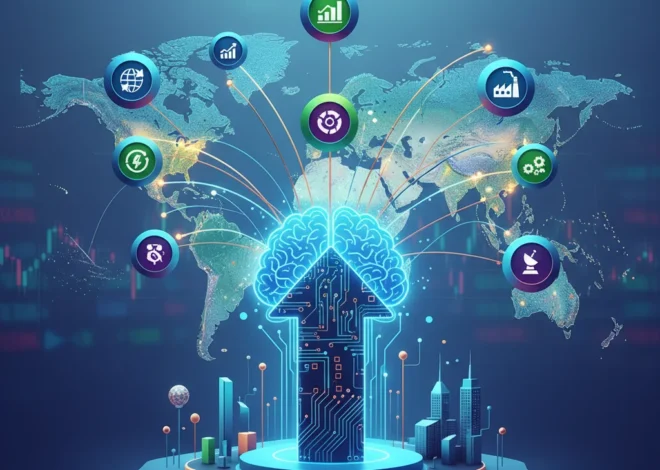
The Avios Economy: How Fintech and Investing are Redefining Loyalty in 2026
The End of Loyalty as We Know It
For decades, the concept of earning airline loyalty points has been straightforward: you fly, you swipe a co-branded credit card, you accumulate miles. It was a simple, transactional relationship between traveler and airline. But the ground is shifting beneath the entire loyalty industry, and the familiar Avios point is at the epicenter of this tectonic change. What was once merely a frequent flyer currency is rapidly evolving into a sophisticated, multi-faceted financial asset, deeply embedded in the modern digital economy.
A recent look into the future strategy for Avios, as highlighted by the Financial Times, reveals a landscape where your investment portfolio, property transactions, and even your pizza delivery could become primary drivers of your points balance by 2026. This isn’t just about adding more partners; it’s a fundamental reimagining of value creation. It signals a strategic pivot where loyalty programs are becoming powerful platforms for customer engagement, powered by cutting-edge financial technology and data analytics. This transformation has profound implications not just for travelers, but for investors, business leaders, and anyone participating in the contemporary financial ecosystem.
From Miles to a Micro-Asset: The New Economics of Avios
The traditional model of earning points was inherently limiting. It favored a specific demographic: the frequent business or leisure traveler with high credit card spend. This left vast untapped potential among a broader consumer base. The new strategy shatters these limitations by integrating Avios earning opportunities into the very fabric of daily financial life, a concept known as embedded finance.
The vision for 2026 is one where Avios acts as a universal reward, a value-add layer on top of activities you’re already undertaking. Consider the scope: earning a significant chunk of points not from a transatlantic flight, but from funding your brokerage account or completing a property deal. This shift transforms Avios from a simple travel perk into a liquid, alternative asset—a micro-currency that rewards engagement across a wide spectrum of economic activities.
This strategic diversification is a masterclass in modern platform economics. For IAG Loyalty, the parent company, it creates a more resilient and “sticky” ecosystem. By decoupling point accumulation from the cyclical and often volatile travel industry, they build a more stable and predictable engagement model. For consumers, it opens up a world of passive and active value accumulation, turning routine financial decisions into tangible travel rewards.
Solving the Market's Matrix: What a Crossword Puzzle Reveals About Modern Investing
The Fintech Fusion: Investing Your Way to a First-Class Future
The most groundbreaking aspect of this evolution is the deep integration with the worlds of investing and finance. The prospect of earning Avios through your stock market activities represents a paradigm shift, blurring the lines between wealth management and lifestyle rewards. This is where the power of fintech becomes truly apparent.
Imagine a scenario where your trading platform or digital bank offers you a choice: a minuscule cash rebate on transactions or a substantial deposit of Avios points. For the financially savvy consumer, the calculation is compelling. By linking investment accounts, users could potentially earn points based on:
- Assets Under Management (AUM): A percentage of your portfolio’s value converted into points annually.
- Trading Activity: A fixed number of points awarded per trade, incentivizing active participation in the market.
- New Account Funding: A significant one-time bonus for opening and funding a new investment account.
This fusion is a strategic win-win. Fintech and banking partners gain a powerful, differentiated tool for customer acquisition in a fiercely competitive market. Offering Avios is more alluring than a simple cash bonus; it taps into aspirational goals and provides a tangible, exciting reward. For Avios, it unlocks a new, often affluent, and financially engaged demographic, turning investors into loyal travelers.
To better understand this strategic shift, let’s compare the old and new models of point accumulation.
| Earning Method | Traditional Model (Pre-2024) | Emerging Fintech Model (2026 Vision) |
|---|---|---|
| Primary Source | Flying, co-branded credit cards, hotel partners | Diversified: Investing, banking, property, retail, travel |
| Target Audience | Frequent flyers, high-spend credit card users | Broad consumer base including investors, homeowners, everyday spenders |
| Underlying Technology | Legacy partnership agreements | API-driven integrations, Open Banking, Financial Technology platforms |
| Value Proposition | “Get a reward for your loyalty to us.” | “Integrate our rewards into your entire financial life.” |
| Economic Driver | Incentivize travel and specific card usage | Incentivize broad economic engagement and data sharing |
However, this also raises questions. As Avios become easier to earn from a multitude of sources, will we see an inevitable devaluation—a form of “points inflation”? The value of any currency, including loyalty points, is tied to its scarcity and utility. Managing this balance will be IAG’s greatest challenge. Furthermore, one could even speculate about a future where these loyalty points are tokenized on a blockchain, making them truly tradable, fungible assets outside the control of a single corporate entity. That would be the ultimate disruption in the loyalty space.
The Broader Ecosystem: From Property Portals to Pizza Deliveries
While the investing angle is the most revolutionary, the strategy’s strength lies in its breadth. The plan to incorporate high-value transactions like property and low-value, high-frequency purchases like food delivery demonstrates a comprehensive approach to capturing consumer spending.
Partnerships with property platforms could yield enormous point windfalls, potentially awarding hundreds of thousands of Avios for a single transaction (source). This taps into life’s biggest financial moments, embedding the Avios brand into significant milestones. On the other end of the spectrum, linking your account to a food delivery app might only earn a handful of points per order, but it fosters daily engagement and keeps the Avios ecosystem top-of-mind.
This is all made possible by the quiet revolution in fintech infrastructure, particularly Application Programming Interfaces (APIs). Secure APIs allow disparate systems—from a stock trading app to a real estate website—to communicate and exchange data seamlessly. When you agree to link your accounts, you are authorizing an API call that validates your activity and triggers the crediting of points. This technological backbone is what allows the Avios economy to scale.
Beyond the Grid: Unpacking the Hidden Economic Lessons in the FT's Polymath Crossword
Your Strategic Playbook: Maximizing Value in the New Avios Economy
This new landscape requires a more strategic approach from consumers and investors. Simply swiping a credit card is no longer the optimal strategy. Here’s how different groups can adapt:
For the Individual Investor:
- Conduct a Points ROI Analysis: Before choosing a new brokerage or banking partner based on an Avios offer, calculate the “points return” in addition to the financial return. Compare the value of the points (typically valued at ~1p/point) against any higher fees or slightly lower interest rates.
- Consolidate for Impact: The biggest bonuses will likely be for new account funding and achieving AUM tiers. Strategically consolidating your investments with a single partner could yield a far greater points return than spreading them thinly.
- Don’t Let the Tail Wag the Dog: The lure of points should never compromise a sound investment strategy. Use Avios as a tie-breaker between two otherwise equal financial products, not as the sole decision-making factor.
For Finance Professionals and Business Leaders:
- Analyze the Competitive Threat: If you’re in consumer banking or wealth management, recognize that loyalty programs are now a competitive vector. Your rivals are no longer just other banks, but anyone competing for consumer engagement and data.
- Explore Partnership Opportunities: Consider how your own business could integrate into such an ecosystem. Could you leverage a loyalty currency like Avios to drive customer acquisition and retention? The expansion into new sectors shows a clear appetite for new partners.
- Study the Data Play: The real asset is the transactional data. Understand how these programs are building comprehensive customer profiles and consider the implications for your own data strategy within the bounds of privacy and regulation.
Conclusion: The Future of Value is Fluid
The transformation of Avios is a powerful indicator of a much broader trend in our global economy. The lines between industries are blurring, driven by the connective tissue of financial technology. What we are seeing is the “financialization” of loyalty, where points are shed of their simple promotional guise and take on the characteristics of a genuine asset class.
By 2026, the most successful Avios collectors won’t necessarily be the ones who travel the most. They will be the ones who most astutely manage their personal finances, strategically aligning their spending, saving, and investing activities with the ecosystem that provides the most valuable return. The future of loyalty isn’t about collecting points; it’s about curating a financial life where every transaction, from a stock trade to a takeaway, generates a stream of value that can, quite literally, take you anywhere in the world.

Related Posts
The £3 Billion Bite: How the UK’s Junk Food Ad Ban is Reshaping the Stock Market and a New Era of Investing
Draining the Coffers: Why a Government’s Reliance on Reserves is a Red Flag for the Global Economy