Driving Alpha: What Hong Kong’s Supercar Scene Reveals About Wealth, Investment, and Economic Signals
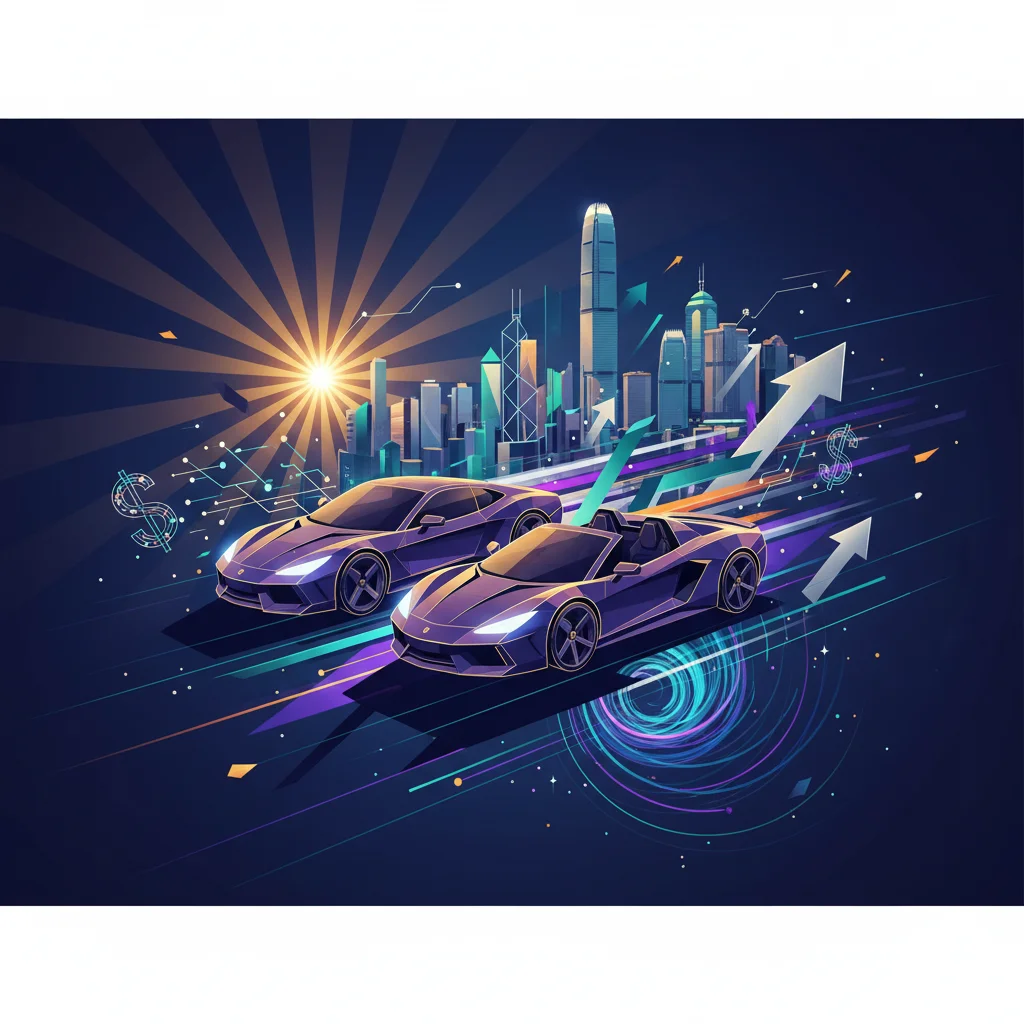
Every Sunday morning, as the sun casts long shadows across Hong Kong’s towering skyline, a different kind of financial market comes to life. It’s not on the trading floor of the Hang Seng, but on the winding roads of Shek O and the Tai Tam Reservoir. Here, the assets aren’t stocks or bonds; they are roaring V12 engines, sculpted carbon fiber, and the gleaming emblems of Ferrari, Lamborghini, and Pagani. This is the weekly pilgrimage of Hong Kong’s elite car enthusiasts, a spectacle that is far more than a simple hobby. It’s a powerful, real-time barometer of the city’s economic health, investment appetites, and the evolving nature of wealth itself.
The original Financial Times article highlights a fascinating social phenomenon: in a city famously devoid of a dedicated racetrack, enthusiasts have created their own mobile car show. But for the astute investor, business leader, or finance professional, this story offers a deeper narrative. It’s a case study in market adaptation, a glimpse into the lucrative world of “passion assets,” and a tangible display of the capital that drives the city’s economy. By looking under the hood of this subculture, we can uncover surprising insights into broader trends in finance, investing, and financial technology.
The Urban Circuit: A Microcosm of Hong Kong’s Economy
Hong Kong’s unique environment—extreme population density, limited space, and sky-high costs—imposes constraints on nearly every aspect of life, including leisure. The absence of a permanent racetrack is a direct consequence of this reality. Yet, instead of stifling the car community, these limitations have forged a new kind of social and economic ecosystem. The Sunday drive is not a race; it’s a meticulously orchestrated gathering, a network, and a display.
This dynamic is a perfect metaphor for Hong Kong’s broader business and economic landscape. The city thrives on creative adaptation within a framework of significant constraints. Just as these drivers have turned public roads into a de facto social club, Hong Kong’s businesses have historically pivoted and innovated to navigate geopolitical shifts, spatial limitations, and intense competition. The car scene demonstrates a core principle of the city’s economics: when a traditional channel is unavailable, a new, often more social and networked, one will emerge. For business leaders, this is a lesson in resilience and the importance of community in overcoming structural barriers. The social capital built over a shared coffee and the sight of a McLaren 720S is as real as any deal brokered in a boardroom.
Beyond the Grid: Unpacking the Hidden Economic Lessons in the FT's Polymath Crossword
From Horsepower to Portfolio Power: Cars as an Alternative Asset Class
While the visual appeal of a supercar is undeniable, its true value to the financial world lies in its performance as an investment vehicle. High-end, rare, and classic automobiles have emerged as a formidable alternative asset class, often referred to as “passion investments.” These are tangible assets whose value is driven by scarcity, provenance, condition, and desirability. For many high-net-worth individuals, a vintage Porsche or a limited-edition Ferrari is not just a weekend toy; it’s a strategic component of a diversified investment portfolio.
Unlike the stock market, which is susceptible to broad economic sentiment and algorithmic trading, the classic car market operates on different fundamentals. It’s a market where appreciation can be significant and often uncorrelated with traditional financial instruments. Consider the performance of certain collectible cars compared to a major stock index. While past performance is no guarantee of future returns, the data illustrates the potential for serious alpha generation.
Below is a comparative look at the hypothetical 10-year appreciation of a well-regarded collectible car against a major stock market index. This illustrates how passion assets can perform as a store of value and a growth investment.
| Asset Type | Example Asset | Estimated 10-Year Value Appreciation (Hypothetical) | Key Value Drivers |
|---|---|---|---|
| Alternative Asset (Classic Car) | 1990s Porsche 911 (993) Turbo | ~150-250% | Scarcity, brand heritage, analogue driving experience, condition |
| Traditional Asset (Stock Index) | Hang Seng Index (HSI) | ~20-30% (Price Return, ex-dividends) | Corporate earnings, economic growth, investor sentiment, monetary policy |
This outperformance is not an anomaly. According to the Knight Frank Luxury Investment Index, collectible cars have appreciated by 185% over the last decade, outperforming assets like fine wine, watches, and art. For investors and wealth managers, this underscores the importance of looking beyond conventional stocks and bonds. The trading of these physical assets requires deep domain expertise, a different kind of due diligence, and an understanding of a market driven by passion as much as by profit.
The Social Economy: Instagram, Influence, and Investment Networks
The article rightly points out the “Insta-friendly” nature of these gatherings. This is not a trivial detail; it’s the engine of a modern social economy. In the world of high finance and big business, networks are paramount. The Sunday drives serve as an informal, yet highly effective, networking platform for Hong Kong’s financial elite. The shared passion for automotive excellence becomes a conduit for building trust and rapport away from the pressures of the office.
The digital layer—Instagram, Facebook groups, and WhatsApp chats—amplifies this effect. A well-curated photo of a Pagani Huayra at Repulse Bay is more than just a social media post; it’s a signal of success, taste, and access. It reinforces one’s position within a certain echelon of society. This digital and physical convergence creates a powerful feedback loop where social status and financial standing are mutually reinforcing. In a city as status-conscious as Hong Kong, this social capital can translate directly into business opportunities, deal flow, and access to exclusive investment circles. It’s a reminder that in modern finance, one’s personal brand and network can be as valuable as their balance sheet.
Solving the Market: An Investor's Guide to Thinking Like a Crossword Master
The Fintech Frontier: Tokenizing the Tarmac
The world of passion investing is ripe for disruption, and financial technology is poised to lead the charge. The inherent illiquidity, high cost of entry, and challenges in verifying provenance for classic cars are precisely the problems that fintech and blockchain technologies are designed to solve. This is where the story of Hong Kong’s car culture intersects with the future of banking and finance.
Imagine a scenario where a legendary Ferrari 250 GTO, worth tens of millions of dollars, is not owned by a single individual but is tokenized on a blockchain. Here’s how this financial technology could revolutionize the market:
- Fractional Ownership: Blockchain allows the car’s ownership to be divided into thousands of digital tokens. Investors could buy and sell these tokens on a secondary market, much like trading a stock. This dramatically lowers the barrier to entry, allowing a wider pool of investors to gain exposure to this asset class.
- Provenance and Transparency: A car’s entire history—its service records, ownership chain, and racing pedigree—can be immutably recorded on a blockchain. This eliminates fraud and provides buyers with a perfect, verifiable record, increasing trust and asset value.
– Enhanced Liquidity: Tokenization creates a more liquid market. Instead of a lengthy, expensive private sale process, owners can sell portions of their asset quickly on a digital exchange, improving capital efficiency.
This is not a distant fantasy. Fintech startups are already building platforms for the fractionalization of collectibles. For the traditional banking sector, this represents both a threat and an opportunity. Wealth management divisions must begin to understand and offer these new digital asset classes, or risk being left behind by more agile, tech-forward competitors. The same principles of tokenization can be applied to art, wine, real estate, and other high-value alternative assets, heralding a major shift in how we define and trade value.
Conclusion: More Than Just a Sunday Drive
The sight of a convoy of supercars winding through the hills of Hong Kong is a potent symbol. It represents the concentration of wealth in one of the world’s premier financial hubs. It showcases a thriving market for alternative investments that often outperforms traditional financial instruments. And it points toward a future where financial technology will unlock new ways to invest in and trade these tangible “passion assets.”
For the investor, the economist, or the business leader, the key takeaway is to look beyond the obvious. The most insightful economic indicators are not always found in official reports or on a trading screen. Sometimes, they are found in the social rituals and cultural phenomena of a place. Hong Kong’s Sunday drivers, in their quest for an open road, have inadvertently created a fascinating and highly visible index of the city’s economic vitality, its investment culture, and its relentless capacity for adaptation. It’s a powerful reminder that the flow of capital is deeply intertwined with the passions that drive us.
Red Oceans and Red Ink: Decoding Meituan's Costly War for China's Instant Retail Crown

Related Posts
The £3 Billion Bite: How the UK’s Junk Food Ad Ban is Reshaping the Stock Market and a New Era of Investing

AI’s Trillion-Dollar Gamble: Are We Building a Revolution or the Next Tech Bubble?