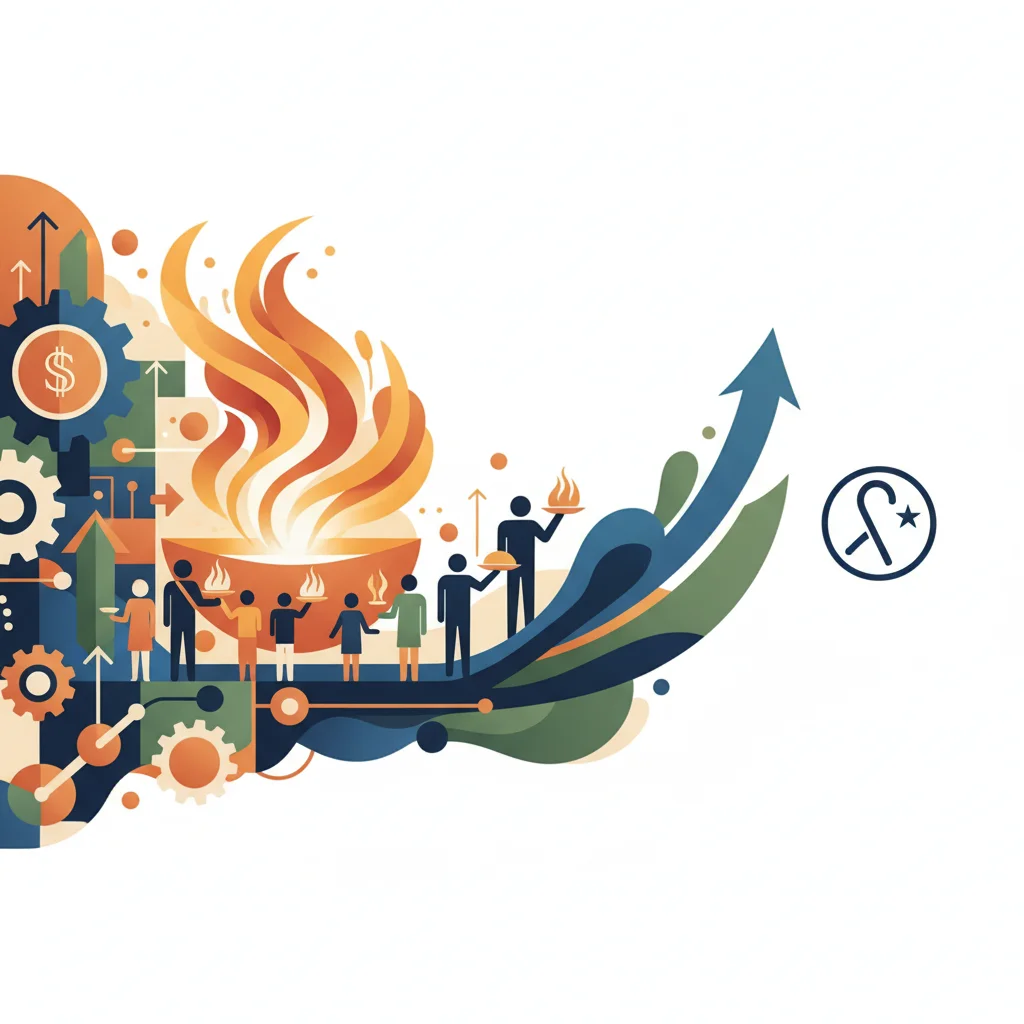
Beyond the Balance Sheet: The Economic Case for a Hot Meal
As winter’s chill sets in, the simple act of providing a hot meal takes on a profound significance. For organizations like Good Shepherd, a charity featured in a recent BBC report, this work is a year-round commitment that becomes “even more important” when temperatures drop. On the surface, this is a story of compassion and community support. But for those in finance, business, and investment, there is a deeper, more strategic narrative unfolding—one that connects directly to the stability of our economy, the principles of modern investing, and the future of corporate responsibility.
The traditional view often separates philanthropy from the cold, hard world of finance. Charity is seen as a cost center, a moral obligation fulfilled through a separate foundation or a line item in the marketing budget. However, this perspective is becoming increasingly outdated. In today’s interconnected world, the work of a local charity is not just a social issue; it’s an economic one. The stability, health, and resilience of our communities are the very foundation upon which our markets are built. This article explores the powerful, often overlooked intersection of community support and financial strategy, arguing that investing in social well-being is one of the most critical investments a business or an economy can make.
The Macroeconomic Ripple Effect of Community Intervention
To understand the financial importance of organizations like Good Shepherd, we must first appreciate the staggering economic cost of poverty and food insecurity. These are not just social maladies; they are significant drags on economic growth and productivity. According to a 2023 report by The Trussell Trust, the primary cost of poverty to the UK’s National Health Service (NHS) is estimated at £29 billion annually. This figure accounts for the increased prevalence of physical and mental health conditions among those facing financial hardship, leading to higher healthcare utilization and costs that are ultimately borne by the state and taxpayers.
When a charity provides a hot lunch, it’s not just alleviating immediate hunger. It is, in economic terms, a micro-intervention with macroeconomic consequences. This single act contributes to:
- Reduced Healthcare Costs: Proper nutrition is a cornerstone of preventative health. By addressing food insecurity, community programs mitigate long-term health issues like malnutrition, diabetes, and heart disease, thus reducing the strain on public healthcare systems.
- Improved Workforce Potential: A person struggling with hunger cannot be a productive employee, a focused student, or an innovative entrepreneur. Addressing basic needs is the first step toward unlocking human capital, which is the primary driver of any modern economy.
- Enhanced Social Stability: High levels of poverty and inequality are strongly correlated with social unrest and crime, which create an unstable environment for business and investment. Community support organizations build social cohesion and resilience, fostering a more secure and predictable market.
From the perspective of pure economics, these frontline charities are not simply giving handouts; they are generating positive externalities. They are de-risking the social environment, reducing long-term public expenditure, and building a more robust foundation for the formal economy. For a finance professional, ignoring these grassroots economic stabilizers is like a trader ignoring leading indicators; it means missing a crucial part of the overall market picture.
The Unwanted Gift Economy: A Financial Guide to Post-Holiday Asset Recovery
ESG Investing and the Tangible Value of the ‘S’
The conversation around Environmental, Social, and Governance (ESG) investing has matured significantly. Initially dismissed by some as a “woke” trend, it has proven to be a durable framework for assessing long-term risk and identifying sustainable opportunities. While the ‘E’ for Environment often grabs headlines, the ‘S’ for Social is arguably where the most immediate human and economic impact can be measured. The ‘S’ encompasses a company’s relationships with its workforce, its suppliers, and the communities in which it operates.
Supporting an organization like Good Shepherd is a prime example of a powerful ‘S’ initiative. For investors and business leaders, this is not about altruism; it’s about strategic value creation. A company that actively invests in its local community is building several key assets:
- Brand Equity and Reputation: In an age of transparency, consumers and clients increasingly favor businesses that demonstrate authentic corporate citizenship. This “reputational capital” can translate into greater customer loyalty and a stronger brand, which are invaluable intangible assets on the stock market.
- Talent Attraction and Retention: Top talent, particularly among younger generations, wants to work for companies with a clear purpose beyond profit. A demonstrated commitment to community well-being is a powerful differentiator in the competitive market for skilled labor.
- License to Operate: Businesses do not operate in a vacuum. A strong, positive relationship with the local community ensures a stable operating environment, reducing the risk of regulatory hurdles, protests, or negative public sentiment that can disrupt operations and impact trading performance.
Below is a comparison of how we can frame the evolution from traditional corporate giving to strategic social investment within an ESG framework.
| Metric | Traditional Corporate Philanthropy | Strategic Social Investing (ESG) |
|---|---|---|
| Primary Motivation | Moral obligation; Public relations | Risk mitigation; Value creation; Stakeholder alignment |
| Measurement of Success | Amount of money donated; Photo opportunities | Measurable social outcomes (e.g., reduced food insecurity rates); Impact on brand equity; Employee engagement scores |
| Financial Framing | A cost or expense | An investment in intangible assets (brand, human capital, social license) |
| Integration | Siloed in a foundation or marketing department | Integrated into core business strategy, risk management, and investor relations |
This shift in perspective is crucial for any forward-thinking leader in finance. The question is no longer “How much can we afford to give?” but rather “How can we invest in our communities to create shared, sustainable value?”
Beyond the Barricades: Why Boxing Day's Decline Signals a Seismic Shift in the UK Economy
The Future: Fintech, Blockchain, and the New Architecture of Giving
The intersection of community support and finance is being supercharged by innovation in financial technology. The traditional model of writing a check is being replaced by more efficient, transparent, and scalable solutions that can amplify the impact of every dollar invested in social good.
Here’s how the fintech revolution is reshaping the landscape:
- Transparent Donations with Blockchain: One of the biggest challenges in philanthropy is the lack of transparency—donors often wonder where their money truly goes. Blockchain technology offers a potential solution: a decentralized, immutable ledger that can track a donation from the source all the way to the final recipient. Imagine a corporate donor being able to see in real-time that their funds were used to purchase specific food supplies that were then distributed, with every step verified on the chain. This level of transparency could unlock billions in institutional and retail investment into the social sector.
- Micro-investing in Social Causes: Fintech platforms have perfected the art of the micro-transaction. Apps that round up your daily purchases for stock market investing can be repurposed for social investing. This democratizes philanthropy, allowing millions of people to contribute small, consistent amounts, creating a powerful and stable funding stream for non-profits. This moves charitable funding away from a reliance on large, infrequent donations and towards a more predictable, diversified model, much like a modern investment portfolio.
- Data Analytics for Impact Measurement: Modern banking and financial technology are, at their core, data-driven. The same analytical tools used for algorithmic trading and credit risk assessment can be applied to measure the effectiveness of social programs. By analyzing community-level data, organizations and their financial backers can identify which interventions are having the greatest positive effect, allowing for the dynamic allocation of resources to maximize the social return on investment (SROI). A study by the Bain & Company highlights the growing importance of such rigorous, data-driven approaches to measuring non-profit impact.
These technological advancements are not just about making charity more efficient. They are about integrating it fully into the financial ecosystem, treating social outcomes with the same analytical rigor as market outcomes.
From Social Media Likes to Economic Policy: Navigating the New Political Risk for Investors
Conclusion: The Ultimate Long-Term Investment
The story of Good Shepherd providing hot lunches is more than just a heartwarming headline. It is a powerful reminder of a fundamental economic principle: no market can outperform the health of the society it serves. For investors, finance professionals, and business leaders, the message is clear. The lines between corporate success and social well-being are blurring, and the most resilient and profitable enterprises of the future will be those that understand this connection.
Investing in community stability, whether through direct support, strategic partnerships, or leveraging financial technology, is not a deviation from the pursuit of profit. It is a core component of a sophisticated, long-term strategy. It is an investment in a stable workforce, a loyal customer base, and a predictable operating environment. In the complex world of economics and the stock market, where we search for sustainable growth and long-term value, the simple act of ensuring a neighbor has a hot meal may just offer the highest and most enduring return of all.