The Great Divide: Navigating the K-Shaped Economy and What It Means for Your Investments
The Anatomy of a Divided Recovery
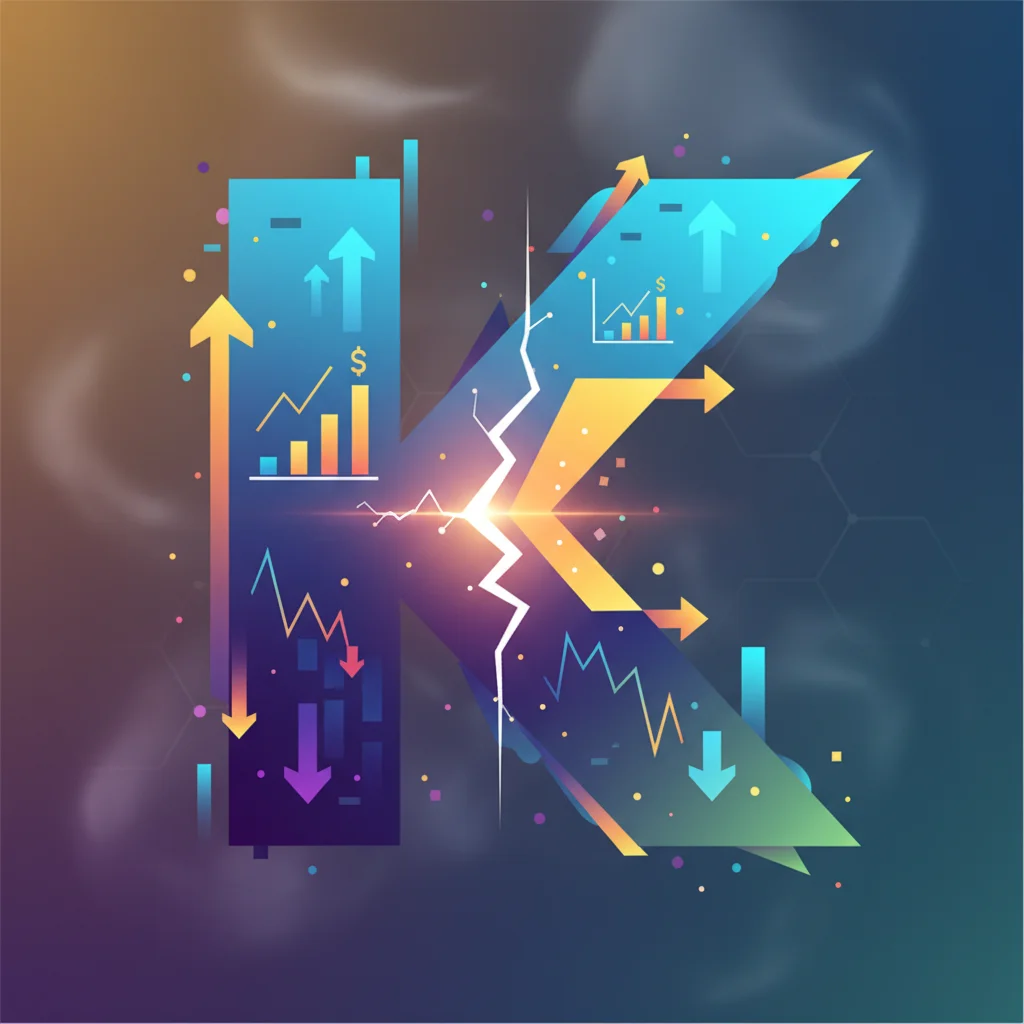
In the world of economics, analysts often use letters to describe the shape of a recovery. A “V” shape represents a sharp downturn followed by a swift rebound. A “U” shape signifies a longer, more protracted slump before growth returns. But the economic landscape that has emerged in recent years, particularly highlighted during Donald Trump’s presidency, defies these traditional models. Instead, we are living in a “K-shaped” economy, a term that vividly illustrates a stark and unsettling divergence in fortunes.
A K-shaped recovery is characterized by two diverging paths. The upper arm of the ‘K’ represents a segment of the economy—industries, businesses, and individuals—that has experienced a rapid and robust recovery, often accelerating past pre-downturn levels. The lower arm of the ‘K’ signifies another segment that is not just recovering slowly but is actively declining, facing persistent hardship and financial distress. As the Financial Times aptly put it, this is an environment where “the rich have got richer and the poor are getting poorer,” creating a chasm that has profound implications for finance, investing, and the very fabric of our society.
This isn’t merely an academic concept; it’s a lived reality reflected in the stock market, housing prices, and employment data. Understanding the forces driving this economic split is no longer optional—it’s essential for investors, business leaders, and anyone looking to navigate the complex financial future ahead.
The Two Paths of the ‘K’: A Tale of Diverging Fortunes
To truly grasp the K-shaped economy, we must examine the two distinct trajectories. The divergence isn’t random; it’s deeply rooted in the structural shifts of the modern economy, accelerated by policy decisions and technological advancement.
The Upward Trajectory: Assets, Tech, and the Professional Class
The upper arm of the ‘K’ is powered by several key engines. First and foremost are asset owners. Unprecedented levels of fiscal and monetary stimulus have flooded the financial system, pushing asset prices—from the stock market to real estate—to record highs. Those who held significant investment portfolios before the downturn have seen their wealth balloon. This isn’t just about the top 1%; it includes a broader swath of the professional class with 401(k)s and home equity.
Secondly, the technology sector and digitally-native industries have thrived. The pandemic acted as a massive catalyst for digital transformation, benefiting companies in e-commerce, cloud computing, software-as-a-service (SaaS), and fintech. Workers in these fields, often able to work remotely, not only kept their jobs but saw their skills become even more valuable. The rise of sophisticated trading platforms and accessible investing apps has further enabled this group to participate in the market’s ascent.
This group’s success creates a virtuous cycle: rising asset values increase their wealth and confidence, leading to more spending and investment, which in turn fuels the very sectors they are a part of. The Great Economic Rewind: Decoding the Trump Campaign's High-Stakes Bet on Nostalgia
The Downward Trajectory: Services, Wages, and Main Street
Conversely, the lower arm of the ‘K’ represents a grim reality for a huge portion of the population. This includes workers in service industries like hospitality, travel, and brick-and-mortar retail—sectors decimated by lockdowns and slow to recover. These jobs are often lower-wage, offer fewer benefits, and cannot be done remotely.
While stimulus checks provided temporary relief, they did little to address the underlying structural issues. For this demographic, the primary economic concern isn’t the performance of their stock portfolio; it’s inflation on essential goods like gas and groceries, rising rents, and job insecurity. According to analysis, the gap between the wealthiest and the poorest has continued to widen, creating a fragile foundation for the broader economy (source). This segment of the population has minimal exposure to the appreciating assets that have enriched those on the upper path, meaning they have been largely excluded from the wealth creation of the past few years.
The Economic Drivers: Policy and Technology as Accelerants
This divergence wasn’t an accident. It was the predictable outcome of specific policy choices and powerful technological trends. Central banking institutions, led by the Federal Reserve, responded to economic shocks with massive liquidity injections and near-zero interest rates. This was designed to keep credit flowing and prevent a systemic collapse, but a primary consequence was massive asset price inflation. It made borrowing cheap for corporations and the wealthy, fueling stock buybacks and M&A activity, while doing little to boost wages for the average worker.
Simultaneously, the relentless advance of financial technology has created a more efficient, but also more bifurcated, financial system. Sophisticated algorithms and high-frequency trading dominate the markets. Fintech platforms offer frictionless investing, but participation remains heavily skewed towards those with disposable income and financial literacy. The promise of democratizing finance is real, but in the short term, it has disproportionately benefited those already equipped to take advantage of it.
The following table illustrates the stark contrast in performance between sectors and assets representing the two arms of the ‘K’.
| Indicator | Upper ‘K’ Trajectory (Growth) | Lower ‘K’ Trajectory (Decline/Stagnation) |
|---|---|---|
| Stock Market Index | Technology & Growth Indices (e.g., Nasdaq 100) | Value & Small-Cap Indices (e.g., Russell 2000) |
| Employment Sector | Software Development, Data Science, Fintech | Hospitality, In-Person Retail, Live Events |
| Household Balance Sheet | Appreciating assets (stocks, real estate) grow wealth | Stagnant wages eroded by inflation on necessities |
| Corporate Health | Companies with strong balance sheets, digital models | Debt-laden businesses reliant on physical foot traffic |
This data makes the divergence painfully clear. The very structure of the modern economy, supercharged by policy, is creating two parallel realities. The 8 Billion Rejection: Why Warner Bros. Is Slamming the Door on Paramount's Mega-Merger
The Future of Finance: Can Blockchain and Fintech Bridge the Gap?
Looking ahead, the question for many in the finance industry is whether technology can be a solution rather than just an accelerant of the divide. This is where emerging technologies like blockchain and decentralized finance (DeFi) enter the conversation. Proponents argue that blockchain can create a more transparent, accessible, and equitable financial system. By removing intermediaries, DeFi could theoretically lower the cost of financial services, from lending to payments, making them available to populations underserved by traditional banking.
However, the reality is complex. Currently, the world of digital assets and blockchain is highly speculative and dominated by knowledgeable, risk-tolerant investors—placing it firmly on the upper arm of the ‘K’. For these technologies to become a true equalizing force, they must overcome significant hurdles related to usability, regulation, and security. Without a focus on financial education and building real-world use cases for the underserved, they risk becoming just another asset class that exacerbates the wealth gap.
The challenge for the financial technology sector is to innovate not just for the affluent but for everyone. This includes creating products that help people on the lower arm of the ‘K’ to save, build credit, and access capital in a fair and transparent way.
Conclusion: Navigating the Divergence for a Resilient Future
The K-shaped economy is more than just a passing headline; it’s the defining characteristic of our time. It presents a challenging environment for policymakers and a complex one for investors and business leaders. The old playbooks of economics, which assumed a rising tide would lift all boats, are no longer sufficient.
For investors, navigating this landscape requires a nuanced approach. It means looking beyond broad market indices and understanding the specific sectors and companies that are positioned to thrive on the upper arm of the ‘K’. It also means being acutely aware of the systemic risks posed by rising inequality. A consumer base that is financially stressed cannot support broad, sustainable economic growth indefinitely. As one report cited, the pressures on the lower end of the economy are immense, with many struggling to afford basic necessities (source).
For business leaders, the imperative is to build resilient organizations that recognize this dual reality. This could mean investing in workforce training, adopting technology that empowers rather than just replaces employees, and understanding that the consumer market is not a monolith but a deeply divided landscape.
Ultimately, the K-shaped recovery is a warning sign. While the gains at the top are real, the struggles at the bottom are a threat to long-term economic stability and social cohesion. Acknowledging and understanding this great divide is the first step toward building more inclusive and sustainable prosperity for all. Beyond the Hype: A Philosophical Guide to Navigating Market Superstition

Related Posts

Beyond the Bricks: Why a ‘Spineless’ Safety Law is a Ticking Time Bomb for the Economy and Your Portfolio
The Pen That Defied Deflation: What a 40-Year Price Hike Tells Us About Japan’s New Economic Reality