The ROI of a Fish and Chip Supper: Deconstructing the Economics of Corporate Goodwill
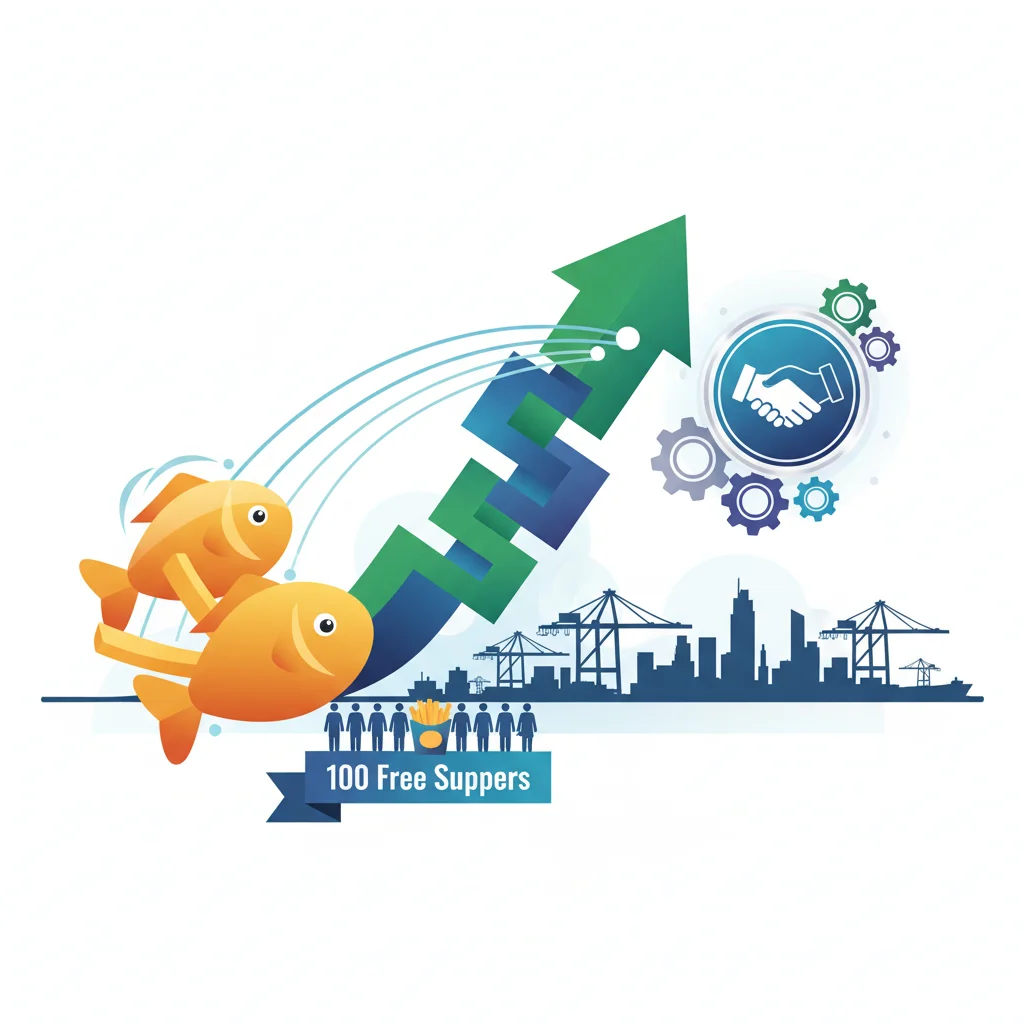
In the bustling port city of Southampton, a small act of kindness is poised to make a significant impact. Raj Khaira, the proprietor of a local fish and chip shop, has pledged to provide 100 free Christmas meals of sausage and chips to those in need. On the surface, this is a heartwarming story of holiday charity—a simple, generous gesture. But for those in the world of finance, investing, and corporate strategy, it serves as a powerful micro-case study in one of the most significant trends shaping the modern economy: the tangible, financial value of corporate social responsibility (CSR).
While Mr. Khaira’s motivation is undoubtedly altruistic, the ripple effects of his decision extend far beyond the 100 individuals receiving a warm meal. This single act embodies the core principles of building brand equity, fostering community loyalty, and generating positive public relations—assets that, in the corporate world, are meticulously tracked, valued in the millions, and increasingly scrutinized by investors on the stock market. How can a gesture worth a few hundred pounds in food costs translate into a lesson for multinational corporations and savvy investors? The answer lies in understanding the sophisticated mechanics of goodwill and its evolving role in our financial ecosystem.
The Microeconomics of a Generous Act: More Than Just Free Chips
Let’s first analyze Mr. Khaira’s decision from a purely business perspective. A small business owner operates on tight margins, where every expense is carefully considered. The decision to give away 100 meals represents a direct, quantifiable cost. However, the potential returns, while less direct, are arguably far more valuable.
- Brand Equity and Reputation: In a competitive market, a positive reputation is invaluable. This act of charity differentiates the shop from its competitors, building a brand associated with community, care, and integrity. This is the same principle that drives billion-dollar corporations to invest in large-scale philanthropic initiatives.
- Customer Loyalty: Local customers who hear about this gesture are more likely to feel a personal connection to the business. This emotional bond can translate into increased patronage and long-term loyalty, creating a more stable revenue stream.
- Earned Media Value (EMV): The story was picked up by the BBC, a major international news organization. The cost of securing an equivalent advertising spot would be substantial. This “earned media” provides free, credible marketing that reaches a vast audience.
- Employee Morale: Staff who work for a business that gives back to the community often report higher job satisfaction and engagement. This can lead to lower turnover and increased productivity, both of which have a direct positive impact on the bottom line.
In essence, this small investment is a masterclass in stakeholder capitalism—the idea that a company’s success is intertwined with the well-being of its customers, employees, and community, not just its shareholders. Beyond Bentleys and Salmon: A Deep Dive into the UK-South Korea Trade Deal's Financial Implications
Scaling the Model: From Local Shops to Global Stock Markets with ESG Investing
What Mr. Khaira is doing on a local level, institutional investors and business leaders are now doing on a global scale through the framework of Environmental, Social, and Governance (ESG) investing. ESG criteria are a set of standards for a company’s operations that socially conscious investors use to screen potential investments. The “Social” component of ESG directly reflects the principles of Mr. Khaira’s actions: how a company manages relationships with its employees, suppliers, customers, and the communities where it operates.
For decades, the prevailing wisdom in economics, famously articulated by Milton Friedman, was that the sole social responsibility of a business is to increase its profits. However, a seismic shift has occurred. A growing body of evidence suggests that companies with strong ESG performance may actually generate superior long-term financial returns. According to a report from Morningstar, in 2023, sustainable funds in the U.S. saw inflows of $13.6 billion, while the broader fund universe experienced outflows (source). This demonstrates a clear investor preference for companies that prioritize more than just the bottom line.
To illustrate this trend, consider the growth of global assets in sustainable funds over the past several years. The data shows a clear and accelerating interest in this area of investing.
| Year-End | Global Assets Under Management |
|---|---|
| 2020 | $1.65 T |
| 2021 | $2.74 T |
| 2022 | $2.50 T |
| 2023 | $3.00 T |
Source: Data compiled and estimated from various industry reports, including the Global Sustainable Investment Alliance (GSIA) and Morningstar (source). Note: 2022 saw a dip due to broad market downturns, but the rebound in 2023 highlights resilient investor demand.
The Fintech Revolution: Supercharging Social and Economic Impact
The intersection of philanthropy and finance is being revolutionized by fintech and emerging technologies like blockchain. These innovations are creating more efficient, transparent, and accessible ways for both individuals and corporations to engage in socially responsible activities, amplifying the impact of every dollar or, in our initial example, every plate of sausage and chips.
Financial Technology (Fintech) and the Democratization of Giving
Platforms like GoFundMe, Kickstarter, and Kiva have fundamentally changed the landscape of fundraising and social impact. They leverage technology to connect individuals directly with causes they care about, bypassing traditional gatekeepers. For corporations, fintech offers tools for managing CSR programs, tracking employee giving, and measuring the impact of their social investments with unprecedented accuracy. This data-driven approach allows companies to optimize their CSR strategy for maximum social and financial return, transforming it from a simple expense into a sophisticated investing activity.
Blockchain: The Ultimate Ledger of Trust
One of the biggest challenges in philanthropy is ensuring that donations reach their intended recipients efficiently and without corruption. This is where blockchain technology offers transformative potential. By creating a decentralized, immutable ledger, blockchain can provide an unprecedented level of transparency in the donation process.
Imagine a large corporation donating to a disaster relief fund. Using a blockchain-based system:
- The donation is recorded as a transaction on the blockchain, visible to the public.
- The funds can be tracked as they move from the corporate donor to the NGO, and then to the specific vendors providing aid (e.g., for food, water, shelter).
- Every step is cryptographically secured and cannot be altered, drastically reducing the risk of fraud and administrative waste.
This level of transparency not only builds trust with donors and the public but also provides companies with verifiable data to include in their ESG reports, satisfying the demands of modern investors and regulators. This is a prime example of how deep tech is reshaping traditional aspects of finance and corporate governance. The UK's Economic Puzzle: Rising Unemployment, Resilient Wages, and What It Means for Your Finances
The Macroeconomic Case for Doing Good
When we zoom out from the individual business to the entire economy, the cumulative effect of these socially responsible actions becomes even more apparent. An economy where businesses actively invest in their communities is often more resilient, stable, and prosperous.
This concept is central to the principles of a “circular economy,” where resources are reused and waste is minimized, and to stakeholder capitalism, which posits that a company’s long-term success is dependent on a healthy society. A company that pays fair wages, invests in local education, and supports community health initiatives contributes to a more skilled workforce and a stronger consumer base. According to a 2022 study by the World Economic Forum, a transition to a stakeholder-driven economic model could unlock trillions of dollars in new economic value annually (source).
Governments recognize this symbiotic relationship and often encourage it through the banking and tax systems. Tax deductions for charitable contributions, for example, are a direct financial incentive for corporations and individuals to engage in philanthropy. This policy acknowledges that private-sector social investment can reduce the burden on public services and foster a more robust economic environment for everyone.
This shift represents a fundamental evolution in our understanding of economics. We are moving away from a purely extractive model of capitalism towards one that recognizes the profound and profitable interconnectedness of business and society.
Conclusion: From a Single Meal to a New Financial Paradigm
We began with a simple story: a fish and chip shop owner in Southampton giving away 100 free meals. We end with a view of a global financial system in the midst of a profound transformation. Raj Khaira’s act of generosity, while small in scale, is a perfect real-world illustration of the principles now driving multi-trillion-dollar investment trends, shaping corporate boardrooms, and being powered by cutting-edge financial technology.
The key takeaway for investors, business leaders, and financial professionals is that the line between social good and financial performance is not just blurring—it is disappearing. In the 21st-century economy, building a resilient, profitable, and sustainable enterprise requires a genuine investment in the well-being of the community. Whether it’s through a local act of kindness or a sophisticated, blockchain-verified global ESG strategy, the message is the same: doing good is, unequivocally, good for business.

Related Posts

The Blackpool Food Bank and the Canary in the Coal Mine: What a £9,000 Donation Reveals About Our Economy

The Fusion-Powered Meme Stock: Decoding the Wild Merger of Trump Media and a Nuclear Energy Moonshot