The New Silk Road: How China is Dominating the Global Luxury Food Market
From ‘Made in China’ to ‘Dined in Michelin’: The Unseen Economic Revolution on Your Plate
For decades, the words “caviar,” “foie gras,” and “truffles” have conjured images of Russian dachas, French countryside estates, and Italian forests. These delicacies were the exclusive domain of established European artisans, symbols of heritage, and staples of high finance dinner tables. The “Made in China” label, conversely, was associated with electronics, textiles, and mass-produced goods. But in the intricate world of global economics and investing, the most profound shifts often happen quietly, away from the headlines of the stock market. One such revolution is unfolding on the world’s most exclusive menus, and it signals a fundamental reshaping of the luxury goods economy.
China, long the world’s factory, is rapidly transforming into its luxury pantry. Through a strategic combination of state-backed ambition, technological adoption, and formidable economies of scale, Chinese producers are not just entering the high-end food market—they are beginning to dominate it. They are displacing century-old European incumbents, altering global supply chains, and challenging long-held perceptions of quality. For investors, business leaders, and anyone interested in the future of the global economy, this is more than a story about expensive food; it’s a case study in strategic market disruption and the relentless evolution of economic power.
The Caviar Coup: How a Chinese Company Conquered the ‘Black Gold’ Market
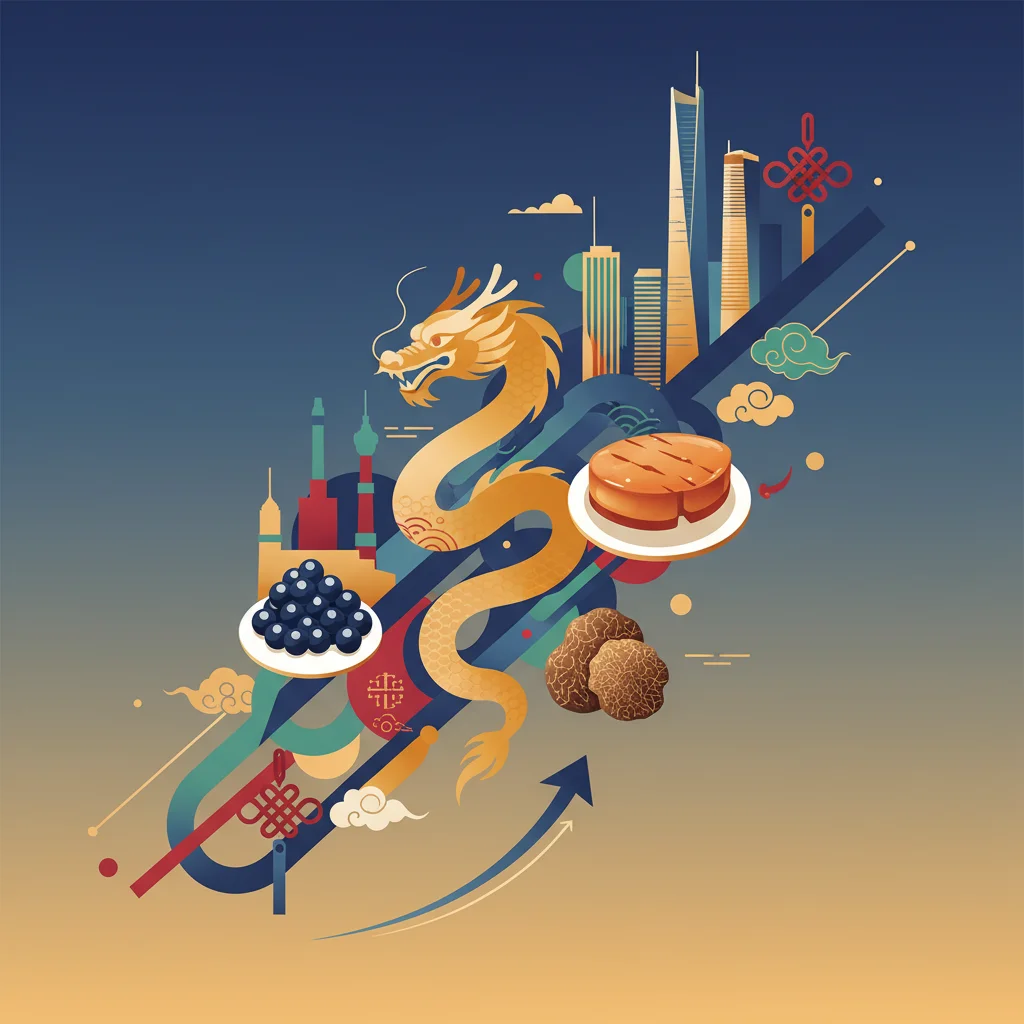
The story of this disruption is best told through the journey of sturgeon roe, or caviar. Historically, the finest caviar came from wild sturgeon in the Caspian Sea, controlled by Russia and Iran. However, overfishing led to CITES bans and the rise of aquaculture. This is where the Chinese saw an opportunity. Enter Kaluga Queen, a brand that, in less than two decades, has become the world’s largest producer of caviar. The company now supplies an estimated 35% of the global market, gracing the tables of 26 of the 27 three-Michelin-starred restaurants in Paris and even being served in the first-class cabins of airlines like Lufthansa.
How did they achieve this? It wasn’t by accident. The company’s success is a masterclass in long-term strategic planning and vertical integration. They established sprawling aquaculture farms in places like Qiandao Lake, an environment that proved ideal for raising sturgeon. By controlling the entire process—from breeding and raising the fish (a process that can take over a decade) to harvesting and processing the roe—they achieved unparalleled cost efficiencies. This allowed them to undercut traditional European producers on price without significantly compromising on quality, a classic market disruption strategy. The economics are simple yet powerful: lower labor costs, vast land and water resources, and government support create a formidable competitive advantage.
This shift has sent shockwaves through the traditional finance and investment communities that back European luxury brands. What was once a stable, heritage-driven market is now facing a high-volume, cost-competitive challenger that is redefining the very notion of luxury.
The Paranormal Activity of the Market: What Horror Theater Reveals About Unseen Financial Risks
Beyond Caviar: The Foie Gras Frontier and a Pattern of Dominance
This isn’t an isolated incident. The same pattern is repeating in the market for foie gras, the fatty liver of a duck or goose, a delicacy synonymous with French gastronomy. While France still dominates in terms of cultural significance, China is rapidly becoming a production powerhouse. This was accelerated by a strategic partnership between French agricultural co-operative Euralis and a local Chinese group. This venture brought French expertise and breeding stock to China, combining it with local production efficiencies.
The result is a burgeoning domestic industry that is not only satisfying China’s growing internal demand for luxury goods but is also beginning to eye export markets. The implications for the global economy are significant. As Chinese producers scale up, they will inevitably exert downward pressure on global prices, impacting the profitability of European farmers and the stock market valuations of publicly traded food conglomerates.
To provide a clearer picture of this market shift, consider the competitive advantages China is leveraging across these luxury food sectors:
| Factor | Traditional European Producers | Modern Chinese Producers |
|---|---|---|
| Production Model | Artisanal, smaller scale, heritage-based | Industrial scale, vertically integrated, technology-driven |
| Cost Structure | High labor costs, strict regulations | Lower labor costs, economies of scale |
| Market Focus | Primarily export and established domestic markets | Massive domestic market and growing export ambitions |
| Investment Horizon | Long-term, stable returns | Aggressive growth, market share acquisition |
This table illustrates a classic economic confrontation: the established artisan versus the industrial challenger. The difference today is that the challenger is aiming for the premium, not the budget, segment of the market.
Investment Implications and the Role of Financial Technology
For those in finance and investing, this trend presents both threats and opportunities. The stock market performance of European luxury food producers could face headwinds as their pricing power erodes. Active traders may find opportunities in shorting these legacy companies or going long on the Asian agritech firms that are powering this revolution.
However, the most significant challenge for Chinese producers remains one of perception: the “Made in China” stigma. In the world of luxury, provenance and trust are paramount. This is where innovative financial technology, or fintech, could play a crucial role. To build trust with discerning global consumers, Chinese firms are beginning to explore using blockchain for supply chain verification. A transparent, immutable ledger that tracks a product from farm to table—verifying its origin, handling conditions, and authenticity—could be the ultimate tool to overcome skepticism. This convergence of agriculture and blockchain technology showcases how fintech is becoming a critical enabler for industries far removed from traditional banking.
Investing in this space, therefore, isn’t just about agriculture. It’s about investing in the picks and shovels: the agritech, the logistics, and the financial technology platforms that will underpin this new global food order. The banking sector also has a role to play in financing the massive capital expenditures required for these large-scale aquaculture and farming operations.
The Investor's Crossword: Decoding Market Signals to Solve the Financial Puzzle
The Future of Luxury: A Redefined Global Palate
The rise of China as a luxury food powerhouse is a multifaceted phenomenon with deep roots in economics, finance, and global trade strategy. It demonstrates a country moving up the value chain, no longer content with being the world’s workshop. The success of companies like Kaluga Queen has been so profound that, as the Financial Times reports, many Western brands now quietly rebrand Chinese-made caviar as their own, a testament to the quality that is now being achieved.
This trend challenges Western businesses to innovate beyond their heritage. They can no longer rely on the country of origin as their sole competitive advantage. They must compete on technology, efficiency, and marketing prowess. For investors and financial professionals, the lesson is clear: the global economic landscape is in constant flux. The forces of globalization that once sent manufacturing jobs to China are now bringing the production of the world’s most exclusive products to its shores.
The next time you see caviar or foie gras on a menu, it’s worth asking where it came from. The answer may surprise you, and it speaks volumes about the future of the global economy and the new silk road of luxury goods being paved from the East.
The Atlantic Divide: Why a Landmark US-UK Tech Deal is on Ice and What it Means for Your Investments
This is not just a culinary shift; it’s a recalibration of economic power. The ability to produce not just necessities but the most sought-after luxuries is a hallmark of a mature and confident economy. As China continues to master the art and science of high-end production, the world of investing must pay close attention. The menu of global opportunities is changing, and the most profitable seats will go to those who can read the new ingredients list.

Related Posts
The Angel’s Share Gets Too Large: Navigating the Investment Risks and Opportunities in the Scotch Whisky Glut
Beyond the Western Lens: Decoding China’s Characteristically Different Economic Blueprint for 2025