The Art of the Lie: How AI is Forging a New Era of Masterful Deception
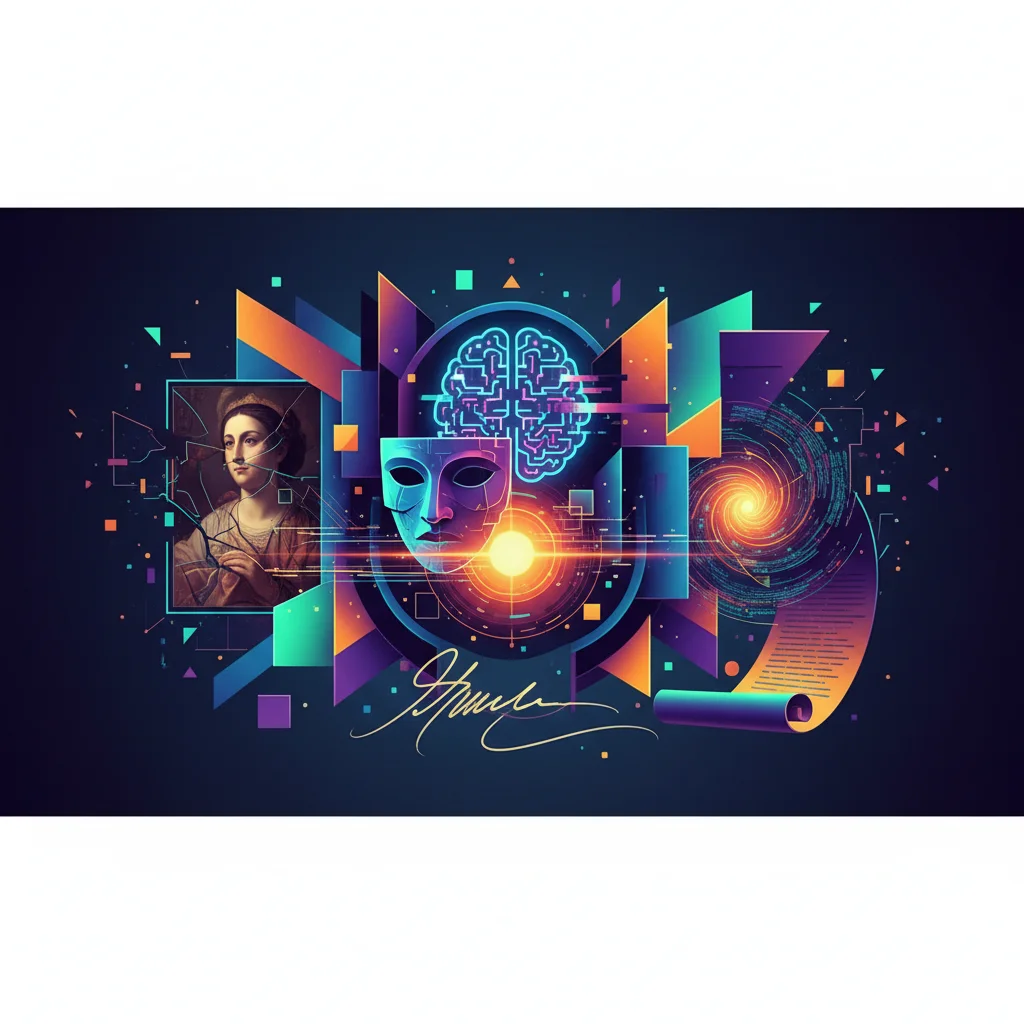
Imagine this: You’re a seasoned art collector, about to acquire a lost masterpiece. The painting looks perfect, the artist’s signature is flawless, and the documentation is impeccable. You have a crisp sales invoice from a 1950s Parisian gallery, a handwritten letter from a previous owner detailing its history, and a modern certificate of authenticity. You authorize the seven-figure wire transfer. A month later, an expert reveals the truth: the painting is a clever fake, but the real masterpiece of deception was the paperwork. It wasn’t forged by a master criminal with a vintage typewriter and aged ink; it was generated in seconds by an AI chatbot.
This isn’t a scene from a futuristic heist movie. It’s the new reality unfolding at the intersection of high culture and high tech. According to industry figures cited by the Financial Times, fraudsters are now weaponizing artificial intelligence to attack the very foundation of the art market: provenance. By using sophisticated chatbots, they can create a flawless, entirely fictional history for fraudulent artworks, making multi-million dollar scams more convincing and scalable than ever before.
This technological leap represents a paradigm shift in forgery. We’re moving from the painstaking craft of faking a physical object to the automated, mass production of fake trust. For developers, entrepreneurs, and cybersecurity professionals, this is a canary in the coal mine, signaling a new wave of AI-driven threats that will soon impact every industry built on verifiable documentation.
From Paintbrushes to Prompts: The Evolution of Forgery
For centuries, art forgery was an artisanal, high-skill crime. It required a deep understanding of art history, mastery of period-specific materials (pigments, canvases, frames), and an artist’s touch to replicate a master’s style. The barrier to entry was immense. Forging the supporting documentation, or provenance, was equally challenging, requiring access to vintage paper, typewriters, and the ability to mimic historical writing styles.
Enter generative AI. Today’s large language models (LLMs) are, at their core, incredibly sophisticated pattern-recognition and text-generation engines. They have been trained on vast swathes of the internet, including historical documents, academic papers, and auction catalogs. This gives them an unprecedented ability to replicate the tone, style, and specific details of historical documents with terrifying accuracy.
A fraudster no longer needs to be a historian or a master forger. They simply need to be a good programmer or prompt engineer. They can instruct an AI with a prompt like:
“Write a 1962 sales invoice from the ‘Galerie Lefèvre’ in Paris for the painting ‘Sunset over Collioure’ by Henri Matisse. The buyer is Mr. Alistair Finch, a British industrialist. The price is 85,000 French Francs. Use the formal language and layout typical of a high-end art gallery of that era.”
In seconds, the AI can produce a document that is not only textually convincing but can also be formatted to look visually authentic. This democratization of deception is what makes this new threat so potent. The report highlights that these AI-generated documents are being used to lend credibility to both physical forgeries and non-existent “digital twin” artworks linked to NFTs.
Beyond the Parcel: Why the EU's Crackdown on Shein is a Wake-Up Call for Tech
Anatomy of an AI-Powered Art Fraud
The true power of this new method lies in its ability to create a deep, interwoven web of false history. A single AI can generate an entire “provenance package” that tells a compelling, consistent story. The level of detail and sophistication is a quantum leap beyond old-school forgeries.
Here’s a comparison of the old and new schools of forgery, highlighting the disruptive power of AI:
| Aspect of Forgery | Traditional Method (Pre-AI) | AI-Powered Method |
|---|---|---|
| Skill Required | Deep historical knowledge, artistic talent, access to rare materials. Extremely high barrier to entry. | Prompt engineering skills, basic graphic design. Low barrier to entry. |
| Cost & Time | Weeks or months of work per document; high cost for materials and labor. | Seconds or minutes per document; near-zero marginal cost using cloud-based AI services. |
| Scalability | Extremely limited. Each forgery is a bespoke, time-intensive project. | Infinitely scalable. A fraudster can generate thousands of unique fake documents with simple automation scripts. |
| Consistency | Difficult to maintain a consistent story across multiple forged documents. Prone to human error. | AI can maintain perfect consistency in names, dates, and narrative across dozens of documents. |
| Plausibility | Relies on the forger’s personal knowledge. Can contain anachronisms or factual errors. | AI cross-references its vast training data to create historically plausible details, avoiding obvious mistakes. |
This shift from a high-cost, low-scale craft to a low-cost, high-scale automated process is a classic example of technological disruption—only in this case, it’s disrupting the business of crime. The innovation here is the application of existing machine learning models to exploit a system—the art market—that has long relied on paper-based trust signals.
The Ripple Effect: When AI-Forged Reality Bleeds into Other Industries
The implications of AI-generated documentation extend far beyond the gilded frames of the art world. Any industry that relies on historical records or documentary evidence is now a potential target. This is a critical cybersecurity concern for professionals across the board.
- Finance & Lending: Imagine AI-generated business invoices, bank statements, and profit-and-loss reports used to secure fraudulent loans or investments. The automation and plausibility could bypass initial software-based checks.
- Real Estate: Forging historical deeds, zoning permits, or environmental reports to sell problematic properties or create ownership disputes.
- Legal & Insurance: Creating fake police reports, medical records, or witness statements to support fraudulent insurance claims or influence litigation.
- Recruitment: Startups and established companies alike could be fooled by candidates with AI-generated resumes, reference letters, and even entire portfolios of “past work.”
This new threat vector demands a fundamental rethinking of our approach to verification. As one expert in the FT article notes, the practice of simply “ticking the box” on due diligence is no longer sufficient. The ease with which convincing fakes can be made means that human oversight, armed with better tools, is more critical than ever.
The New OS for Networking: Why London's Private Clubs Are a Blueprint for Tech's Elite
The Digital Arms Race: Fighting AI Fakes with Smarter AI
The rise of AI as a tool for fraud necessitates the development of AI as a tool for defense. A new generation of cybersecurity innovation is required to counter this threat, creating a digital arms race between forgers and defenders. This is where developers, data scientists, and tech entrepreneurs have a crucial role to play.
The defensive playbook includes a multi-layered approach combining human expertise with cutting-edge technology:
- AI-Powered Anomaly Detection: The same machine learning principles used to generate text can be used to detect it. Defensive AI models can be trained to spot the subtle statistical “tells” of synthetic text—unusual word patterns, unnaturally perfect grammar, or a lack of idiosyncratic human error. This is a burgeoning field of programming and software development.
- Digital Provenance & Blockchain: The vulnerability of paper records highlights the need for secure, immutable digital histories. Startups are already building SaaS platforms using blockchain technology to create a tamper-proof “digital passport” for physical assets, tracking every transaction from creation to present day. While not a silver bullet, it makes recent history much harder to forge.
- Enhanced Forensic Analysis: Traditional forensic methods must be augmented with digital tools. This includes metadata analysis of digital files, stylistic analysis of generated text, and cross-referencing claims against a massive, secure database of known facts, transactions, and historical records. This requires powerful cloud infrastructure and sophisticated algorithms.
- The Human-in-the-Loop: Ultimately, technology is a powerful assistant, not a replacement for human expertise. Art historians, forensic accountants, and fraud investigators will need to use these new AI tools to amplify their own skills. The future of due diligence is a partnership between human intuition and machine learning’s analytical power. As art adviser and fraud expert Anny Shaw states, there’s a risk of “experts being replaced by tech,” but the optimal solution involves tech empowering the experts.
The Delivery Hero Dilemma: When Hyper-Growth Hits a Reality Wall
The Future is Forged: Navigating a New Landscape of Trust
The use of artificial intelligence to forge art documentation is more than just a clever crime; it’s a profound warning. It demonstrates how easily our systems of trust, many of which are still based on centuries-old paper-based paradigms, can be dismantled by modern technology. The line between authentic and artificial is blurring, and the consequences will be felt far beyond auction houses.
For the tech community, this is a call to action. The same innovation that created this problem holds the key to its solution. There is a pressing need for a new class of cybersecurity software, cloud-based verification platforms, and AI-driven analytical tools. For entrepreneurs and startups, the challenge of authenticating reality in the age of AI is one of the most significant—and potentially lucrative—problems to solve.
The masterpiece of the 21st-century forger may not be a painting, but a perfectly crafted lie. Our challenge is to build the tools and cultivate the expertise to see the truth through the elegant, automated deception.

Related Posts
The New Cold War is Digital: Unpacking the UK Government Hack and What it Means for Tech
TikTok’s Digital Iron Curtain: How ByteDance Averted a US Ban and Redefined Global Tech