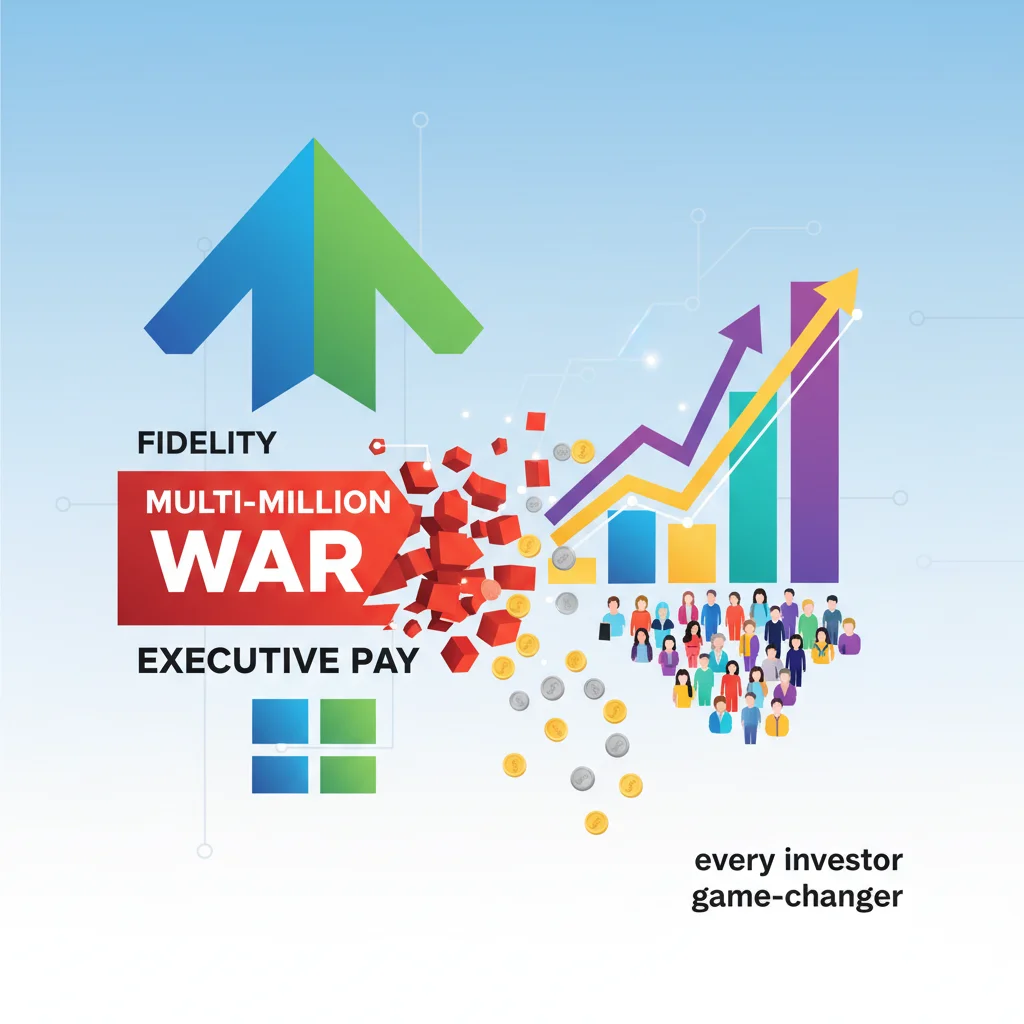
The Paycheck Rebellion: Why Fidelity’s War on Executive Pay Is a Game-Changer for Every Investor
In the intricate world of finance and investing, few topics stir as much debate as executive compensation. The multi-million dollar pay packages of top CEOs often make headlines, leaving investors and the public wondering if such figures are truly justified. Now, a titan of the asset management world is drawing a firm line in the sand. Fidelity International, a global powerhouse overseeing billions in assets, has put corporate boards on notice: the era of rubber-stamping excessive pay is over. This isn’t just a memo; it’s a seismic shift with profound implications for the stock market, corporate governance, and the very fabric of our economy.
The firm has explicitly warned that it will vote against remuneration packages and even the re-election of board members at UK companies it deems too generous with shareholder money. This proactive stance, detailed in a report by the Financial Times, signals a new chapter in the ongoing saga of shareholder activism, moving beyond passive disapproval to direct, consequential action.
The Heart of the Matter: Fidelity’s Ultimatum
Fidelity’s message is clear and direct. Jenn-Hui Tan, the firm’s global head of stewardship and sustainable investing, has articulated a new policy of heightened scrutiny. The focus is not merely on the size of the paycheck but on its structure, transparency, and alignment with long-term company performance. For too long, critics argue, executive bonuses have been tied to short-term metrics or vague, non-financial targets that are easily met, creating a system of reward without commensurate risk or achievement.
The consequences for non-compliance are significant. In the world of corporate governance, a “no” vote from a major institutional investor like Fidelity carries immense weight. It can tarnish a company’s reputation, signal a lack of confidence to the broader market, and, in cumulative cases, lead to the ousting of directors on remuneration committees. This is the financial equivalent of a warning shot across the bow, intended to force boards to rethink their entire approach to compensation philosophy. The move reflects a growing sentiment that the interests of executives have become decoupled from the interests of the shareholders who own the company and the employees who create its value.
The Brussels Effect in Reverse: Is Europe's Regulatory Empire Stifling Its Own Economy?
A Rising Tide: The Broader Context of Shareholder Activism
Fidelity’s crackdown doesn’t exist in a vacuum. It represents a powerful current in a much larger tide of evolving corporate accountability. This trend is fueled by several key factors:
- The Rise of ESG Investing: Environmental, Social, and Governance (ESG) criteria have become central to modern investment strategy. Executive pay falls squarely under the ‘G’ for Governance. Investors increasingly see well-structured, reasonable compensation as a hallmark of a well-run company, while excessive pay is viewed as a major red flag indicating a weak board and a culture that prioritizes executives over long-term health.
- Widening Pay Gaps: The disparity between CEO and average worker pay has exploded in recent decades. In 2022, the average S&P 500 company CEO-to-worker pay ratio was a staggering 344-to-1, according to the AFL-CIO. This growing inequality has social and economic ramifications, and institutional investors are facing pressure to use their influence to address it.
- Fiduciary Duty: Asset managers have a fiduciary duty to act in the best financial interests of their clients. Misaligned or excessive pay structures can destroy long-term shareholder value by incentivizing risky short-term behavior, diluting shareholder equity through excessive stock grants, or draining cash that could be used for R&D, dividends, or stock buybacks.
This movement is transforming the role of large asset managers from passive capital allocators to active stewards of the economy. They are recognizing that their votes in the boardroom have real-world consequences, affecting everything from a company’s strategic direction to its impact on society.
Decoding Executive Pay: A Look Under the Hood
To understand the significance of Fidelity’s stance, it’s crucial to demystify how executive pay is determined. It’s not a simple salary; it’s a complex cocktail of components designed, in theory, to align the executive’s interests with those of shareholders. The decision-making body is the Remuneration Committee, a subset of the company’s board of directors.
However, the effectiveness of these packages is a subject of intense debate. Below is a table contrasting the characteristics of well-structured versus poorly-structured compensation plans from an institutional investor’s perspective.
| Characteristic | Well-Structured Plan (Investor-Friendly) | Poorly-Structured Plan (Red Flag) |
|---|---|---|
| Performance Metrics | Tied to clear, measurable, and challenging long-term goals (e.g., Total Shareholder Return vs. peers, Return on Invested Capital). | Based on vague, non-financial targets, easily manipulated accounting metrics, or simple share price growth which can be influenced by market-wide trends. |
| Vesting & Hold Periods | Long vesting periods for stock awards (3-5 years) and requirements for executives to hold stock even after leaving the company. | Short vesting periods that encourage short-term thinking and allow executives to cash out quickly, regardless of long-term outcomes. |
| Discretion | Limited board discretion. Payouts are formulaic based on performance. | High levels of board discretion, allowing committees to award bonuses even when pre-set targets are missed. |
| Peer Grouping | Benchmarking against a relevant and aspirational peer group of companies. | “Cherry-picking” a peer group of larger, higher-paying companies to artificially justify higher compensation. |
| Clawback Provisions | Strong “clawback” provisions that allow the company to reclaim compensation in cases of financial restatements or misconduct. | Weak or non-existent clawback provisions, meaning pay is guaranteed even if performance was based on faulty data. |
There’s also a fascinating technological angle to consider. The rise of fintech platforms and retail trading apps is democratizing shareholder participation. In the future, it may not just be giants like Fidelity wielding this power. Imagine a future where millions of retail investors, empowered by user-friendly financial technology, can easily vote their shares in blocs, creating a powerful new force for accountability. While still nascent, this trend could amplify the pressure on boards exponentially. This is a fundamental shift in the power dynamics of the stock market, moving from a system dominated by a few institutions to a more distributed model of corporate oversight.
The Ripple Effect: What This Means for You
The implications of this heightened scrutiny extend far beyond the boardrooms of London-listed companies. This is a development that every participant in the global economy should watch closely.
For Investors
Whether you are a seasoned professional managing a fund or a retail investor building a retirement portfolio, this is good news. Better corporate governance, driven by shareholder pressure, historically correlates with stronger, more sustainable long-term returns. When executive pay is tied to genuine value creation, it aligns the C-suite with your own financial goals. This move helps protect your capital from being used to enrich executives for mediocre performance.
For Business Leaders and Boards
The message is unequivocal: the status quo is no longer acceptable. Remuneration committees will need to become more rigorous, transparent, and creative in designing compensation plans. They must be prepared to defend their decisions not just with glossy presentations, but with hard data that demonstrates a clear link between pay and performance. The era of simply benchmarking against peers to justify raises is coming to an end. A 2021 study from Harvard Law School’s Forum on Corporate Governance highlighted the increasing pressure to link pay to ESG metrics, a trend Fidelity’s policy will surely accelerate.
The Bo Diddley Beat: Rock's Original Blockchain and the Economics of a Foundational Rhythm
For the Broader Economy
The issue of executive pay is deeply intertwined with the field of economics and discussions about inequality. While this action alone won’t solve systemic economic disparities, it is a step toward a more equitable form of capitalism. By ensuring that rewards at the top are earned rather than simply given, it helps restore faith in the fairness of the market system. A healthier, more accountable corporate sector is the bedrock of a stable and prosperous economy.
The Future of Corporate Governance
Fidelity’s policy is a bellwether for the future of corporate governance and the role of capital in society. We are moving toward a model where ownership entails active stewardship. This trend is likely to expand beyond pay to other critical areas like climate transition strategies, human capital management, and data privacy.
Technology will undoubtedly play a pivotal role. While still largely speculative, some futurists in the fintech space envision a world where blockchain technology could be used to create immutable and transparent corporate voting systems, further empowering shareholders and eliminating ambiguity. Regardless of the specific tools, the direction of travel is clear: toward greater transparency, accountability, and a rebalancing of power between corporate managers and their ultimate owners—the shareholders.
In conclusion, Fidelity’s pledge to crack down on excessive pay is more than just a policy update; it’s a statement of intent and a reflection of a paradigm shift in the world of investing. It’s a reminder that in the complex machinery of the global finance and banking ecosystem, the power to effect change often lies with those who control the capital. By choosing to wield that power more forcefully, Fidelity is not just challenging a few overpaid executives; it’s challenging the entire corporate world to do better.

Related Posts

The “Merry Christmas Baby” Portfolio: Timeless Lessons on Investing, Economics, and Enduring Value
The Dragon Takes a Breath: Why China’s Stock Market Rally Is Facing a Harsh Economic Reality