The Geopolitical Gambit: How Tencent is Tapping Nvidia’s Elite AI Chips Through a Japanese Backdoor
The $128 Million Question: A Geopolitical Chess Move in the AI Arms Race
In the high-stakes world of global finance and technology, the stock market often tells a story long before the headlines catch up. Consider Datasection, a once-modest Japanese data analytics firm. In a matter of months, its stock price surged from around ¥450 to over ¥2,000, a meteoric rise that left many investors scrambling for answers. The reason? A cleverly structured series of contracts with Chinese tech behemoth Tencent, designed to navigate the turbulent waters of the US-China tech war and secure access to the one resource every AI player covets: Nvidia’s top-of-the-line H100 AI chips.
This isn’t just a story about a lucrative business deal. It’s a masterclass in financial engineering and geopolitical strategy, a narrative that intertwines the global economy, complex international relations, and the relentless march of financial technology. At its core, it reveals how capital and corporate ingenuity can create pathways around political barriers, raising profound questions about the future of technology, investing, and the effectiveness of economic sanctions.
The Digital Iron Curtain: Why Nvidia’s Chips are Forbidden Fruit
To understand the genius—and the controversy—of this deal, one must first grasp the current geopolitical landscape. The global economy is increasingly defined by the technological rivalry between the United States and China. At the heart of this competition lies Artificial Intelligence, and the engine of modern AI is the Graphics Processing Unit (GPU), a market utterly dominated by US-based Nvidia.
Nvidia’s H100 and newer B200 chips are the gold standard, the essential hardware for training the large language models (LLMs) that power services like ChatGPT. Recognizing this strategic chokepoint, the US government has imposed strict export controls, effectively banning the sale of these advanced chips to Chinese companies. The goal is to slow China’s progress in AI, a technology with significant military and economic implications. For companies like Tencent, a leader in gaming, social media, and cloud computing, this blockade represents an existential threat to their future ambitions.
Datasection’s Transformation: From Obscurity to “Neocloud” Powerhouse
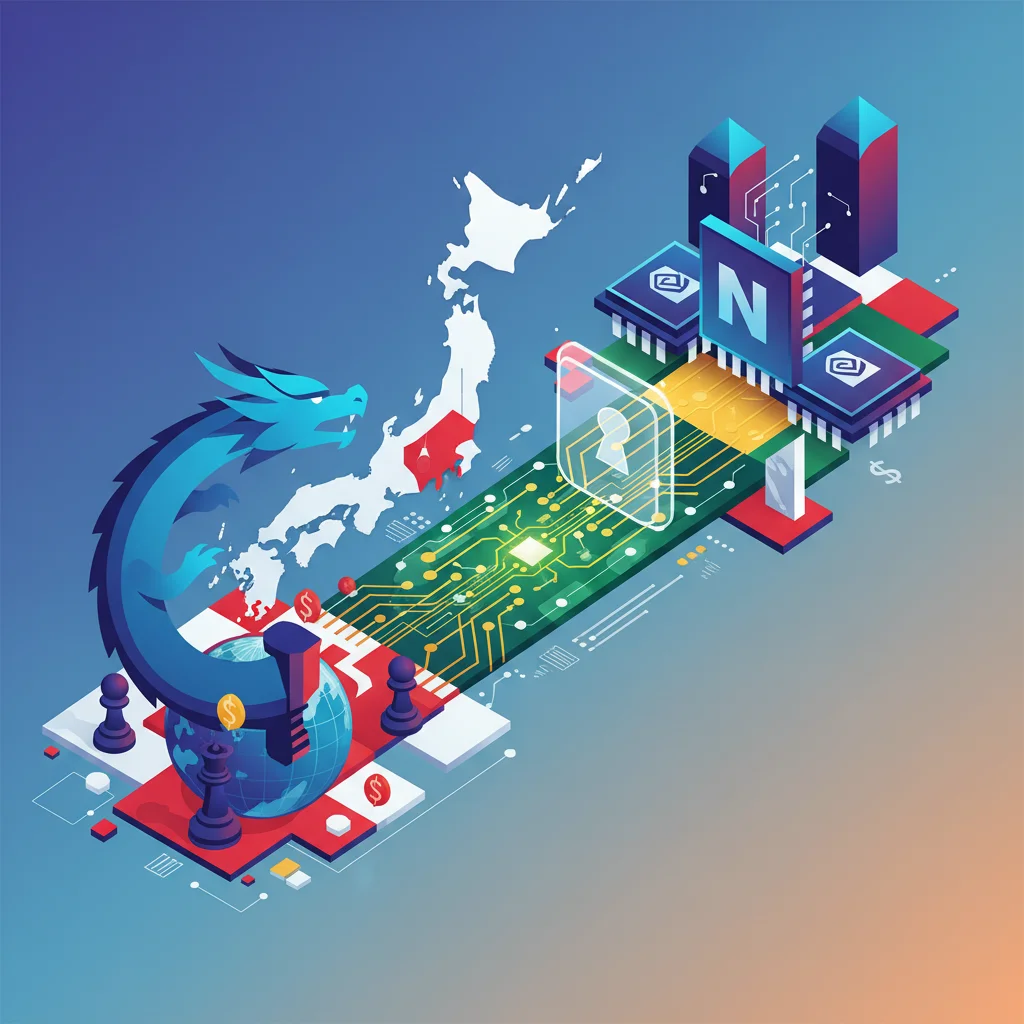
This is where Datasection enters the picture. The Japanese firm, through an intricate arrangement, has become the conduit for Tencent to access the processing power it desperately needs. The structure is a testament to modern financial innovation. Tencent isn’t buying the chips directly; that would violate US sanctions. Instead, it is bankrolling Datasection to the tune of ¥20 billion ($128 million) to purchase and house thousands of Nvidia’s H100 GPUs in Japanese data centers.
Datasection then leases this immense computing power back to its clients, chief among them being Tencent. This arrangement has given rise to a new term in the tech and finance lexicon: the “neocloud.” Unlike traditional cloud providers (like Amazon’s AWS or Microsoft’s Azure) that own and operate their infrastructure for a broad market, a neocloud is a more specialized entity, often funded by a primary “anchor” tenant to serve its specific, high-demand needs while also offering services to others.
The table below breaks down the roles of each key player in this innovative structure:
| Entity | Role in the Deal | Primary Motivation |
|---|---|---|
| Tencent (China) | Provides the capital and acts as the anchor tenant for the computing power. | To gain access to state-of-the-art AI processing power, bypassing US export controls. |
| Datasection (Japan) | Purchases Nvidia chips, builds the data center infrastructure, and operates the “neocloud” service. | To rapidly scale its business, generate significant revenue, and become a major player in the AI infrastructure market. |
| Nvidia (USA) | Sells its H100 GPUs to a legitimate buyer in a non-restricted country (Japan). | To sell its high-demand products legally while complying with US government regulations. |
This model allows Nvidia to compliantly sell its chips to a Japanese company, while Tencent gains access to the computational power generated by those chips without ever taking ownership or control of the physical hardware. It’s a sophisticated workaround that exists in a legal gray area, one that is sure to be scrutinized by regulators.
The Stock Market’s Verdict and the Broader Economic Implications
For the financial markets, the verdict on Datasection has been swift and decisive. The company’s stock has become a darling of the Tokyo trading scene. This explosive growth reflects investor optimism that Datasection has found a highly profitable niche in the global AI supply chain. By positioning itself as a neutral host for restricted technology, it is tapping into the colossal demand from China’s tech giants.
However, this deal has broader implications for the global economy and the practice of banking and finance. It demonstrates that capital is fluid and will always seek the path of least resistance to the highest return. US sanctions, while powerful, have spurred the creation of new, complex financial instruments and corporate structures to circumvent them. This trend could lead to a more fragmented global financial system, with different blocs operating under different rules and using intermediary nations like Japan or Singapore as financial and technological clearinghouses.
This dynamic challenges the traditional models of international trade and investment, forcing finance professionals and business leaders to account for a new layer of geopolitical risk in their decision-making. The “neocloud” model could be replicated in other sectors facing similar restrictions, from biotechnology to advanced materials, creating a shadow infrastructure that operates in parallel to the officially sanctioned global economy.
Beyond the Ticker: Why Hedge Funds Are Getting Their Hands Dirty in Physical Commodities
A Precarious Precedent: The Future of AI and Global Competition
The long-term success of this model is far from guaranteed. The US Commerce Department is undoubtedly aware of such arrangements. According to one analyst cited in the Financial Times, while the deal appears “white” on the surface, its intent pushes it into a “grey zone.” Washington could expand its regulations to cover the leasing of computing power, not just the sale of chips, which would directly target this business model.
This raises a critical question for the future of economics and technology: can any nation truly control the flow of innovation in a deeply interconnected world? While the US aims to maintain its technological edge, the Tencent-Datasection deal shows that the global market is incredibly adept at finding workarounds. This could lead to an escalating cat-and-mouse game between regulators and corporations, with each side developing more sophisticated strategies.
For business leaders and investors, the key takeaway is that the AI revolution is not just a technological story; it’s a geopolitical one. The future winners will be those who can navigate this complex landscape, understanding both the technology and the intricate web of regulations, alliances, and rivalries that govern it. The rise of Datasection is a powerful signal that in the new tech cold war, immense value can be created by those who can build bridges—or clever detours—across the digital divide.
In conclusion, the partnership between Tencent and Datasection is a landmark event. It’s a case study that will be taught in business schools for years to come, illustrating the intersection of finance, technology, and international politics. It highlights the limitations of sanctions in a globalized economy and showcases the relentless drive for innovation, both in technology and in the financial structures that support it. As the AI arms race continues to accelerate, we are likely to see many more such “neoclouds” and other creative arrangements emerge from the shadows, reshaping the investment landscape and the very future of global commerce.

Related Posts

The Kingmaker’s Gambit: How One Man’s Political Strategy Could Reshape Israel’s Investment Landscape
Europe’s High-Stakes Gamble: The Franco-German Clash Over Russian Assets Threatens Global Finance