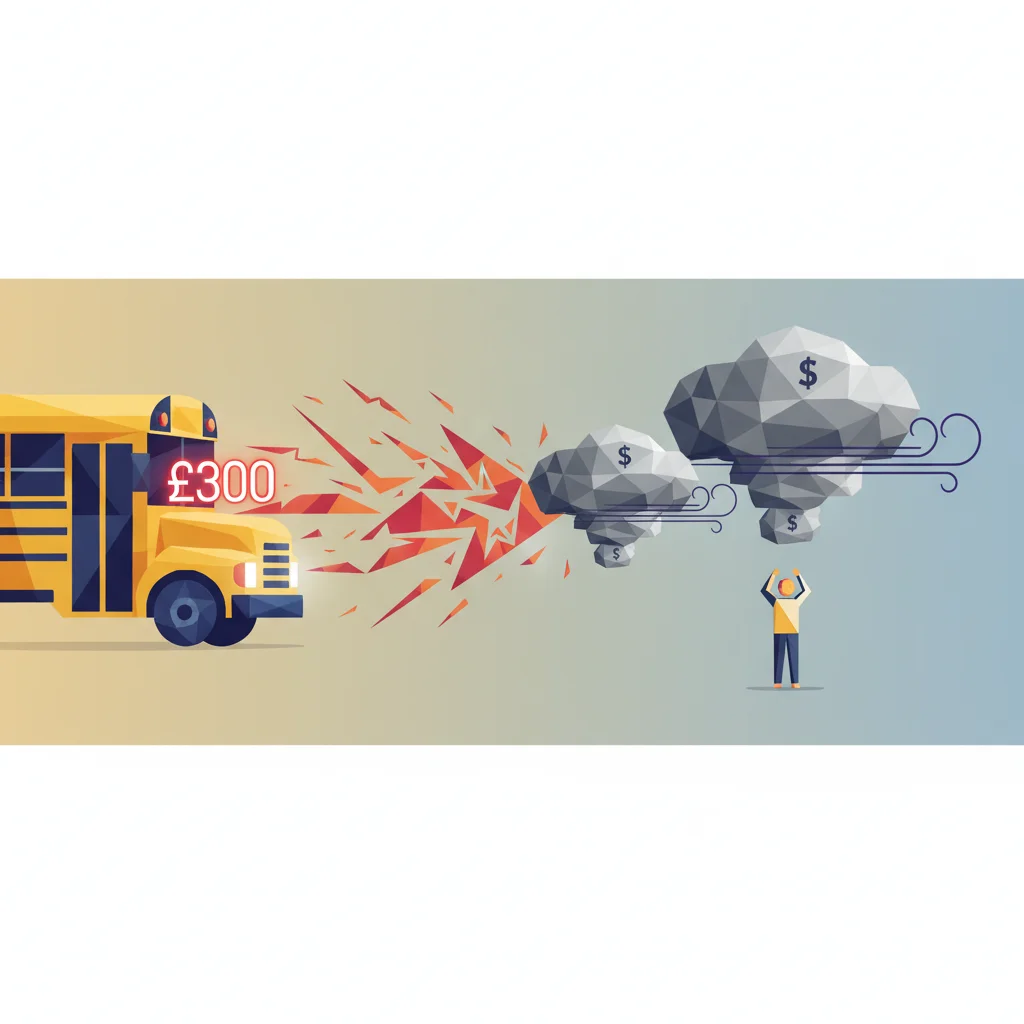
The £300 School Bus Ticket: A Micro-Crisis Pointing to Macroeconomic Headwinds
On the surface, it’s a local news story—a frustrated parent facing a steep, unexpected bill. Ambi Ambituuni, a father in the UK, recently highlighted a staggering 45% hike in his daughter’s school bus fare, pushing the termly cost to over £300. For many, this is an infuriating but isolated incident. For those in finance, business, and investing, however, this single bus ticket is a canary in the coal mine—a tangible, household-level symptom of the complex and persistent macroeconomic pressures shaping our economy.
This isn’t just about one family’s budget; it’s a case study in modern economics. It reveals the intricate web connecting global supply chains, national monetary policy, local government finance, and the everyday financial reality of citizens. Understanding the forces that inflate a school bus fare by nearly half is to understand the challenges and opportunities facing the entire financial ecosystem, from central banking to personal fintech.
The Anatomy of a 45% Price Shock
A price increase of this magnitude rarely stems from a single cause. It’s the result of a “perfect storm” of economic factors converging on a single, essential service. To investors and business leaders, deconstructing these drivers offers a clearer picture of the operational risks and inflationary environment that all sectors are navigating.
1. Persistent Inflation and Operational Costs
The most immediate culprit is inflation. While headline inflation rates may be receding from their peaks, the cumulative effect on operational costs remains profound. Transport services are particularly vulnerable. According to the UK’s Office for National Statistics, while the Consumer Prices Index (CPI) has eased, costs for specific inputs like vehicle maintenance and, crucially, wages, have seen sustained growth (source). A bus service isn’t just a vehicle; it’s a complex operation involving fuel, insurance, parts, and skilled labor—all of which have become significantly more expensive.
We can visualize the potential cost pressures on a service provider with the following breakdown:
| Cost Component | Economic Driver & Impact |
|---|---|
| Fuel | Volatile global energy markets, geopolitical instability. Directly impacts daily operational costs. |
| Labor (Driver Wages) | Widespread labor shortages and demands for higher wages to combat inflation. A major, often inflexible, expense. |
| Vehicle Maintenance & Parts | Supply chain disruptions, increased cost of raw materials, and specialized labor. |
| Insurance & Compliance | Rising premiums in a risk-averse market and costs associated with meeting regulatory standards. |
2. The Squeeze on Public Finance
School transport is often a subsidized service, a hybrid of public responsibility and private operation. Local councils, which typically fund these subsidies, are facing their own severe financial pressures. Years of tight budgets, coupled with rising demand for social care and other statutory services, have left little room for discretionary spending. A report from the Local Government Association has repeatedly warned of a funding crisis, with many councils facing effective bankruptcy (source). When a council’s contribution to a transport service is reduced or frozen, the private operator has two choices: absorb the loss or pass the entire cost increase onto the consumer. The 45% hike suggests the latter.
This dynamic is a critical lesson in public finance and its intersection with the private sector. For investors, it highlights the risks associated with companies heavily reliant on government contracts, where fiscal tightening can obliterate margins overnight.
The Coat Drive Economy: Unlocking Latent Value and Lessons for Modern Finance
From a Local Route to the Global Stock Market: The Ripple Effect
A £300 bus bill doesn’t exist in a vacuum. It is a data point that, when aggregated with millions of similar household pressures, paints a detailed picture of the national and global economy. For the finance professional, these are the signals that inform strategy.
Impact on Consumer Spending and a K-Shaped Recovery
Every extra pound spent on a non-discretionary item like a school bus is a pound not spent elsewhere. This directly impacts the consumer discretionary sector—restaurants, entertainment, retail—which is a key driver of the stock market. When thousands of families face similar cost hikes for utilities, food, and transport, it creates a significant drag on economic growth. This contributes to a “K-shaped” recovery, where wealthier households continue to spend while lower and middle-income families are forced to cut back, creating divergence in the market performance of luxury goods versus consumer staples.
Monetary Policy and the Banking Sector
Stories like this are precisely what central bankers monitor. The persistence of inflation in core services, even as energy prices stabilize, complicates the mission of central banks. It suggests that inflation is becoming embedded in the economy through wages and services, making it harder to control without more aggressive or prolonged interest rate hikes. For the banking sector, this environment means a continued focus on credit risk and loan performance, as more households may struggle with debt obligations when faced with unexpected, significant cost increases. The decisions made in the boardrooms of the Bank of England or the Federal Reserve are directly influenced by the collective financial pain felt by families like the Ambituunis.
This is a crucial consideration for anyone involved in trading or managing investment portfolios. The stickiness of services inflation is a leading indicator for the future direction of interest rates, which in turn affects bond yields, equity valuations, and the entire financial landscape.
Beyond the Firewall: Why the Coupang Data Breach is a Defining Moment for Tech Investing
Navigating the New Reality: The Role of Financial Technology
While the macroeconomic forces are daunting, they have also accelerated the need for innovative solutions. The rise of financial technology (fintech) provides both defensive tools for individuals and new investment opportunities. The challenge posed by the £300 bus fare is a perfect use case for the fintech revolution.
Empowering Households with Fintech
For families, the first line of defense is a clear understanding of their financial position. Modern fintech platforms have moved far beyond simple banking apps. They offer sophisticated tools for:
- Automated Budgeting: AI-driven tools that categorize spending, identify rising costs, and predict future cash flow crunches.
- Subscription Management: Services that identify and help cancel unused recurring payments, freeing up cash to be reallocated to essential costs.
– Micro-saving & Investing: Platforms that allow users to automatically round up purchases or sweep small amounts into savings or investment accounts, helping to build a buffer for unexpected expenses.
The table below outlines how specific fintech solutions can directly address the financial shock of a sudden cost increase:
| Financial Challenge | Fintech Solution | Example Application |
|---|---|---|
| Sudden Large Expense | High-Yield Savings Accounts / Automated Savings | Setting up an automatic transfer to a dedicated “emergency fund” to absorb shocks without incurring debt. |
| Difficulty Tracking Rising Costs | AI-Powered Budgeting Apps | An app sends an alert that the “Transport” category has exceeded its monthly budget by 45%. |
| Need to Offset Costs | Accessible Trading & Micro-Investing Platforms | Using a commission-free trading app to invest small, regular amounts into a diversified ETF portfolio. |
| Inefficient Public Service Payments | Blockchain & Digital Wallets (Future-Facing) | A theoretical transparent ledger for subsidy payments, ensuring efficiency and reducing administrative costs. |
The Investment Horizon: Blockchain and Beyond
Looking further ahead, this problem space is ripe for disruption. Imagine a system where public subsidies are distributed via a blockchain, ensuring transparent, low-friction delivery directly to providers or citizens. Or consider decentralized finance (DeFi) platforms offering more competitive, accessible credit to families facing short-term liquidity crises. While still nascent, the application of advanced financial technology to solve fundamental economic challenges represents a significant long-term growth area for investors. The core of economics is about allocating scarce resources, and technologies like AI and blockchain are fundamentally tools for optimizing that allocation.
Beyond the Balance Sheet: Why Food Parcels Are a Critical Economic Indicator for Modern Investors
Conclusion: The Macro View from a Minibus Window
The story of a 45% school bus fare hike is far more than a local grievance. It is a powerful illustration of the interconnectedness of our modern economy. It’s a lesson in public finance, a real-time indicator of inflationary pressure, a stress test for household budgets, and a catalyst for financial technology innovation.
For business leaders, it’s a reminder of the fragility of supply chains and the importance of pricing strategy. For investors, it’s a signal to look beyond headline numbers and understand the underlying pressures on consumers and public services. And for policymakers, it’s a stark warning about the consequences of fiscal tightening on the everyday lives of constituents. The view from this particular bus window shows a bumpy road ahead, but it also highlights the tools—from sound economic policy to disruptive fintech—that will be essential for navigating it.

Related Posts
Beyond the Billions: Deconstructing the UK’s £11.7bn Borrowing Surge and Its Ripple Effect on the Economy
The Great Christmas Migration: What Holiday Travel Reveals About the Economy, Investing, and Fintech