Beyond the Gravy: What Your Christmas Dinner Cost Reveals About the Global Economy
The £32 Barometer: Your Festive Feast and the State of Global Finance
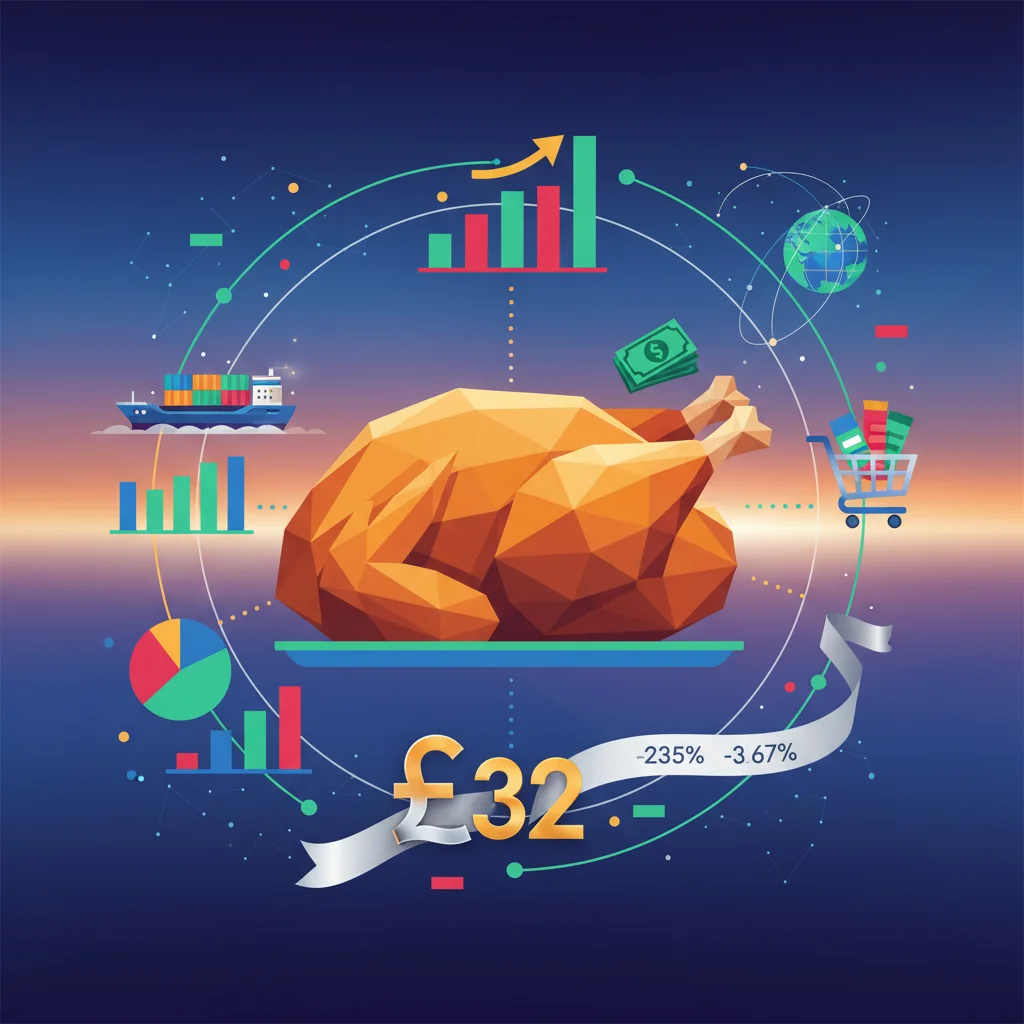
As families across the country begin planning their festive celebrations, a seemingly simple question arises: how much will the Christmas dinner cost this year? According to recent research conducted for the BBC, a typical turkey dinner for a family is projected to cost around £32.45. While this figure might seem like a straightforward piece of consumer information, it is, in fact, a powerful economic barometer—a single data point reflecting a complex web of global supply chains, monetary policy, and intricate market forces.
This isn’t just about the price of potatoes and parsnips. The rising cost of our holiday meal is a tangible, relatable symptom of the broader economic pressures shaping our world. For the average person, it’s a direct hit on the household budget. For investors, finance professionals, and business leaders, it’s a critical indicator of inflation, consumer sentiment, and the underlying health of the global economy. In this analysis, we will dissect the components of that £32.45 dinner, trace the economic threads from the farm to the financial markets, and explore how technology and investment strategies are responding to this new era of sustained price pressure.
Anatomy of an Inflated Dinner Plate
To truly understand the economic story, we must first break down the meal itself. The overall price increase isn’t uniform; each component of the traditional Christmas dinner has its own narrative of supply, demand, and disruption. The journey of each ingredient from producer to plate has become fraught with new costs and logistical hurdles.
Below is a comparative look at the estimated cost breakdown of key Christmas dinner items, illustrating where consumers are feeling the pinch the most. While the BBC’s research provides a total figure, this table offers a representative model of how individual component costs have contributed to the overall increase, based on wider food inflation trends reported by sources like the Office for National Statistics.
| Christmas Dinner Component | Estimated Cost (Previous Year) | Estimated Cost (This Year) | Key Economic Drivers |
|---|---|---|---|
| Turkey (Medium) | £14.00 | £16.50 | Avian flu outbreaks reducing supply; soaring feed and energy costs for farmers. |
| Potatoes (2kg) | £1.20 | £1.50 | Higher fertilizer costs (linked to natural gas prices); adverse weather conditions. |
| Brussels Sprouts (500g) | £0.90 | £1.10 | Labour shortages for harvesting; increased transportation fuel costs. |
| Carrots & Parsnips (1kg) | £1.00 | £1.25 | Similar to potatoes, impacted by energy, fertilizer, and transport costs. |
| Christmas Pudding | £3.50 | £4.25 | Rising prices of imported dried fruits, sugar, and flour. |
| Accompaniments (Gravy, Stuffing, etc.) | £7.50 | £7.85 | General inflation across processed goods, packaging, and manufacturing. |
This granular view reveals a multifaceted crisis. It’s not one single factor, but a cascade of interconnected issues. The war in Ukraine has driven up grain prices, making animal feed more expensive. Soaring energy prices have increased the cost of heating poultry sheds and operating farm machinery. Post-Brexit labour shortages have made harvesting crops more difficult and costly. Each of these elements contributes a few pence or pounds, but together they create the significant increase we see in the final shopping bill. For businesses, this means navigating margin pressures, while for investors, it requires a deep understanding of the vulnerabilities within the consumer staples sector.
The Great Unwinding: Why Global Economics, Not Hype, Is Dictating Bitcoin's Next Move
From Supermarket Aisles to the Stock Market: The Macroeconomic Picture
The forces driving up the cost of your turkey dinner are the very same ones dominating headlines in the world of finance and investing. Understanding these macroeconomic drivers is essential for anyone looking to protect their capital and identify opportunities in a volatile environment.
1. Inflation and Central Banking Policy
At its core, the rising dinner cost is a story of inflation. For years, major economies enjoyed a period of relatively low and stable inflation. That era has decisively ended. A combination of post-pandemic supply chain bottlenecks, massive government stimulus, and geopolitical energy shocks has created a perfect inflationary storm. Central banks, from the Bank of England to the Federal Reserve, have responded with their primary tool: raising interest rates. This form of monetary tightening is a blunt instrument designed to cool demand across the economy. It makes borrowing more expensive for both consumers and businesses, theoretically slowing spending and bringing prices back under control. However, this has profound implications for the stock market, as higher rates can stifle corporate growth and make less-risky assets like bonds more attractive.
2. Supply Chain Fragility and Geopolitics
The pandemic exposed the shocking fragility of our just-in-time global supply chains. A single disruption can have a domino effect, and we are now living with the consequences. The cost of shipping a container remains significantly higher than pre-pandemic levels, and geopolitical tensions add another layer of risk and cost. This environment challenges the long-held assumption of ever-increasing global efficiency. For investors, this means re-evaluating companies based on the resilience and location of their supply chains, not just their cost-effectiveness.
3. The Commodity Trading Nexus
The raw ingredients for your dinner—wheat for stuffing, sugar for the pudding, even the fuel for the delivery truck—are all commodities traded on global markets. Professional traders and institutional investors are constantly buying and selling futures contracts for these goods, speculating on everything from weather patterns to political instability. The volatility in these markets, as seen in the price of natural gas and agricultural products over the past two years, feeds directly into consumer prices. This complex world of trading is a key, though often invisible, component of the final price you pay at the checkout.
The Technological Response: Can Fintech and Blockchain Help?
As consumers and businesses grapple with these economic headwinds, technology is emerging as a critical tool for adaptation and innovation. The fields of financial technology (fintech) and even more nascent technologies like blockchain are offering novel solutions to these age-old problems.
Fintech: Empowering the Consumer and Business
The rise of fintech has put powerful financial management tools in the hands of millions. Modern banking apps are no longer just for checking balances; they offer sophisticated budgeting features, automated savings tools, and real-time spending analysis. In an inflationary environment, these tools become indispensable for households trying to manage their finances. For businesses, fintech platforms are streamlining payments, optimizing cash flow, and providing access to more flexible forms of credit, helping them navigate the pressures of rising input costs. This digital transformation in finance is a key secular trend for investors to watch.
Blockchain: A Future of Transparent Supply Chains?
While still in its early stages of adoption, blockchain technology holds immense promise for addressing the supply chain inefficiencies that contribute to higher food prices. Imagine a future where every ingredient in your Christmas dinner can be tracked on an immutable digital ledger from farm to fork. A blockchain-based system could provide unprecedented transparency, verifying the origin of a turkey, tracking its journey and storage conditions, and automating payments between suppliers, distributors, and retailers. According to a report by IBM Food Trust, this could drastically reduce waste, fraud, and administrative overhead, ultimately leading to a more efficient and potentially cheaper food system. While widespread implementation is years away, it represents a frontier of innovation with the potential to disrupt the entire agricultural and retail sectors.
Hollywood's Endgame: Decoding the High-Stakes M&A Battle Reshaping Entertainment
Investment Outlook: Navigating the New Economic Reality
For investors and business leaders, the message from the Christmas dinner table is clear: the economic landscape has fundamentally changed. The era of low inflation and predictable growth has been replaced by volatility and uncertainty. This requires a strategic shift in how we approach capital allocation and business planning.
- Focus on Pricing Power: In an inflationary world, the most valuable companies are those with strong brands and unique products that allow them to pass on rising costs to consumers without destroying demand. These are businesses with a deep “moat.”
- Understand Commodity Exposure: Businesses and investors must have a clear-eyed view of their exposure to volatile commodity markets. This could mean hedging strategies for corporations or targeted investments in commodity-producing sectors for portfolio managers.
– Re-evaluate Consumer Stocks: The consumer sector will see a clear divergence. Discount retailers and companies providing essential, low-cost goods (consumer staples) are likely to be more resilient than those focused on high-end, discretionary items.
– Embrace Technological Efficiency: Companies that invest in financial technology and other efficiency-driving innovations will be better positioned to protect their margins and gain a competitive advantage.
The challenges are significant, but so are the opportunities. A deep understanding of economics and market dynamics will be paramount for successful investing and leadership in the years ahead.
Conclusion: More Than Just a Meal
The humble Christmas dinner, a tradition steeped in comfort and familiarity, has become an unlikely symbol of our complex and turbulent economic times. The £32.45 price tag is a culmination of global events, central banking decisions, and technological shifts. It reminds us that the major forces of the global economy are not abstract concepts; they have a direct and tangible impact on our daily lives.
By deconstructing the cost of this single meal, we can better understand the interconnectedness of our world—from geopolitical conflicts affecting grain prices to fintech apps helping us manage our budgets. For consumers, it demands greater financial literacy and adaptation. For professionals in finance, investing, and business, it serves as a crucial reminder to look beyond the headlines and understand the fundamental drivers shaping our future. This holiday season, as you gather around the table, you’ll be looking at more than just a meal; you’ll be seeing a snapshot of the 21st-century global economy.