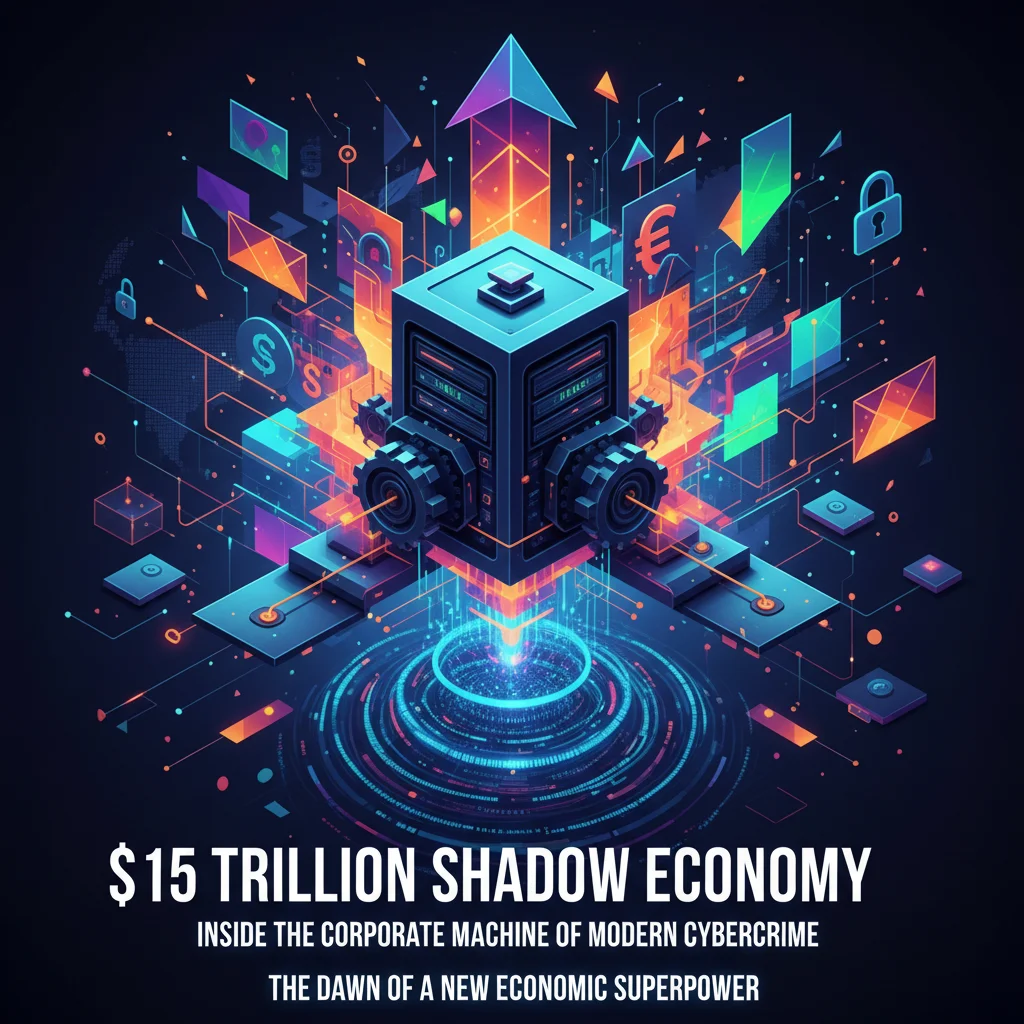
The $15 Trillion Shadow Economy: Inside the Corporate Machine of Modern Cybercrime
The Dawn of a New Economic Superpower
Imagine an economy larger than Japan and Germany combined, operating entirely in the shadows, driven by innovation, and managed with corporate efficiency. This isn’t a futuristic scenario; it’s the reality of the global cybercrime empire, an enterprise the Financial Times now values at a staggering $15 trillion. This is not the work of lone-wolf hackers in dimly lit basements. It is the domain of sophisticated, state-linked criminal syndicates that have transformed illicit activity into a streamlined, global business. At the forefront of this evolution are Chinese criminal organizations, which have pivoted from traditional rackets to dominate the digital underworld, creating a pervasive threat to global finance, investing, and the stability of the entire digital economy.
For business leaders, finance professionals, and investors, understanding this new paradigm is no longer optional—it’s a critical component of risk management. The very foundations of our financial technology infrastructure, from international banking to the burgeoning world of fintech, are being targeted by an enemy that operates with the scale and strategy of a multinational corporation. This is the story of how crime became a service, how triads went digital, and what it means for the future of our interconnected world.
From Street Corners to Silicon Valley: The Rise of Crime-as-a-Service (CaaS)
The most significant shift in the criminal landscape has been the industrialization of hacking through a model known as Crime-as-a-Service (CaaS). Much like Software-as-a-Service (SaaS) revolutionized the tech industry, CaaS has democratized cybercrime, making sophisticated tools and expertise available to anyone with the funds to pay for them. These syndicates have created sprawling digital marketplaces where would-be criminals can purchase everything from ransomware kits and stolen financial data to full-service scam operations complete with call centers and multilingual support staff.
This business model is brutally efficient. It lowers the barrier to entry for criminals, allows for massive scalability, and insulates the masterminds at the top from the risks of direct execution. An aspiring fraudster no longer needs to know how to code malware; they can simply lease it. This has led to an explosion in the frequency and sophistication of attacks targeting everything from individual trading accounts to the core infrastructure of the stock market itself. The syndicates provide the tools, the personnel, and the money laundering networks, taking a cut of the profits in a dark reflection of a legitimate franchise model. This professionalization represents a systemic threat to the integrity of global finance.
The CaaS ecosystem is a complex marketplace with various specialized offerings. Understanding its structure is key to appreciating the depth of the threat.
| Service Type | Description | Impact on Finance & Investing |
|---|---|---|
| Ransomware-as-a-Service (RaaS) | Developers lease out malware that encrypts a victim’s data, demanding payment (usually in crypto) for its release. | Can paralyze financial institutions, disrupt trading platforms, and force companies to pay enormous sums, impacting their stock value and operational stability. |
| Phishing-as-a-Service | Providers sell pre-built phishing kits and mass-emailing services designed to steal credentials for banking, email, and brokerage accounts. | Directly facilitates account takeovers, unauthorized wire transfers, and the theft of sensitive investment information. |
| Scam-as-a-Service | Full-service operations, including call centers and scripts for elaborate scams like “pig butchering,” which target investors with fraudulent opportunities. | Erodes investor confidence and leads to catastrophic personal financial losses, often siphoning capital from legitimate markets. |
| Money Laundering-as-a-Service | Networks that use a mix of cryptocurrency tumblers, shell corporations, and complicit financial agents to clean illicitly obtained funds. | Abuses both traditional banking and emerging fintech platforms, complicating compliance and enabling the flow of trillions in dark money. |
This structured approach allows these criminal enterprises to attack the global economy on multiple fronts simultaneously, with each “service” feeding into the others to create a resilient and highly profitable ecosystem.
The Razor's Edge: How a 14th-Century Principle Can Revolutionize Your Modern Financial Strategy
The Financial Plumbing: How a Shadow Economy Moves Trillions
A $15 trillion enterprise requires a sophisticated financial system to move and legitimize its earnings. This is where the worlds of cybercrime and high finance collide. These syndicates have become masters of exploiting the global financial system, leveraging both cutting-edge financial technology and old-school methods to launder their profits.
The rise of `blockchain` technology and cryptocurrencies has been a boon for these organizations. The perceived anonymity of digital currencies like Bitcoin and Monero provides an initial layer to obscure the source of funds. Criminals use a variety of techniques, including “chain hopping” (converting funds between different cryptocurrencies), “mixers” or “tumblers” (services that pool and mix crypto from thousands of addresses), and privacy coins to break the transaction trail. According to the FT’s investigation, these methods are used on an industrial scale to process billions of dollars from scams and ransomware.
However, it’s a mistake to believe this is purely a crypto problem. Ultimately, for the profits to be useful, they must often re-enter the legitimate `banking` system. Syndicates achieve this through a global network of shell companies, complicit money mules, and investments in high-cash-flow businesses like casinos and real estate. They exploit weaknesses in international anti-money laundering (AML) and know-your-customer (KYC) regulations, overwhelming compliance departments with a sheer volume of complex, layered transactions. This puts immense pressure on the entire `finance` sector, from global investment banks to nimble `fintech` startups, who are all on the front lines of this battle.
The Trillion-Dollar Ripple Effect: Why a Farmer's Poverty is Wall Street's Problem
Economic Warfare: The Macro Impact on Markets and Investors
The activities of this shadow empire are not victimless crimes occurring in a digital vacuum. They represent a direct and growing threat to the stability of the global `economy`. The economic impact can be broken down into several key areas:
- Direct Financial Losses: The most obvious impact is the direct theft of funds from individuals, corporations, and even governments. These losses, which number in the trillions, represent a massive, involuntary transfer of wealth that drains capital from productive economic activity like `investing` and business expansion.
- Erosion of Trust: Modern `economics` is built on trust. When people fear that their bank accounts can be drained, their investment data stolen, or that the `stock market` itself can be manipulated by malicious actors, they become hesitant to participate. This erosion of trust in digital `financial technology` can slow innovation and reduce market liquidity.
- Increased Cost of Business: Companies are forced to spend billions on cybersecurity defenses, insurance, and compliance to protect themselves. This “cybersecurity tax” diverts resources that could have been used for R&D, hiring, or shareholder returns. For investors, this means evaluating a company’s security posture is as important as analyzing its balance sheet.
- Market Distortion: The injection of trillions of dollars of illicit funds into legitimate assets like real estate and luxury goods can create artificial bubbles and distort market pricing. This laundered money makes it harder for legitimate investors and businesses to compete, creating an uneven playing field. As one expert in the FT film notes, the scale of this operation is now so vast it has a measurable macroeconomic impact (source).
Navigating the New Reality: A Call for Vigilance
The emergence of a $15 trillion cybercrime economy, spearheaded by highly organized and state-linked syndicates, is a paradigm shift. It’s a geopolitical, economic, and technological challenge that requires a unified response from governments, law enforcement, and the private sector. For those in the world of `finance`, `trading`, and `investing`, the message is clear: the digital landscape is a contested territory.
Business leaders must prioritize cybersecurity not as an IT issue, but as a core business risk. Investors need to scrutinize the resilience of their portfolio companies against these advanced threats. And everyone must cultivate a healthy skepticism, particularly towards unsolicited investment opportunities that seem too good to be true. The battle against this digital empire is the defining economic and security challenge of our time. Acknowledging its scale and sophistication is the first, most crucial step in mounting a defense.
Political Risk on Trial: What the Arrest of a Bolivian Ex-President Means for Global Investors