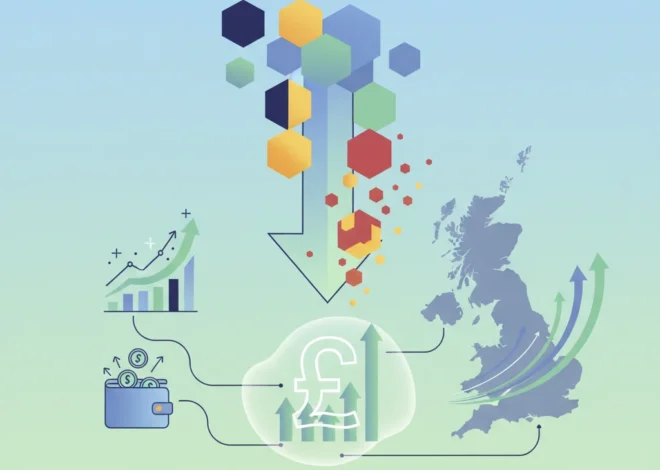
Inflation Cools Faster Than Expected: A Turning Point for the UK Economy?
A Welcome Winter Chill: UK Inflation Sees a Surprising Drop
In a development that has sent ripples through the financial world, the United Kingdom’s rate of inflation has fallen more sharply than anticipated, offering a glimmer of hope for households and businesses battered by the persistent cost of living crisis. The latest figures show the Consumer Prices Index (CPI) fell to 3.9% in the year to November, a significant drop from the 4.6% recorded in October. This marks the lowest inflation rate in over two years, a crucial milestone in the nation’s economic recovery journey.
This unexpected cooling in price pressures was primarily driven by a slowdown in the cost of transport, recreation, and, most notably, food and non-alcoholic beverages. While the battle against high prices is far from over, this data provides the Bank of England with critical breathing room and sparks a renewed debate across the stock market about the future path of interest rates. In this deep dive, we will unpack what these numbers truly mean for the UK economy, for your investments, and for the broader landscape of finance and banking.
Dissecting the Data: What’s Driving the Disinflation?
To understand the significance of the 3.9% headline figure, we must look beneath the surface. Inflation isn’t a monolithic force; it’s a complex interplay of price changes across hundreds of goods and services. The Office for National Statistics (ONS) provides a detailed breakdown, revealing the key sectors contributing to this welcome trend.
The most significant downward contribution came from transport, particularly motor fuels, where prices fell this year compared to a rise a year ago. However, the slowdown in food price inflation has arguably the biggest impact on public sentiment. After months of eye-watering grocery bills, the pace of price increases is finally beginning to ease.
Here is a simplified look at the key contributors to the change in the annual inflation rate, according to the latest ONS data.
| Category | Impact on Inflation Rate | Commentary |
|---|---|---|
| Food & Non-Alcoholic Beverages | Significant Downward Pressure | Prices for items like milk, cheese, and eggs are rising much more slowly than a year ago. |
| Transport | Largest Downward Pressure | Primarily driven by falling motor fuel prices compared to the previous year. |
| Recreation & Culture | Downward Pressure | Slowing price rises for items such as computer games and package holidays. |
| Furniture & Household Goods | Downward Pressure | Easing prices for a range of household items and appliances. |
This broad-based slowdown is a positive sign, suggesting that the disinflationary trend is not reliant on a single volatile component. It points towards a wider cooling of the economy, a direct consequence of the aggressive monetary policy tightening enacted by the Bank of England over the last two years. However, it’s crucial to remember that falling inflation does not mean falling prices; it simply means prices are rising at a slower pace. The cumulative impact of the past two years of high inflation will continue to weigh on consumer pockets for some time. The Bartender's Test: Why AI Can't Replace the Human Touch in Finance
The Bank of England’s Tightrope Walk: Interest Rates and the Economy
This inflation data places the Bank of England’s Monetary Policy Committee (MPC) in a fascinating, albeit challenging, position. For months, their singular focus has been to tame inflation by raising interest rates, a blunt instrument designed to cool demand across the economy. The strategy appears to be working, perhaps even more effectively than forecasted.
The key question now shifts from “How high will rates go?” to “When will they start to come down?”. The financial markets have reacted swiftly, with traders increasing their bets on earlier and deeper rate cuts in the coming year. This has implications across the entire financial ecosystem:
- Banking: While high rates have boosted net interest margins for banks, the prospect of cuts could temper future profit expectations. However, lower rates would also reduce the risk of loan defaults, a major concern for the sector.
- Stock Market: Lower interest rate expectations are generally a tailwind for equities. They reduce the discount rate used to value future earnings, making stocks appear more attractive, particularly for growth-oriented technology and fintech companies.
- Investing & Trading: The shift in sentiment creates new opportunities. Bond yields have fallen in anticipation of rate cuts (as bond prices and yields move inversely). Currency traders are also recalibrating, as interest rate differentials are a key driver of exchange rates.
However, the MPC has maintained a cautious “higher for longer” stance. As noted by officials, a single data point does not make a trend. They will need to see sustained evidence that inflation is firmly on a path back to the 2% target before signaling a policy pivot. Cutting rates too early could risk reigniting inflation, undoing all the painful work of the past two years. This delicate balancing act—supporting a fragile economy without letting inflation off the leash—will be the defining challenge of the year ahead. Silver's Seismic Surge: Why the Precious Metal Just Shattered and What It Signals for the Global Economy
Global Context and the Role of Financial Technology
The UK’s inflation story is not happening in a vacuum. It’s part of a global disinflationary trend, with similar patterns seen in the United States and the Eurozone. This is largely due to the resolution of global supply chain bottlenecks that plagued the post-pandemic economy and the stabilization of energy markets. This global context is crucial, as it suggests that domestic policy is being aided by powerful international tailwinds.
In this complex economic environment, the role of financial technology (fintech) has become more important than ever. For consumers, fintech tools offer powerful ways to navigate the cost of living crisis, from intelligent budgeting apps that track spending to platforms that facilitate seamless switching to better savings rates. For businesses, fintech solutions are streamlining payments, improving cash flow management, and providing access to alternative forms of finance, all of which are vital in a high-cost, uncertain economy.
Looking further ahead, emerging technologies in finance continue to evolve. While not a direct factor in today’s inflation numbers, the principles behind technologies like blockchain—transparency, efficiency, and disintermediation—offer long-term potential for creating more resilient and efficient supply chains. A more transparent supply chain, for instance, could one day help mitigate the kind of price shocks we have recently experienced. The ongoing innovation in financial technology is a key theme for investors looking at long-term structural growth in the economy.
To better understand the impact on different investment types, consider the following potential effects of a continued disinflationary environment and the prospect of lower interest rates.
| Asset Class | Potential Impact of Lower Inflation / Interest Rates | Rationale |
|---|---|---|
| Government Bonds | Positive | Existing bonds with higher fixed coupons become more valuable as new bonds are issued at lower rates. |
| Growth Stocks (e.g., Tech, Fintech) | Positive | Future earnings are discounted at a lower rate, increasing their present value. Lower borrowing costs fuel investment. |
| Value Stocks (e.g., Banking, Industrials) | Mixed | Banks may see lower net interest margins, but a stronger economy reduces credit risk. Cyclicals benefit from economic stability. |
| Real Estate | Positive | Lower mortgage rates can stimulate housing demand and reduce borrowing costs for commercial real estate investors. |
This table illustrates the interconnectedness of macroeconomic data and investment strategy. A single inflation print can set off a chain reaction across all corners of the financial markets, underscoring the importance of staying informed. The Affordability Paradox: Deconstructing Trump's 2024 Economic Blueprint for Investors
Conclusion: A Brighter Outlook, But the Path is Not Clear
The sharp fall in UK inflation is undeniably positive news. It signals that the worst of the inflationary storm may be behind us and provides tangible relief for millions. For investors, it heralds a potential shift in the monetary policy landscape, opening up new strategic considerations for the stock market and beyond.
Yet, this is a moment for cautious optimism, not premature celebration. The UK economy remains fragile, and the path back to the 2% inflation target is fraught with potential obstacles, from geopolitical risks to sticky domestic price pressures. The decisions made by the Bank of England in the coming months will be critical in navigating this final, challenging phase. For now, the data provides a welcome dose of festive cheer and sets the stage for a pivotal year in the ongoing story of our global economy.

Related Posts
Brace for Impact: How a UK Interest Rate Cut Will Reshape Your Finances and the Economy

The Billion-Pound Traffic Jam: Why the UK Driving Test Backlog is a Major Red Flag for the Economy and Investors