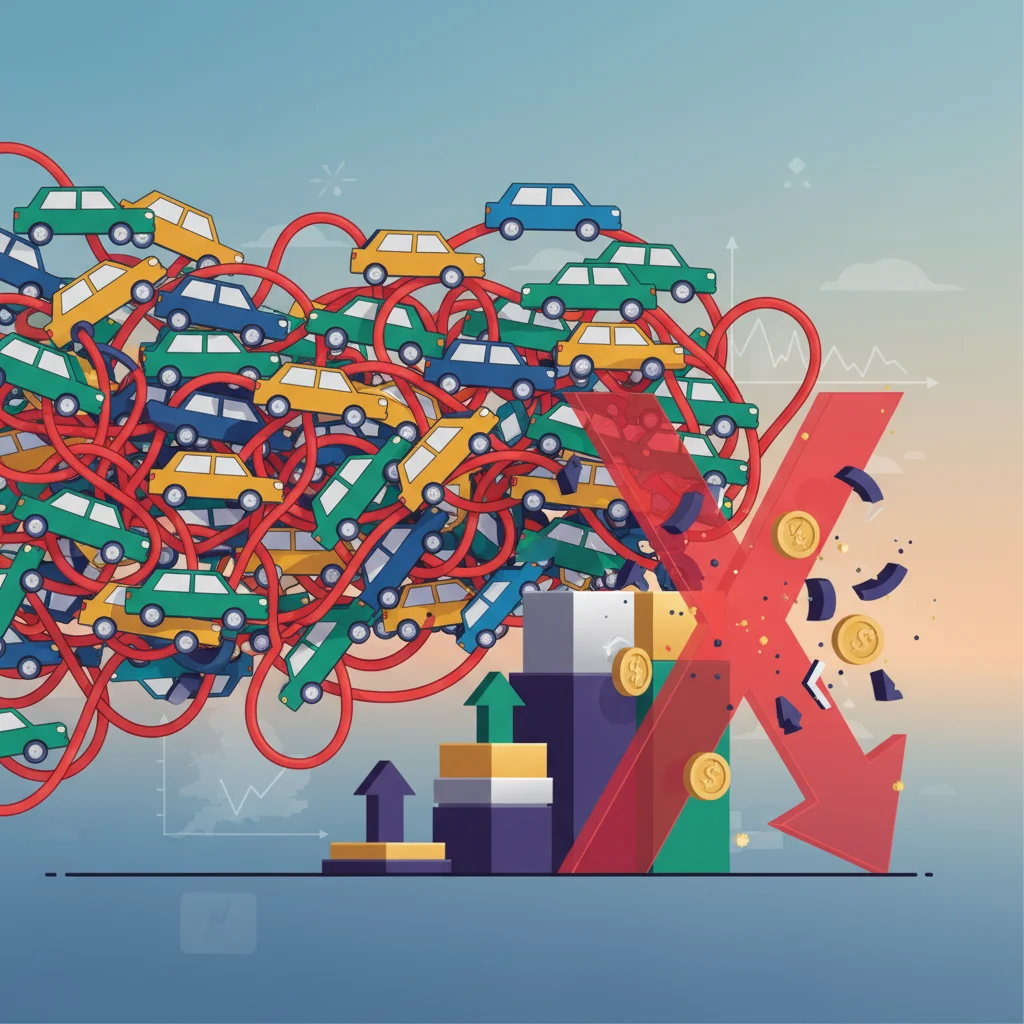
The Billion-Pound Traffic Jam: Why the UK Driving Test Backlog is a Major Red Flag for the Economy and Investors
On the surface, it sounds like a mundane administrative headache: a long wait to take a driving test. However, a recent report from the National Audit Office (NAO) reveals a staggering reality—a backlog of 1.1 million tests has created a six-month waiting period that could persist until 2027. While this is a source of immense frustration for learner drivers, for those in finance, business, and investment, it represents something far more significant. This logistical failure is a powerful, yet overlooked, leading indicator of systemic friction within the UK economy, with profound implications for the stock market, consumer spending, and the labor force.
This isn’t just about delayed freedoms for teenagers; it’s about a critical bottleneck in economic mobility that ripples through multiple sectors. When a fundamental rite of passage and a key enabler of employment is choked off, the shockwaves are felt in corporate earnings reports, national productivity figures, and investment theses. Understanding the deep economic consequences of this backlog is essential for anyone looking to navigate the complexities of today’s market, revealing both hidden risks and unexpected opportunities in the worlds of finance, banking, and technology.
The Anatomy of a System Under Strain
The origins of the crisis are rooted in the COVID-19 pandemic, which forced a complete halt to testing for extended periods. However, the failure to recover points to deeper, more systemic issues within the Driver and Vehicle Standards Agency (DVSA). According to the NAO’s analysis, the backlog is a multifaceted problem fueled by:
- Examiner Shortages: A significant number of driving examiners left the profession during the pandemic, and recruitment efforts have failed to keep pace with soaring demand.
- Pent-Up Demand: Two years of intermittent lockdowns created a massive cohort of potential new drivers all entering the system at once.
- Operational Inefficiencies: Critics argue that the DVSA’s booking systems and operational models are outdated, lacking the scalability and flexibility to manage such a surge. This highlights a chronic underinvestment in the digital infrastructure of essential public services.
The result is a classic supply and demand crisis. The demand for tests far outstrips the available supply of slots, creating a fiercely competitive and often chaotic booking environment. This failure to deliver a core public service has now morphed from a temporary disruption into a long-term structural impediment to economic activity.
Economic Gridlock: Quantifying the Ripple Effects
A driver’s license is more than a piece of plastic; it’s a key that unlocks economic potential. Its absence on a national scale creates a significant drag on growth. The economic consequences can be broken down into three primary areas: labor market friction, suppressed consumer spending, and a widening urban-rural divide.
1. Labor Market Friction
For a significant portion of the workforce, particularly outside of major metropolitan hubs, a driving license is a prerequisite for employment. The inability to obtain one directly restricts labor mobility. This means businesses have a smaller talent pool to draw from, leading to unfilled vacancies, reduced productivity, and upward pressure on wages in specific sectors. Industries like construction, logistics, healthcare (especially community care), and the skilled trades are disproportionately affected. This bottleneck directly impacts corporate performance and, by extension, the UK’s overall economic output.
2. Suppressed Consumer Spending
The journey to getting a license is a major trigger for a series of high-value purchases. Delaying this process puts a freeze on billions in potential consumer spending, impacting several key sectors on the stock market. This is not a niche issue; it is a macroeconomic headwind.
The following table illustrates the direct and indirect impacts on key industries, a critical consideration for any investing strategy focused on the UK market.
| Affected Sector | Direct & Indirect Economic Impact |
|---|---|
| Automotive | Delayed or cancelled first-time car purchases (new and used). This directly hits manufacturer sales, dealership revenue, and the entire automotive supply chain. A report from the SMMT on new car registrations often reflects consumer confidence, which is being artificially suppressed by this backlog. |
| Insurance & Banking | Fewer new drivers means a smaller pool of new policyholders for insurance companies. For the banking sector, it means fewer car loans being issued, impacting a key revenue stream for retail banks. |
| Energy & Fuel | A direct correlation exists between the number of drivers on the road and fuel consumption. A constrained pipeline of new drivers translates to lower-than-expected fuel sales for energy giants. |
| Gig Economy | Companies reliant on drivers (e.g., ride-sharing, food delivery) face a restricted supply of new workers. This can stifle growth, increase operational costs, and impact profitability for major players in this sector. |
3. The Urban-Rural Divide
While those in cities with robust public transport may be less affected, the driving test backlog exacerbates economic inequality in rural and suburban areas. In these regions, a car is often the only viable means of accessing education, employment, and essential services. The delay acts as a barrier to social and economic mobility, further entrenching regional disparities—a key concern in the field of economics.
A Catalyst for Innovation: The Fintech and Blockchain Opportunity
While the backlog highlights governmental failure, it also illuminates a clear opportunity for technological intervention. The crisis exposes an urgent need for modernization, where principles from financial technology (fintech) and even blockchain could provide robust, scalable solutions. This is not just about fixing a broken system but about reimagining how public services are delivered in a digital age.
Imagine a future-state system for driver credentialing:
- Fintech-Driven Booking and Payments: Instead of a clunky, overloaded website, a modern platform built with fintech principles could offer dynamic scheduling, intelligent waitlisting, and seamless payment processing. This could drastically reduce the 25% of tests that are currently cancelled or changed (NAO source), optimizing the use of every available examiner slot. Advanced analytics could predict demand surges and allocate resources proactively, much like a modern trading algorithm responds to market signals.
- Blockchain for Digital Identity: The entire process of licensing is about verifying identity and qualifications. A blockchain-based digital identity could create a secure, immutable, and easily verifiable record of a driver’s journey—from passing the theory test to the final practical exam. This “digital driver’s license” could be instantly shared with insurers, employers, or car rental agencies, eliminating fraud, reducing administrative overhead, and streamlining countless processes across the economy.
This isn’t a futuristic fantasy; it’s the application of existing technologies to solve a pressing real-world problem. The crisis could serve as the catalyst for a public-private partnership to build a 21st-century infrastructure for a 21st-century workforce.
Beyond GDP: The Hidden Metric Revealing the UK's True Economic Struggle
Actionable Insights for Investors and Business Leaders
Navigating this environment requires a nuanced understanding of the second- and third-order effects. The driving test backlog is a powerful piece of alternative data for those willing to look beyond traditional economic reports.
- Re-evaluate Sector-Specific Forecasts: Investors with exposure to the UK automotive, insurance, and consumer discretionary sectors should adjust their growth forecasts downwards to account for this multi-year demand suppression. Conversely, companies in public transport, ride-sharing, and last-mile mobility solutions (like e-bikes) may experience a sustained tailwind.
- Scrutinize Labor-Dependent Businesses: When analyzing UK-based companies, particularly those outside London, pay close attention to their reliance on a mobile workforce. Businesses that are heavily dependent on entry-level or skilled-trade employees who need to drive may face significant hiring challenges and wage inflation.
- Identify “Shovel-Ready” Tech Opportunities: For venture capital and private equity, the glaring inefficiencies in public services represent a significant market opportunity. Companies developing solutions in digital identity, process automation, and public sector financial technology are poised for growth as the government is inevitably forced to modernize.
The Affordability Paradox: Deconstructing Trump's 2024 Economic Blueprint for Investors
Conclusion: More Than Just a Wait
The UK’s driving test backlog is far more than an administrative failure; it is a powerful case study in the interconnectedness of our modern economy. It demonstrates how a bottleneck in a seemingly small corner of public services can throttle labor markets, depress consumer spending, and reveal deep-seated structural inefficiencies.
For investors, finance professionals, and business leaders, the long wait for a driving test should be seen as a critical signal. It’s a warning about the hidden costs of underinvestment in public infrastructure and a real-time indicator of friction in the economic engine. But within this challenge lies opportunity—a clear call to action for innovation and a chance for astute market participants to identify the risks and rewards that emerge when a system is pushed to its breaking point. The road ahead is long, not just for learner drivers, but for the UK economy as it navigates the fallout from this billion-pound traffic jam.