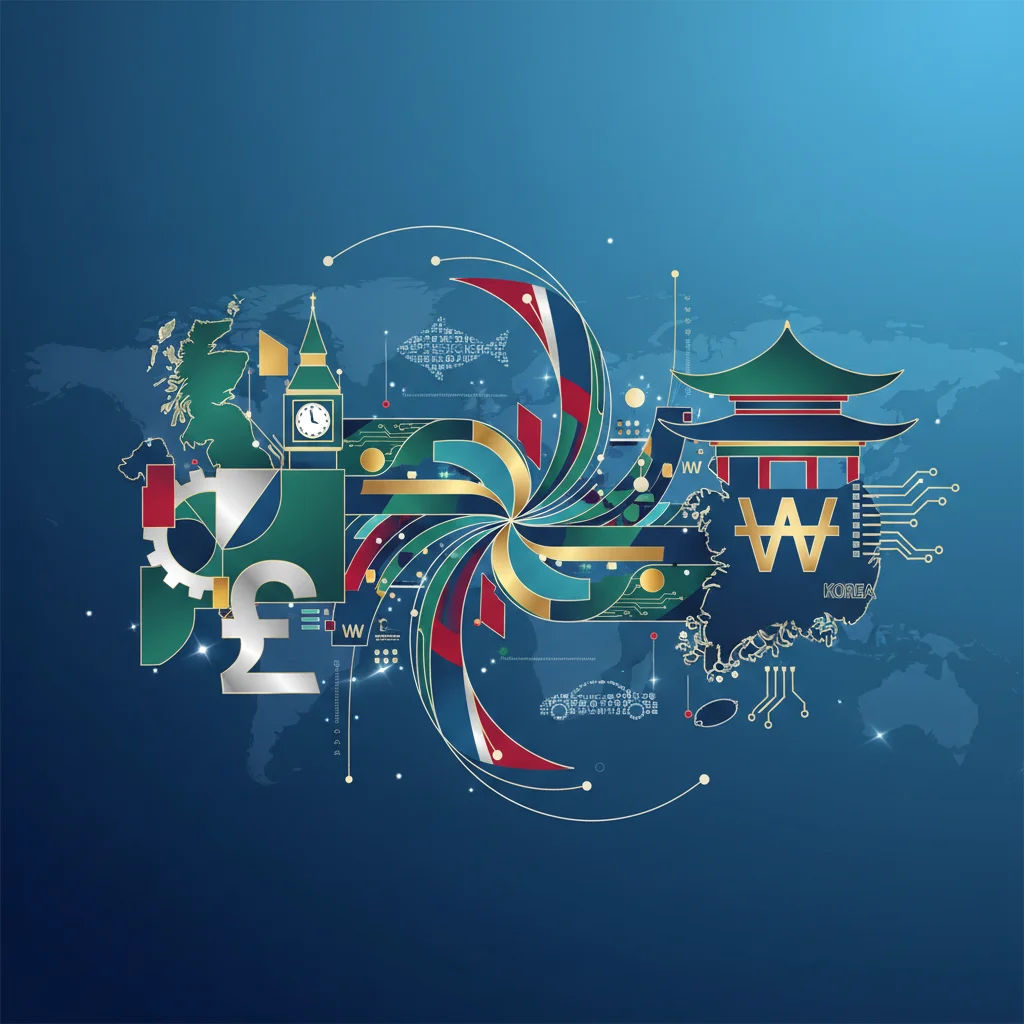
Beyond Bentleys and Salmon: A Deep Dive into the UK-South Korea Trade Deal’s Financial Implications
In the world of international economics, headlines often gravitate towards tangible, high-value goods. The recent announcement of an upgraded UK-South Korea trade deal is no exception, with names like Bentley and Scottish salmon capturing the initial spotlight. While the image of luxury cars and gourmet food smoothly crossing borders tariff-free is certainly appealing, it only scratches the surface of a much deeper and more strategically significant economic maneuver. This isn’t merely a renewal of existing terms; it’s a foundational upgrade designed for a 21st-century economy, with profound implications for finance, investing, and the UK’s post-Brexit global positioning.
The original announcement from the government positioned the deal as an extension of the current tariff-free arrangement, ensuring continuity for the £14.8 billion trading relationship (source). However, for business leaders, finance professionals, and savvy investors, the real story lies in the details—the move to modernize the agreement to encompass digital trade, financial services, and future-facing industries. This post will unpack the multifaceted layers of this agreement, exploring its impact on the UK economy, identifying key sectoral opportunities, and analyzing its place within the broader geopolitical landscape.
The Anatomy of the Deal: From Continuity to Cutting-Edge
To fully appreciate the significance of this development, it’s crucial to understand its history. The current UK-South Korea Free Trade Agreement (FTA) is a “continuity agreement.” Following its departure from the European Union, the UK government worked to roll over existing EU trade deals to avoid a “cliff-edge” scenario that would have seen tariffs reimposed overnight. The deal with South Korea was one such agreement, effectively preserving the terms of the EU-South Korea FTA for the UK.
While essential for stability, these continuity deals were always intended as a starting point. The new negotiations aim to build upon this foundation, creating a bespoke agreement that reflects the specific strengths and ambitions of the UK and South Korean economies. The focus is shifting from simply trading goods to enabling a more profound economic partnership in high-growth areas. This includes simplifying digital trade, fostering collaboration in financial technology (fintech), and establishing clearer rules for the services sector, a cornerstone of the UK economy.
From Wish Lists to Wall Street: How AI Gift-Finders Signal a New Economic Reality
By the Numbers: The Economic Stakes of the Partnership
The UK-South Korea trade relationship is already robust and balanced. According to the latest government data, the total trade in goods and services between the two nations was valued at £20.8 billion in the four quarters to the end of Q3 2023 (source). A closer look at the composition of this trade reveals why a modernized deal is so critical.
Below is a breakdown of the top goods and services exchanged, highlighting the diversity of the economic ties:
| Category | Top UK Exports to South Korea | Top UK Imports from South Korea |
|---|---|---|
| Goods | Crude oil, Cars, Non-ferrous metals, Pharmaceutical products, Beverages (e.g., Scotch whisky) | Cars, Refined oil, Ships, Electrical machinery, Iron & steel |
| Services | Other Business Services, Financial Services, Transportation, Intellectual Property | Other Business Services, Transportation, Financial Services, Travel |
Data synthesized from UK Department for Business and Trade statistics.
What this data illustrates is a relationship far more complex than luxury goods. The significant volume of trade in financial and business services underscores the untapped potential. A new deal that specifically addresses digital services, data flows, and regulatory cooperation in banking and finance could unlock substantial growth, moving beyond physical products and into the high-value, knowledge-based economy.
Sectoral Deep Dive: Opportunities in Finance, Fintech, and Beyond
While the automotive and food and drink sectors will undoubtedly benefit from continued tariff-free access, the most exciting growth prospects lie in the areas targeted by the upgraded negotiations.
1. Financial Services and Banking
London remains a global financial hub, and South Korea possesses a sophisticated and rapidly digitizing financial market. An enhanced agreement could streamline the process for UK-based banks, asset managers, and insurance firms to operate in South Korea, and vice-versa. This could involve mutual recognition of certain financial regulations, simplifying compliance and reducing operational costs. For the stock market, this means potentially greater cross-border investment flows and more opportunities for financial firms with an Asian footprint.
2. Financial Technology (Fintech) and Blockchain
South Korea is a global leader in technology adoption, with one of the most connected populations on earth. This makes it a fertile ground for fintech innovation. A modernized trade deal could establish a framework for UK fintech firms to export their services—from payment solutions to regulatory technology (RegTech)—more easily. Furthermore, as both countries explore the potential of central bank digital currencies (CBDCs) and the applications of blockchain in finance, a forward-looking trade agreement could set precedents for digital asset trading and secure data sharing, placing both nations at the forefront of financial technology.
3. The Digital Economy
The negotiations’ focus on digital trade is paramount. This covers everything from banning unjustifiable data localization requirements (which force companies to store data within a country’s borders) to ensuring the free flow of data. For any company operating online, from e-commerce to cloud computing, these provisions are critical for reducing costs and improving efficiency. This directly impacts the broader economy by lowering barriers for small and medium-sized enterprises (SMEs) to engage in international trading.
Ben & Jerry's vs. Unilever: A High-Stakes Battle for Corporate Soul and Shareholder Value
The Investor’s Lens: Uncovering Alpha in a Strengthened Partnership
From an investing perspective, this upgraded trade deal creates several compelling themes and potential opportunities. Stable, long-term trade agreements reduce geopolitical risk, a factor that is increasingly priced into the stock market. By securing and enhancing its relationship with a G20 economy, the UK provides greater certainty for businesses, which can translate into more predictable earnings and stronger equity performance for exposed companies.
Investors should monitor the following areas as the deal progresses:
| Investment Theme | Potential Opportunities & Considerations |
|---|---|
| UK Exporters | Companies in luxury automotive, high-end food & drink (especially Scotch whisky), and pharmaceuticals with significant sales in South Korea will see continued, stable market access. |
| Financial Services Sector | Look for UK-listed banks, insurers, and asset managers with strategies to expand in Asia. Regulatory alignment could be a significant catalyst for growth. |
| Technology & Fintech | UK tech firms, particularly in fintech and cybersecurity, could find a more accessible and lucrative market. This could benefit both listed tech stocks and venture capital investing in the space. |
| Supply Chain Resilience | South Korea is a key player in semiconductors and electronics. A stronger trade relationship could help UK manufacturers secure more resilient supply chains for critical components, benefiting the wider industrial sector. |
Geopolitical Context: A Key Pillar of ‘Global Britain’
This deal cannot be viewed in a vacuum. It is a crucial component of the UK’s broader post-Brexit foreign and economic policy. As outlined in the government’s Integrated Review, the UK is strategically “tilting” its focus towards the Indo-Pacific region, which is the world’s engine of economic growth (source). Deepening the partnership with South Korea—a vibrant democracy and technological powerhouse—is a strategic imperative. It diversifies the UK’s trade dependencies and strengthens its network of allies in a region of immense strategic importance.
For the UK economy, this strategy of building a portfolio of modern FTAs, including its accession to the Comprehensive and Progressive Agreement for Trans-Pacific Partnership (CPTPP), is a long-term play. It’s about positioning the UK as a flexible, independent trading nation that can forge deep, modern partnerships in the world’s most dynamic regions. According to the OECD, South Korea’s advanced economy is expected to continue its path of solid growth, driven by its innovative prowess (source), making it an ideal long-term partner.
Scoops, Stocks, and Social Justice: The Billion-Dollar Battle for Ben & Jerry's Soul
Conclusion: A Strategic Upgrade for a Modern Economy
The enhanced UK-South Korea trade deal is far more than a simple continuation of the status quo. While ensuring that Bentleys and salmon continue to flow tariff-free is an important element of stability, the true value lies in the future. By modernizing the agreement to focus on digital trade, financial services, and fintech, the UK and South Korea are laying the groundwork for a deeper, more resilient economic partnership.
For investors and business leaders, the message is clear: this deal solidifies a vital trade relationship and opens new avenues for growth in high-value sectors. It is a testament to the UK’s evolving global economic strategy, one that prioritizes depth, innovation, and strategic alignment. As the negotiations progress, the opportunities in finance, technology, and beyond will only become more apparent, making this a critical development to watch for anyone invested in the future of the UK economy.

Related Posts
Beyond the Paycheck: How the UK’s New Employment Bill Will Reshape the Investment Landscape
The UK’s Economic Puzzle: Rising Unemployment, Resilient Wages, and What It Means for Your Finances