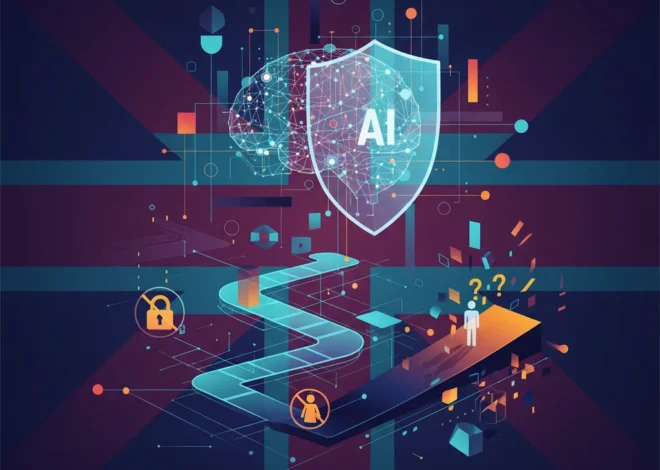
The Bundestag Blackout: How a 4-Hour Outage Signals a New Era of Digital Geopolitics
The Unseen Battlefield: When Code Becomes a Weapon
Picture the scene: Ukrainian President Volodymyr Zelenskyy stands before the German parliament, the Bundestag, delivering a powerful address. It’s a moment of high-stakes diplomacy, a plea for continued support in a grueling war. But as his words echo through the chamber, another, more insidious event is unfolding in the digital realm. The parliament’s entire email system grinds to a halt. For four critical hours, communication is crippled. Coincidence? Unlikely. German MPs and security officials suspect a targeted cyber attack, a digital shot across the bow timed for maximum political impact.
This incident, as reported by the Financial Times, is far more than a simple IT headache. It’s a stark illustration of modern hybrid warfare, where geopolitical conflicts are fought not just with tanks and missiles, but with malicious code and network disruptions. For developers, entrepreneurs, and tech leaders, this event isn’t just a distant news story; it’s a critical case study in the evolving landscape of cybersecurity, where the stability of our digital infrastructure is constantly under threat. What happened at the Bundestag is a warning shot for every organization, from government bodies to tech startups, highlighting the urgent need for resilient, intelligent, and automated defense systems in an increasingly hostile digital world.
Deconstructing the Bundestag Attack: A Message in the Disruption
While official attribution is pending, the timing of the four-hour email outage is profoundly telling. It began just as President Zelenskyy entered the building. This wasn’t a clandestine attempt to steal state secrets; it was a loud, public, and symbolic act of disruption. The likely culprit? A Distributed Denial-of-Service (DDoS) attack, a common tactic for pro-Russian hacktivist groups.
A DDoS attack is essentially a digital traffic jam. Attackers use a network of compromised computers (a “botnet”) to flood a target’s servers with an overwhelming amount of junk traffic. The legitimate requests—like an MP trying to send an email—get lost in the noise, and the service becomes unavailable. It’s a brute-force method, but highly effective for causing chaos and making a political statement. The goal wasn’t to breach the system, but to paralyze it, demonstrating vulnerability on a global stage at a moment of peak political significance.
This type of attack is a hallmark of the hybrid warfare model that has characterized the conflict in Ukraine. Long before the physical invasion, Russia was implicated in numerous cyber attacks against Ukrainian infrastructure, including its power grid and financial systems. According to a report from the Center for Strategic and International Studies (CSIS), state-sponsored cyber attacks have become a routine instrument of statecraft, with a dramatic increase in disruptive and destructive attacks since 2022. The Bundestag incident fits this pattern perfectly: a low-cost, high-impact operation designed to undermine confidence and project power without firing a single shot.
Beyond the Stars: How AI and Software are Launching Australia's New Space Age
The Modern Arsenal: AI, Cloud, and the Evolving Cyber Battlefield
The tools and techniques behind attacks like the one on the Bundestag are evolving at a breathtaking pace, driven by the same technologies that power our modern digital economy: artificial intelligence, cloud computing, and automation.
On the offensive side, malicious actors are leveraging AI and machine learning to create smarter, more evasive threats. AI can be used to:
- Automate Reconnaissance: AI algorithms can scan vast networks for vulnerabilities far faster than any human team.
- Craft Sophisticated Phishing: Machine learning models can generate highly personalized and convincing phishing emails, increasing the likelihood of a successful breach.
- Develop Polymorphic Malware: AI can create malware that constantly changes its own code, making it incredibly difficult for traditional signature-based antivirus software to detect.
However, this technological arms race cuts both ways. The same innovation that empowers attackers is also creating a new generation of defensive tools. Leading cybersecurity firms are building SaaS platforms that use AI to turn the tables on hackers. These AI-driven security systems can analyze billions of data points across a network in real-time, identify anomalous behavior that signals an attack, and even launch an automated response to contain the threat before a human analyst is even alerted. This shift towards security automation is no longer a luxury; it’s a necessity to combat threats that operate at machine speed.
The widespread adoption of cloud infrastructure adds another layer of complexity. While cloud providers like AWS and Azure offer incredibly robust security controls, misconfigurations by users remain a primary entry point for attackers. Yet, the cloud also enables a more dynamic and scalable defense, allowing organizations to deploy advanced security solutions without massive upfront hardware investment.
Understanding the Attacker’s Playbook: The Cyber Kill Chain
To build an effective defense, you must first understand the offense. Professional cybersecurity teams often use a framework called the “Cyber Kill Chain” to model the stages of a typical digital attack. Understanding these steps can help organizations identify and disrupt an attack at multiple points, rather than waiting for the final damage to be done.
Here is a simplified breakdown of the seven core stages:
| Stage | Description |
|---|---|
| 1. Reconnaissance | The attacker gathers information about the target, identifying vulnerabilities in their systems, software, and even personnel (e.g., finding employee emails for a phishing campaign). |
| 2. Weaponization | The attacker creates a malicious payload, such as a virus or ransomware, often coupling it with an exploit that can take advantage of a known vulnerability. |
| 3. Delivery | The weaponized payload is sent to the target. This is commonly done via email attachments, malicious links, or infected USB drives. |
| 4. Exploitation | The malicious code is triggered. The exploit takes advantage of a software or hardware vulnerability to gain a foothold in the target’s system. |
| 5. Installation | The malware installs itself on the compromised system, establishing a persistent presence that can survive a reboot. |
| 6. Command & Control (C2) | The malware “phones home” to a server controlled by the attacker, allowing them to remotely control the compromised system and issue commands. |
| 7. Actions on Objectives | The attacker achieves their ultimate goal, which could be anything from stealing data and intellectual property to encrypting files for ransom or, as in the Bundestag case, simply disrupting operations. |
A successful defense involves placing barriers at every stage of this chain. Strong firewalls might stop the delivery, up-to-date software patching can prevent exploitation, and advanced endpoint detection can spot the installation of malware.
Apple's AI Inertia: How Chinese Rivals Are Weaponizing AI to Topple the iPhone
From Parliament to Your Platform: Actionable Lessons for Tech Leaders
The security breach at the heart of German democracy offers critical lessons for any organization that relies on technology—which, today, is every organization. Here’s how tech professionals, from developers to founders, can translate this geopolitical event into a stronger security posture:
- Embrace DevSecOps: Security is a Feature, Not a Fix. The old model of building software and then handing it to a security team to “harden” is broken. Security must be integrated into every stage of the development lifecycle. This means training developers in secure programming practices, automating security scans in your CI/CD pipeline, and making security a shared responsibility across the entire team.
- Prioritize Resilience Over Impenetrability. The Bundestag’s email was down for four hours, but it came back online. The goal isn’t to build an unbreakable fortress—that’s impossible. The goal is to build a resilient system that can detect an attack quickly, contain the damage, and recover with minimal disruption. This involves robust backup strategies, incident response plans, and regular drills.
- Leverage AI and Automation for Defense. You cannot fight automated, AI-driven attacks with manual processes alone. A recent study by IBM found that organizations using extensive security AI and automation identified and contained breaches 108 days faster than those that didn’t. Invest in modern security platforms that use machine learning to detect threats and automate routine security tasks, freeing up your human experts to focus on strategic defense.
- The Human Firewall is Your First and Last Line of Defense. Despite all the advanced technology, a huge percentage of breaches still begin with a simple human error, like clicking a phishing link. Continuous security awareness training for all employees is one of the most cost-effective investments you can make. It transforms your team from a potential liability into a vigilant sensor network.
Airwallex's Billion Gambit: Decoding the Fintech Giant's Bold Leap into Silicon Valley
Conclusion: The Inescapable Reality of Digital Sovereignty
The silent, four-hour disruption at the German Bundestag is a potent symbol of our time. It demonstrates that in the 21st century, a nation’s sovereignty is not just defined by its physical borders, but by the integrity of its digital infrastructure. This was not a simple technical glitch; it was a political act, a message delivered through packets and servers instead of paper and ink.
For everyone in the tech industry, from the programmer writing a single line of code to the entrepreneur building a global SaaS platform, this reality has profound implications. The systems we build are the new front lines. The innovation we drive in artificial intelligence, cloud computing, and automation will define the future of both cyber offense and defense. The Bundestag blackout serves as a powerful reminder that in our interconnected world, cybersecurity is no longer a back-office IT concern. It is a fundamental component of strategic planning, economic stability, and national security.

Related Posts

Drone Down: What a Black Sea Incident Reveals About AI, Cybersecurity, and the Future of Automation

TikTok’s Ticking Clock: The High-Stakes Tech Chess Match for Its US Future