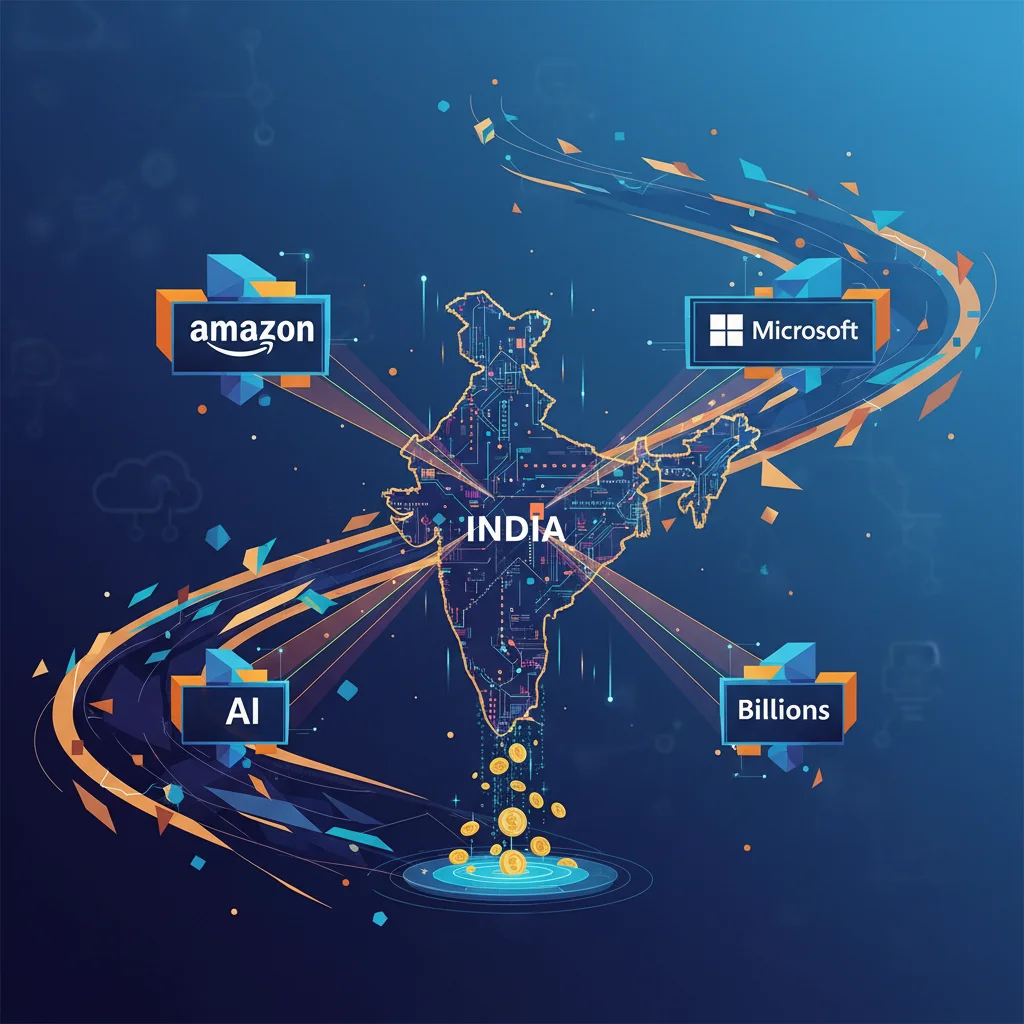
The New Digital Silk Road: Why Amazon and Microsoft Are Pouring Billions into India’s AI Future
We’re witnessing a tectonic shift in the global technology landscape, and the tremors are originating from India. In what can only be described as a colossal vote of confidence, two of the world’s biggest tech titans, Amazon and Microsoft, have pledged staggering multi-billion dollar investments to build out India’s artificial intelligence and cloud infrastructure. This isn’t just another headline about foreign investment; it’s a declaration that India is no longer just a back-office hub but a critical nerve center for the future of global innovation.
The numbers themselves are breathtaking. We’re talking about a combined commitment that runs into the tens of billions of dollars, earmarked for everything from hyperscale data centers to nationwide digital skilling initiatives. This deluge of capital is set to supercharge an already booming tech ecosystem, fundamentally reshaping opportunities for developers, startups, and enterprises across the subcontinent. But what’s driving this modern-day gold rush? And more importantly, what does it mean for you?
Let’s unpack the details of these mega-deals, explore the “why India, why now?” question, and analyze the profound ripple effects this will have on everything from programming jobs to national cybersecurity.
A Tale of Two Titans: Deconstructing the Pledges
While both Amazon Web Services (AWS) and Microsoft are betting big on India, their investment strategies, though similar, have distinct focuses. This isn’t just about spending money; it’s a calculated, strategic play for market dominance in one of the world’s fastest-growing digital economies. Their goal is to become the foundational platform—the digital bedrock—upon which India’s next generation of software and AI will be built.
Here’s a breakdown of their announced commitments, which signal a long-term vision for the Indian market:
| Tech Giant | Investment Focus | Key Initiatives & Goals |
|---|---|---|
| Amazon (AWS) | Cloud Infrastructure Expansion | A massive $12.7 billion investment by 2030 to expand their data center and cloud computing infrastructure. This directly supports the growing demand for data storage, processing power, and scalable SaaS platforms from Indian businesses and startups. |
| Microsoft | AI & Skilling Empowerment | A multi-faceted commitment that includes building out its AI and cloud infrastructure while also pledging to train two million people in India in AI skills by 2025. This dual approach aims to build both the technological capacity and the human capital required for an AI-first economy. |
These aren’t just abstract figures. Microsoft’s CEO, Satya Nadella, emphasized that the company is “most excited about the AI innovation that is happening in India,” highlighting the country’s potential to become a global leader in the field. This investment is designed to provide the tools and training necessary to turn that potential into reality.
Similarly, Amazon’s investment is a direct response to the exponential growth in data consumption and the digital transformation sweeping across Indian industries. By building more local data centers, AWS can offer lower latency, enhanced security, and data sovereignty—critical features for businesses in sectors like finance and healthcare.
India's New Smartphone Mandate: A Cybersecurity Shield or a Surveillance Trojan Horse?
The Perfect Storm: Why India is the Epicenter of the AI Boom
So, why is this happening now? The convergence of several powerful factors has created the perfect environment for this unprecedented wave of investment. India has cultivated a unique ecosystem that makes it an irresistible destination for tech capital.
1. The Demographic Dividend & A Massive Digital Market
India is home to the world’s largest youth population and has over 800 million internet users. This isn’t just a market; it’s a digital-native continent. This vast, connected population is generating immense amounts of data—the lifeblood of machine learning models—and represents an enormous user base for new AI-powered applications and services.
2. A World-Class Talent Pipeline
India is a global powerhouse of STEM talent, producing millions of engineers and developers annually. The country’s workforce has a strong foundation in mathematics, logic, and programming, making it uniquely suited to pivot towards specialized fields like AI and data science. Microsoft’s skilling initiative is a strategic move to harness and shape this raw talent, ensuring a steady supply of developers proficient in its Azure AI ecosystem.
3. The Thriving Startup Ecosystem
India has emerged as the world’s third-largest startup ecosystem, with a culture of frugal innovation and rapid problem-solving. These startups are incredibly agile and are voraciously adopting cloud and SaaS solutions to build and scale their businesses. For AWS and Microsoft, this vibrant ecosystem represents tens of thousands of current and future customers who will build their empires on their cloud platforms. According to a NASSCOM report, the Indian tech industry is a significant contributor to the nation’s GDP, showcasing its economic might and potential for further growth.
4. Proactive Government Support
Initiatives like “Digital India” and “Make in India” have created a policy landscape that encourages technological adoption and foreign investment. The government’s focus on building digital public infrastructure, like the Unified Payments Interface (UPI), has already demonstrated the country’s ability to execute complex, large-scale tech projects. This creates a stable and predictable environment for long-term investments.
The Ripple Effect: What This Means for Developers, Startups, and the Nation
These multi-billion dollar commitments will cascade through every layer of the Indian economy. The impact will be felt far beyond the boardrooms of tech giants, creating tangible opportunities and new challenges.
For Developers and Tech Professionals
This is a golden era. The demand for skilled professionals in cloud computing, AI/ML engineering, data science, and cybersecurity is set to explode. The skilling programs will democratize access to high-quality training, allowing developers to work with state-of-the-art AI models and tools. It means more high-paying jobs, greater opportunities for career advancement, and the chance to work on cutting-edge projects that solve real-world problems, from agricultural tech to personalized healthcare.
Is AI Making Software Buggier? This Startup Just Raised 5M to Find Out.
For Startups and Entrepreneurs
The barrier to entry for launching a tech-intensive startup has just been lowered significantly. Entrepreneurs will have access to world-class, scalable infrastructure on a pay-as-you-go basis, eliminating the need for massive upfront capital expenditure. This fosters a culture of experimentation and rapid innovation. An entrepreneur with a brilliant idea for an AI-powered SaaS product can now leverage these platforms to build and deploy their solution to a global market from day one, focusing on their core product rather than on managing servers.
For the Broader Economy
The widespread availability of AI and cloud services will accelerate the digital transformation of traditional industries. We will see increased automation in manufacturing, AI-driven diagnostics in healthcare, personalized financial services, and smarter supply chains. This boost in efficiency and productivity will have a significant positive impact on India’s GDP. However, it also necessitates a national conversation about the future of work and the importance of lifelong learning.
Navigating the Challenges on the Road Ahead
While the future looks bright, this rapid technological acceleration is not without its challenges. Navigating them effectively will be crucial to realizing the full potential of these investments.
- Data Governance and Sovereignty: As more of India’s critical data moves onto cloud platforms owned by foreign companies, the need for robust data protection laws becomes paramount. The implementation and enforcement of regulations like India’s Digital Personal Data Protection Act will be a key area to watch, as it will define the legal landscape for cybersecurity and privacy. This legislation is a critical step in building trust in the digital economy.
- The Digital Divide: The benefits of this AI revolution must not be confined to urban centers. Ensuring that rural and semi-urban areas have access to high-speed internet and digital literacy programs is essential for inclusive growth. The challenge lies in extending the reach of this digital infrastructure to the last mile.
- The Skilling Imperative: While Microsoft’s commitment to training two million people is a fantastic start, the scale of the challenge is immense. India needs a concerted effort from government, academia, and industry to upskill and reskill tens of millions in its workforce, preparing them for a future where AI and automation are ubiquitous.
The AI Gold Rush Goes Public: Anthropic's IPO Move Ignites a High-Stakes Race with OpenAI
Conclusion: The Dawn of India’s AI Decade
The mega-investments from Amazon and Microsoft are not the end of the story; they are the beginning of a new chapter. This infusion of capital, technology, and expertise is a powerful catalyst that will accelerate India’s journey to becoming a global leader in artificial intelligence. It’s a recognition of the nation’s immense potential, driven by its talent, its entrepreneurial spirit, and its sheer scale.
For the developers writing the next generation of software, the entrepreneurs building disruptive startups, and the businesses looking to innovate, this is a moment of unprecedented opportunity. The digital silk road is being paved, and it runs directly through India. The decade ahead will be defined by how effectively the country leverages this historic investment to build an inclusive, innovative, and secure AI-powered future for its 1.4 billion people.

Related Posts

Beyond the Code: Inside the Physical Temples of Artificial Intelligence

Instagram’s Password Panic: Was It a Breach, a Bug, or a Glimpse into Our Automated Future?