Gridlock or Green Light? The High-Stakes Overhaul of Britain’s Energy Grid and What It Means for Investors
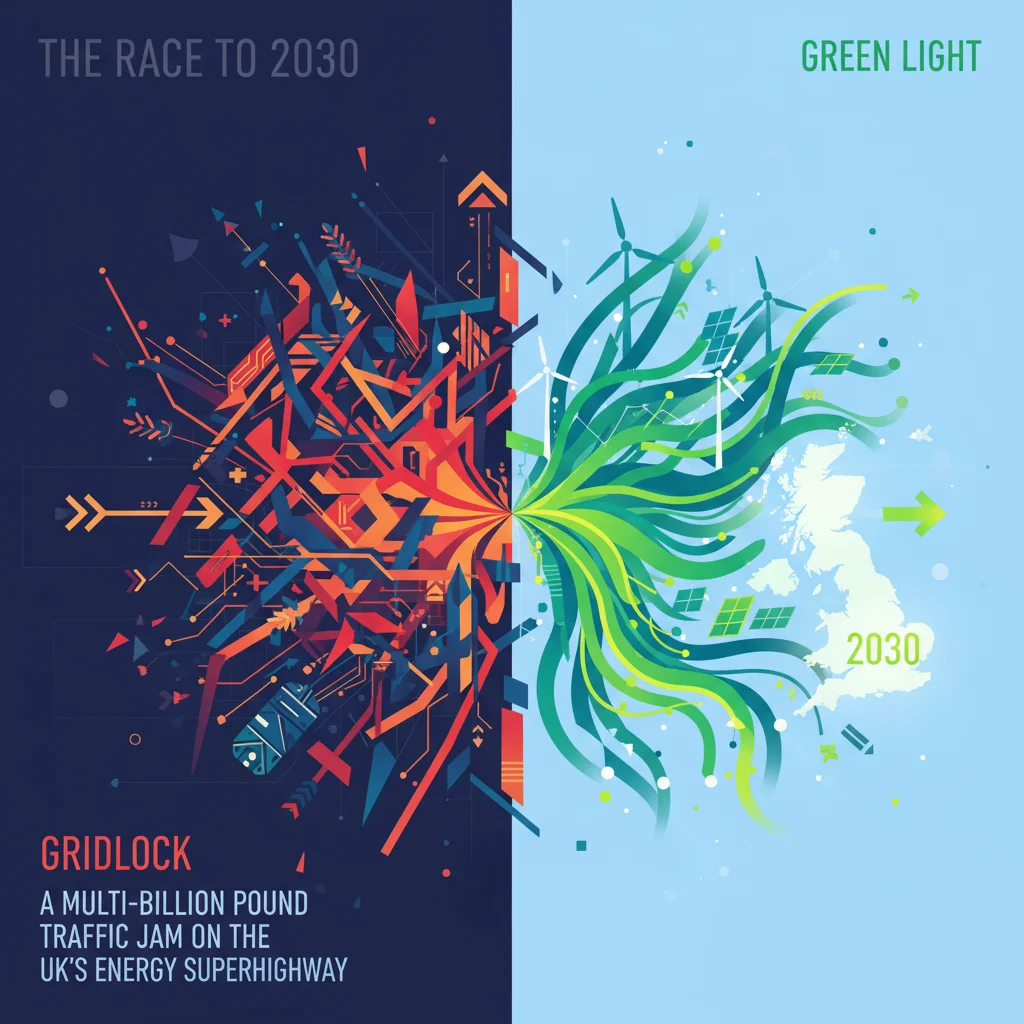
The Race to 2030: A Multi-Billion Pound Traffic Jam on the UK’s Energy Superhighway
The United Kingdom has set one of the world’s most ambitious climate targets: a fully decarbonised power system by 2030. This goal has ignited a gold rush in renewable energy development, with wind, solar, and battery storage projects clamouring for a piece of the future. Yet, this green revolution has hit a monumental roadblock, not in the windswept plains or sunny fields, but in the bureaucratic labyrinth of the National Grid. A colossal queue of energy projects, all waiting to plug into the national power network, has created a state of paralysis, threatening the very target it was meant to achieve. The implications for the UK economy, energy security, and the world of green finance are profound.
For years, the system operated on a seemingly fair “first-come, first-served” basis. In theory, it was orderly. In practice, it became a developer’s Wild West. Speculative or “zombie” projects—some with little more than a plan on paper—could squat in the queue for years, holding a valuable spot they were not ready to use. This created an artificial bottleneck, blocking viable, shovel-ready projects from connecting. The result? The connection queue has ballooned, growing fivefold since 2021 (source), with connection dates for new applicants stretching well into the late 2030s. This gridlock represents a critical failure in infrastructure management, turning potential green assets into stranded liabilities.
A New Sheriff in Town: The “First-Ready, First-Served” Revolution
In a move of surgical precision, the National Grid Electricity System Operator (ESO) is tearing up the old rulebook. The new mandate is “first-ready, first-served,” a meritocratic approach designed to clear the congestion and fast-track projects that can genuinely contribute to the 2030 goal. To get priority, developers must now prove they have cleared critical hurdles, such as securing land rights, planning permissions, and financing commitments. This fundamental shift is designed to separate the serious players from the speculators.
The logic is sound: prioritise those who can deliver. By doing so, the ESO hopes to accelerate the connection of gigawatts of clean power, ensuring the lights stay on and carbon targets are met. However, this radical overhaul is a double-edged sword. While well-prepared developers are celebrating their newfound priority access, hundreds of other projects, particularly in the solar and battery storage sectors, are facing a harsh new reality. Their connection dates are being unceremoniously pushed back, many beyond this decade. This abrupt change in fortune has sent shockwaves through the investing community, redrawing the map of risk and opportunity in the UK’s renewable energy sector.
Forging New Fortunes: How London's Industrial Past is Powering a Modern Investment Boom
Visualising the Shake-Up: Winners and Losers in the New Queue
The impact of this policy change creates a stark divergence in project viability. The table below illustrates how different project profiles are affected by the transition from the old system to the new one, highlighting the dramatic shift in investment outlook.
| Project Profile | Status Under Old System (“First-Come”) | Status Under New System (“First-Ready”) | Investment & Finance Outlook |
|---|---|---|---|
| Shovel-Ready Wind Farm (All permits and financing secured) | Stuck behind speculative projects with earlier queue dates. | Fast-tracked for connection, potentially pre-2030. | Positive: Lower risk, clearer path to revenue, attractive to institutional investors and banking partners. |
| Early-Stage Solar Project (Land secured, planning in progress) | Held a potentially valuable early queue position. | Pushed to the back of the line, connection date delayed past 2030. | Negative: High uncertainty, project finance becomes difficult to secure, potential for write-downs. |
| Speculative Battery Storage (No land or planning permission) | Clogging the queue, holding a spot as a tradable asset. | Effectively removed from the priority queue or delayed indefinitely. | Very Negative: Stranded asset risk, investors face significant losses. Represents a market correction. |
The Economic Shockwave: Navigating the New Investment Landscape
The consequences of this policy shift extend far beyond project timelines, touching every corner of the financial ecosystem, from venture capital to large-scale infrastructure funds. A clear division is emerging between the winners—well-capitalised, efficient developers—and the losers, who now face an uncertain future.
For Investors and the Stock Market
For those investing in the UK’s green transition, the rules of engagement have changed overnight. The risk profile for renewable energy assets is no longer linear. A project’s value is now inextricably linked to its operational readiness. This will likely trigger a flight to quality, with capital flowing towards established developers with proven track records. Listed renewable energy funds on the stock market will face intense scrutiny from analysts, who will be digging deep into their portfolios to assess their exposure to delayed projects. The ability to navigate complex planning laws and secure supply chains is now as valuable as the technology itself. This is a market that will reward operational excellence over speculative ambition.
For Banking and Project Finance
The world of project finance is also being reshaped. Lenders who have provided capital for early-stage development based on a project’s queue position now face heightened risk. The new system demands a more robust, milestone-driven approach to banking and lending. Future financing agreements will likely include stringent clauses tied to achieving “ready” status. This shift puts immense pressure on developers to de-risk their projects much earlier in the lifecycle, a capital-intensive process that could favour larger players and squeeze out smaller innovators. According to the Financial Times, a significant portion of the projects in the queue—around 60% by capacity—are for battery storage, a sector often pursued by newer, more agile firms that may now struggle under these new capital requirements.
The Balanced Budget Myth: Why Governments Aren't Households and What It Means for Your Portfolio
Beyond the Queue: The Trillion-Pound Infrastructure Challenge
Clearing the queue is only the first step. The underlying issue is that Britain’s grid—a marvel of 20th-century engineering—was not designed for the decentralised, intermittent nature of 21st-century renewable energy. The long-term solution requires a monumental investment in the physical infrastructure itself: new pylons, more substations, and smarter technology to manage energy flows. This represents one of the most significant infrastructure investment opportunities of our time, but it also highlights a critical challenge for UK economics.
Meeting the UK’s 2030 clean power target (source) is not just a matter of building more wind turbines; it’s about building the modern circulatory system needed to transport that power. This is where future-facing technologies could converge. Smart grids, powered by AI and advanced data analytics, will be essential for balancing supply and demand. Innovative fintech platforms could facilitate peer-to-peer energy trading, while some futurists even propose blockchain technology to create an immutable, transparent ledger for energy credits and grid access rights. These technological solutions, however, depend on a stable and encouraging policy environment to attract the massive, long-term capital required.
Operation Ajax: How a 1953 Coup in Iran Forged Decades of Geopolitical Risk for Investors
Conclusion: A Necessary Reset for a Greener Future
The overhaul of Britain’s grid connection process is a landmark event in the country’s energy transition. It is a bold, and for some, painful, attempt to impose order on a chaotic system and get the UK back on track to meet its ambitious climate goals. By prioritising readiness, the National Grid is sending a clear message to the market: the era of speculation is over, and the era of execution has begun. For investors, finance professionals, and business leaders, this moment demands a recalibration of strategy. The opportunities are immense, but they now belong to those who can demonstrate not just vision, but a tangible ability to deliver. The road to 2030 remains challenging, but by clearing this critical bottleneck, the UK may have just given the green light to a smarter, more efficient, and ultimately more successful energy future.

Related Posts

UK’s Fiscal Surprise: Decoding the December Dip in Government Borrowing and What It Means for Investors

UK Government Borrowing Plummets: A Deep Dive into What This Means for the Economy, Investors, and Your Wallet