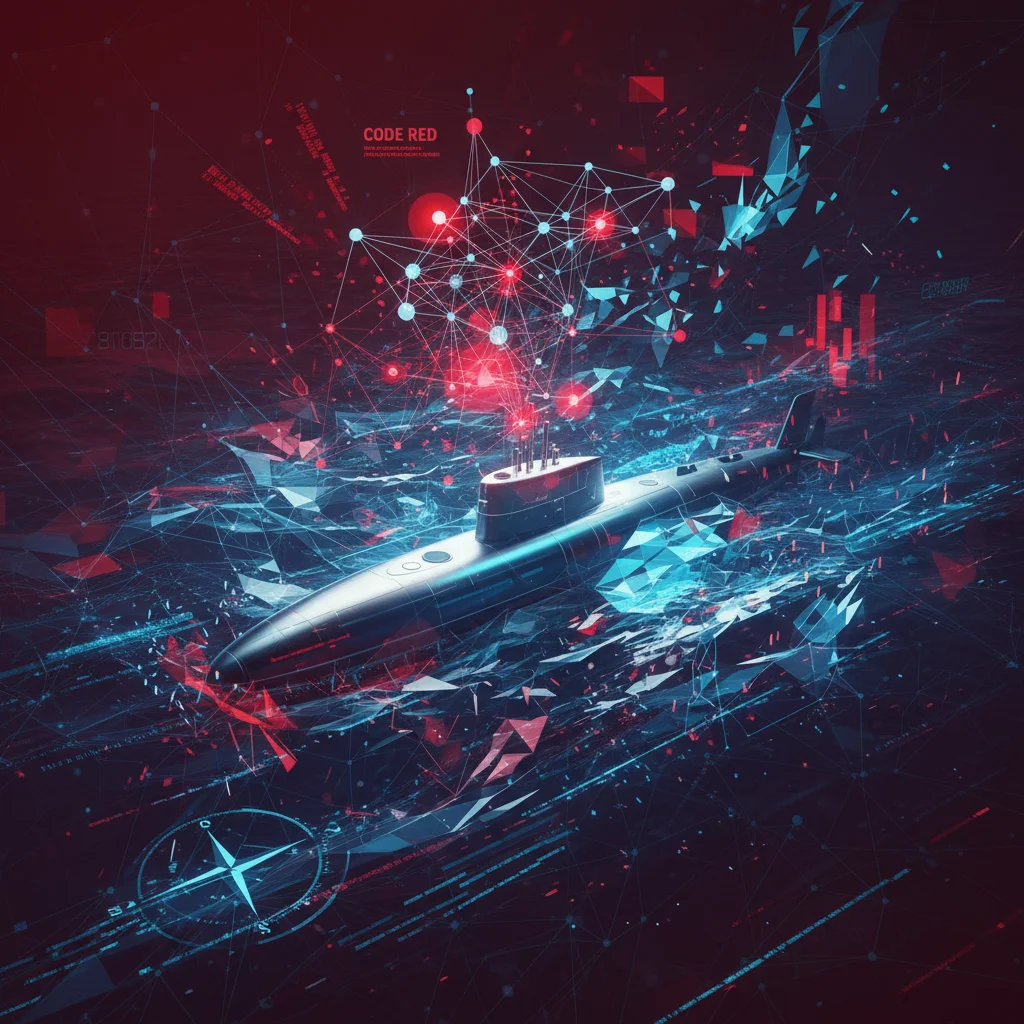
Code Red at Sea: How AI is Powering the Royal Navy’s High-Stakes Submarine Hunt
Imagine the North Atlantic. It’s not just a vast, empty expanse of water; it’s a complex, dynamic, and data-rich environment. For centuries, naval dominance was about the size of your fleet and the range of your cannons. Today, it’s about the speed of your algorithms and the sophistication of your software stack. The new frontline isn’t just on the waves; it’s in the cloud, powered by artificial intelligence and a level of automation that would make a Silicon Valley startup nod in approval.
The UK’s Royal Navy is in the midst of a profound technological transformation, driven by a resurgent threat lurking beneath the waves. The UK’s Defence Secretary, Grant Shapps, recently unveiled a new strategy dubbed the “Atlantic Bastion,” calling it a “blueprint for the future of the Royal Navy.” But this isn’t just about military hardware. It’s a fundamental shift towards a data-driven, AI-powered, and software-defined approach to national security. For developers, entrepreneurs, and tech professionals, this signals a monumental shift where the worlds of defense and cutting-edge tech are colliding with unprecedented force.
The Problem: A 21st-Century Threat in a Cold War Playground
The North Atlantic has always been a strategic chessboard for global powers. During the Cold War, the Greenland-Iceland-UK (GIUK) gap was a critical chokepoint for monitoring Soviet submarines. Today, that old playground has new players and new rules. Russian submarine activity has surged, with vessels that are quieter, faster, and more technologically advanced than ever before.
These submarines pose a multifaceted threat. They can target critical undersea infrastructure, like the data cables that carry over 95% of global internet traffic. They represent a direct challenge to NATO’s naval forces and could disrupt vital supply lines. The old methods of tracking—a lone frigate pinging sonar into the deep—are no longer sufficient. It’s like trying to find a single malicious process on a global server network using only a command-line interface. You need better tools, more data, and smarter systems.
This is where the paradigm shift occurs. The challenge is no longer just a physical one; it’s an information and technology problem. How do you process petabytes of sensor data from ships, aircraft, satellites, and autonomous drones in real-time? How do you distinguish the acoustic signature of a state-of-the-art enemy sub from a pod of whales or a commercial freighter? The answer, according to the UK’s new strategy, lies in embracing the tech revolution.
Code, Canvas, and Controversy: Is AI Killing the Art World's Oldest Profession?
The Solution: Building a “System of Systems” with AI and Automation
The “Atlantic Bastion” strategy isn’t about building a single, perfect submarine-hunting machine. Instead, it’s about creating an integrated “system of systems”—a concept intimately familiar to any software architect. It’s a distributed network of assets, sensors, and decision-making platforms, all glued together by software, powered by the cloud, and sharpened by artificial intelligence.
1. AI and Machine Learning: The Digital Sonarman
At the heart of this new approach is AI and machine learning. Anti-submarine warfare (ASW) is the ultimate big data problem. The ocean is incredibly noisy, and finding the faint, tell-tale signs of a hostile submarine requires sifting through an ocean of irrelevant data. This is a perfect application for machine learning algorithms.
Instead of relying solely on human operators staring at screens for hours, AI systems can be trained on vast libraries of acoustic data. They can learn to identify the unique signatures of specific submarine classes, predict their likely movements based on past behavior and environmental conditions, and flag anomalies for human analysts to investigate. This fusion of human expertise and machine efficiency is a game-changer, dramatically reducing detection times and false positives. According to the Financial Times, this new strategy involves a significant investment in technology to “hunt and track” these threats more effectively.
2. Automation and Unmanned Platforms: The Force Multipliers
You can’t have sensors everywhere at once—at least, not with crewed vessels. This is where automation and unmanned systems come in. The strategy calls for a fleet of autonomous underwater vehicles (AUVs) and uncrewed aerial vehicles (UAVs). These drones are essentially mobile, persistent sensor platforms. They can patrol vast areas of the ocean for weeks or months at a time, collecting data and streaming it back to a central command hub.
This creates a persistent, wide-area surveillance network that would be prohibitively expensive to maintain with traditional ships and aircraft. The software orchestrating this fleet of autonomous assets is the secret sauce. It involves complex programming for mission planning, dynamic routing, and collaborative behavior, ensuring the drones work in concert to create a complete, real-time picture of the undersea environment.
3. Cloud and SaaS: The Command and Control Backbone
All this data from a distributed network of sensors is useless unless it can be collected, processed, and accessed securely in real-time. This necessitates a robust, resilient, and secure cloud infrastructure. The Royal Navy is effectively building a military-grade, private cloud environment that can fuse data from multiple sources—from a satellite feed to a sonar buoy to an analyst’s report.
This move towards a centralized data fabric mirrors the digital transformation seen in the enterprise world. It opens the door for a SaaS (Software as a Service) model for military applications, where new capabilities can be deployed and updated rapidly through software, rather than through slow and expensive hardware upgrades. This agility is critical when facing an adversary who is constantly evolving their own technology.
However, this also introduces profound new challenges. The attack surface for a nation’s defense is no longer just its physical borders; it’s the millions of lines of code and the network infrastructure that underpins it. The greatest threat might not be a torpedo, but a sophisticated piece of malware. Furthermore, as we delegate more detection and decision-making to AI, we must establish rigorous ethical and operational guardrails. An autonomous system misidentifying a commercial vessel could have catastrophic consequences. The conversation around AI ethics is no longer academic; it’s a matter of national and global security.
From Defense Contractor to Tech Startup: A New Ecosystem of Innovation
This technological pivot has huge implications for the tech industry. The traditional defense procurement model is notoriously slow and bureaucratic, often shutting out smaller, more innovative companies. The shift to a software-centric model demands a different kind of partner: agile, innovative, and expert in fields like AI, cybersecurity, and cloud computing.
The UK government recognizes this, actively seeking to engage with non-traditional defense suppliers and startups. For a tech company, this represents a new frontier. The problems are complex, the stakes are incredibly high, and the solutions require bleeding-edge innovation. It’s an opportunity to apply commercial tech expertise to solve some of the most critical national security challenges.
The AI Overlord Problem: Why "Helpful" Software Is Driving Us All Mad
To illustrate the technological leap, consider the difference between the old and new approaches to anti-submarine warfare:
| Aspect | Legacy Approach (Cold War Era) | Next-Gen Approach (Atlantic Bastion) |
|---|---|---|
| Data Source | Siloed data from individual ships and aircraft | Fused, real-time data from a networked “system of systems” (ships, drones, satellites) |
| Data Processing | Manual analysis by human operators | AI/Machine Learning algorithms for pattern recognition and predictive analysis |
| Asset Deployment | Pre-planned patrols by expensive, crewed vessels | Dynamic, autonomous deployment of unmanned platforms managed by automation software |
| Infrastructure | On-premise, vessel-specific hardware | Secure, distributed cloud infrastructure for centralized processing and access |
| Core Vulnerability | Physical destruction of assets | Cybersecurity breaches, data poisoning, and network attacks |
This table highlights a fundamental truth: the future of naval warfare is less about the platform and more about the network. The winning side will be the one that can collect, process, and act on information faster and more effectively than its opponent. As the Defence Secretary stated, this is part of a plan for the UK to be “more lethal and more active” globally, a goal that is now inextricably linked to technological superiority (source).
The Road Ahead: Challenges and Opportunities
The journey to a fully AI-driven naval force is not without its hurdles. Integrating legacy systems with new technology is a monumental engineering challenge. Ensuring the absolute cybersecurity of a software-defined defense network is a task of Sisyphean proportions. And recruiting and retaining top-tier tech talent—programmers, data scientists, and AI specialists—to work in the public sector will require a cultural shift within the military.
But the direction of travel is clear. The “Atlantic Bastion” is more than just a naval strategy; it’s a case study in how foundational technologies like AI, cloud computing, and automation are reshaping entire industries—even one as traditional as the military.
For the tech world, this is a call to action. The complex, high-stakes problems of national security are becoming some of the most interesting and challenging software and data problems on the planet. The code you write tomorrow might not just power a new app; it could help secure the seas.

Related Posts
The Shadow War: How AI, Software, and a Scramble for Chinese Drones Are Redefining Modern Conflict
From Assembly Lines to Front Lines: Why Renault’s Drone Deal is a Landmark Moment for Tech and Defense