The Black Sea’s New Battlefield: How Drone Attacks Are Weaponizing Shipping Insurance and Shaking the Global Economy
The dark waters of the Black Sea have become the latest flashpoint in the complex interplay between military strategy and global finance. In a dramatic escalation of the conflict, recent Ukrainian sea drone attacks on Russian naval and commercial vessels are sending shockwaves far beyond the immediate blast radius. These attacks are not just tactical victories; they are a calculated strike at the heart of Russia’s economic lifeline, triggering a volatile surge in maritime insurance costs and threatening to disrupt the global flow of essential commodities like oil and grain. This isn’t just a regional conflict anymore—it’s a high-stakes economic battle with profound implications for international trading, the global economy, and investment portfolios worldwide.
From Grain Corridors to Contested Waters: A Strategic Shift
For months, the Black Sea was governed by a fragile, UN-brokered grain deal that allowed Ukraine to export its agricultural products, providing a semblance of stability to global food markets. The collapse of that agreement in July 2023 plunged the region back into uncertainty. Initially, Russia capitalized on the situation, targeting Ukrainian ports with a barrage of missile and drone strikes in an attempt to cripple its export capabilities.
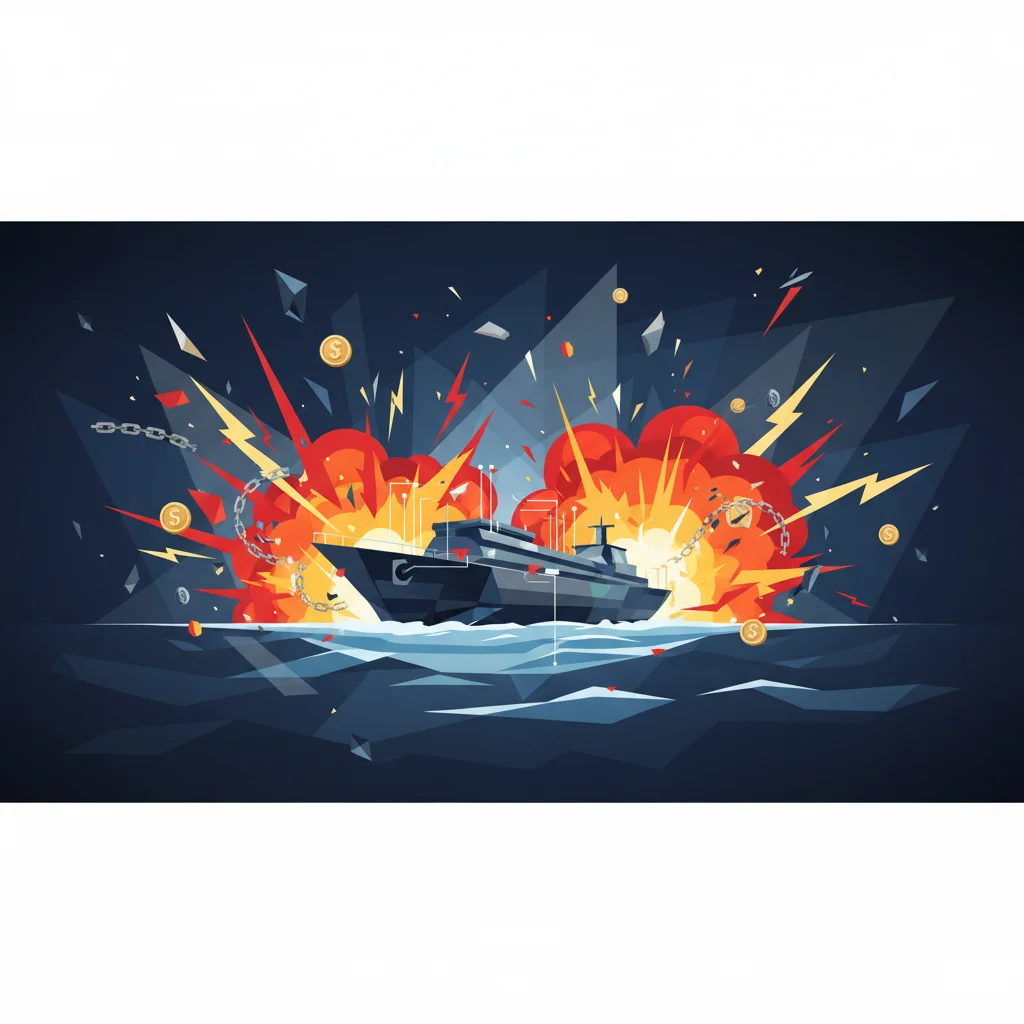
Now, the tables have turned. Ukraine has responded with asymmetric warfare, deploying sophisticated sea drones to target Russian assets. The successful strikes on a Russian naval landing ship and, more critically, a Russian-flagged chemical tanker, have fundamentally altered the risk calculus in the region. By demonstrating a credible threat to Russian shipping, Ukraine is no longer just defending its own coastline; it is actively projecting power and imposing direct economic costs on Moscow. This strategic pivot transforms the Black Sea from a simple export route into a contested economic battleground.
The Invisible Tax: Deconstructing the War Risk Insurance Spike
In the world of global shipping, insurance is the invisible lubricant that keeps goods moving. Every vessel requires a complex web of policies covering everything from the hull and machinery to the cargo itself. When a region is deemed high-risk due to conflict, insurers add a special surcharge known as a “war risk premium.” This premium is a direct financial measure of perceived danger, and right now, the indicators for the Black Sea are flashing red.
Following the Ukrainian attacks, insurance brokers have reported a significant spike in these premiums. According to Marcus Baker, global head of marine, cargo, and logistics at the broker Marsh, the cost has surged dramatically. While premiums were already elevated at around 1% of a ship’s hull value, they have now climbed to between 1% and 1.25%. For a modern tanker valued at $100 million, this increase represents an additional $250,000 in cost for a single seven-day voyage.
This “war risk tax” is not applied evenly. The steepest increases are being levied on vessels with perceived links to Russia, creating a two-tiered market where Russian commodity exports face a significant financial penalty. To better understand the financial impact, consider the following breakdown of these additional voyage costs.
| Metric | Before Recent Attacks | After Recent Attacks | Financial Impact (on a $100M vessel) |
|---|---|---|---|
| War Risk Premium (% of Hull Value) | ~1.00% | 1.20% – 1.25% | An increase of $200,000 – $250,000 per voyage |
| Per-Voyage Insurance Cost | $1,000,000 | $1,250,000 | A 25% jump in premium costs |
| Market Sentiment | High Risk, but manageable | Extreme Risk, cover becoming scarce | Insurers are reassessing their exposure, potentially leading to a withdrawal of coverage for certain routes (source). |
This surge in costs is more than just an accounting issue. It forces shipowners to decide whether a voyage is economically viable. Some may refuse to enter the region altogether, while others will pass the inflated costs on to charterers, which ultimately translates into higher prices for consumers and businesses globally.
The Investor's Gambit: Navigating the Generational Divide in Modern Finance
The Global Ripple Effect: Why a Black Sea Skirmish Matters to Your Portfolio
The events unfolding in the Black Sea are a stark reminder of the interconnectedness of the global economy. The immediate consequences extend far beyond the shipping and insurance industries, creating ripples that will be felt across commodity markets, supply chains, and investment portfolios.
1. Pressure on Russia’s War Chest
Russia is heavily reliant on the export of oil, grain, and other commodities to fund its government and its war effort. Every dollar added to shipping costs is a dollar less in profit. This insurance squeeze acts as a de facto sanction, directly impacting Russia’s primary revenue streams. While Russia has cultivated a “shadow fleet” of tankers to circumvent official sanctions, these vessels still require insurance, and the heightened risk in its own backyard makes operating this fleet more expensive and complex (source).
2. Volatility in Commodity Markets
The Black Sea is a critical artery for global grain and energy supplies. Any disruption or perceived risk to this supply chain inevitably leads to price volatility. Traders in Chicago, London, and Singapore will be watching these developments closely. Fear of supply disruptions can cause futures prices for wheat and oil to spike, which can contribute to inflationary pressures worldwide. For investors, this highlights the importance of monitoring geopolitical events as a key driver of commodity trading and the performance of the broader stock market.
3. A Test for the Insurance Industry
The world’s largest insurers, many of whom are publicly traded, are now facing a difficult balancing act. On one hand, higher premiums mean higher potential revenue. On the other, the risk of a catastrophic loss—such as the total destruction of a large oil tanker—is now terrifyingly real. A major incident could lead to billions of dollars in claims, potentially wiping out years of profits from the region. As a result, many insurers may choose to reduce their exposure or pull out of the region entirely, further constricting supply and driving up costs.
From LOL to Ledger: The Sobering End of Finance's Joke Era
The Investor’s Compass: Navigating a High-Risk Geopolitical Landscape
For investors, finance professionals, and business leaders, the situation in the Black Sea offers several crucial lessons in navigating the modern investment landscape, where geopolitics and economics are inextricably linked.
First, it underscores the necessity of incorporating sophisticated geopolitical risk analysis into any investing strategy. The conflict has created clear winners and losers. Companies involved in defense technology, particularly unmanned naval systems, have seen their profiles rise. Conversely, companies with heavy exposure to Black Sea shipping or Russian commodities face significant headwinds.
Second, it highlights the fragility of global supply chains. The pandemic, the Suez Canal blockage, and now the Black Sea conflict have repeatedly shown how quickly global trade can be disrupted. Businesses must prioritize building resilient and diversified supply chains to mitigate these risks. From a financial perspective, technologies that enhance supply chain transparency are becoming increasingly valuable. While still in its infancy for this application, some theorists propose that blockchain could one day offer a secure, immutable ledger for tracking cargo and authenticating insurance documents in high-risk zones, reducing fraud and streamlining claims in the complex world of maritime banking and trade finance.
Finally, understanding the niche but powerful role of industries like insurance is critical. The seemingly arcane world of war risk premiums is now a key theater in a major European conflict, demonstrating that in our interconnected world, financial levers can be as powerful as military ones.
Conclusion: A New Era of Economic Warfare
The drone attacks in the Black Sea are more than just headlines from a distant conflict. They represent a pivotal moment in the evolution of modern warfare, where economic and financial tools are fully integrated with military strategy. The surging insurance premiums are a clear signal that the financial markets are now pricing in a new, more dangerous phase of the conflict—one that directly targets the commercial arteries of a global power.
For the world, this serves as a potent reminder that stability is fragile and risk is global. The aftershocks of these attacks will continue to influence everything from the price of gasoline and bread to the risk models used in the highest echelons of finance. Watching the Black Sea is no longer just about tracking troop movements; it’s about understanding the future of global trade, risk management, and the profound economic consequences of a new era of conflict.