Beyond the Handshake: The High-Stakes Economic Chess Match Between Europe and China
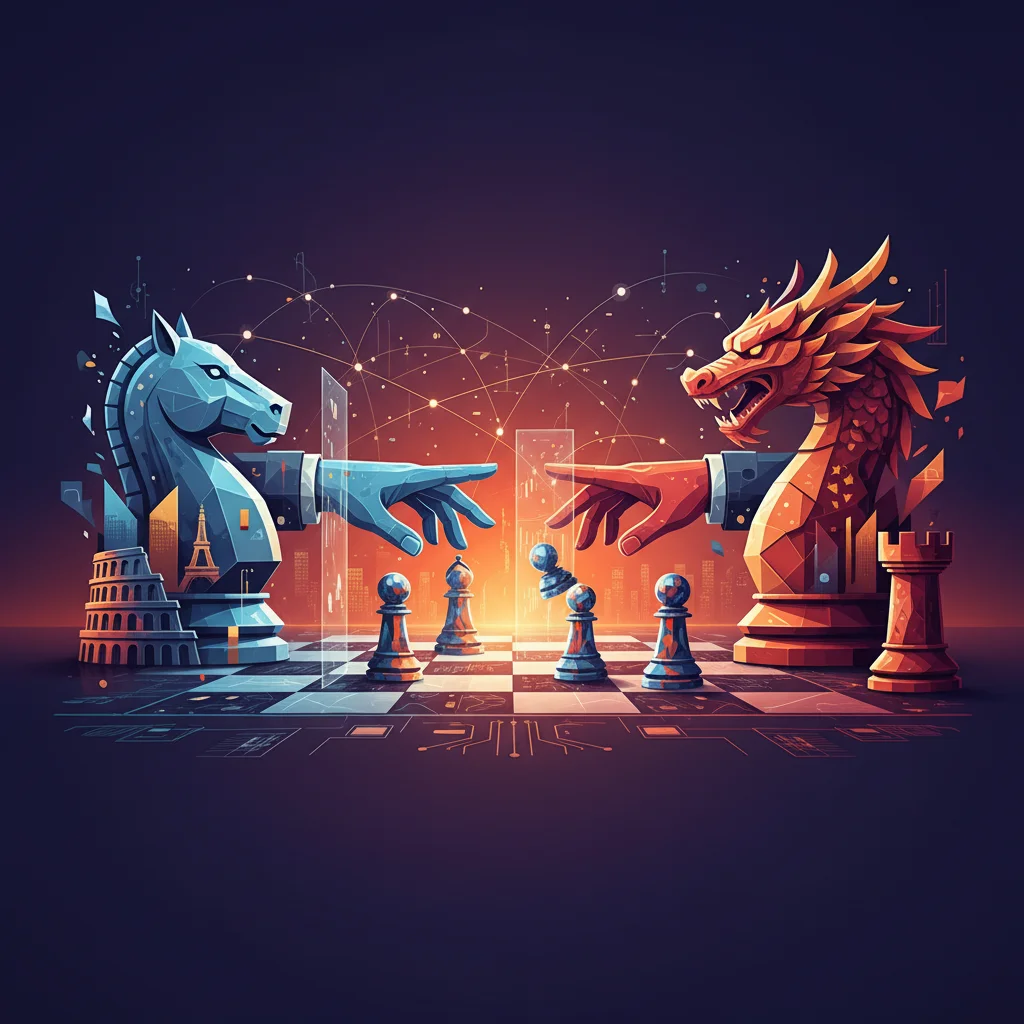
Beyond the Handshake: The High-Stakes Economic Chess Match Between Europe and China
On the surface, French President Emmanuel Macron’s recent visit to Beijing was a carefully choreographed display of diplomacy. The smiles, the state dinners, and the talk of mutual respect painted a picture of stable international relations. Yet, beneath this veneer of bonhomie lies a stark and increasingly urgent economic reality: Europe is waking up to what many now consider an existential threat to its industrial core, fueled by what French Finance Minister Bruno Le Maire has bluntly termed “unbearable imbalances” in trade with China.
This isn’t just diplomatic rhetoric; it’s a flashing red light for anyone involved in international finance, investing, and strategic business planning. The delicate dance between geopolitical cooperation and fierce economic competition is reaching a tipping point, and the shockwaves will be felt across the global economy, influencing everything from the stock market to individual investment portfolios.
The Diplomatic Facade vs. The Economic Reality
President Macron’s trip, accompanied by a delegation of top European business leaders, aimed to re-engage with China after years of pandemic-induced isolation. The goal was to find common ground on global issues and, crucially, to advocate for a level playing field for European companies. However, the underlying message from Paris and other European capitals is one of growing alarm.
The core of the issue is a massive trade deficit and the nature of Chinese exports. In 2022, the EU’s trade deficit with China ballooned to a staggering €396 billion, nearly double the figure from just two years prior. But this isn’t simply about numbers; it’s about the strategic sectors where China is not just competing, but dominating. Once the world’s workshop for low-cost goods, China has rapidly climbed the value chain, powered by massive state subsidies and a protected domestic market. Today, it is challenging Europe in the very high-tech, green industries that the continent has staked its future on.
Beyond the Broken Glass: The Hidden Economic Shockwaves of a Local Business Break-In
The Battleground: Green Technology and Industrial Sovereignty
The primary flashpoint in this economic conflict is the green technology sector. Europe has committed to an ambitious green transition, a cornerstone of its long-term economic strategy. Yet, in a bitter twist of irony, its efforts are being undermined by a flood of highly competitive, state-supported Chinese products. This has profound implications for European industrial policy and the future of its manufacturing base.
To illustrate the scale of the challenge, let’s examine the key sectors under pressure.
| Sector | The European Position | The Chinese Challenge |
|---|---|---|
| Electric Vehicles (EVs) | Home to legacy automotive giants like Volkswagen, Renault, and Stellantis, who are investing billions to pivot to EVs. | Chinese brands (BYD, Nio, Xpeng) are entering the EU market with high-quality, lower-cost models, backed by a dominant position in battery financial technology and production. |
| Solar Panels | Once a leader in solar innovation, Europe has seen its manufacturing base decimated over the past decade. | China now controls over 80% of the global solar supply chain, from polysilicon to finished panels, creating a critical dependency for Europe’s energy transition. |
| Wind Turbines | A remaining stronghold for European industry, with companies like Vestas and Siemens Gamesa leading the global market. | Chinese turbine manufacturers, having honed their skills in a massive and protected domestic market, are now aggressively bidding for projects in Europe, often at significantly lower prices. |
This isn’t just healthy competition; European officials argue it’s a distorted market. The Chinese model of massive state subsidies, cheap energy, and other non-market practices creates an environment where European companies, bound by stricter environmental and labor laws, find it impossible to compete on price. The fear is a repeat of the solar panel experience—where a promising European industry was effectively wiped out—across the entire green tech landscape.
Beyond the Balance Sheet: The Hidden Psychology Driving Your Financial Decisions
Implications for Investors and the Financial Markets
For those in finance and investing, this geopolitical chess match is not a spectator sport. It has direct and tangible consequences for portfolio construction, risk assessment, and identifying long-term growth opportunities. The era of frictionless globalization is over, and the new paradigm is one of strategic competition and supply chain resilience.
1. Sector-Specific Volatility
European industrial and automotive stocks are now subject to a new layer of political risk. An aggressive push by Chinese EV makers could compress margins and market share for established European brands, impacting their performance on the stock market. Conversely, any potential EU tariffs or anti-subsidy investigations could spark retaliatory measures from Beijing, creating volatility in sectors heavily reliant on the Chinese market, such as luxury goods and aerospace. Active trading strategies will need to account for this heightened headline risk.
2. The Rise of “Industrial Policy” Stocks
As Europe moves to protect its strategic industries, government support will likely flow to companies in key areas like battery manufacturing, semiconductor production, and green hydrogen. Investors should watch for opportunities in companies poised to benefit from EU initiatives like the Green Deal Industrial Plan or the Chips Act. This is a shift from pure market-driven investing to one that incorporates top-down policy direction.
3. Re-evaluating China Exposure
The calculus for investing in China is changing. While the growth story remains compelling, the risks are multiplying. Regulatory crackdowns, geopolitical tensions, and the potential for market access restrictions add layers of uncertainty. Investors must now weigh the potential rewards against the risk of being caught in the crossfire of a trade dispute. This environment also affects global banking, as financial institutions must navigate the complex sanctions and regulatory landscapes of both Western nations and China.
4. The Role of New Technology
In this competitive landscape, innovation is paramount. European firms will be pushed to accelerate their adoption of advanced financial technology (fintech) to streamline operations and supply chain management. Furthermore, technologies like blockchain could see increased adoption for ensuring supply chain transparency and verifying the provenance of materials—a key differentiator as Europe emphasizes sustainability and ethical sourcing in its trade policies.
The Path Forward: A High-Wire Balancing Act
Europe finds itself in an incredibly difficult position. It cannot afford to decouple from the Chinese economy, yet it can no longer ignore the hollowing out of its industrial base. The path forward will likely involve a multi-pronged strategy:
- Assertive Trade Defense: Expect the EU to make greater use of its trade defense instruments, including anti-subsidy and anti-dumping investigations. The recent probe into Chinese EVs is likely just the beginning.
- Strategic Investment: Pouring public and private capital into nurturing domestic supply chains for critical technologies. This is a core component of the “de-risking” agenda.
- Diversification: Actively seeking to build stronger economic ties with other regions and countries, such as India, Southeast Asia, and Latin America, to reduce over-reliance on any single partner.
- Continued Dialogue: Keeping channels of communication with Beijing open, as Macron attempted to do. The goal is to manage competition responsibly and avoid a complete breakdown in relations.
The bonhomie in Beijing may have provided a temporary diplomatic respite, but the fundamental economic tensions between Europe and China are structural and long-term. For business leaders, policymakers, and investors, the key takeaway is clear: the global economic landscape is being redrawn along strategic lines. Navigating this new world requires a deep understanding of the intricate interplay between economics, politics, and technology. The friendly handshakes are over; the real contest has just begun.
Beyond the Headlines: Decoding the Puzzle of Today's Global Economy