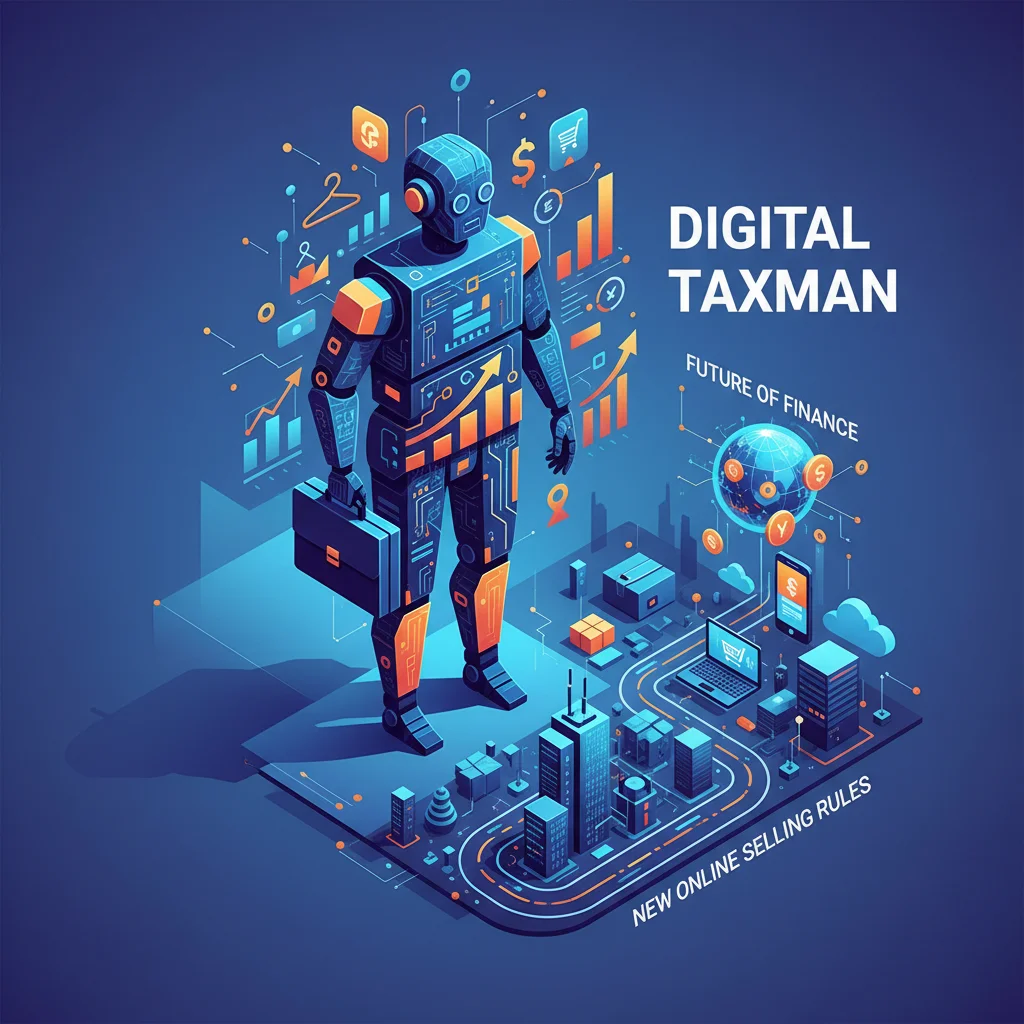
The Digital Taxman Cometh: Navigating New Online Selling Rules and Their Impact on the Future of Finance
The Side Hustle Goes Official: Understanding the New Tax Reporting Rules
For years, the digital marketplace has been a modern-day bazaar. A quick sale on Vinted to clear out a wardrobe, flipping a find on eBay, or renting out a spare room on Airbnb—these activities have become a staple of the contemporary economy, forming a vibrant ecosystem of side hustles and micro-enterprises. However, a recent shift in tax regulations has sent a ripple of confusion and concern through this community. If you’ve sold more than 30 items or earned over €2,000 (£1,700) on a platform in the last year, you may have received a notification about your data being shared with His Majesty’s Revenue and Customs (HMRC). The immediate reaction for many is panic. The reality, however, is far more nuanced.
These new rules, which came into effect on 1 January 2024, are not a new tax. Instead, they represent a significant evolution in financial transparency, driven by the Organisation for Economic Co-operation and Development (OECD) and implemented in the UK as part of a directive known as DAC7. Their purpose is to close the “tax gap”—the difference between tax owed and tax collected—by giving authorities a clearer view of the income generated within the burgeoning digital economy. This article will demystify these changes, explain what they mean for the average person, and, more importantly, explore the profound implications for the worlds of finance, investing, and financial technology.
Reporting vs. Tax Liability: The Critical Distinction
The most crucial point to understand is that a platform like Vinted or eBay reporting your sales figures to HMRC does not automatically mean you have a tax bill to pay. The core of this initiative is data collection, not automatic taxation. The UK has specific tax allowances in place that mean most casual sellers will remain unaffected.
The key provision here is the trading allowance. Every individual in the UK is entitled to a £1,000 tax-free allowance on income from self-employment or casual services. This means you can earn up to £1,000 in profit from these activities before you even need to register with HMRC or pay any tax. It’s vital to note this applies to your profit, not your total revenue.
Furthermore, most people using platforms like Vinted are not “trading” in the eyes of the taxman. They are simply selling personal, second-hand possessions. If you sell a dress you bought for £50 for just £15, you have made a loss, not a profit. You cannot be taxed on a loss. Tax is only due on profits made from buying and selling goods with the intention of making money.
To clarify the new landscape, let’s compare the reporting thresholds with the UK’s tax liability thresholds:
| Scenario | Platform Reporting Trigger | Potential UK Tax Liability Trigger |
|---|---|---|
| Number of Sales | More than 30 transactions in a calendar year | N/A (Number of sales is irrelevant for tax liability) |
| Total Earnings (Revenue) | More than €2,000 (approx. £1,700) in a calendar year | More than £1,000 in profit from trading |
| Type of Activity | Selling goods, renting property, providing services | Engaging in “trading” activities with the intent to make a profit |
As the table illustrates, it’s entirely possible to trigger a report to HMRC by selling 35 old items from your wardrobe for a total of £500, yet owe no tax because you are not trading for profit.
The UK's Non-Dom Shake-Up: A High-Stakes Gamble for Britain's Economy
The Macro View: A Watershed Moment for the Digital Economy and Fintech
While the immediate impact on individuals may be minimal, for professionals in finance, economics, and investing, these rules signal a monumental shift. This is the formalization of the gig economy, bringing a previously “grey” area of economic activity into the full light of regulatory oversight. This has several profound consequences:
- Economic Data and Modeling: For the first time, economists and national statisticians will have access to a rich dataset on the scale of the peer-to-peer economy. This will allow for more accurate measurements of GDP, household income, and entrepreneurial activity, refining our understanding of the modern economy.
- The Rise of RegTech: This regulation is a prime example of the convergence of regulation and technology, a field known as “RegTech.” Digital platforms are now, by law, part of the national tax collection infrastructure. This creates new challenges for them but also immense opportunities for financial technology companies that specialize in compliance, data security, and automated reporting. This integration of platform data with government systems is a core tenet of modern fintech evolution.
- Investing and Market Implications: For investors, this adds a new layer of analysis when evaluating publicly traded platform companies like eBay, Etsy, or Airbnb. The increased regulatory burden could be seen as a cost, potentially impacting their stock market valuation. Conversely, platforms that handle this compliance seamlessly may build greater trust and a more stable user base. It also highlights the resilience of their business models in an era of increasing government scrutiny.
What we are witnessing is more than a simple tax rule change; it’s a fundamental philosophical shift. Our digital footprints are, irrevocably, becoming our financial footprints. For decades, the internet economy operated in a relatively unregulated space, but this era is definitively over. This OECD-led initiative is a global pincer movement, ensuring that digital activity, regardless of where the platform is based, is visible to the relevant national tax authority.
This raises critical questions about data privacy versus financial transparency. While the goal of a fair tax system is laudable, the mechanism involves the automated, mass transfer of user data to government agencies. This trend is only set to accelerate. Looking forward, we can anticipate deeper integrations, potentially leveraging AI to analyze transaction patterns for signs of undeclared trading. This is the new frontier of banking and finance, where the lines between social platforms, e-commerce sites, and regulated financial institutions are becoming increasingly blurred. The key takeaway is that the digital economy is no longer a separate entity; it is now a fully integrated and scrutinized component of the global financial system.
Future Trajectories: Centralized Data, Blockchain, and the New Financial Paradigm
The current model mandated by DAC7 is one of centralized reporting. Platforms act as central hubs, collecting user data and transmitting it to a single government authority. This is efficient but creates a massive honeypot of sensitive financial data, raising valid security concerns. This is where emerging financial technology offers intriguing, if distant, alternatives.
Consider the principles of blockchain technology. A decentralized ledger could, in theory, offer a different path. Imagine a future where transactions are verified on a secure, anonymous ledger. A user could grant a tax authority permission to view a verified, unalterable summary of their profitable trading activity without revealing the entire dataset of every single personal item they sold. This would preserve privacy while ensuring tax compliance. While the technology and regulatory frameworks are not yet mature enough for this, it represents a starkly different paradigm to the centralized surveillance model being implemented today. This ongoing tension between centralized efficiency and decentralized security will be a defining theme in the future of finance and trading.
The sheer volume of data being collected will also be a catalyst for innovation in AI-driven financial technology. HMRC and its global counterparts will use sophisticated algorithms to analyze this data, identify patterns of professional trading, and streamline tax collection. This represents a new era of data-driven governance in the global economy.
Actionable Takeaways for Every Stakeholder
Navigating this new environment requires a clear understanding of your position, whether you’re a casual seller, a professional investor, or a business leader.
For Individuals and Casual Sellers:
- Don’t Panic: A notification from a platform is a procedural step, not an accusation of tax evasion.
- Know Your Status: Are you selling unwanted personal items at a loss, or are you buying goods to resell for a profit? This is the key distinction.
- Track Your Profits: If you are trading, keep a simple record of your income and expenses. If your profits are under the £1,000 trading allowance, you have nothing to worry about. If they exceed it, you must register for Self Assessment.
For Investors and Finance Professionals:
- Analyze Regulatory Risk: When evaluating platform stocks, factor in the cost and complexity of this new compliance layer. Companies that invest in robust RegTech infrastructure may prove more resilient.
- Identify Fintech Opportunities: The demand for compliance-as-a-service, data security, and automated reporting solutions for the digital economy is set to explode. This is a high-growth area within the financial technology sector.
- Monitor Global Trends: This is an OECD-wide initiative. Watch how different countries implement these rules, as this will shape the future regulatory landscape for the entire global digital economy.
The Platinum Pivot: Why Hybrid Cars Are Creating a Golden Opportunity in an Overlooked Metal
Conclusion: A New Chapter in Digital Finance
The new rules for online selling platforms are far more than a simple administrative update. They represent a landmark moment in the maturation of the digital economy, signaling its full integration into the traditional frameworks of global finance and taxation. While the headlines may spark alarm for casual sellers, the reality is that the UK’s existing tax allowances protect those who are simply decluttering or making a small amount of extra cash. The real story is the larger one: the increasing sophistication of tax authorities, the critical role of fintech in bridging the gap between platforms and regulators, and the permanent shift towards greater transparency in all forms of economic activity. This is not the end of the side hustle, but it is the end of its financial invisibility.