Prada’s Power Play: Why the Versace Acquisition at a 35% Discount is a Masterclass in Financial Strategy
In the high-stakes world of luxury fashion, where brand legacy is capital and market perception is currency, a seismic shift has just occurred. Italian fashion powerhouse Prada has announced its acquisition of the iconic house of Versace in a deal valued at $1.38 billion. While the merger of two of Italy’s most celebrated brands is monumental in itself, the real story lies in the numbers. This acquisition price represents a staggering discount from the roughly $2 billion valuation Versace commanded when it was sold to Capri Holdings in 2018.
This isn’t just a fashion headline; it’s a profound statement on the current state of the global economy, a masterstroke of corporate finance, and a critical lesson for anyone involved in investing. For business leaders, investors, and finance professionals, the Prada-Versace deal is a multi-layered case study in opportunistic growth, brand valuation in a volatile market, and the strategic consolidation necessary to compete on a global scale. Let’s dissect this landmark transaction and explore what it signals for the future of luxury, finance, and the intricate dance between them.
The Deal by the Numbers: A Tale of Two Valuations
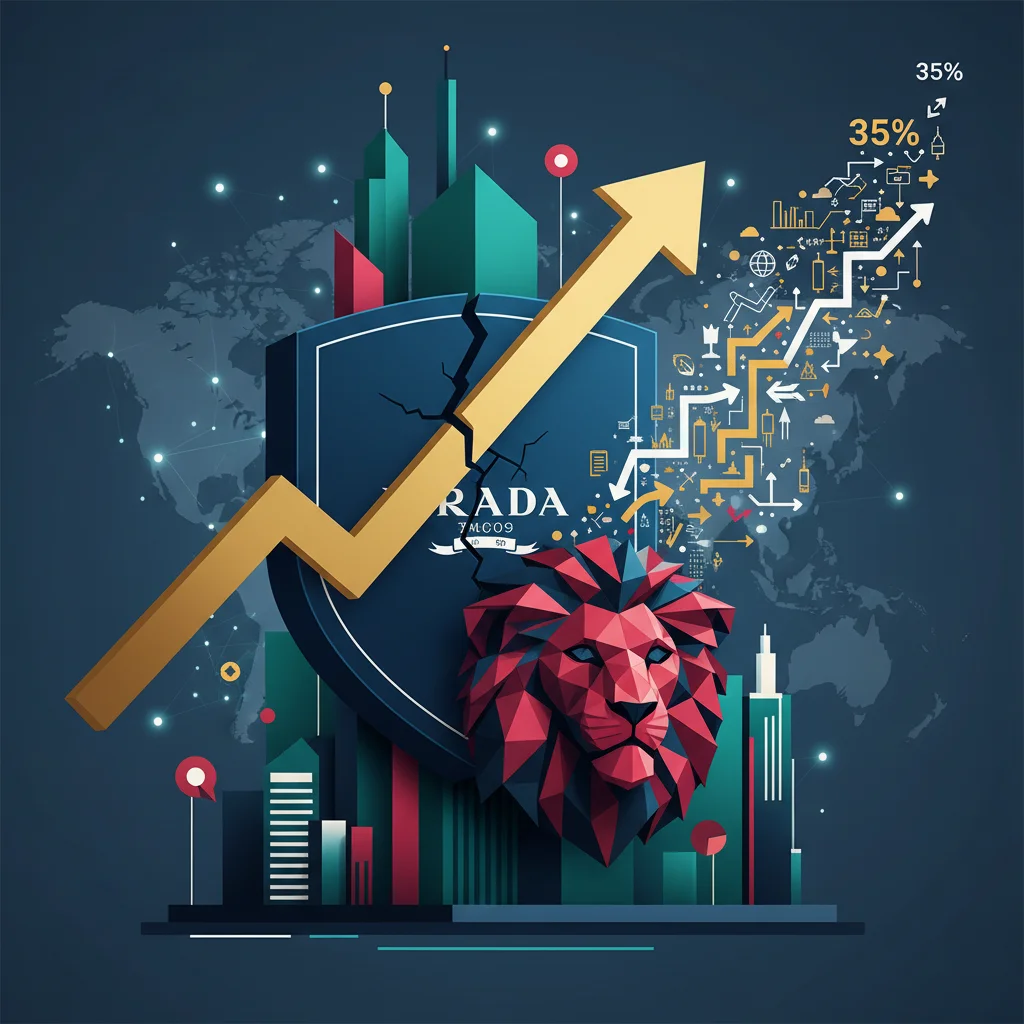
To fully grasp the significance of Prada’s move, we must first contextualize the sharp decline in Versace’s valuation. In 2018, Michael Kors Holdings (which subsequently rebranded as Capri Holdings) acquired Versace in a blockbuster deal that valued the brand at approximately $2.12 billion. At the time, the acquisition was seen as a bold move to create an American luxury conglomerate capable of challenging European giants like LVMH and Kering. Fast forward to today, and Prada has managed to acquire the same asset for $1.38 billion—a discount of nearly 35%.
This dramatic markdown is the central financial narrative of the acquisition. Here is a direct comparison of the two landmark deals involving Versace:
| Metric | 2018 Acquisition (by Capri Holdings) | 2024 Acquisition (by Prada) |
|---|---|---|
| Acquirer | Capri Holdings (formerly Michael Kors) | Prada Group |
| Acquisition Price | ~$2.12 Billion | $1.38 Billion |
| Valuation Change | N/A (Baseline) | Approx. -35% |
| Market Context | Pre-pandemic, strong global growth | Post-pandemic, economic uncertainty, higher interest rates |
This valuation gap immediately raises critical questions. Is Versace a declining brand? Did Capri Holdings overpay? Or is Prada simply an incredibly shrewd negotiator that capitalized on perfect timing? The answer, as is often the case in high-level corporate finance, is a complex mix of all three, intertwined with broader macroeconomic factors.
Deconstructing the Discount: A Confluence of Market Forces
A 35% valuation drop in just six years for a globally recognized luxury brand is not an everyday occurrence. It points to a confluence of factors, from Versace’s specific performance to a fundamental reset in the luxury market’s economics.
1. The Post-Pandemic Luxury Hangover
The luxury sector experienced an unprecedented boom following the initial COVID-19 lockdowns, fueled by “revenge spending,” government stimulus, and a shift in discretionary spending from experiences to goods. This created inflated valuations across the board. However, that euphoria has subsided. Persistent inflation, rising interest rates, and a slowdown in key markets like China have tempered consumer demand. According to a report by Bain & Company, the personal luxury goods market’s growth is expected to slow, leading to a “great moderation.” (source). Prada’s acquisition at a lower price reflects this new, more sober reality where valuations are returning to more fundamentally-grounded levels.
2. Performance Under Capri Holdings
While Versace remains an iconic brand, its performance under Capri Holdings has been a mixed bag. The parent company’s stock market performance has been turbulent, facing challenges in integrating its diverse brands (Michael Kors, Jimmy Choo, and Versace) and navigating a competitive landscape. Analysts have pointed to inconsistencies in Versace’s product and marketing strategies, suggesting that the brand may not have reached the growth targets set at the time of the 2018 acquisition. This underperformance likely weakened Capri’s negotiating position, creating an opening for a strategic buyer like Prada.
3. Prada’s Position of Strength
This deal is as much about Prada’s strength as it is about any perceived weakness in Versace. The Prada Group, buoyed by the stellar resurgence of its Miu Miu brand and the steady performance of its flagship Prada label, is operating from a position of financial health and strategic clarity. With a strong balance sheet and a clear vision, Prada was able to act opportunistically, acquiring a coveted asset at a moment of market softness. This is a classic value investing strategy applied to corporate M&A: buying high-quality assets when they are temporarily out of favor.
Labour's North Sea Pivot: A Deep Dive into the New Economics of UK Energy
The Strategic Blueprint: Building an Italian Luxury Behemoth
Beyond the attractive price tag, the acquisition of Versace is a calculated strategic move by Prada to fortify its position in the global luxury arena. The rationale extends far beyond simple expansion.
- Portfolio Diversification: Versace adds a new dimension to the Prada Group. While Prada is known for its sophisticated, intellectual aesthetic and Miu Miu for its playful, avant-garde femininity, Versace brings a powerful heritage of flamboyant glamour and celebrity-driven appeal. This diversification allows the group to capture a wider spectrum of the luxury consumer market.
- Achieving Scale: In today’s market, scale is everything. A larger group has more leverage with suppliers, greater access to prime retail locations, a bigger marketing budget, and more favorable terms from banking partners. This consolidation is a direct response to the scale of French rivals, creating a more competitive Italian entity.
- Synergies and Efficiencies: From shared manufacturing capabilities in Italy to integrated logistics and back-office functions, the potential for cost savings is significant. Furthermore, the combined group’s data on consumer behavior will be a powerful asset for everything from product development to targeted digital marketing.
The Role of Technology in the New Luxury Conglomerate
A modern luxury empire cannot be built on heritage alone. The integration of Versace into the Prada Group presents a unique opportunity to leverage cutting-edge financial technology and data solutions to create a more resilient and efficient enterprise.
One of the most promising areas is supply chain management. The luxury industry is plagued by counterfeits, which erode brand value and revenue. By implementing a blockchain-based system, the new entity could create an immutable digital ledger for its products. Each item, from a Prada handbag to a Versace gown, could have a unique digital identity, allowing consumers to verify its authenticity with a simple scan. This not only protects the brand but also enhances consumer trust, a critical asset in the luxury space. Major players in the industry are already exploring this, with the Aura Blockchain Consortium being a prime example of industry collaboration (source).
Furthermore, the convergence of luxury and fintech at the point of sale is accelerating. A larger group can invest in a unified, sophisticated e-commerce platform that offers seamless global payments, multi-currency pricing, and innovative financing options, catering to a global clientele. The insights gathered from millions of transactions can fuel AI-driven algorithms for inventory management, demand forecasting, and personalized customer experiences, directly impacting the bottom line.
Beyond the Tinsel: Unpacking the Economic Signals Behind the Weakest Holiday Hiring Since 2008
Risks and Roadblocks on the Runway
Despite the compelling strategy and attractive price, the path ahead is not without challenges. Successful M&A is notoriously difficult, and the fashion world is littered with examples of integrations that failed to deliver on their promise.
- Cultural Integration: Prada and Versace have vastly different corporate cultures and creative identities. Melding these two worlds without stifling the unique spirit of each brand will be the management’s most critical task. A heavy-handed approach could alienate Versace’s loyal creative teams and customer base.
- Brand Dilution: There is a risk that Versace’s distinct identity could become diluted within the larger Prada Group. Maintaining brand autonomy while capitalizing on group synergies is a delicate balancing act.
- Execution and Debt: Financing a billion-dollar acquisition places a significant burden on Prada’s balance sheet. The company must execute its integration plan flawlessly to realize the projected synergies and ensure a healthy return on its investment, especially in a volatile economic climate where the cost of capital is high. Any missteps could attract negative attention from the stock market and credit rating agencies.
The Great Contraction: Is China's Investment Freeze a Crisis or a Calculated Gambit?
Conclusion: A New Chapter for Italian Luxury
Prada’s acquisition of Versace for $1.38 billion is far more than a simple transaction. It is a masterclass in strategic timing, financial acumen, and bold vision. By capitalizing on a moment of market softness and a discounted valuation, Prada has not only added one of the world’s most recognizable brands to its portfolio but has also fundamentally reshaped its own destiny.
This deal serves as a powerful reminder that in the world of investing and corporate strategy, fortune favors the prepared and the patient. For investors, it signals a potential value creation opportunity within the Prada Group. For the industry, it ignites a new competitive fire, positioning an Italian-led conglomerate as a more formidable challenger to the established French titans. As the integration process begins, all eyes will be on Prada to see if this financially astute power play can be translated into a creatively vibrant and commercially successful new chapter for Italian luxury.