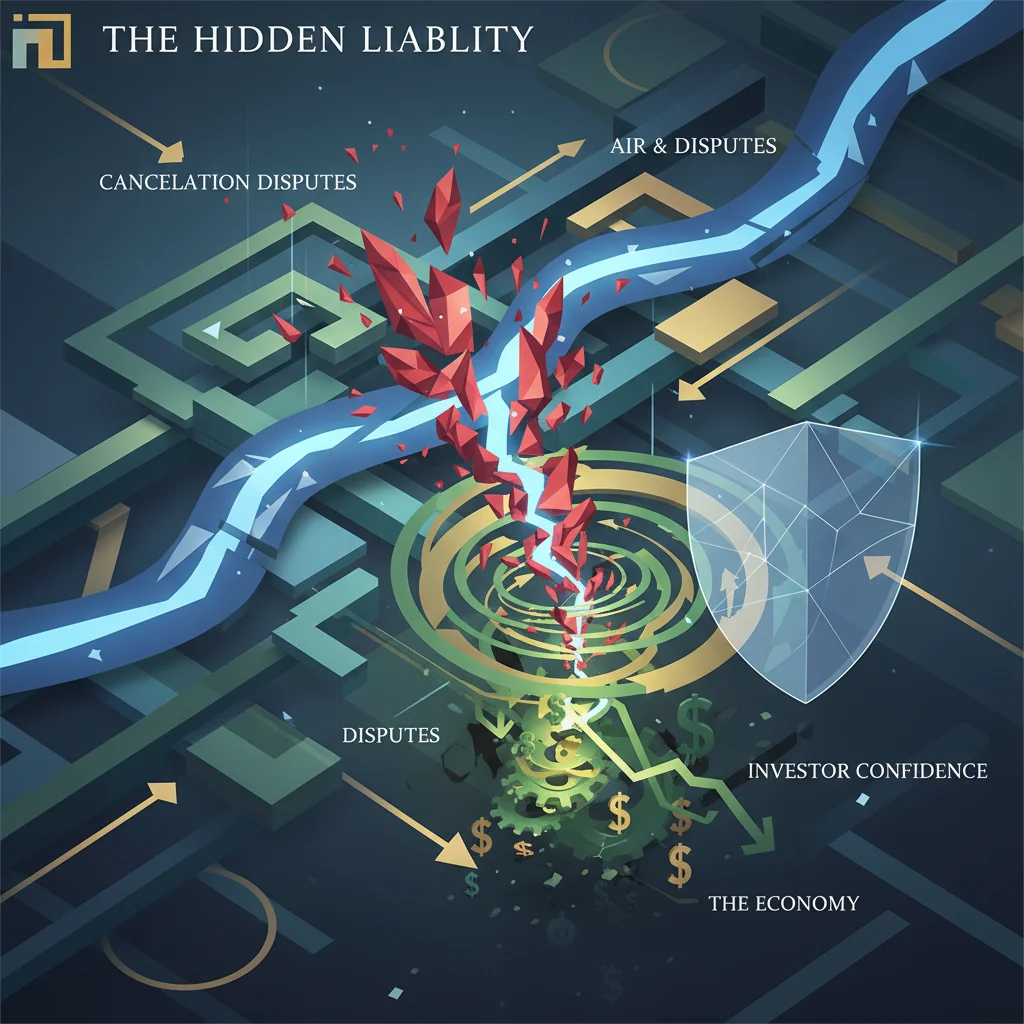
The Hidden Liability: How Airline Compensation Practices Impact Investor Confidence and the Economy
For millions of travelers, the experience is frustratingly familiar: a flight is cancelled, plans are thrown into disarray, and the subsequent quest for legally mandated compensation becomes a labyrinth of confusing forms, vague excuses, and outright rejections. While this ordeal is a headache for passengers, for investors, finance professionals, and business leaders, it represents something far more significant: a glaring red flag in corporate governance and a hidden liability that can impact a company’s stock market performance and long-term financial health.
A recent investigation by the BBC has shed light on a troubling pattern within the airline industry. Passengers are accusing major carriers of deliberately confusing them into dropping valid compensation claims, only for the airlines to pay out millions of pounds when those claims are escalated to official dispute resolution services. This isn’t just poor customer service; it’s a calculated financial strategy with profound implications for the company’s balance sheet, brand equity, and the broader economy.
This article will dissect the financial and economic fallout of these practices. We will explore the regulatory framework governing passenger rights, analyze the short-term gains versus the long-term costs of a “deny and delay” strategy, and examine how innovations in financial technology (fintech) and blockchain could revolutionize this broken system, offering a glimpse into a more transparent and efficient future.
Understanding the Financial Stakes: The Regulatory Framework
To grasp the financial risk, one must first understand the legal obligations. In the UK and Europe, passenger rights are robustly protected under regulations commonly known as UK261 and EU261. These laws mandate that airlines must pay fixed compensation for significant delays, cancellations, or being denied boarding, unless the disruption was caused by “extraordinary circumstances” beyond their control.
The compensation is not a refund; it’s a penalty for the inconvenience caused. The amounts are standardized, creating a clear and predictable liability for airlines. Below is a summary of the standard compensation structure under these rules.
| Flight Distance | Length of Delay (at final destination) | Compensation Amount |
|---|---|---|
| Up to 1,500 km | 3+ hours | £220 / €250 |
| Over 1,500 km (within UK/EU) or 1,500 – 3,500 km (to/from UK/EU) | 3+ hours | £350 / €400 |
| Over 3,500 km (to/from UK/EU) | 3-4 hours | £260 / €300 (50% reduction) |
| Over 3,500 km (to/from UK/EU) | 4+ hours | £520 / €600 |
Airlines frequently leverage the “extraordinary circumstances” clause—citing weather or air traffic control strikes—to reject initial claims. However, as the evidence shows, many of these rejections are overturned upon appeal. The BBC report highlights that some resolution schemes see more than half of the complaints they handle ruled in the passenger’s favor (source). This high reversal rate suggests a systemic issue, not just isolated errors, pointing to a deliberate corporate strategy.
Beyond Borders: How the UK's Student Policy Shift is Reshaping Finance and Investment
The Economics of “Deny, Delay, Defend”
From a purely cynical, short-term finance perspective, the strategy makes a degree of sense. By creating friction and initially denying claims, airlines can:
- Manage Cash Flow: Delaying payouts keeps cash within the company for longer, improving working capital metrics in the short run.
- Reduce Total Payouts: A significant percentage of passengers, confused by the process or discouraged by the initial rejection, will simply give up. This “breakage” directly pads the bottom line.
- Test the Claimant’s Resolve: The strategy filters out all but the most persistent claimants, effectively reducing the number of successful claims.
However, this approach is a classic example of prioritizing short-term gains at the expense of long-term value and stability. The hidden costs associated with this strategy are substantial and can severely impact a company’s standing on the stock market. These costs include direct financial outlays for dispute resolution fees, increased administrative burden, and the immense, unquantifiable cost of reputational damage, which erodes customer loyalty and brand value—a key intangible asset for any investor to consider.
The Macro Impact: From Airline Balance Sheets to the Broader Economy
The implications of these practices extend beyond individual airlines and their passengers. For finance professionals, it’s crucial to understand how these potential payouts are treated in financial reporting. They represent a “contingent liability”—a potential financial obligation that depends on the outcome of a future event. An airline that systematically under-reports or fails to adequately provision for these liabilities is presenting a misleading picture of its financial health. This can distort key financial ratios and metrics that analysts and trading algorithms use to value a stock.
For the wider economy, a poorly functioning airline industry has ripple effects. It impacts tourism, business travel, and logistics. When consumers lose trust in carriers, it can lead to reduced demand or a shift to more reliable, often more expensive, alternatives. Furthermore, the resources spent by consumers and dispute resolution bodies to fight these claims represent a deadweight loss to the economy—time and money expended on resolving a conflict that shouldn’t exist in the first place.
The Midas Touch of Uncertainty: How Geopolitical Threats Forge Gold and Silver Highs
A Technological Fix: The Role of Fintech and Blockchain
The manual, adversarial nature of the current claims process is ripe for disruption by financial technology. The rise of “legal tech” and “justice tech” platforms, a burgeoning sub-sector of fintech, is already empowering consumers. These services automate the claims process, handle communication with the airline, and manage the escalation process for a fee or a percentage of the payout. They aggregate data on airline behavior, creating a powerful tool for holding carriers accountable.
Looking further ahead, blockchain technology offers a truly transformative solution. Imagine a system built on smart contracts:
- The Trigger: A flight’s status (e.g., cancelled, delayed by 4 hours) is recorded as a verifiable event on an immutable blockchain, using trusted data feeds from aviation authorities.
- The Contract: A smart contract, pre-coded with the UK261/EU261 compensation rules, automatically executes when the trigger event occurs.
- The Payout: The correct compensation amount is instantly transferred from the airline’s digital wallet to the passenger’s, bypassing the need for claims forms, customer service agents, and dispute resolution.
This application of blockchain and financial technology would move the system from a reactive, adversarial model to a proactive, automated one. For airlines, it would drastically reduce administrative costs and eliminate the reputational damage of rejecting valid claims. For investors, it would provide a transparent, real-time view of liabilities. For the banking system, it would facilitate seamless, instant cross-border payments, showcasing the efficiency of modern financial infrastructure.
Actionable Insights for Investors and Business Leaders
The airline compensation saga offers critical lessons for anyone involved in finance, investing, or corporate leadership. The short-sightedness of the “deny and delay” tactic highlights the severe long-term consequences of prioritizing immediate cash preservation over ethical conduct and customer trust.
Here is a comparison of the perceived short-term benefits versus the actual long-term costs:
| Short-Term “Benefits” of Denying Claims | Long-Term Costs and Realities |
|---|---|
| Improved short-term cash flow. | Increased long-term expenses from legal fees, penalties, and higher administrative overhead. |
| Reduced immediate payout totals due to customer attrition. | Severe brand and reputational damage, leading to loss of customer loyalty and market share. |
| Apparent reduction of liabilities on quarterly reports. | Negative scrutiny from investors and analysts, leading to a higher perceived risk and lower stock valuation. |
| Maintaining operational status quo. | Increased regulatory oversight and the potential for significant fines that dwarf the initial savings. |
For investors, the key takeaway is to look beyond the surface-level financials. High rates of overturned claim rejections are a powerful indicator of poor operational management and a weak ethical framework. When evaluating a company, particularly in a service-intensive industry, metrics like customer complaint volumes and resolution success rates should be considered alongside traditional financial statements. They are leading indicators of future financial and reputational risk.
Crypto's Crossroads: Why the "TACO" Market Has Bitcoin and Ethereum on Mute
Conclusion: A Call for Transparency and Accountability
The practice of systematically denying valid compensation claims is more than a customer service failure; it is a strategic miscalculation with far-reaching consequences for finance and the economy. It erodes trust, invites regulatory action, and ultimately destroys shareholder value. As reported by outlets like the BBC, the millions eventually paid out after appeals are a testament to the flawed nature of this short-term thinking.
The path forward requires a shift in corporate mindset, from confrontation to compliance. Embracing modern financial technology, from claims automation platforms to blockchain-based smart contracts, can pave the way for a more efficient and transparent system. For investors and business leaders, the lesson is clear: in today’s interconnected world, ethical conduct and customer respect are not just a matter of public relations—they are fundamental pillars of sustainable financial performance and long-term economic success.

Related Posts
The Billion-Dollar Nap: How a Single Maritime Accident Exposes Deep Risks in the Global Economy

Ryanair’s Turbulent Ascent: Why Your Next Flight Will Cost More and What It Means for the Market