Your AI Coworker is Perfect. And That’s a Huge Problem.
Picture this: a workday with zero friction. Your meeting notes are perfectly summarized and distributed the second the call ends. The first draft of that tricky email to a client writes itself. The data you need is pulled, analyzed, and visualized in a neat dashboard before you even finish your morning coffee. This is the world promised by the rapid integration of artificial intelligence into our professional lives—a world of seamless efficiency, powered by sophisticated software and cloud-based assistants.
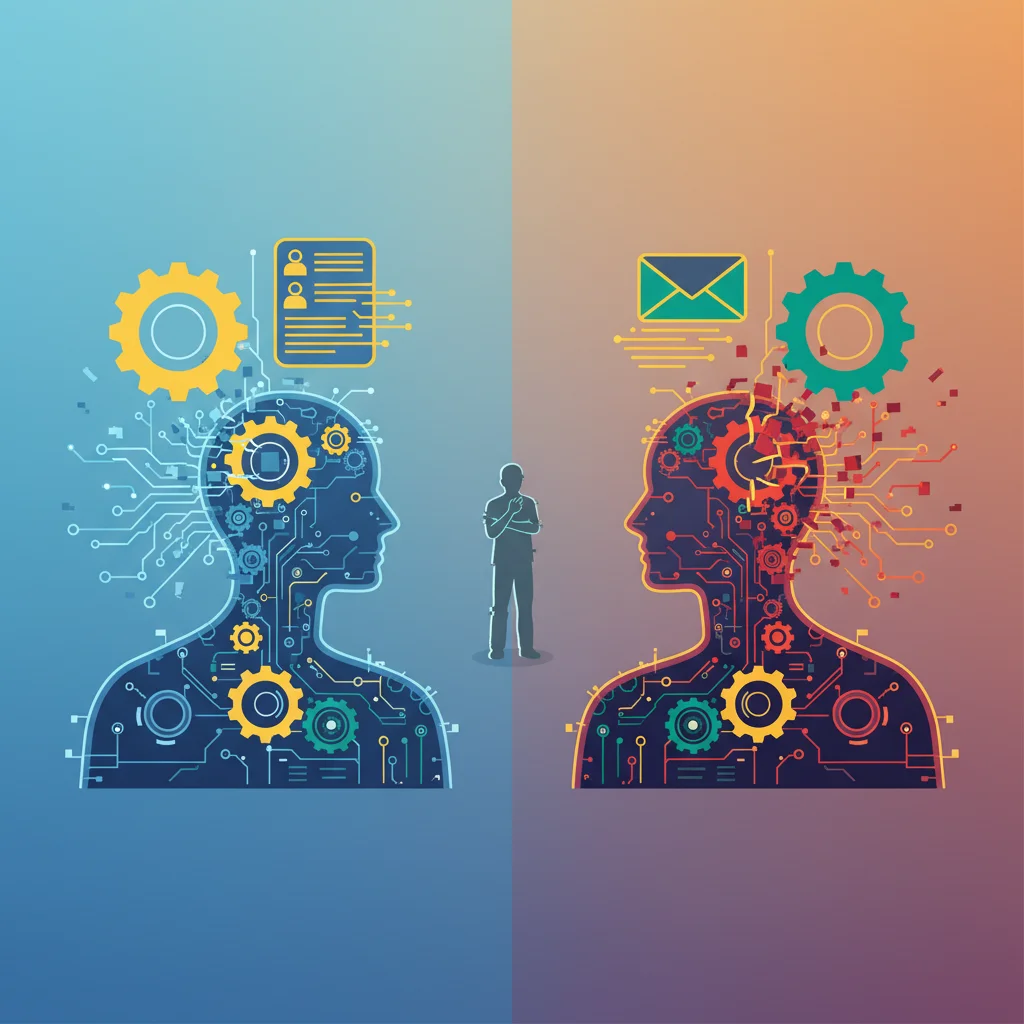
For developers, entrepreneurs, and tech professionals, this promise of hyper-productivity is intoxicating. We’re building and using these tools to eliminate the mundane, automate the repetitive, and free up our cognitive load for the “real work.” But what if the “real work” is hidden in the very friction we’re so desperately trying to eliminate? What if the messiness of human interaction—the awkward silences, the heated debates, the colleague who drives you crazy but occasionally has a brilliant idea—is not a bug, but a feature of innovation?
A recent article from the Financial Times poses a chilling question: what happens when our automated office companions smooth over all the rough edges of human collaboration? The convenience is undeniable, but the cost might be our creativity, our resilience, and the very spark that drives groundbreaking ideas.
The Seductive Silence of the Perfect AI Colleague
Let’s be honest, the appeal of an AI assistant is immense. It doesn’t have bad days. It doesn’t interrupt you with weekend stories on a Monday morning. It doesn’t challenge your ideas in a way that feels personal or passive-aggressive. It just… executes. This is automation at its finest, a SaaS dream come true.
Tools powered by advanced machine learning models can now:
- Draft code snippets and debug complex programming errors.
- Summarize lengthy research papers and competitive analyses.
- Manage schedules and automate follow-ups with flawless precision.
- Generate marketing copy, reports, and internal communications.
This efficiency is a massive win for productivity. For startups running lean, it’s like having an extra hire without the overhead. For large enterprises, it’s a way to streamline global operations. But this sanitized version of work glosses over a fundamental truth about human achievement: innovation is rarely born from consensus and comfort. It’s born from conflict, debate, and the collision of different perspectives.
Creative Friction: Why Annoying Colleagues Might Be Your Greatest Asset
The FT article brilliantly illustrates this with the anecdote of a difficult former colleague, “Mr. Fridge,” whose contrarian and often irritating nature forced the author to sharpen her arguments, defend her positions, and ultimately produce better work (source). We’ve all worked with a Mr. or Ms. Fridge. They’re the ones who play devil’s advocate in every meeting, poke holes in every plan, and force the team to confront uncomfortable truths.
An AI, in its current form, is designed to be agreeable. It’s a people-pleaser, a consensus-builder. It won’t tell you your brilliant idea has a fatal flaw unless you specifically prompt it to find one. It won’t have a gut feeling that the project is heading in the wrong direction. It won’t challenge the status quo because it has no stake in it. This “unrelenting helpfulness,” as the FT puts it, risks creating an echo chamber where good ideas never evolve into great ones.
My AI Coach Made Me Run in Circles: What a Marathon Taught Me About Trusting Algorithms
To better understand what’s at stake, let’s compare the dynamics of human-centric collaboration with a heavily AI-mediated workflow.
| Aspect of Collaboration | Human-Led Interaction | AI-Mediated Interaction |
|---|---|---|
| Idea Generation | Spontaneous, chaotic, driven by debate and serendipity. Can be slow and inefficient. | Structured, data-driven, and fast. Lacks unexpected “left-field” ideas. |
| Conflict Resolution | Builds empathy, negotiation skills, and team resilience. Can be emotionally taxing. | Friction is minimized or avoided. AI provides neutral summaries, bypassing the need for direct confrontation. |
| Mentorship & Growth | Learning happens organically through observation, feedback, and challenging conversations. | Skills are acquired through direct queries to the AI. Misses out on nuanced, context-specific wisdom. |
| Team Cohesion | Forged through shared struggles, inside jokes, and non-work-related chatter. | Transactional and task-focused. Can lead to a sense of isolation and a purely functional team dynamic. |
| Decision Making | Incorporates intuition, experience, and emotional intelligence alongside data. | Heavily reliant on data and logical patterns. May miss crucial qualitative factors. |
The Ripple Effect on Culture, Security, and the Future of Work
The implications of a frictionless work environment extend far beyond individual creativity. They touch the very core of what makes a company tick.
The Startup Conundrum
Startups are forged in the fires of chaos and rapid iteration. The “pivot” is a celebrated milestone, often born from a heated argument between co-founders or a frank admission that the initial idea isn’t working. If an AI is constantly validating the current path and smoothing over disagreements, does it inadvertently stifle the very agility that gives startups their competitive edge?
The Hidden Risks of Pervasive AI
Beyond culture, there’s a significant cybersecurity angle. When we feed every meeting transcript, every email draft, and every strategic document into a third-party AI model, we are creating a centralized repository of our organization’s most sensitive intellectual property. While leading cloud providers have robust security, this level of data aggregation presents a tantalizing target for attackers and raises complex questions about data sovereignty and privacy. A breach could be catastrophic, exposing everything from product roadmaps to private employee feedback.
Redefining “Teamwork” in Software Development
In the world of programming, practices like pair programming and agile stand-ups are built on the principle of collaborative problem-solving. It’s about two minds working together, catching each other’s mistakes, and building on each other’s ideas. While AI coding assistants are incredibly powerful, they change this dynamic. A developer working with an AI might solve problems faster, but they miss the learning opportunity that comes from debating an architectural decision with a senior engineer or explaining their code to a junior dev. As one report notes, this shift impacts how we train the next generation of talent (source).
The Great AI Chip Standoff: Why China Just Put Nvidia's H200 on Ice
How to Keep the Human Spark Alive in the Age of AI
Rejecting artificial intelligence is not an option, nor should it be. The key is not to eliminate these powerful tools but to wield them with intention and wisdom. The goal is to augment human intelligence, not replace human interaction.
Here are some actionable strategies for leaders and teams:
- Use AI for Preparation, Not Participation: Let AI summarize pre-reading materials, analyze data sets, and prepare the agenda. But when the meeting starts, encourage a “laptops down” (or “AI off”) environment for critical brainstorming and decision-making phases. The AI can take notes, but the humans should drive the conversation.
- Architect Serendipity: Just as office architects design spaces to encourage random encounters, leaders must design processes that encourage unstructured interaction. This could mean dedicated “no-agenda” team check-ins, cross-departmental “problem-solving” sessions, or simply building buffer time around meetings for casual chat.
- Train for “Constructive Conflict”: Invest in training that teaches your team how to disagree productively. In a world where it’s easy to defer to a machine’s answer, the skill of respectfully challenging ideas and articulating a contrarian viewpoint becomes more valuable than ever.
- Conduct AI “Pre-Mortems”: Before fully integrating a new AI tool, hold a session to discuss potential negative consequences. Ask questions like: “What human interaction will this tool replace?” and “How can we mitigate the loss of that interaction?” This proactive approach helps you harness the benefits while being mindful of the costs.
Beyond the Magnificent Seven: Why the AI Revolution is Spreading to the Rest of the Economy
Ultimately, the hard truth about AI at work isn’t something the AI will ever tell you. It can’t. It is a tool designed for a world of inputs and outputs, of efficiency and optimization. But our world—the world of work, of creativity, of human connection—is messy, unpredictable, and gloriously inefficient. Our greatest breakthroughs often come from the spaces in between the tasks, from the friction that polishes a rough idea into a diamond. As we continue to integrate these incredible technologies, we must fight to protect that messiness. Our future innovation depends on it.

Related Posts
The Humanoid Robot Paradox: Why Factories Are Buying Robots That Are Only Half as Good as Humans
The Trojan Horse of Recruitment: This Startup is Training AI to Do Your Job