Wall Street vs. Washington: Unpacking Trump’s $5 Billion Lawsuit Against JPMorgan Chase
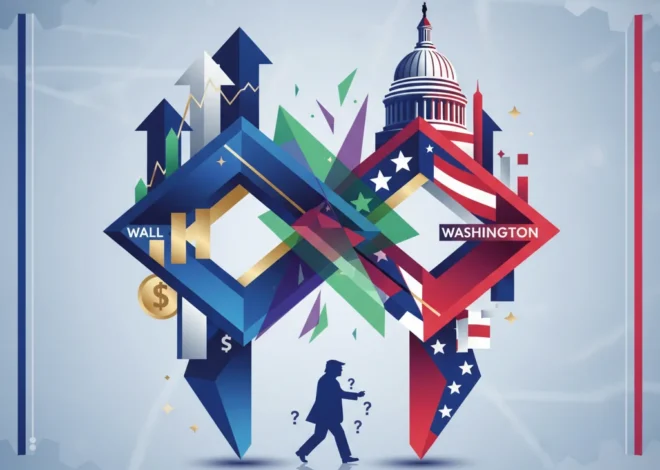
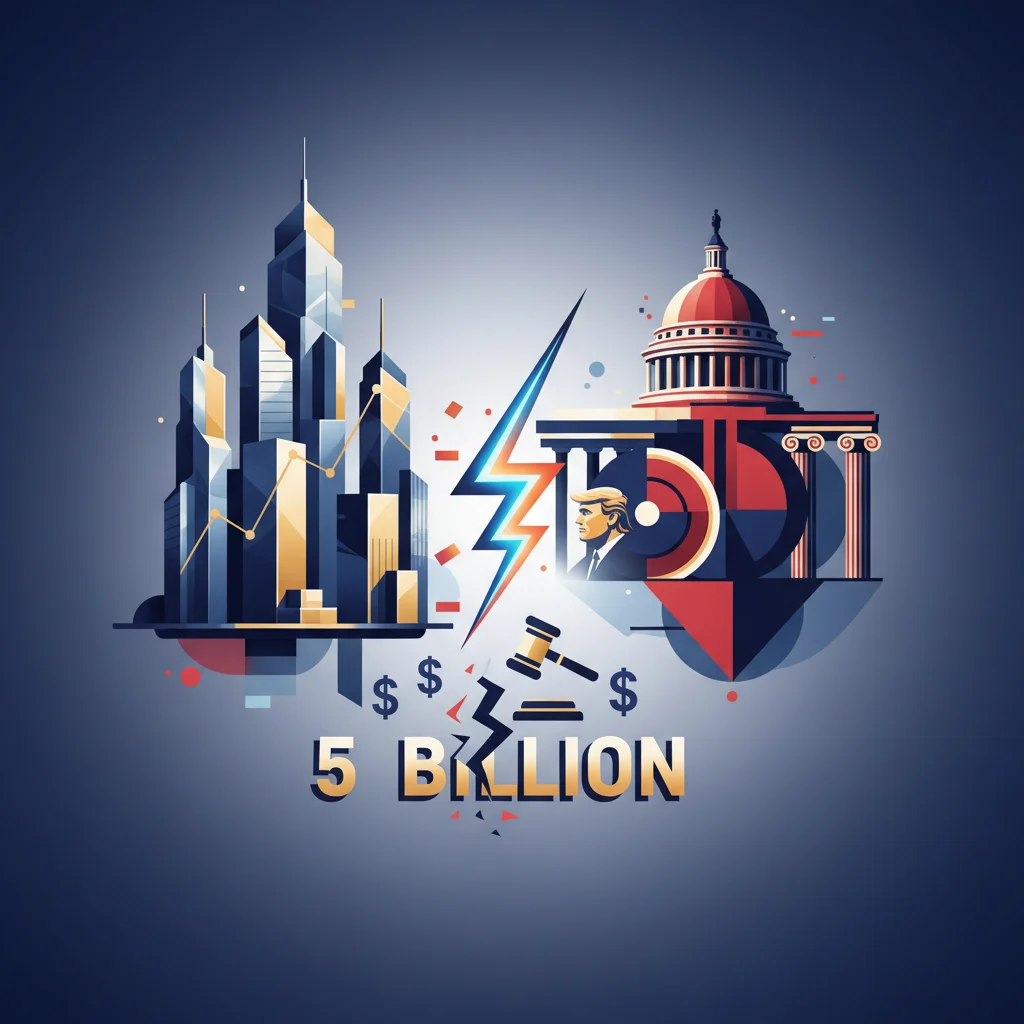
In a move that reverberates through the corridors of both Wall Street and Washington, former President Donald Trump has initiated a staggering $5 billion lawsuit against JPMorgan Chase, one of the world’s largest financial institutions. The lawsuit, filed by a Trump-controlled entity, alleges that the bank improperly closed its accounts following the events at the U.S. Capitol on January 6, 2021. This legal battle is more than just a high-profile dispute; it sits at the volatile intersection of politics, corporate power, and the fundamental mechanics of the modern economy. It forces us to ask a critical question: Where does a bank’s duty to manage risk end and a client’s right to access financial services begin, especially in a hyper-polarized political climate?
The lawsuit plunges us into the heart of a growing debate around “de-banking”—the practice of financial institutions terminating relationships with clients they deem to pose a reputational, financial, or legal risk. While banks argue it’s a necessary tool for compliance and stability, critics contend it can be wielded as a form of political or ideological censorship. This case, featuring two of the most powerful entities in American public and private life, promises to set a significant precedent for the future of banking and corporate responsibility.
The Core of the Conflict: Allegations and Defenses
The lawsuit, filed by a company named Red Finch which Mr. Trump reportedly controls, centers on the claim that JPMorgan’s decision was a politically motivated act of discrimination. According to the filing, the bank’s actions constituted a breach of contract and an infringement on the company’s rights. The legal documents paint a picture of a financial giant succumbing to political pressure, making an example out of a high-profile, controversial client. The suit states the decision was “a thinly veiled, politically-motivated attack on President Trump and his business and political interests” (source).
In a pointed jab, the lawsuit attempts to draw a contrast by referencing JPMorgan’s past relationships, including its controversial dealings with the late financier Jeffrey Epstein, suggesting a hypocritical standard is being applied. The core argument is that if the bank maintained relationships with convicted criminals, the closure of Trump’s accounts must be based on political animus rather than objective risk assessment.
JPMorgan Chase, however, has vehemently refuted these claims. In a public statement, the bank asserted that the lawsuit has “no merit” and that it “does not close accounts for political or religious reasons.” From the perspective of a global financial institution, the decision likely stemmed from a complex risk management calculation. In the wake of the Capitol riot, corporations across the United States faced immense pressure to distance themselves from individuals and entities associated with the event. For a bank like JPMorgan, the concept of “reputational risk” is paramount. An association with politically volatile figures can impact its stock market valuation, customer trust, and relationships with regulators.
Financial institutions operate under strict federal regulations, including the Bank Secrecy Act and “Know Your Customer” (KYC) guidelines. These rules compel banks to monitor and report suspicious activities and to understand the nature of their clients’ business to prevent money laundering and terrorist financing. While this case doesn’t involve such allegations, these regulations grant banks broad discretion to terminate relationships they deem too risky to maintain. According to a report on financial regulation, banks are increasingly using these discretionary powers to de-risk their portfolios from politically exposed persons (PEPs) (source).
A Timeline of Key Events
To better understand the context of the lawsuit, it’s helpful to review the sequence of events leading to this legal confrontation.
| Date | Event | Significance |
|---|---|---|
| January 6, 2021 | Riot at the U.S. Capitol | The catalyzing event that led many corporations to re-evaluate their relationships with Donald Trump and associated entities. |
| Late Jan/Feb 2021 | JPMorgan moves to close accounts | The bank makes the internal decision, citing reputational risk concerns in the aftermath of the riot. |
| May 2024 | Lawsuit Filed by Red Finch | A Trump-controlled entity officially files the $5 billion lawsuit against JPMorgan Chase in federal court. |
| May 2024 | JPMorgan Chase Responds | The bank issues a statement calling the lawsuit meritless and defending its right to manage its client relationships. |
The “De-Banking” Phenomenon and Its Economic Impact
The Trump-JPMorgan lawsuit is the most high-profile example of a much broader and deeply contentious trend: de-banking. This practice isn’t new, but its application appears to be widening, affecting industries and individuals from cryptocurrency traders and firearms dealers to political commentators and non-profits. The central tension lies between a private company’s right to choose its customers and the quasi-public utility role that banks play in our society.
From an economics perspective, widespread de-banking could have chilling effects. It can stifle entrepreneurship in emerging or controversial industries, limit access to capital for certain groups, and create an unbanked or underbanked class of citizens and businesses who are forced to operate outside the formal financial system. This not only creates inefficiencies but can also drive activity toward less regulated, higher-risk channels. Proponents of robust banking freedom argue that forcing banks to serve any and all customers would cripple their ability to perform risk management, potentially jeopardizing the stability of the entire system. They argue that a bank’s primary duty is to its shareholders and depositors, which includes avoiding relationships that could lead to financial or reputational ruin (source).
Beyond the Bottle: Kikkoman’s Multi-Billion Dollar Recipe for Global Dominance
Market Implications and the Future of Financial Technology
For investors, the direct impact of this lawsuit on JPMorgan’s bottom line is likely negligible. A $5 billion claim, while enormous, is a drop in the bucket for a bank with a market capitalization in the hundreds of billions and a fortress balance sheet. The real significance for those interested in investing and the stock market lies in the precedent it could set. If the suit were to succeed, it could open the floodgates for similar litigation, dramatically increasing the legal and compliance costs for the entire banking sector. It would force a radical rethinking of how banks assess reputational risk, potentially making them more cautious or, conversely, more beholden to political pressures.
This controversy also shines a spotlight on the world of financial technology, or fintech. As traditional financial institutions navigate these politically charged waters, many see an opportunity for disruption. Fintech companies and decentralized finance (DeFi) platforms built on blockchain technology often market themselves as more open, accessible, and censorship-resistant alternatives. While these platforms come with their own set of risks and regulatory uncertainties, a growing perception that mainstream finance is becoming politicized could accelerate their adoption. If individuals and businesses fear being arbitrarily cut off from the traditional banking system, they will naturally seek out alternatives that promise greater autonomy.
A Dangerous Game: When Politics and Central Banking Collide
What’s Next? Legal Hurdles and Potential Outcomes
The legal path forward for this lawsuit is fraught with challenges for the plaintiff. Proving in court that a business decision was motivated by political bias, rather than a legitimate assessment of risk, is an incredibly high bar to clear. Banks have broad legal protections in choosing their clients, and their internal risk assessment documents are often proprietary and confidential. The defense will likely argue that their decision was a standard business practice applied to a uniquely high-risk client in an unprecedented situation.
Possible outcomes include:
- Dismissal: The court could dismiss the case early on, agreeing with JPMorgan that the claims lack legal merit. This is a strong possibility given the legal precedents favoring a bank’s discretion.
- Settlement: To avoid a lengthy, public, and distracting legal battle, the parties could reach a confidential settlement.
- Protracted Litigation: The case could proceed through the discovery phase and toward a trial, a process that could take years and generate endless headlines.
Ultimately, this lawsuit is more than a battle over a bank account; it’s a reflection of our times. It encapsulates the collision of political polarization with corporate power and forces a critical examination of the rules that govern our economic lives. Whether the case is quickly dismissed or becomes a landmark legal saga, its themes will continue to shape the future of finance, investing, and the very structure of our market economy.

Related Posts
The £1.5 Billion Green Failure: A Case Study in Government Waste, Investment Risk, and the Future of ESG
Beyond the Numbers: Deconstructing Jamie Dimon’s Record-Breaking $43 Million Payday