The TikTok Partition: A New Blueprint for Global Tech and a Warning for Investors
The Great Digital Wall: Understanding TikTok’s High-Stakes US Deal
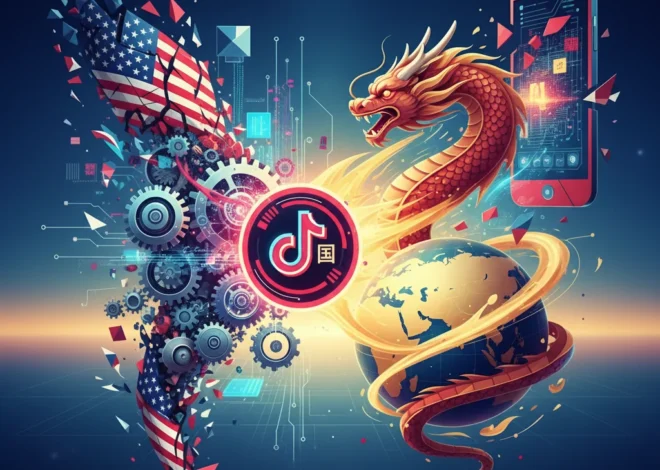
In the grand theater of global commerce, few stories have been as captivating or as fraught with tension as the saga of TikTok. More than just a platform for viral dances and creative content, the social media giant has become a focal point in the escalating geopolitical chess match between the United States and China. The recent finalization of a deal to create a new, separate US entity for TikTok isn’t merely a corporate restructuring; it’s a landmark event that signals a profound shift in the global technology and finance landscape. This move, designed to appease US national security concerns, could inadvertently fracture the very foundation of a global internet and create a challenging new reality for international businesses and investors.
For years, TikTok, owned by the Chinese tech behemoth ByteDance, operated under a cloud of suspicion in Washington. Concerns centered on two key areas: the security of American user data and the potential for the Chinese government to manipulate the platform’s powerful recommendation algorithm to influence public opinion. After a tumultuous period involving threats of an outright ban, the solution that emerged is a form of corporate mitosis: the creation of “TikTok US,” an entity designed to operate at arm’s length from its global parent. As detailed by the BBC, this arrangement carves off TikTok’s American business into a distinct operation. But in solving one political problem, this deal raises a host of new, complex questions for the future of technology, the global economy, and international investing strategies.
Deconstructing the Deal: A Look Inside “Project Texas”
The core of the agreement, often referred to as “Project Texas,” is an ambitious attempt at digital insulation. The plan involves housing all US user data on domestic servers managed by a trusted US technology partner, Oracle. According to a report from Reuters, the deal aims to create a firewall between TikTok’s US operations and its Chinese parent, ByteDance. This involves not just data storage but also personnel and governance, with the new US entity set to be overseen by a board approved by the US government.
This structural separation is designed to build a fortress around American data and influence. But how different will the two entities truly be? The table below outlines the proposed division of responsibilities and assets, highlighting the complexities of splitting a deeply integrated global platform.
| Operational Aspect | TikTok Global (ByteDance) | TikTok US (Proposed Entity) |
|---|---|---|
| Corporate Ownership | Wholly owned and controlled by ByteDance Ltd. | Subsidiary structure with potential US investor stakes and government-approved oversight board. |
| Data Storage & Security | Managed globally, with data centers in various locations like Singapore. | Exclusively stored on US-based servers managed by a US partner (Oracle). |
| Algorithmic Control | Core recommendation algorithm developed and maintained by ByteDance engineers. | The most contentious point. Aims for US-based review and moderation, but the core IP likely remains with ByteDance. |
| Monetization & E-commerce | Integrated global strategy for advertising and social commerce. | Separate US-focused strategy, potentially integrating with US-based fintech and payment platforms. |
This partition raises a critical question that directly impacts ByteDance’s valuation and the future of the stock market for tech firms: who truly controls the “secret sauce”—the algorithm? While data can be localized, the sophisticated machine learning models that power TikTok’s addictive “For You” page are the company’s crown jewels. Severing the US entity from ByteDance’s continuous algorithmic innovation could handicap its competitiveness. Conversely, if the core code remains tethered to ByteDance, it may not fully satisfy the national security apparatus in Washington. The End of an Era: Unpacking the Financial Legacy of Kathleen Kennedy's Lucasfilm
The Financial Ripple Effect: Valuation, IPOs, and a New Era of Risk
For investors and finance professionals, the TikTok deal is a sobering case study in a new and potent variable: geopolitical risk. The decision to split the company has profound implications for ByteDance’s valuation, which was once estimated to be as high as $400 billion (source). A fragmented company is often worth less than a unified whole, a concept that runs counter to typical “sum-of-the-parts” analyses in corporate finance.
The primary concerns for the investment community include:
- Stranded Assets: The immense investment in building a seamless global platform is now compromised. Synergies in engineering, marketing, and content moderation are lost, leading to duplicated costs and operational inefficiencies.
- IPO Complications: A long-anticipated IPO for ByteDance or TikTok is now far more complex. Would the company pursue separate listings for TikTok US and TikTok Global? How would investors price the political risk baked into the US entity or the growth limitations of the global one without its most profitable market? This uncertainty chills the stock market‘s appetite for such offerings.
- Innovation Bottlenecks: With separate engineering and oversight teams, the pace of innovation could slow. A feature developed for the global app might face significant hurdles before being approved for the US version, and vice-versa. This is particularly relevant in the fast-moving world of financial technology, where regulatory hurdles can already stifle innovation.
This situation forces a fundamental re-evaluation of how we price technology companies. Traditional metrics like user growth and revenue are no longer sufficient. Analysts must now build sophisticated models that account for “sovereignty risk”—the potential for a government to effectively seize or cripple a foreign company’s operations within its borders. This adds a new layer of complexity to trading and long-term investing in any company with significant cross-border operations.
A Blueprint for “Techno-Nationalism”: The Broader Implications
The TikTok-US deal is far more than an isolated business arrangement. It serves as a potential blueprint for how nations will handle foreign technology in the future, a trend often described as “techno-nationalism.” The core idea is that key digital infrastructure—from social networks to banking platforms and payment systems—is a matter of national security, not just commerce. This has massive implications for the global economy.
We can expect to see this playbook used again. Will a successful European fintech company looking to enter the US market be forced to host all its data and run its transaction algorithms under the supervision of an American partner? Will a US cloud computing giant be required to create a completely separate, state-approved entity to operate in India? This trend towards “data localization” and “algorithmic sovereignty” creates enormous friction in global trade and investment. A Dangerous Game: When Politics and Central Banking Collide
This new paradigm directly challenges the business models of multinational corporations, which are built on scale and seamless cross-border operations. The additional costs of regulatory compliance, duplicated infrastructure, and legal navigation will eat into profit margins and may deter companies from expanding internationally altogether. The era of frictionless globalization in the tech sector appears to be drawing to a close, replaced by a more cautious and fragmented approach. As one expert from the Center for Strategic and International Studies notes, this trend represents a significant “decoupling” of the U.S. and Chinese tech sectors (source), with far-reaching consequences for supply chains, innovation, and market access.
Conclusion: Navigating a Fractured Digital World
The TikTok deal is a watershed moment. It represents a pragmatic, if imperfect, solution to a complex geopolitical standoff. For the company, it ensures survival in its most valuable market. For the US government, it provides a veneer of control over a foreign technology platform. However, the long-term cost of this solution may be a less open, less innovative, and more fragmented internet.
For those in the world of finance, investing, and business leadership, the message is clear: the rules of the game have changed. Geopolitical strategy is no longer a niche consideration but a central pillar of corporate strategy and risk management. The principles of economics are now inextricably linked with national security doctrines. Whether you are evaluating a new investment, planning a market entry, or designing a new piece of financial technology, the “TikTok Precedent” looms large. The ability to navigate this complex intersection of politics and technology will be the defining characteristic of successful global enterprises in the 21st century. The open digital ocean is gone; we are all now learning to sail in archipelagos. A New Hope for Investors? Analyzing the Financial Force of the Star Wars Franchise After a Leadership Change