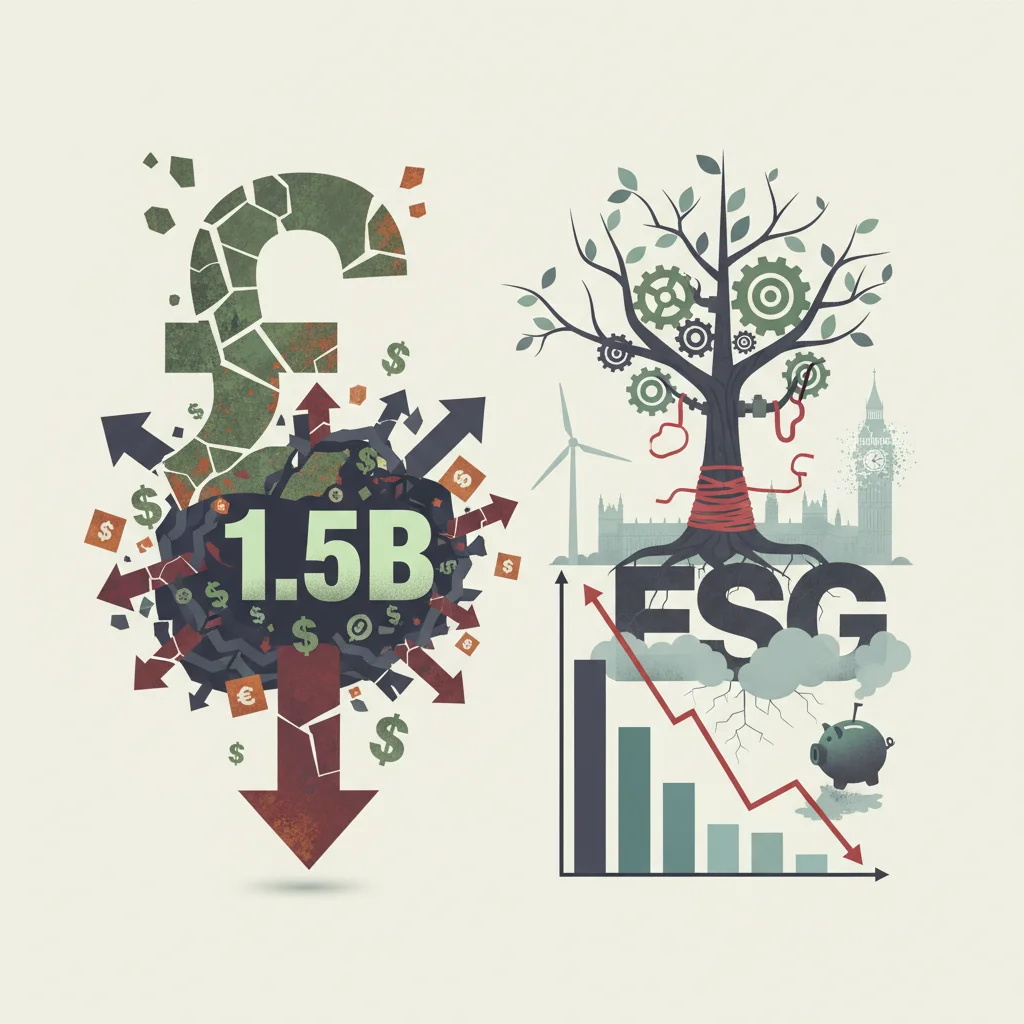
The £1.5 Billion Green Failure: A Case Study in Government Waste, Investment Risk, and the Future of ESG
A Green Dream Turned Financial Nightmare
In the world of public finance and investment, few things are as alluring as a government-backed initiative that promises to stimulate the economy, create jobs, and save the planet all at once. The UK’s Green Homes Grant scheme was designed to be just that—a flagship post-pandemic policy to upgrade the nation’s housing stock, slash carbon emissions, and support thousands of skilled workers. Instead, it has collapsed into a cautionary tale of mismanagement, staggering waste, and now, a potential criminal investigation. An influential parliamentary committee has not only branded the scheme as “doomed to fail” from its inception but has taken the extraordinary step of recommending that installers be investigated by the Serious Fraud Office.
For investors, business leaders, and finance professionals, the implosion of this £1.5 billion project is far more than a political headline. It is a stark case study in the operational risks of public-private partnerships, a brutal lesson in the complexities of ESG (Environmental, Social, and Governance) investing, and a wake-up call about the critical need for robust governance in any large-scale economic endeavor. This failure raises profound questions about how we structure green initiatives, protect taxpayer funds, and ensure that well-intentioned policy doesn’t devolve into a financial black hole.
The Promise vs. The Reality: A Scheme “Botched” From The Start
Launched in September 2020, the Green Homes Grant was ambitious. It offered homeowners vouchers of up to £5,000 (or £10,000 for low-income households) to install energy-saving measures like insulation and low-carbon heating. The stated goals were twofold: to upgrade 600,000 homes and support over 100,000 jobs in the green construction sector. The reality, however, was a catastrophic failure to deliver on nearly every metric.
A damning report from the UK’s National Audit Office (NAO) painted a picture of chaos. The scheme was rushed, poorly designed, and plagued by an overly complex administrative process that left both homeowners and installers frustrated and out of pocket. The timeline was impossibly short, creating a frantic rush that overwhelmed the system. According to the NAO, the department responsible had only 12 weeks to design the scheme and procure a grant administrator (source), a recipe for disaster in any multi-billion-pound undertaking.
The results speak for themselves. The scheme, which was abruptly scrapped in March 2021, fell spectacularly short of its targets. The Public Accounts Committee (PAC) highlighted the grim statistics, revealing a project that failed on an epic scale.
Below is a summary of the scheme’s intended goals versus its actual achievements, illustrating the sheer scale of the shortfall:
| Metric | Original Target | Actual Outcome | Percentage of Target Achieved |
|---|---|---|---|
| Homes Upgraded | 600,000 | Approximately 47,500 | ~8% |
| Budget | £1.5 billion | £314 million spent (with £50m on administration) | ~21% (of which a significant portion was admin) |
| Cost Per Home Upgraded | N/A (implied average £2,500) | ~£6,610 (including administration costs) | Significantly higher than planned |
This data, drawn from official reports, underscores a fundamental breakdown in project management and financial oversight. The PAC concluded that the scheme not only failed to deliver its green objectives but may have actively damaged the very industry it was meant to support, with installers taking on staff and buying equipment only for the work to evaporate (source). Now, with calls for a fraud investigation, the reputational and financial damage is deepening.
Beyond the Handout: Analyzing the UK's New Cash Payout Scheme as an Economic Strategy
The Financial Fallout: A Lesson in ESG, Economics, and Investment Due Diligence
The failure of the Green Homes Grant reverberates far beyond the walls of Parliament. It offers critical, if costly, lessons for anyone involved in the modern economy.
For investors, this serves as a potent reminder that the ‘E’ in ESG is meaningless without the ‘G’. A company’s involvement in a seemingly positive environmental project is not, by itself, a sign of a sound investment. The key is governance—both the government’s and the company’s. Did investors in participating installation companies properly assess the operational risks of a hastily launched government scheme? Did they scrutinize the payment mechanisms, the administrative hurdles, and the potential for sudden policy shifts? The subsequent damage to the balance sheets and reputations of many small and medium-sized enterprises (SMEs) in the sector shows that such due diligence was paramount. The volatility and potential collapse of such schemes can have a direct, negative impact on the stock market valuation of any publicly traded firms involved.
From an economics perspective, the opportunity cost is immense. The £314 million spent yielded minimal returns and could have been deployed far more effectively elsewhere. Furthermore, such high-profile failures erode public and market confidence in future green stimulus packages, potentially hindering the transition to a low-carbon economy. It creates a climate of skepticism, making it harder for legitimate, well-structured projects to gain traction and funding. The role of banking and finance in this is also crucial; financial institutions that provided capital to these installers based on the promise of government contracts now face increased credit risk.
Could Technology Have Prevented This Disaster? A Glimpse into Fintech and Blockchain Solutions
While hindsight is 20/20, it’s worth exploring whether modern financial technology could have mitigated some of the scheme’s worst failings, particularly the administrative chaos and potential fraud.
Imagine a system built using fintech principles. Instead of a cumbersome, paper-based application and reimbursement process, a centralized digital platform could have managed the entire workflow. Homeowners could apply via a simple app, and accredited installers could be verified using digital identity checks. Smart contracts could automate payments, releasing funds directly to installers only after the homeowner digitally signs off on the completed work, perhaps even requiring time-stamped photo evidence uploaded to the platform. This would have slashed administrative costs, sped up payments, and created a real-time data dashboard for government officials to track progress and spot anomalies instantly.
Taking it a step further, a private blockchain ledger could have offered an unparalleled level of transparency and security. Every transaction—from the issuance of a voucher to the purchase of materials and the final payment—could have been recorded as an immutable block on the chain. This would create a perfect, tamper-proof audit trail, making fraudulent claims or duplicate payments virtually impossible. While perhaps seen as an advanced solution, the core principles of transparency and verification offered by blockchain technology are precisely what was missing from the Green Homes Grant. It transforms the concept of oversight from a backward-looking audit to a real-time, preventative mechanism.
Actionable Lessons for the Future of Finance and Policy
The wreckage of the Green Homes Grant offers a curriculum’s worth of lessons for every stakeholder in the economy.
- For Investors & Finance Professionals: Government contracts are not a golden ticket. Scrutinize the operational framework of any public scheme before investing in reliant companies. ESG analysis must go deeper than surface-level environmental goals and rigorously assess the governance and execution risk.
- For Business Leaders: Be wary of “too good to be true” government programs. Assess your company’s ability to navigate complex bureaucracy and withstand payment delays or the sudden withdrawal of the scheme. Diversification remains the best defense against policy volatility.
- For Policymakers: Pilot programs are not a sign of weakness; they are a sign of wisdom. Before launching a multi-billion-pound national scheme, test it on a smaller scale. Engage with the industry experts on the ground—the installers, the suppliers, the administrators—to design a system that works in the real world, not just on a policy paper.
The Force of Finance: Decoding the Economic Impact of a Leadership Shift at Lucasfilm
Ultimately, the journey toward a sustainable economy will be paved with government initiatives and public-private partnerships. The challenge is not to stop trying, but to learn from catastrophic and expensive failures like the Green Homes Grant. By integrating smarter project management, leveraging financial technology for transparency, and demanding a higher standard of governance, we can ensure that the next wave of green investing fuels genuine progress, not just headlines and investigations. The cost of failure is simply too high—for the taxpayer, the economy, and the planet.

Related Posts

Beyond the Greenland Gaffe: Decoding the EU’s Push for Economic Stability with the US
Beyond the Numbers: Deconstructing Jamie Dimon’s Record-Breaking $43 Million Payday