Intel’s $25 Billion Nosedive: A Warning Shot for America’s Tech Ambitions?
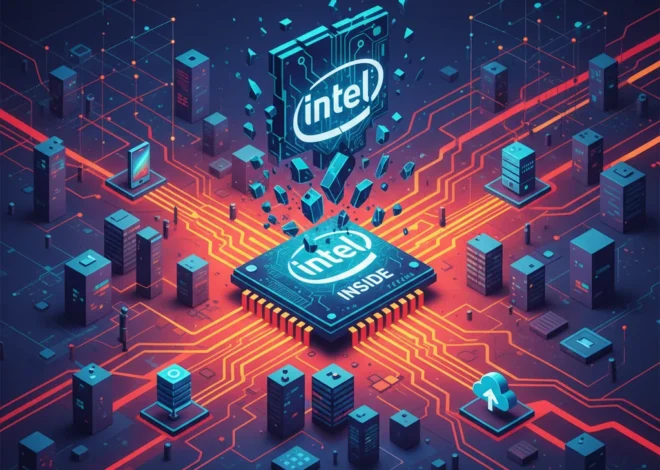
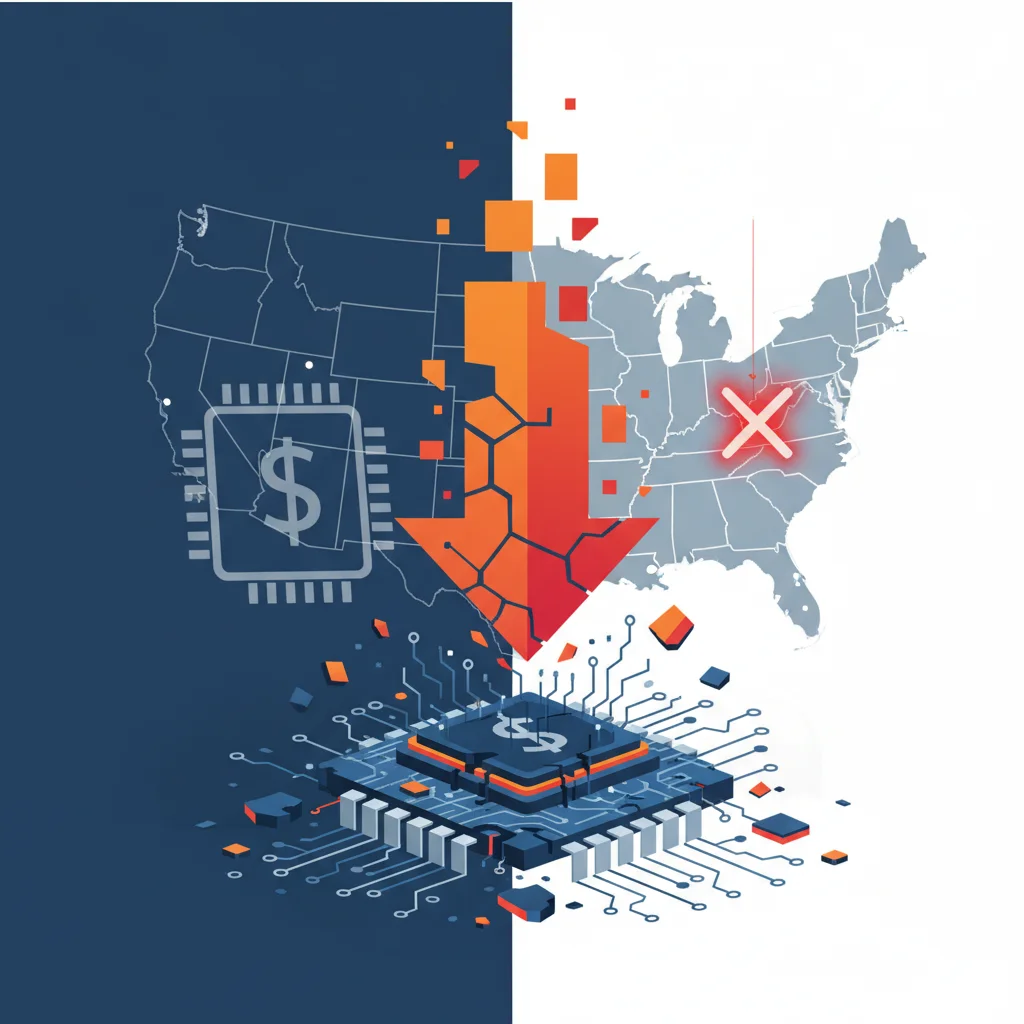
In the unforgiving arena of the stock market, even titans can stumble. On a recent Friday, Silicon Valley giant Intel learned this lesson the hard way. Investors watched in dismay as the company’s shares plummeted by nearly 12 percent, wiping out a staggering $25 billion in market value in a single session. The culprit? A disappointing forecast rooted in a problem that has plagued the company for years: manufacturing struggles.
This wasn’t just another bad day on Wall Street. This was a direct blow to one of the most ambitious and strategically important corporate turnarounds in recent history. Under the leadership of CEO Pat Gelsinger, Intel has embarked on a high-stakes mission to not only reclaim its former glory but to become the cornerstone of America’s strategy to dominate advanced chipmaking. This stock slide, however, serves as a stark reminder that vision and reality are often miles apart. For investors, business leaders, and anyone interested in the future of the global economy, the question is urgent: Is this a temporary setback on a long road to recovery, or a fatal crack in the foundation of Intel’s grand plan?
The Anatomy of a Meltdown: Beyond the Numbers
The immediate trigger for the sell-off was the company’s guidance for the upcoming quarter. While its fourth-quarter results were respectable, the outlook was anything but. Intel projected revenues and profits that fell significantly short of analyst expectations, a clear signal of turbulence ahead. The phrase that sent shivers down investors’ spines was “supply constraints,” a deceptively simple term for a complex and deeply concerning problem.
Specifically, the constraints are hitting Intel’s efforts to package its most advanced chips, a critical final step in the manufacturing process. This bottleneck is a direct hit to the company’s high-stakes push to become a world-class “foundry”—a contract manufacturer that builds chips for other companies, much like the industry leader, Taiwan Semiconductor Manufacturing Co. (TSMC). The company admitted that these issues were a “blow” to this nascent but crucial part of its business (source).
This isn’t just about a single production line. It speaks to the immense difficulty of executing at the bleeding edge of physics and engineering. In the world of semiconductors, where transistors are measured in angstroms, the margin for error is non-existent. For a company trying to simultaneously catch up to competitors and launch a brand-new business model, any operational hiccup is magnified tenfold.
The £4 Billion Question: Are the UK's Post-Brexit Trade Deals a Grand Delusion?
The Grand Vision vs. The Gritty Reality
To understand why this stumble is so significant, one must appreciate the scale of Intel’s ambition. When Pat Gelsinger returned to Intel as CEO in 2021, he laid out a strategy called “IDM 2.0.” The plan was audacious:
- Regain Process Leadership: Rapidly advance its manufacturing technology through five new “nodes” (generations of chip tech) in just four years, a breakneck pace designed to leapfrog TSMC and Samsung.
- Build a World-Class Foundry: Open its factories to outside customers, including direct competitors, to compete for a piece of the massive contract manufacturing market.
- Leverage External Foundries: Pragmatically use competitors like TSMC to build certain parts of its own chips, ensuring access to the best technology available.
This strategy is intricately linked to the geopolitical landscape. With the passage of the US CHIPS and Science Act, the American government has committed billions of dollars in subsidies to onshore advanced semiconductor manufacturing, reducing its reliance on East Asia. Intel is positioned as the “national champion” in this endeavor, the primary vehicle for America’s technological sovereignty. This latest manufacturing issue, therefore, isn’t just a corporate failure; it’s a setback for a national strategic objective.
A Crowded and Ruthless Battlefield
Intel is not operating in a vacuum. Its stumbles are a direct opportunity for its rivals, who have been executing with ruthless efficiency. The competitive landscape in the semiconductor industry has never been more intense.
To put Intel’s position into perspective, let’s compare it to its key competitors:
| Company | Primary Focus | Manufacturing Strategy | Key Strength |
|---|---|---|---|
| Intel (INTC) | CPUs, GPUs, Foundry Services | Integrated (Designs & Manufactures) | Legacy scale, US-based manufacturing, government support. |
| Nvidia (NVDA) | GPUs, AI Accelerators & Software | Fabless (Designs only, outsources manufacturing) | Dominance in AI/ML, powerful software ecosystem (CUDA). |
| AMD (AMD) | CPUs, GPUs | Fabless (Designs only, outsources manufacturing) | Agile design, strong competition in data center and consumer CPUs. |
| TSMC (TSM) | Pure-Play Foundry Services | Contract Manufacturer (Manufactures for others) | World’s most advanced process technology, operational excellence. |
As the table shows, both Nvidia and AMD have thrived using a “fabless” model, focusing all their energy on chip design and leaving the incredibly capital-intensive manufacturing to specialists like TSMC. This has allowed them to be more agile and consistently access the best production technology. Intel, with its integrated model, bears the full weight of both design and manufacturing, a monumental task that has become its Achilles’ heel. Its goal of becoming a foundry means it is now directly competing with TSMC, a company that has spent decades perfecting the art of contract manufacturing with a singular, unwavering focus.
The Ferguson Effect: What Man Utd & UK Politics Reveal About Long-Term Investment Strategy
The Ripple Effect: Why Intel’s Problems Matter for Everyone
The tremors from Intel’s stock plunge extend far beyond the portfolios of its shareholders. The health of the semiconductor industry is a barometer for the entire global economy and the bedrock of modern life.
- Investing & The Stock Market: For investors, Intel represents a classic “turnaround” play, which comes with high risk and potential high reward. This event underscores the execution risk. It forces a re-evaluation of the company’s valuation and the timeline for its recovery. It also highlights the extreme momentum in competitors like Nvidia, which are seen as safer bets on the growth of AI.
- Financial Technology (Fintech) & Banking: The entire digital financial technology ecosystem, from high-frequency trading algorithms and mobile banking apps to the secure servers that process our transactions, runs on silicon. A bottleneck in the supply of advanced chips, or a lack of credible US-based alternatives to Asian manufacturing, could have long-term implications for the cost, security, and innovation within the fintech sector.
- Blockchain & Decentralized Finance: Emerging technologies like blockchain are incredibly compute-intensive. Whether it’s miners securing a proof-of-work network or validators running nodes for a complex proof-of-stake system, a reliable supply of powerful and efficient chips is non-negotiable. Instability at a major producer like Intel can create uncertainty for the hardware infrastructure that underpins the decentralized economy.
Ultimately, this is a story about the intricate dance between corporate strategy, technological execution, and macroeconomic policy. The success or failure of Intel’s turnaround has profound implications for global supply chains, national security, and the future of technological leadership.
India's Economic Paradox: Navigating Job Scarcity Amidst Record Growth
A Critical Crossroads for a Silicon Valley Pioneer
Intel is not down for the count. The company still generates immense revenue, possesses deep engineering talent, and has the full-throated support of the US government. The journey to reclaim leadership was never going to be a straight line, and setbacks were inevitable. One executive even noted that the company’s recovery would be “measured in years, not quarters” (source).
However, this 12% stock collapse is more than just a dip. It’s a harsh reality check. It proves that ambitious PowerPoint presentations and government subsidies are no substitute for flawless execution on the factory floor. The path forward for Intel is fraught with peril. It must fix its immediate manufacturing problems while simultaneously sprinting to catch up with rivals who are not standing still.
For investors and market watchers, the coming months will be a crucial test of Pat Gelsinger’s leadership and Intel’s operational resilience. The company is at a crossroads, and the direction it takes will not only determine its own fate but will also send powerful signals about the future of technology, investing, and the global economic power balance for years to come.

Related Posts
Intel’s Stumble: Why a 12% Stock Drop is a Red Flag for the Entire AI and Tech World

Intel’s Reality Check: Why a 12% Stock Plunge Is a Wake-Up Call for the Entire Tech Industry