The Slovakian Tiger: How a Small Nation Became the World’s Automotive Superpower
From Post-Soviet Bloc to Global Auto Hub: The Unlikely Rise of Slovakia
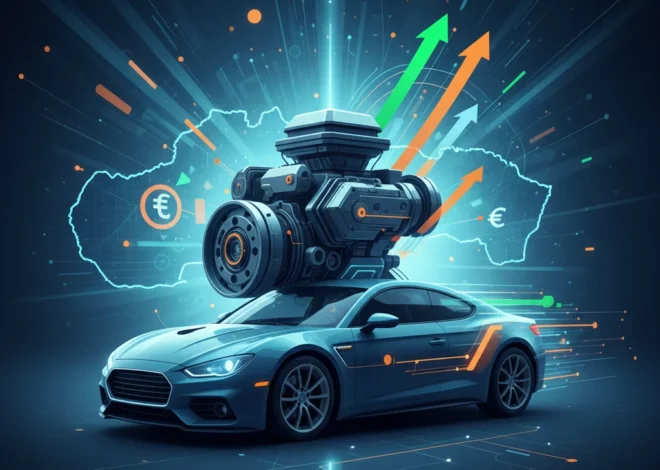
In the world of global economics and manufacturing, certain countries are synonymous with specific industries: Switzerland with watches, Germany with precision engineering, and Japan with consumer electronics. But what if I told you that a small, landlocked Central European nation of just 5.4 million people is the world’s undisputed heavyweight champion of car manufacturing on a per-capita basis? Welcome to Slovakia, the “Detroit of Europe,” a country that has engineered one of the most remarkable economic transformations of the modern era. In 2023, this compact nation produced over one million vehicles, which translates to an astonishing 184 cars for every 1,000 inhabitants. This figure dwarfs the output of traditional automotive giants like Germany, Japan, and South Korea.
This isn’t just a quirky statistic; it’s the result of a meticulously executed, decades-long strategy that fused savvy economic policy, geographic advantage, and a powerful wave of foreign investment. For investors, finance professionals, and business leaders, Slovakia’s journey offers a compelling case study in national economic development, the dynamics of foreign direct investment (FDI), and the intricate dance between government and global capital. Understanding this story is key to grasping the shifting landscape of European industry and identifying future opportunities in one of the continent’s most dynamic regions.
The Scale of Dominance: A Numbers-Driven Perspective
To truly appreciate Slovakia’s achievement, we must look at the data. The country’s auto industry isn’t just a part of its economy; it is the engine. The automotive sector accounts for approximately 13% of Slovakia’s GDP and is responsible for over 50% of its total industrial production. It’s a level of specialization that is both a source of immense strength and a topic of strategic debate.
Let’s put Slovakia’s per-capita production into a global context. While giants like China and the United States produce more cars in absolute terms, no country comes close to Slovakia’s output relative to its population.
| Country | Vehicles Produced per 1,000 People (Approx. 2023 Data) | Key Manufacturers |
|---|---|---|
| Slovakia | ~184 | Volkswagen, Stellantis (Peugeot, Citroën), Kia, Jaguar Land Rover, Volvo |
| Czech Republic | ~125 | Škoda (VW Group), Hyundai, Toyota |
| Germany | ~50 | Volkswagen, Mercedes-Benz, BMW, Audi, Porsche |
| South Korea | ~45 | Hyundai, Kia, Genesis |
| Japan | ~42 | Toyota, Honda, Nissan, Suzuki, Mazda |
Data compiled from reports by the International Organization of Motor Vehicle Manufacturers (OICA) and national statistics.
This intense concentration of industrial might didn’t happen by accident. It was built on a foundation laid after the peaceful “Velvet Divorce” from the Czech Republic in 1993, a moment that forced the newly independent Slovakia to chart its own economic course.
The Blueprint for an Economic Miracle: Policy, Proximity, and the Euro
Slovakia’s success can be attributed to a trifecta of strategic pillars that created a near-perfect environment for automotive investment.
1. Aggressive Pro-Investment Policies
In the late 1990s and early 2000s, Slovakia rolled out the red carpet for foreign capital. The government implemented a flat 19% tax for both corporate and personal income, simplified the tax code, and offered substantial investment incentives, including tax breaks, land grants, and direct financial subsidies for large-scale projects. This created a highly competitive and predictable environment for multinational corporations, fundamentally altering the country’s economic trajectory. A stable and modernizing banking sector was crucial in facilitating these massive capital flows and providing the necessary financial infrastructure for these global giants.
2. Prime Geographic & Logistical Positioning
Slovakia sits at the heart of Europe. Its location provides seamless, tariff-free access to the vast consumer markets of Western Europe and the burgeoning supplier networks of Central and Eastern Europe (CEE). Major plants in Slovakia are just a few hours’ drive from assembly lines in Germany, Austria, Hungary, and Poland. This geographic sweet spot minimizes logistics costs and enables just-in-time manufacturing, a critical component of modern automotive production. This strategic positioning made the country a linchpin in the continental supply chain, bolstering its entire economy.
3. European Integration and Euro Adoption
Joining the European Union in 2004 was a game-changer, eliminating trade barriers and standardizing regulations. However, the adoption of the Euro in 2009 was the masterstroke. It completely removed currency risk for Western European investors, simplifying cross-border trading and financial planning. For a company like Germany’s Volkswagen, being able to operate its Bratislava and Martin plants within the same currency zone as its home base in Wolfsburg was a massive strategic advantage, making long-term investing decisions far more secure.
The Titans of Industry: A Look Inside Slovakia’s Auto Plants
Four global automotive giants form the backbone of Slovakia’s production, with a fifth, Volvo, currently building a state-of-the-art EV-only facility—a crucial step for the country’s future. Each has carved out a significant presence, producing some of the world’s most popular vehicles.
| Manufacturer | Location | Key Models Produced | Significance |
|---|---|---|---|
| Volkswagen | Bratislava | Porsche Cayenne, Audi Q7/Q8, VW Touareg, VW up! | The trailblazer. VW’s early investment was the catalyst for the entire industry and the sole producer of these high-margin SUVs. |
| Stellantis | Trnava | Peugeot 208, Citroën C3 | A high-volume plant focusing on popular B-segment cars, crucial for the European mass market. |
| Kia Motors | Žilina | Kia Ceed family, Kia Sportage | Kia’s only European production facility, showcasing top-tier efficiency and quality control. |
| Jaguar Land Rover | Nitra | Land Rover Defender, Land Rover Discovery | A major post-Brexit investment, producing iconic and highly profitable models for a premium brand. |
The announcement of Volvo Cars’ new €1.2 billion plant near Košice, focused exclusively on electric vehicles, is a monumental vote of confidence. It signals that Slovakia is not being left behind in the industry’s seismic shift away from internal combustion engines, a transition that will redefine the global automotive landscape and impact the stock market valuations of every major carmaker.
The Road Ahead: Navigating the Challenges of Electrification and Diversification
Despite its incredible success, Slovakia faces a complex future. The very factors that fueled its rise now present new challenges.
- The EV Transition: The country’s existing infrastructure and workforce are highly optimized for building cars with internal combustion engines. Retooling factories, retraining tens of thousands of workers, and attracting battery production facilities (gigafactories) are urgent national priorities. Failure to pivot effectively could quickly erode its competitive advantage.
- Rising Labor Costs & Automation: Slovakia’s initial appeal was its skilled yet affordable labor. As wages and living standards have rightly increased, the country must now compete on efficiency, quality, and innovation. This means embracing automation and robotics, which could have complex social and employment implications.
- Economic Diversification: Over-reliance on any single industry is a risk. Global recessions, supply chain shocks (like the recent semiconductor shortage), or a sudden shift in consumer preferences can have an outsized impact on Slovakia’s economy. Fostering growth in other sectors, such as IT, R&D, and even fintech or exploring blockchain for supply chain transparency, will be critical for long-term stability.
A Pint of Policy: Why the Chancellor's Pub Lifeline Signals Deeper Economic Headwinds
Lessons for Investors and Global Markets
Slovakia’s automotive saga is more than a national success story; it’s a playbook filled with insights for the global financial community. It underscores the immense power of targeted FDI, the strategic value of economic blocs like the EU and Eurozone, and the importance of a stable political and financial environment. For those looking at the CEE region, Slovakia proves that smaller nations can become global leaders through smart economics and policy.
While direct investment is for corporations, portfolio investors can gain exposure to this industrial success through the stock market by investing in the parent companies—Volkswagen AG, Stellantis N.V., Tata Motors (JLR’s parent), and Hyundai Motor Group (Kia’s parent). Furthermore, the ongoing industrial transformation in the region presents opportunities in logistics, technology, and energy sectors that support this automotive behemoth.
In conclusion, the small nation of Slovakia has punched far above its weight, strategically positioning itself as the world’s per-capita car manufacturing champion. Its journey from a fledgling post-communist state to an indispensable hub in the global automotive supply chain is a testament to vision and execution. The road ahead is filled with the challenges of a rapidly changing industry, but if the past is any indication, it would be a mistake to underestimate the Slovakian Tiger.