The Greenland Gambit: How a Geopolitical Pivot Could Reshape Global Markets
In the world of global finance and investing, stability is the currency of confidence. Markets thrive on predictability, and investors build strategies on the assumption of rational statecraft. But what happens when a global superpower throws the rulebook out the window? This week, we witnessed such a moment, as a sudden and dramatic pivot by the United States regarding Greenland sent shockwaves from Copenhagen to Wall Street, leaving European leaders scrambling and financial analysts reassessing the very nature of geopolitical risk.
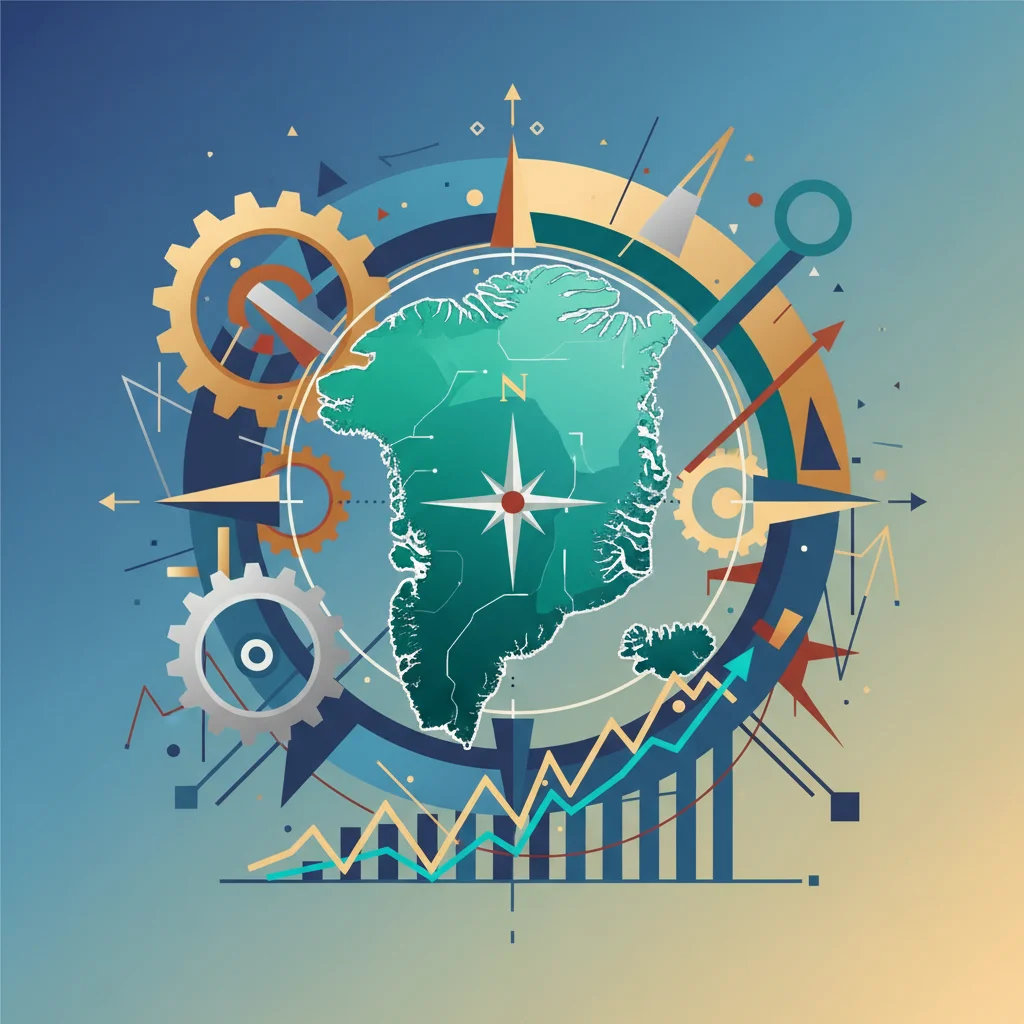
For days, the global economy held its breath. Following a period of escalating rhetoric, the U.S. administration had reportedly issued an ultimatum to Denmark: begin negotiations for the transfer of Greenlandic sovereignty or face a combination of crippling tariffs and a significant military realignment in the North Atlantic. The news, first broken by the Financial Times, sent the stock market into a tailspin and caused a flight to safe-haven assets. Then, just as abruptly, the threats were withdrawn. The tariffs were shelved, the military posturing ceased, and a terse statement announced a new “cooperative framework” was being discussed. This sudden reversal, far from calming nerves, has only deepened the uncertainty, forcing business leaders and investors to confront a new, more volatile era of economic diplomacy.
This is not merely a diplomatic spat. It is a stress test for the global financial system and a stark reminder that in today’s interconnected world, a single political maneuver can have profound consequences for the economy, banking, and your investment portfolio.
The Anatomy of a Geopolitical Shock
To understand the financial fallout, we must first dissect the event itself. The initial threat was a multi-pronged assault on a NATO ally, a move unprecedented in modern history. The proposed tariffs were not targeted at specific goods but were designed to inflict maximum pain on the Danish economy, a strategy more akin to economic warfare than trade negotiation. The military component, though vague, hinted at a potential drawdown of U.S. forces in Europe, redirecting them to the Arctic—a move that would fundamentally alter the continent’s security architecture.
The market’s reaction was swift and severe. The Copenhagen Stock Exchange (OMXC25) plunged over 5% in a single trading session, its worst performance in years (source). The Danish Krone fell sharply against the dollar, and credit default swaps on Danish sovereign debt widened significantly. The ripple effect was global; the Euro weakened, and U.S. stock market futures turned red as investors grappled with the prospect of a fractured transatlantic alliance. This wasn’t just about Greenland; it was about the perceived reliability of the United States as a global partner, a cornerstone of the post-war economic order.
The subsequent pivot, while preventing a full-blown crisis, has left a scar. The whiplash effect has injected a new layer of volatility into trading, making long-term financial planning more complex. The core principles of international economics—that nations will generally act in their own predictable self-interest—have been called into question.
Solving the Financial Grid: What the FT Crossword Teaches Us About Modern Investing
Why Greenland? The Trillion-Dollar Prize Beneath the Ice
To the casual observer, the fixation on a sparsely populated, ice-covered island may seem bizarre. But for those in finance, energy, and technology, Greenland represents one of the last great frontiers of untapped resources. Its strategic importance cannot be overstated, both geographically and economically.
Geographically, Greenland is the linchpin of the Arctic. As climate change accelerates the melting of polar ice, new, faster shipping routes are opening between Asia, Europe, and North America. Controlling access to these routes is a massive strategic advantage. Economically, however, the real prize lies beneath the ice sheet. Greenland is believed to hold vast reserves of oil, natural gas, and, most critically, rare earth minerals—the essential components in everything from smartphones and electric vehicles to advanced defense systems and financial technology hardware.
To put this in perspective, consider the following estimates of Greenland’s potential mineral wealth compared to current global production leaders.
| Resource | Estimated Greenlandic Potential | Current Top Global Producer & Share |
|---|---|---|
| Rare Earth Elements (REEs) | Potentially 20-25% of global reserves | China (~60% of 2022 production) |
| Crude Oil | Up to 50 billion barrels (USGS estimate) | United States (~18% of 2022 production) |
| Zinc | Considered one of the world’s largest unexploited deposits | China (~30% of 2022 production) |
| Iron Ore | Billions of tonnes in known deposits | Australia (~37% of 2022 production) |
This data illustrates why Greenland is not just a piece of land; it’s a strategic key to disrupting global supply chains. A U.S.-controlled Greenland could reduce Western dependence on China for rare earths, a major vulnerability in the current global economy. For investors, this highlights potential long-term opportunities in mining, logistics, and energy companies poised to operate in the Arctic, though the political risk remains exceptionally high.
Navigating the New Reality: Implications for Finance, Investing, and Technology
The Greenland incident is a microcosm of a broader shift in the global landscape. For professionals in finance and business, ignoring these undercurrents is no longer an option. The event carries specific, actionable implications across several domains:
1. Investment Strategy: Geopolitical Risk is Now Alpha
For years, many investors treated geopolitical risk as a background noise. Now, it is a primary driver of market volatility and returns. A successful investing strategy must now incorporate sophisticated geopolitical analysis. This means:
- Diversification Beyond Asset Class: True diversification now includes geographic and supply-chain diversification. Companies heavily reliant on single-country suppliers are carrying immense, often unpriced, risk.
- Sector-Specific Opportunities: The new environment creates clear winners and losers. Defense, cybersecurity, and commodity-related stocks (especially those in politically stable regions) may see sustained interest.
- Active Management: Passive, index-based investing may underperform in an environment where entire national stock markets can be whipsawed by a single political announcement. Active trading and risk management are paramount.
2. The Future of Banking and Financial Technology
The weaponization of economic policy has direct consequences for the banking sector. The threat of sweeping tariffs or sanctions creates a compliance nightmare for international banks, which must navigate a constantly shifting regulatory landscape. This uncertainty could slow global trade finance and increase the cost of capital.
Simultaneously, this instability could accelerate the adoption of financial technology (fintech) and decentralized finance (DeFi). If state-controlled financial channels like SWIFT can be used as leverage in geopolitical disputes, corporations and even nations may begin seeking alternatives. Blockchain technology offers a potential, albeit still nascent, alternative for cross-border settlements that is resistant to censorship by a single entity. The Greenland affair may inadvertently become a powerful use case for the development of a parallel, decentralized financial system. A recent industry report suggests that corporate inquiries into blockchain-based trade finance solutions have increased by 45% in the wake of recent geopolitical tensions (source).
The Unseen Risk: Why a Minneapolis Shooting Is a Data Point for Your Investment Portfolio
3. A New Economic Paradigm
Classical economics is built on models of rational actors operating within a stable, rules-based system. The Greenland pivot challenges this foundation. We are entering an era of “geo-economic” competition where trade policy, monetary policy, and military posture are no longer separate domains but are instead integrated tools of statecraft.
This has massive implications for economic forecasting. Standard models that predict GDP growth or inflation based on interest rates and employment data may prove inadequate. The new X-factor is the political whim of world leaders, a variable that is notoriously difficult to quantify. Business leaders must now plan for radical uncertainty, building more resilient operations and hedging against risks that were once considered unthinkable.
When Titans Tango: Why the Rio Tinto-BHP Alliance is a Game-Changer for the Global Economy
Conclusion: The Wake-Up Call for Global Markets
The Greenland saga may fade from the headlines, but its lessons will linger in boardrooms and on trading floors for years to come. It served as a stark, real-world demonstration that the tectonic plates of global power are shifting, and the tremors are being felt directly in the stock market. The incident has exposed the fragility of the globalized economic system and the deep interdependence of finance and foreign policy.
For investors, executives, and financial professionals, the key takeaway is that the rules of the game are changing. Success in this new era will not just be about understanding balance sheets and market trends; it will require a deep and nuanced understanding of the complex interplay between economics, technology, and geopolitics. The Greenland gambit was a wake-up call, and those who heed it will be best positioned to navigate the uncertainty and capitalize on the opportunities of a world in flux.