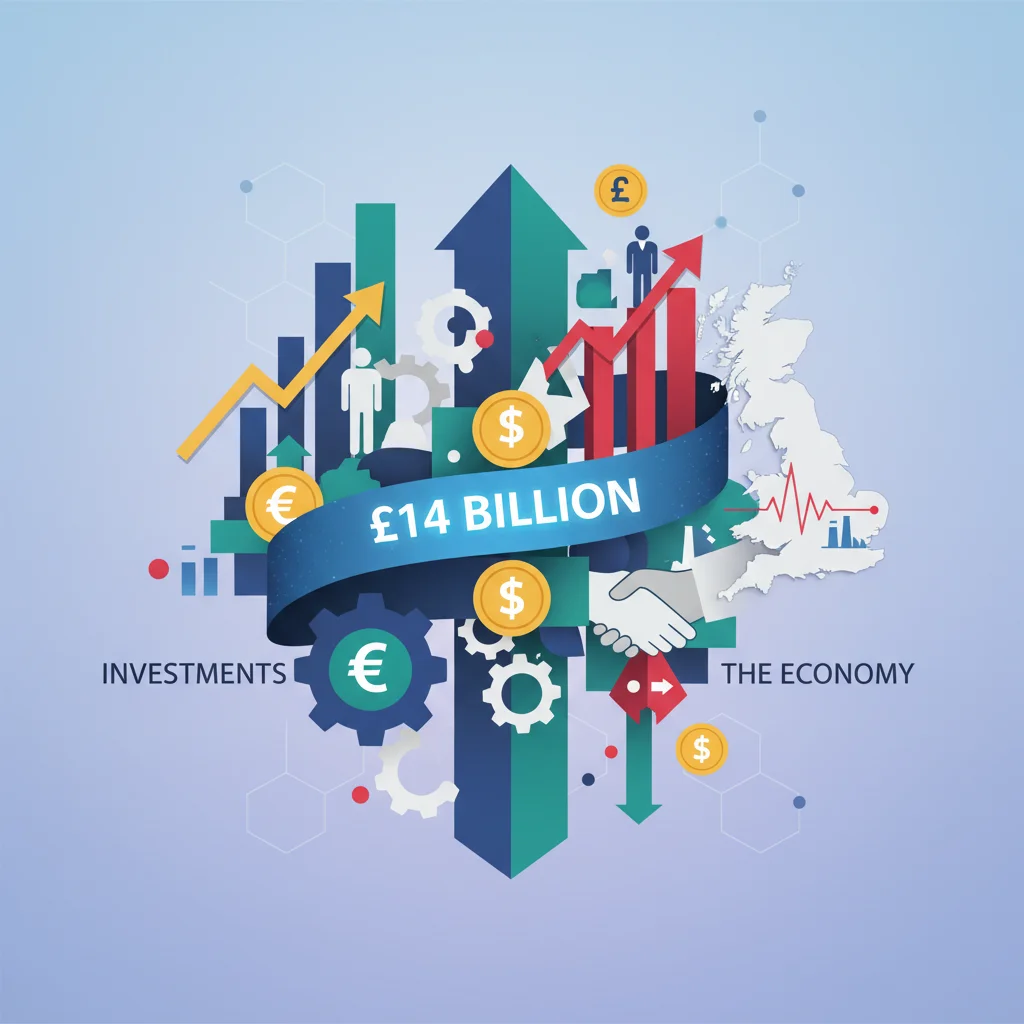
The £14 Billion Truce: How the UK’s New Drug Pricing Deal Impacts Your Investments and the Economy
In the high-stakes world of global finance and investment, few sectors represent the crossroads of human progress and immense capital quite like the pharmaceutical industry. It’s a realm where multi-billion-dollar research and development bets can lead to life-saving cures, and where government policy can make or break a nation’s economic competitiveness. Recently, the United Kingdom found itself at a critical juncture, with its relationship with the global pharmaceutical industry strained to a breaking point. A recent letter to the Financial Times by Richard Torbett, Chief Executive of the Association of the British Pharmaceutical Industry (ABPI), crystallised the urgency of the situation, highlighting a drug pricing regime that had become, in his words, “punitive.”
The subsequent agreement, forged between the industry and the government, is more than just a new contract; it’s a bellwether for the UK’s post-Brexit economic strategy and a crucial signal to investors worldwide. For anyone involved in finance, investing, or business leadership, understanding the nuances of this deal is essential. It reveals the delicate dance between public healthcare affordability and the private sector innovation that fuels the stock market and the broader economy. This post will dissect the old system’s failures, analyze the new agreement’s framework, and explore the profound implications for the UK’s future as a life sciences superpower.
The Anatomy of a Crisis: Understanding the VPAS
To grasp the significance of the new deal, we must first understand the mechanism it replaces: the Voluntary Scheme for Branded Medicines Pricing and Access, or VPAS. Established in 2019, its goal was twofold: to provide the National Health Service (NHS) with predictable spending on branded medicines while ensuring the UK remained an attractive hub for pharmaceutical investment.
The core of the VPAS was a cap on the growth of branded medicine sales to the NHS, set at a modest 2% per year. If total sales exceeded this cap, pharmaceutical companies in the scheme would pay a “levy” or rebate to the government on their excess revenue. In theory, it was a neat piece of financial engineering designed to balance costs and innovation. In practice, the economic landscape shifted dramatically.
The COVID-19 pandemic and subsequent recovery led to a surge in demand for healthcare and medicines, blowing past the 2% cap. As a result, the rebate rates skyrocketed. As Richard Torbett pointed out, the levy rate for 2023 reached an astonishing 26.5% of sales revenue. For investors and finance professionals, this figure is alarming. It’s not a tax on profit; it’s a clawback on gross revenue. Such a high rate erodes margins, destabilizes financial forecasts, and fundamentally alters the risk/reward calculation for launching new products in a market.
The consequences were swift and severe. Major pharmaceutical giants, including AbbVie and Eli Lilly, publicly withdrew from the voluntary scheme, a move that sent shockwaves through the UK’s life sciences sector. This wasn’t just a dispute over economics; it was a vote of no confidence in the UK’s commercial environment, threatening future clinical trials, manufacturing plants, and patient access to the latest medicines.
Sleep Arbitrage: The Untapped Alpha in a 24/7 Financial World
From Standoff to Solution: Comparing the Old and New Deals
The new agreement, rebranded as the Voluntary Scheme for Branded Medicines Pricing, Access and Growth (VPAG), represents a hard-won compromise. It acknowledges that the previous model was unsustainable and seeks to rebuild trust. The table below outlines the key differences, providing a clear snapshot for business leaders and investors evaluating the new landscape.
| Feature | Old Scheme (VPAS 2019-2023) | New Scheme (VPAG 2024-2028) |
|---|---|---|
| Core Mechanism | Single rebate rate applied to all eligible sales above a 2% growth cap. | Tiered rebate system. Newer medicines have full exemption or lower rates, while older, off-patent products pay a higher levy. |
| Rebate/Levy Rate | Reached a peak of 26.5% in 2023, creating significant instability. | Capped at a much lower, more predictable level, projected to be around 6.88% in 2024. |
| Industry Investment | Implicit expectation of investment. | Explicit commitment of £400 million over five years via the Life Sciences Investment Programme, focused on R&D, clinical trials, and manufacturing. |
| Key Focus | Primarily cost containment for the NHS. | Balanced focus on NHS affordability, patient access to new medicines, and driving economic growth. |
The most crucial innovation in the VPAG is the tiered approach. It recognizes that the financial lifecycle of a drug is complex. Newer, on-patent medicines, which represent the cutting edge of R&D and are crucial for a company’s growth trajectory, are protected from high rebates. This directly incentivizes companies to launch their most innovative products in the UK. This nuanced understanding of pharmaceutical economics is a significant step forward and a positive signal for the stock market performance of companies with strong UK operations.
Looking ahead, we can anticipate a greater fusion of financial technology and life sciences. The future of drug development involves massive data sets from clinical trials and real-world evidence. There’s a huge opportunity for fintech solutions to improve the financing of early-stage biotech, and for technologies like blockchain to ensure the integrity and security of the pharmaceutical supply chain. The VPAG provides a stable foundation, but the UK’s long-term success will depend on embracing these adjacent innovations to build a truly interconnected and efficient life sciences ecosystem. The global investment community will be watching for signs of this forward-thinking integration.
The Broader Economic Ripple Effect: Why This Matters Beyond Pharma
A stable pharmaceutical pricing agreement is not a niche industrial policy; it’s a cornerstone of the UK’s broader economic health. The life sciences sector is a powerhouse, contributing over £16 billion a year to the UK economy and supporting high-skilled jobs across the country. Every pound invested in this sector has a significant multiplier effect, benefiting everything from university research departments to the banking and logistics industries that support it.
For those focused on the stock market and trading, the VPAG provides a much-needed dose of predictability. When analysts model the future earnings of pharmaceutical giants like GSK or AstraZeneca, the UK rebate rate is a key variable. The volatility of the old VPAS created uncertainty, which markets detest. A stable, capped system allows for more accurate financial forecasting, potentially leading to more stable valuations and reduced investor risk.
Furthermore, this deal sends a powerful message about the UK’s approach to business. After years of political and economic uncertainty, a pragmatic, long-term agreement with a critical industry suggests a return to a more stable and pro-investment policy environment. This can influence foreign direct investment decisions far beyond the pharmaceutical sector, impacting the entire financial technology and professional services landscape that orbits these major industries.
Decoding Labour's Pivot: What the Workers' Rights U-Turn Means for the UK Economy and Your Portfolio
The banking sector also plays a crucial role. Funding the long, expensive journey of a drug from lab to market requires immense capital. A predictable commercial environment like the one fostered by the VPAG gives banks and venture capitalists the confidence to extend credit and make equity investments in promising biotech startups, fueling the next generation of medical breakthroughs. The principles of sound economics dictate that capital flows to where it is treated best, and the VPAG is a clear move to treat life sciences capital better.
Conclusion: A Prescription for Growth?
The journey from the “punitive” 26.5% levy of the old VPAS to the balanced framework of the new VPAG is a case study in high-stakes negotiation. It underscores the symbiotic relationship between a government’s public health commitments and the private sector’s need for a stable and profitable operating environment. The new deal is a prescription for recovery, designed to restore the UK’s health as a top-tier destination for life sciences investment.
For investors, business leaders, and financial professionals, the takeaway is clear: the UK has recognized the economic self-harm of its previous policy and has taken a decisive step to correct it. While challenges remain, the VPAG provides a five-year window of predictability that is vital for long-term capital planning. This agreement is about more than just the price of medicines; it’s about the price of innovation, the value of a key economic sector, and the UK’s ambition to lead in the industries of the future. The financial world will be monitoring the vital signs of this new policy closely, watching to see if this truce blossoms into a long-term, prosperous partnership.
The Empathy Paradox: Why 'Human-Like' AI is a Ticking Time Bomb for Your Portfolio

Related Posts
UK’s Fiscal Surprise: Decoding the December Dip in Government Borrowing and What It Means for Investors
UK’s Unexpected Fiscal Breather: Decoding the December Borrowing Drop and Its Impact on the Economy
